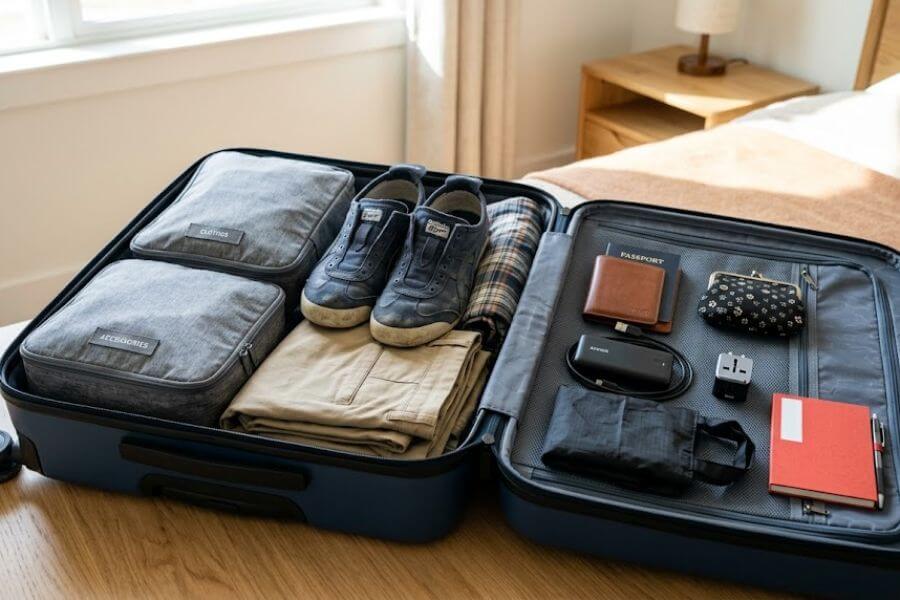
Packing for a trip across the world can feel like a massive puzzle. Japan is a beautiful mix of the ultra-modern future and ancient traditions. Because it is so unique, packing for a trip there requires a little more thought than a typical beach vacation. If you pack too much, you will regret it while dragging heavy bags through crowded train stations. If you pack too little, you might miss out on essential items that are hard to find in Japanese stores. This guide will walk you through exactly what to put in your bag so you can travel like an absolute pro.
Key Takeaways for Your Packing Success
Before we dive into every single item, here is the golden rule of packing for Japan.
- Pack light and think smart: You will walk thousands of steps every day and carry your luggage up train station stairs.
- Slip-on shoes are a must: You will take your shoes off constantly when entering temples, traditional restaurants, and hotels.
- Cash is still king: Even though Japan is high-tech, many small shops, temples, and ramen spots only take paper money and coins.
- Bring a small coin purse: Japanese currency uses coins for large amounts like five dollars, and your pockets will fill up fast.
- Keep your trash with you: Public trash cans are rare in Japan, so you need a small plastic bag in your backpack to hold your garbage.
- Power up correctly: Japan uses the same flat two-prong plugs as America, but they do not have the third round grounding hole.
The Essential Travel Documents and Financials
When you land in Japan, the very first things you will need are your documents. Without these, your trip cannot even begin. Let us make sure you have your paperwork and money situation completely sorted out before you leave American soil.
Passport and Immigration Requirements
Your passport is your golden ticket. It needs to be valid for the entire length of your stay in Japan. As an American citizen, you do not need a pre-arranged visa if you are staying for less than ninety days for a vacation. When you are on the airplane, the flight attendants will hand you a small paper form for immigration and customs. Fill this out carefully using blue or black ink. Alternatively, you can use the official digital service online before you leave to get QR codes on your phone. This makes walking through the airport lines much faster. Always make a physical photocopy of your passport picture page and keep it in a separate pocket of your bag. If you lose your passport, having that copy makes getting a replacement at the embassy a million times easier.
Cash, Cards, and the Magic of Coins
Many Americans assume that a futuristic country like Japan uses digital payments for everything. This is a common mistake. While big department stores and convenience stores accept American credit cards, hundreds of small noodle shops, historical sites, and local buses only accept cash.
You should notify your American bank that you are traveling abroad so they do not freeze your debit or credit cards. When you arrive, the easiest way to get cash is by using your debit card at an ATM inside a 7-Eleven convenience store. These ATMs are everywhere, they have English language options, and they offer great exchange rates.
Once you start spending cash, you will notice something interesting. Japan uses coins for one yen, five yen, ten yen, fifty yen, one hundred yen, and five hundred yen. That five hundred yen coin is actually worth around four American dollars. Buy a small zipper pouch or coin purse specifically for your trip. If you do not, your pockets will rattle loudly every time you take a step down the street.
Transit IC Cards
To ride the clean and fast trains in Tokyo, Kyoto, and beyond, you will want a transit card. In Tokyo, these are called Suica or Pasmo cards. In Osaka and Kyoto, they are called Icoca cards. They are rechargeable plastic cards that you tap against the ticket gates to pay for your ride. You can also use them to buy drinks from vending machines or snacks from corner stores.
Lately, physical plastic cards have sometimes been hard to find due to chip shortages, so many travelers load a digital version directly into their phone wallet before leaving home. If you want a physical card, look for the special version made just for foreign tourists at the airport train stations. It lasts for twenty-eight days and makes a wonderful souvenir when your trip is over.
The Ultimate Clothing Strategy: Layering and Comfort
Dressing for Japan is all about blending comfort with respect. The Japanese people tend to dress very neatly and stylishly. While you do not need to wear a suit, looking clean and put-together will help you fit right in. The secret weapon for packing clothes for Japan is layering.
Understanding the Climate and Seasons
Japan has four distinct seasons, and the weather changes drastically depending on when you visit. Spring brings beautiful cherry blossoms but can still have chilly mornings and windy nights. Summer is famously hot, sticky, and humid, with a rainy season that requires waterproof gear. Autumn offers stunning red maple leaves and crisp, perfect walking weather. Winter gets very cold, and northern areas like Hokkaido get massive amounts of snow. Look at this simple guide to see how the weather impacts your clothing choices.
| Season | Average Temperatures | What to Pack |
| Spring (March to May) | 50°F – 65°F | Light jackets, sweaters, long pants, scarves |
| Summer (June to August) | 80°F – 95°F | Lightweight t-shirts, shorts, linen clothes, umbrella |
| Autumn (September to November) | 55°F – 70°F | Cardigans, light layers, jeans, light jackets |
| Winter (December to February) | 35°F – 50°F | Heavy coat, thermal underwear, gloves, warm hats |
Tops, Shirts, and Layering Basics
Because you will be moving from cold outdoor air into heavily heated trains during the winter, or from blazing summer heat into icy air-conditioned shops, you need versatile tops. Pack lightweight t-shirts made of breathable fabrics. Cotton is fine, but synthetic moisture-wicking fabrics are even better because they dry quickly when you wash them.
Avoid shirts with offensive graphics, large loud logos, or overly ripped fabric. If you are visiting in the cooler months, pack two or three thin sweaters or flannels that you can easily take off and stuff into a daypack when you get warm. For women, modest tops that cover the shoulders are highly recommended, especially when visiting holy sites like temples and shrines.
Pants, Shorts, and Bottoms
You will spend hours sitting on train seats, walking up temple steps, and sometimes sitting cross-legged on tatami straw mats on the floor of traditional restaurants. This means you need pants that stretch and offer maximum comfort. Leave your tightest, stiffest jeans at home. Instead, pack stretch denim, lightweight chinos, or travel pants with secure pockets.
In Japan, local adults rarely wear short shorts out in public, even during the hot summer months. If you want to blend in, opt for knee-length shorts, capris, or loose skirts. Long pants also protect your legs from mosquitoes if you are walking through forested shrine paths in the evening. Pack about three to four pairs of bottoms total, assuming you can wash them during your trip.
The Shoe Rule: Slip-On and Supportive
If there is one piece of advice you must remember, it is this: choose your footwear wisely. You will easily walk anywhere from ten thousand to twenty-five thousand steps every single day of your trip. Bring sneakers that are broken-in and have excellent arch support. Do not buy brand-new shoes right before your trip, or your feet will be covered in painful blisters by day two.
Furthermore, you will be taking your shoes off multiple times a day. You remove them at temple entrances, traditional ryokan hotels, historical castles, and even some fitting rooms in clothing stores. Shoes with complicated laces or tall boots that take five minutes to buckle will quickly become an annoying hassle. Look for supportive slip-on sneakers or shoes with simple laces that you can slide out of easily.
The Great Sock Selection
Since your shoes will be sitting on shelves at temple entrances while you walk around inside, your socks will be on full display. This is not the time to pack socks with holes in the toes or worn-out heels. Pack clean, high-quality socks that match.
In the winter, thick wool socks will keep your feet warm on the cold wooden floors of old temples. In the summer, moisture-wicking ankle socks will keep your feet dry. Bring a few more pairs of socks than you think you need, just in case your feet get wet during an unexpected rain shower.
Electronics and Tech Gear for the Modern Traveler
Japan is a wonderland of technology, but their power outlets and voltage rules are slightly different than what you use at home in America. Packing the right cords and power banks ensures your phone stays alive so you can navigate the winding streets without getting lost.
Plugs, Volts, and Power Adapters
The good news for American travelers is that Japanese electrical outlets look almost identical to the ones in the United States. They use the same flat, two-prong plugs. However, there is a catch. Most outlets in Japan do not have the third, round hole used for grounding plugs. If your laptop charger or hair dryer has three prongs, it will not plug into a standard Japanese wall outlet.
You should buy a simple two-prong adapter that converts a three-prong American plug into a two-prong plug. Additionally, Japan runs on one hundred volts of electricity, while America runs on one hundred and twenty volts. For simple devices like phones, tablets, and cameras, this small difference does not matter because their chargers are dual-voltage. They will just charge a tiny bit slower. But for high-powered items like American curling irons, the lower voltage means they might not get hot enough to work correctly.
Portable Power Banks
Your phone is going to do an incredible amount of heavy lifting on this vacation. You will use it as your digital train ticket, your map, your camera, and your language translator. Running all these apps constantly will drain your phone battery before lunchtime.
Carrying a portable external battery pack is non-negotiable. Look for a power bank with a capacity of around ten thousand milliamp hours. This size is small enough to fit comfortably in your pocket or backpack but holds enough juice to charge a modern smartphone two to three times. Keep in mind that aviation safety rules require you to pack all lithium-ion battery packs in your carry-on bag, never in your checked luggage.
Pocket Wi-Fi versus Travel eSIM
To get around Japan efficiently, you absolutely need a reliable internet connection. You have two excellent options to choose from, and you should arrange this before your flight lands.
- Pocket Wi-Fi: This is a small, battery-powered router that you rent at the airport when you arrive. It creates a private Wi-Fi network that floats around with you. You can connect multiple devices to it at the same time, including your phone, a tablet, and a laptop. It provides fast, unlimited data, but you have to remember to charge it every night, and you must return it at the airport before you fly home.
- Travel eSIM: If you have a modern, unlocked smartphone, an eSIM is incredibly convenient. You buy a digital data plan online, download a profile via a QR code, and activate it when you land. It uses your phone’s internal antenna to give you local data without needing a physical device. This means you do not have to carry extra gear or worry about returning a rental. However, it only works for one specific phone.
Headphones and Entertainment
Japanese trains are incredibly quiet. People do not talk loudly, and nobody plays videos or music out loud on their devices. It is considered very rude to disturb your fellow passengers. Pack a reliable pair of headphones or wireless earbuds for your train journeys. They are perfect for listening to podcasts or calming music during long bullet train rides across the countryside. Do not forget to pack the specific charging cable for your headphones too.
Toiletries, Medication, and Personal Care
While Japanese convenience stores and drugstores are packed with amazing products, many brands will be completely unfamiliar to you. Furthermore, Japanese laws regarding medication are incredibly strict, so you must prepare your personal care kit carefully.
Over-the-Counter and Prescription Medications
This is the most critical part of your packing checklist. Japan has zero-tolerance laws for certain chemicals that are common in American over-the-counter medicines. For example, inhalers, allergy medicines, and sinus relief products that contain pseudoephedrine or codeine are strictly illegal to bring into Japan. Even standard American pain relievers like ibuprofen or acetaminophen are sold in much lower strengths in Japanese pharmacies.
Bring an ample supply of your personal prescription medications in their original pharmacy bottles with your name clearly printed on the label. If you need to bring more than a one-month supply of any prescription drug, you must apply for a special medical import certificate online weeks before your trip. For everyday peace of mind, pack a small first-aid pouch with basic bandages, blister pads, anti-diarrhea pills, and your favorite brand of headache medicine.
Sun Protection and Insect Repellent
If you are visiting Japan in the summer, the sun can be intense. While Japanese sunscreens are famous for being lightweight and high-quality, the bottles are often tiny and expensive. Pack a full-sized bottle of your favorite American sunscreen if you plan on doing a lot of outdoor hiking.
Similarly, if you are exploring rural areas, mountain trails, or the ancient bamboo groves of Arashiyama, you will encounter hungry bugs. Pack a small travel-sized insect repellent spray containing DEET or picaridin to keep the mosquitoes away.
Deodorant: The Hidden Challenge
Here is a quirky fact that catches many western tourists off guard: traditional stick deodorant is very difficult to find in Japan. Many Japanese people do not possess the specific gene that causes strong underarm body odor, so local stores mostly sell mild body wipes or light scented sprays instead of heavy-duty antiperspirants. If you rely on a specific brand of solid or gel deodorant to keep you dry and smelling fresh during long days of walking, pack two full sticks in your toiletry bag.
The Small Towel Trick
When you use a public restroom in Japan, you will notice two things. First, the toilets are high-tech marvels with heated seats and water sprays. Second, there are often no paper towels or electric hand dryers next to the sinks. Local people always carry a small hand towel or a traditional cotton washcloth in their pocket to dry their hands. Pack a small, quick-drying microfiber hand towel or purchase a beautiful, inexpensive cotton washcloth at a Japanese convenience store on your very first day.
Luggage, Bags, and the Art of Moving Around
Getting your gear from point A to point B in Japan requires a smart luggage strategy. The streets can be narrow, train stations are massive structures with lots of stairs, and overhead racks on trains have limited space.
Choosing the Right Suitcase
Leave your massive, oversized suitcases at home. A medium-sized, hardshell spinner suitcase with four wheels that rotate a full three hundred and sixty degrees is the ideal choice for Japan. This type of bag allows you to roll your luggage sideways through narrow train aisles or crowded subway turnstiles.
If you prefer backpacks, a durable travel pack around forty to fifty liters in size works beautifully because it keeps your hands completely free to hold train tickets or your phone map. Remember that many older train stations do not have elevators at every single exit. You will inevitably have to carry your bag up two or three flights of stairs at some point, so make sure you can lift your fully packed bag above your head without straining.
The Daypack or Crossbody Bag
While your main suitcase stays at the hotel, you will need a smaller bag to carry with you during your daily adventures. A small, lightweight backpack or a secure crossbody bag is perfect. It should be large enough to hold your water bottle, power bank, camera, coin purse, and a light jacket.
Choose a bag with secure zippers to deter any rare pickpockets in crowded tourist areas. When you board a crowded subway train, it is polite etiquette to take your backpack off and hold it in your hands or wear it on your front so you do not bump into the people standing behind you.
Laundry Bags and Packing Cubes
Packing cubes are an absolute game-changer for organizing your suitcase. Group your clothes by type: one cube for shirts, one for pants, and one for underwear and socks. This keeps your bag neat and allows you to find items instantly without tearing your entire suitcase apart in your small hotel room.
Also, bring a lightweight, compressible laundry bag to separate your dirty clothes from your clean items. Many business hotels in Japan have coin-operated laundry machines in the lobby, so being able to grab your laundry bag and head downstairs makes washing clothes mid-trip incredibly simple.
Seasonal Items and Weather Protection
Depending on the exact month you decide to visit the land of the rising sun, you will need a few specialized items to keep yourself comfortable against the elements.
Summer Survival Tools
Summer in Japan is a serious test of endurance. To beat the heat, pack a lightweight, UV-blocking umbrella or parasol to create your own portable shade. A cooling neck towel, which stays chilled when wet, can be a lifesaver during afternoon walks.
You might also want to pack a small, handheld battery-operated fan. While you can buy these everywhere in Tokyo, having one ready in your bag from day one means you stay cool the moment you exit the airport.
Winter Warmth Essentials
Winter in places like Tokyo or Kyoto is generally dry and sunny, but the wind chill can be biting. Pack high-quality thermal base layers, such as lightweight leggings and long-sleeve tops that fit tightly under your regular clothes.
A warm beanie that covers your ears, a cozy scarf, and insulated gloves are essential. You can also buy small heat packs called kairo at local convenience stores that warm up when you shake them, which you can slip inside your coat pockets or shoes to keep your fingers and toes warm.
Rainy Season Readiness
If you are traveling during June, you will hit the peak of the Japanese rainy season. Instead of packing a heavy, bulky raincoat that will make you sweat in the humid air, pack a compact, high-quality travel umbrella that folds down tiny.
Alternatively, you can do what the locals do: buy a cheap, clear plastic umbrella at a convenience store for a few dollars the moment it starts pouring. If you plan to do outdoor activities, pack a lightweight waterproof shell jacket and consider spraying your walking shoes with a water-repellent coating before you leave home.
Cultural Items and Smart Extras
These are the small, thoughtful items that do not fit into standard categories but will make your daily life in Japan much smoother and more enjoyable.
Plastic Bags for Trash
As you walk through Japanese cities, you will quickly notice something surprising: there are almost no public trash cans on the sidewalks. After a domestic terrorist attack in the nineties, most public garbage bins were removed for safety.
You are expected to carry your trash home with you or keep it in your bag until you find a vending machine that has a small recycling bin next to it for cans and bottles. Pack three or four small plastic grocery bags from home. Tuck one into your daypack each morning so you have a dedicated place to store snack wrappers, used tissues, and drink caps throughout the day.
Stamp Books for Souvenirs
Here is a wonderful, inexpensive hobby you can enjoy while traveling through Japan. Almost every major train station, Buddhist temple, Shinto shrine, and historical castle has a unique, beautifully designed ink stamp available for free.
Before you leave home, or on your first day in Japan, buy a small notebook with thick, blank paper pages. Whenever you see a stamping station, press your notebook down to collect a beautiful visual record of exactly where you have traveled. It becomes an incredible, personalized souvenir that costs virtually nothing.
Business Cards or Gift Etiquette
If you are traveling to Japan for work, or if you expect to meet local guides and new friends, carrying clean business cards is important. In Japan, business cards are treated with immense respect. You present and receive them using both hands, holding the card by the top corners so you do not cover the text, and you take a moment to read it carefully before putting it away into a proper protective case.
If you are staying with a host family, it is a lovely cultural tradition to bring a small, neatly wrapped gift from your home state in America, such as local chocolates, maple syrup, or regional snacks.
What to Leave at Home
Sometimes, knowing what not to pack is just as important as knowing what to include. Leaving these items behind will save precious space in your suitcase and prevent potential headaches at customs.
Too Many Heavy Clothes
You really do not need a fresh outfit for every single day of a two-week trip. Many Japanese hotels feature coin-operated washers and dryers that cost only a few dollars per load. Packing too many heavy sweaters or multiple pairs of heavy boots will just weigh you down. Keep your clothing choices simple, color-coordinated, and easy to wash.
Bulky Towels and Hair Dryers
Unless you are camping in the deep wilderness, every single hotel, hostel, and traditional inn in Japan provides clean towels, high-quality shampoo, conditioner, body wash, and a functioning hair dryer. American hair dryers often do not work at full power due to Japan’s lower voltage anyway, so leave your bulky styling tools at home and use the gear provided by your accommodation.
Expensive Jewelry and Flashy Items
Japan is famous for being one of the safest countries in the entire world. However, walking around with loud, incredibly expensive diamond jewelry or flashing massive bundles of cash is unnecessary and can make you stand out in an awkward way. The general style in Japan leans toward modesty and subtle elegance, so keep your luxury items safely at home.
Frequently Asked Questions
What happens if I forget to pack an essential item for my trip?
Do not panic at all. Japan has some of the finest convenience stores and discount shops on earth. Stores like 7-Eleven, Lawson, and FamilyMart are open twenty-four hours a day and sell high-quality travel items like socks, underwear, umbrellas, chargers, and basic toiletries. For anything else, you can visit a massive discount department store called Don Quijote, which sells everything from electronics and cosmetics to clothing and medicine at great prices.
Can I use my American credit card everywhere in Japan now?
While credit card acceptance has increased dramatically over the past few years, you still cannot rely on plastic cards for everything. Major hotels, bullet train ticket offices, and large restaurants in big cities like Tokyo will accept your Visa or Mastercard. However, historical temples, rural buses, local street food stalls, and traditional capsule hotels often remain strictly cash-only. Always carry at least five thousand to ten thousand yen in cash with you just in case.
Is it easy to find English signs and help if I get lost without internet?
Most major train stations, airports, and popular tourist destinations have excellent English signage alongside the Japanese text. However, if you venture off the main tourist paths into smaller neighborhoods or rural towns, English signs become much rarer. That is why having a working internet connection on your phone via pocket Wi-Fi or an eSIM is so vital. It allows you to use live translation apps and map services to navigate anywhere without needing to read the local characters.
Should I pack a formal outfit for dining at nice restaurants?
For the vast majority of restaurants in Japan, including high-end sushi spots and cozy ramen shops, a neat casual outfit is perfectly acceptable. For men, clean chinos or nice jeans paired with a collared polo shirt or button-down shirt works wonderfully. For women, a casual dress, skirt, or nice pants with a modest blouse is ideal. You do not need to pack a formal suit or an evening gown unless you are attending a specific formal business event or an ultra-exclusive luxury gala.
Can I bring my favorite American snacks and candy into Japan?
You can bring most standard factory-sealed snacks like potato chips, chocolate bars, crackers, and candy into Japan without any issues. However, Japan has incredibly strict agricultural quarantine laws regarding fresh items. You are strictly forbidden from bringing fresh fruits, vegetables, meat products, or beef jerky from America into the country. If you are caught carrying unsealed meat or fresh produce at airport customs, you can face massive fines, so stick to simple, sealed processed treats if you need comfort food.