Key Takeaways
- The Ultimate Culinary Hub: Kappabashi Street is a half-mile stretch packed with over 150 shops dedicated entirely to cooking tools, dishes, and kitchen supplies.
- Fake Food Capital: This neighborhood is world-famous for sampuru, the incredibly realistic plastic food models used by Japanese restaurants.
- Knives of Lifetime Quality: You can find hand-crafted Japanese chef knives and even get your name engraved on the blade by local masters.
- Open for Professionals and Foodies: While the area originally served restaurant owners, regular shoppers and travelers are welcome in almost every store.
- Timing Matters: Most shops operate from 9:00 AM to 5:00 PM, and many close completely on Sundays and national holidays.
Welcome to the Food Lover’s Hidden Paradise
Imagine a place where an eight-foot-tall statue of a chef greets you from the top of a building. Imagine walking down a long, straight road where every single shop window holds beautiful plates, sharp knives, or bowls of ramen made entirely of plastic. This place is real. It sits quietly between the historic streets of Asakusa and the pop-culture hub of Ueno. Its name is Kappabashi Dougu Gai, but most people simply call it Tokyo’s Kitchen Town.
For over a century, this neighborhood has been the secret engine behind Tokyo’s world-class food scene. When a new sushi bar, ramen shop, or cozy cafe opens anywhere in Japan, the owners come here first. They come to buy their stoves, their signs, their uniforms, and their spoons. But you do not need to own a restaurant to enjoy this street. If you love to cook, if you love beautiful design, or if you just love unique shopping experiences, this neighborhood will feel like a dream come true.
Walking down this street gives you a look into the heart of Japanese hospitality. Every item on display shows a deep respect for the art of cooking and eating. As you start your walk, the sights, smells, and sounds will immediately catch your attention. Let us take a slow walk together down this unique stretch of Tokyo and discover exactly what makes it so special.
The Story Behind the Kitchen Street
How a Simple Riverbank Became a Trading Hub
To truly appreciate this street, it helps to know how it began. More than one hundred years ago, around the year 1912, a few merchants began selling secondhand tools along the banks of the nearby river. Merchants chose this spot because it was close to busy residential neighborhoods but offered cheap space to store large items. Over time, more sellers arrived. They realized that instead of selling everything, they could do better by focusing on tools for businesses.
As Tokyo grew after difficult times in history, the demand for restaurant supplies shot up. The street transformed from a collection of used-goods carts into a clean, organized row of specialized shops. Today, it stands as the largest shopping district of its kind in all of Japan.
Meeting the Mystic Water Creature
As you explore, you will notice images and statues of a strange green creature everywhere. This is not a cartoon mascot made for tourists. It is a kappa, a famous creature from ancient Japanese folklore.
Legends say kappa are water spirits that live in rivers. They have a turtle shell on their back, a beak for a mouth, and a small pool of water on top of their head. If the water on their head dries up, they lose their power.
There are two main stories about why the street uses this creature. One story says that a local merchant named Kihachi Kappaya tried to build a water canal here to help the neighborhood. The project was very hard, but the local kappa saw his hard work and helped him finish it at night. Another story says that long ago, poor residents would hang their traditional raincoats, called kappa, out to dry on the bridges here.
Whatever the true history is, the neighborhood loves its green water spirits. You will find them printed on flags, carved into stone, and even standing as a giant golden statue in a small pocket park along the main road. Finding these creatures turns your shopping trip into a fun scavenger hunt.
Getting to Know the Layout of the Street
Mapping Your Walking Plan
The shopping area is surprisingly easy to explore because it forms one long, straight line. The main section stretches for about a half-mile along a single avenue. Shops line both the left side and the right side of the street.
A great way to plan your day is to start at one end, walk all the way down one side of the street, then cross over and walk back down the opposite side. This ensures you do not miss any hidden doorways.
The closest train stop to the southern entrance is Tawaramachi Station on the Ginza Subway Line. If you get off there, you will see the famous giant chef building just a short walk away. If you prefer to start from the north, you can walk about fifteen minutes from Ueno Station or Asakusa Station.
Choosing the Best Time for Your Visit
Planning your schedule is very important when visiting this neighborhood. This is a working commercial district, not a standard shopping mall. Because the shops cater to restaurant owners, their hours follow business patterns.
Most stores open their doors around 9:00 AM or 9:30 AM and start packing up by 5:00 PM. If you arrive at night, the street will be dark and quiet.
Days of the week matter just as much as the hours. Saturday is the liveliest day for visitors, as almost all shops are open. Sunday is a different story. More than half of the shops close on Sundays to rest. National holidays also see many closed shutters. For the absolute best experience, aim for a Tuesday through Friday morning. You will get to see the street in its true form, filled with local chefs picking out supplies for their evening service.
The Magic of Realistic Plastic Food
The Art of the Perfect Fake Meal
One of the biggest reasons travelers visit this street is to see sampuru. This word comes from the English word “sample.” It refers to the amazingly detailed plastic food models you see in the windows of Japanese restaurants.
When you see a bowl of soup with noodles lifted high in the air by an invisible fork, you are looking at sampuru. These models look so real that you can see the texture of the grill marks on a piece of plastic chicken or the glistening fat on a bowl of ramen broth.
The craft began in the early 1900s. In those days, menus did not have pictures, and many people could not read complex food signs. Craftspeople created wax models to show customers exactly what they would get. Today, artists use durable plastic instead of wax, painting each piece by hand with tiny brushes to match real food perfectly.
Where to Buy Your Own Plastic Souvenirs
You do not have to buy a whole plate of fake spaghetti to take this art home. Several famous shops specialize in selling these items to the public. Ganso Shokuhin Sample-ya is one of the most famous stops. Here, you can find small, affordable versions of fake food.
You can buy keychains shaped like a single piece of crunchy tempura shrimp, magnets that look like a tiny fried egg, or phone grips that look like a piece of salmon sushi. They also sell DIY kits if you want to try making simple wax food models at home. Another fantastic shop is Maiduru, which has been making these items for decades and offers everything from tiny fruit charms to giant, life-sized fake cakes.
A Deep Dive into Famous Kitchen Tool Shops
The Legendary World of Japanese Knives
For home cooks and professional chefs alike, Japanese knives are the ultimate prize. The steel used in these knives is famous for being incredibly hard, which allows the blade to stay sharp for a very long time.
When you walk into a dedicated knife shop on this street, the selection can feel overwhelming. You will see long, thin blades made just for slicing raw fish, heavy cleavers for bone, and versatile utility knives for everyday vegetable chopping.
A wonderful shop to visit is Kamaasa. Founded in 1908, this store helps you choose the perfect tool based on how you cook. They have staff members who speak excellent English and will show you how to hold and care for the blades.
Another essential stop is Tower Knives Tokyo, where experts demonstrate the cutting power of different steels right in front of you. Many of these shops offer a complimentary service where they will scratch your name into the metal blade in Japanese characters, making it a truly personal treasure.
Pots, Pans, and Traditional Cast Iron
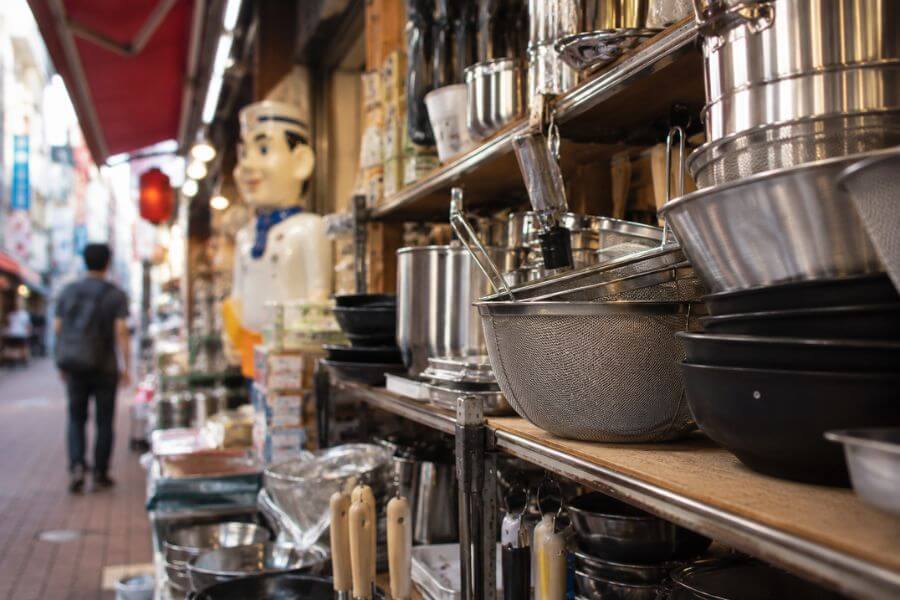
Beyond knives, you will find stores stacked from floor to ceiling with metalware. There are shops that sell nothing but copper tamagoyaki pans, which are rectangular pans used to roll sweet Japanese omelets. Other stores feature rows of heavy black cast-iron teapots, known as nambu teki. These teapots keep water hot for a long time and develop a beautiful look as they age.
If you love baking, you will find stores filled with cookie cutters in the shape of cherry blossoms, Mount Fuji, and cute animals. You can also find traditional wooden molds used to press out sweet rice cakes for tea ceremonies.
Elevating Your Table with Ceramic Ware
Bowls for Every Style of Soup
In Japanese dining, the dish you serve food in is just as important as the food itself. The presentation must match the season and the mood of the meal. On this street, you will find multiple shops dedicated entirely to ceramics, porcelain, and clay.
There are massive wooden crates sitting on the sidewalks filled with thousands of bowls. You can find tiny, delicate dishes meant for holding a splash of soy sauce, medium bowls with textured blue lines for rice, and giant, heavy ceramic bowls designed to hold hot ramen soup. The variety of colors is stunning, ranging from earthy greens and browns to bright, clean whites and deep indigos.
Traditional Lacquerware and Bamboo Tools
To complete your table setup, you should look for traditional lacquerware. These are lightweight bowls, often colored in deep red or shiny black, made from wood and coated with a special natural tree sap. They feel warm to the touch and are traditionally used for serving hot miso soup.
Alongside lacquerware, you will find shops overflowing with bamboo products. You can buy smooth bamboo chopsticks, woven baskets for holding fried food, and special whisks used to mix green matcha tea powder into a smooth foam.
Special Stores You Cannot Miss
Coffee and Tea Equipment Specialists
If you start your day with a hot cup of coffee or tea, you will find plenty of inspiration here. Several stores focus exclusively on drink equipment. You will see beautiful copper kettles with long, thin necks designed for pouring water with perfect control.
There are glass dripping towers that look like laboratory equipment, manual coffee grinders made of rich dark wood, and modern espresso machines. You can also pick up beautiful canisters covered in traditional Japanese paper to keep your tea leaves dry and fresh.
Baskets, Brushes, and Natural Cleaning Tools
One of the most charming aspects of the street is the presence of shops that sell everyday household items made from natural materials. You will find stores that specialize entirely in brushes. They sell tiny, soft brushes for cleaning delicate pottery, stiff scrubbers made from palm fibers for washing vegetables, and long-bamboo brooms.
Another store might feature hundreds of hand-woven baskets made from willow or bamboo, perfect for organizing your kitchen or carrying bread to the table. These shops remind us of a time before plastic, when every household tool came from nature.
The Art of Japanese Hospitality and Presentation
Paper Lanterns and Restaurant Signs
As you walk down the sidewalk, look up to see rows of bright red and white paper lanterns hanging from the shop roofs. These are called chochin. Restaurants hang them outside their doors to show they are open for business.
Shops on this street sell these lanterns in every size imaginable. Some are plain, while others feature bold black calligraphy writing out words like “Sushi,” “Ramen,” or “Izakaya” (Japanese pub).
You will also see shops filled with noren, which are fabric curtains that hang in restaurant doorways. Customers push these curtains aside when entering a shop. Buying a small lantern or a fabric curtain is a fantastic way to bring a piece of authentic Japanese restaurant style into your own home.
Uniforms and Chef Clothing
Have you ever wondered where Japanese chefs get their sleek, clean outfits? They buy them here. Several shops display traditional clothing worn by food workers.
You can find samue, which are comfortable, loose-fitting two-piece cotton outfits worn by workers in traditional restaurants. You can also find structural white chef hats, heavy denim aprons, and brightly colored festival coats called happi. Many of these items are made from high-quality, durable cotton that lasts for years, making them unique and practical clothing choices for cooking at home.
Useful Shopping Tips for a Smooth Trip
Handling Cash and Credit Cards
While Tokyo is a very modern city, many of the older, traditional shops on this street still prefer cash. This is especially true if you are buying small items like a single pair of chopsticks or a tiny magnet.
Before you start shopping, it is a smart idea to stop by a convenience store ATM and withdraw some Japanese Yen. Some of the larger knife and ceramic stores do accept international credit cards, but having cash ready ensures you will never have to walk away from an item you love.
Understanding Tax-Free Shopping
If you are visiting Japan as a tourist, you can save money by utilizing the tax-free shopping system. Many of the bigger stores on this street participate in this program. Look for a sign in the window that says “Tax-Free.”
To get the discount, you must bring your physical passport with you while you shop. The store clerk will check your passport and subtract the local consumption tax from your total bill right at the cash register. Keep in mind that you usually need to spend over 5,000 Yen in a single shop to qualify for this benefit.
Carrying Your Treasures Home Safely
Ceramic bowls and heavy iron pots are beautiful, but they are also fragile and heavy. It helps to bring a sturdy, reusable shopping bag with a comfortable shoulder strap to hold your items as you walk.
When you buy ceramics or glassware, store clerks will usually wrap each piece carefully in old newspaper or bubble wrap. However, if you plan to pack these in a suitcase for a flight home, it is wise to bring a few extra pairs of thick socks or soft clothes in your daypack to wrap around your new dishes for extra protection.
Where to Rest and Eat Nearby
Finding Coffee in Hidden Alleys
Shopping for hours can make your feet tired. While the main street is dedicated to selling tools rather than cooked food, you can find lovely places to rest if you step just a few steps into the side streets.
There are several small, independent coffee shops hidden away in the neighborhood. Some are modern and minimalist, serving cold-brew coffee and sweet pastries. Others are old-fashioned Japanese coffee shops, known as kissaten. In a kissaten, the lights are low, jazz music plays softly in the background, and an older owner pours hot coffee into beautiful antique porcelain cups.
Tasting Local Asakusa Comfort Food
When your stomach starts to rumble for a full meal, you have great options nearby. If you walk a few minutes east, you will find yourself in the heart of Asakusa. This area is famous for tempura—lightly battered and deep-fried seafood and vegetables served over hot rice with a sweet brown sauce.
You can also find historic shops serving soba, which are thin buckwheat noodles served either cold with a dipping sauce or hot in a savory broth. Eating a meal nearby gives you a chance to see the very tools, bowls, and decorations you just saw on the street being used in real life.
Comparing Your Options: Shopping Styles
To help you decide how to spend your time and budget, it is useful to see how the main categories of goods compare. Some items are cheap and easy to carry, while others require more investment.
| Category | Average Price Range | Weight and Portability | Best for Beginners |
| Plastic Food | Low to Medium | Very light, easy to pack | Keychains and magnets |
| Japanese Knives | High to Very High | Medium weight, requires care | Stainless steel utility knife |
| Ceramic Bowls | Low to Medium | Heavy and fragile | Small rice or tea bowls |
| Cooking Tools | Medium | Variable weight | Rectangular egg pans |
| Table Linens | Low | Light and flat | Doorway curtains (noren) |
Frequently Asked Questions
What should I do if I want to buy a knife but do not speak Japanese?
You do not need to worry about language barriers when buying a knife here. Because this street is incredibly popular with international visitors, the major knife stores employ helpful staff members who speak excellent English. They are patient and will explain the differences between metals clearly. They will also give you printed care sheets in English so you know exactly how to wash and sharpen your blade at home.
Is it acceptable to bargain or ask for a lower price in these shops?
In Japan, bargaining is not part of the standard shopping culture. The price you see printed on the tag is the final price you are expected to pay. Trying to argue for a lower price can make shop owners feel uncomfortable. The only exception is if you are a professional business owner buying hundreds of the exact same item at once, but for regular shoppers, it is best to pay the listed price with a smile.
Can I use the kitchen knives I buy here immediately in my hotel room?
Yes, the knives are sold completely finished and ready to cut. However, you must remember international travel laws. You cannot carry a knife in your hand luggage on an airplane. It must be packed securely inside your checked suitcase before you go to the airport. It is also smart to keep the knife in its original box and wrap it inside your receipts until you return home.
Are children welcome to join the walk down this shopping street?
Children can absolutely enjoy this area, especially when looking at the bright colors of the fake plastic food windows and hunting for the green kappa statues. However, you should exercise close care inside the ceramic and knife shops. These stores are often very narrow and packed tightly with fragile plates stacked high on low shelves. It is best to hold young children by the hand so they do not accidentally knock anything over.
Can I take pictures inside the stores to show my friends back home?
Policies regarding photography vary from store to store. In plastic food shops and knife stores, taking photos is generally acceptable, and some even encourage it. However, ceramic shops and traditional tool stores sometimes display “No Photo” signs on their walls to protect the privacy of regular business customers. If you are unsure, it is always polite to point to your camera and ask the clerk “Ok?” before snapping a picture.
What happens if it rains during my shopping day?
A rainy day will not spoil your trip here. Many of the shops along the main avenue feature deep metal roofs that extend out over the sidewalks. This creates a covered walkway that protects you from raindrops as you move from one store to the next. Just remember to bring an umbrella for crossing the streets, and look for the plastic umbrella stands outside shop doors where you can place your wet umbrella while you browse inside.