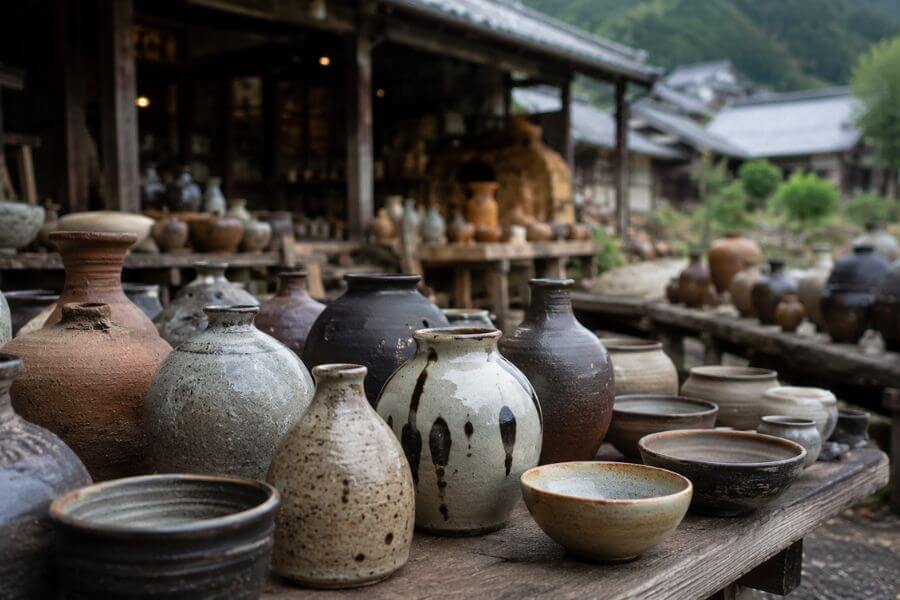
Imagine walking down a narrow street made of stone. The air is clean, and the mountains around you are bright green. You hear a sound like water dropping or wood hitting wood. In every window, you see beautiful plates, cups, and bowls. They have deep blue colors, warm brown clay textures, and soft white patterns.
Welcome to Kyushu, the large island in the south of Japan.
Kyushu is famous for its hot springs and delicious food, but it is also the heart of Japanese pottery. Hundreds of years ago, artists here discovered special stones and clay in the mountains. They learned how to bake this clay in big fire ovens called kilns. Today, these small towns still make some of the best pottery in the world.
If you want to slow down, see old Japan, and bring home a piece of art that you can use every day, a trip to these villages is perfect. This guide will show you how to visit these magical places, what makes each town special, and how to choose the perfect cup or plate.
Key Takeaways for Your Pottery Journey
- Three main towns matter most: Arita is famous for white porcelain with blue paint. Imari is known for colorful, expensive designs for kings. Karatsu is famous for earthy, simple pottery used in tea ceremonies. Onta is a tiny hidden village that uses water power to crush clay.
- Spring and fall are the best times: The towns hold huge shopping festivals in May and November. You can buy beautiful pieces for very cheap prices during these weeks.
- Respect the shops and artists: Do not touch fragile pieces with big bags on your back. Always ask before you take a picture of an artist working.
- Look at the bottom of the cup: Every piece has a special mark from the workshop. Checking this mark helps you know the history of your plate.
Why Kyushu Is the Heartland of Japanese Ceramic Art
To understand these towns, we must look back four hundred years. Before that time, Japan made simple clay pots. They did not know how to make white, shiny porcelain. Porcelain is a very hard kind of ceramic that looks like glass and sounds like a bell when you tap it.
In the early sixteen hundreds, local leaders brought skilled craftspeople from Korea to Kyushu. One master artist named Ri Sampei found a special white stone in the mountains of Arita. This stone was porcelain stone. When you crush it into powder, mix it with water, and bake it at a very high heat, it becomes pure white.
This discovery changed Kyushu forever. The island became a busy center for trade. Ships sailed from the ports of Kyushu to Europe, carrying beautiful plates and vases. Kings and queens in Germany, France, and England collected these pieces like gold. Today, walking through these villages feels like walking through a living museum. The families making the cups today are often the tenth or twelfth generation of the same family doing the same work.
The nature of Kyushu also makes this art possible. The island has many volcanoes, which means the soil is full of unique minerals. The thick forests provide the wood needed to burn the big kilns. When you buy a bowl here, you are holding the wood, water, and earth of Kyushu in your hands.
Arita the Birthplace of Japanese Porcelain
Arita is a quiet town sitting in a green valley. It is the place where everything started. When you arrive at the train station, you will notice pottery everywhere. The station signs are made of porcelain, the street lamps are ceramic, and even the bridges have beautiful porcelain decorations.
The old part of town is called Uchiyama. It is a long, winding street lined with traditional wooden houses from the nineteenth century. As you walk, look closely at the walls between the houses. They are called Tombai walls. People built them using old bricks from broken kilns and pieces of pottery mixed with mud. They look like beautiful puzzles made of history.
In Arita, the style is elegant. The artists use a super white clay. They paint delicate designs using a special blue paint called cobalt. After they paint the blue design, they cover the piece with a clear liquid and bake it. The blue color becomes deep and bright under the smooth surface. Later, some artists add red, gold, and green paints on top and bake it a second time.
Must Visit Spots in Arita
You should start your day at the Izumiyama Quarry. This is the exact spot where Ri Sampei found the white porcelain stone long ago. Today, it looks like a massive white canyon cut into the green hill. It is quiet now, but you can feel the history of the workers who chopped the stone by hand.
Next, walk to the Sueyama Shrine. This is a Shinto shrine like no other in Japan. The large torii gate at the entrance is made of white and blue porcelain instead of wood or stone. The protective statues of lions are ceramic, and even the small cups used for washing your hands are beautiful porcelain. It is a wonderful place to take a quiet walk and take beautiful photos.
Shopping Tips for Arita
If you want to shop for dinner plates or coffee cups, head to the Arita Sera. This is a large shopping center outside the historic center. It has more than twenty large stores next to each other. They sell every kind of Arita ware, from cheap plates for daily meals to expensive masterpieces. It is very easy to compare styles here because the shops are so close.
Imari the Royal Village of Secret Kilns
Just a short trip from Arita sits Imari. In the past, Imari was the port city where boats picked up the pottery to sell across the world. But the most famous place to visit is a hidden village in the mountains near the city, called Okawachiyama.
Okawachiyama is often called the Village of Secret Kilns. In the old days, the local lords wanted to keep their pottery secrets safe from other regions. They hid the best artists in this steep mountain valley. They put guards at the entrance so no one could enter or leave without permission. The artists here made pottery only for imperial families, rich leaders, and foreign rulers.
When you walk into Okawachiyama today, you will understand why it was easy to hide. Tall, jagged rock mountains rise straight up behind the houses. The village looks like a painting. Small stone bridges cross a rushing river, and ceramic panels are set into the stone walls. The sound of water wheels turning and birds singing fills the air.
The Unique Style of Imari Ware
The pottery made here is very colorful. It uses bright red, rich yellow, and deep green colors to paint flowers, birds, and geometric patterns. The lines are extremely thin and perfect. In the past, if a plate had a small mistake, the workers destroyed it so the royal family would never see it. That high standard of quality is still alive today.
Exploring Okawachiyama
The best way to enjoy this village is to get lost in the small pathways. Walk up the hill along the main road. On both sides, you will see traditional workshops with open doors. You can walk inside, look at the beautiful displays, and sometimes see the artist sitting at a table, painting a tiny teacup with a brush made of deer hair.
At the top of the village, there is a beautiful park with a view of the whole valley. You can see the tall brick chimneys of the active kilns rising above the black tile roofs of the homes. Smoke rises from these chimneys when the artists are baking their work, creating a beautiful and nostalgic scene.
Karatsu Where Earth and Tea Meet
Now we move from the delicate, white world of porcelain to the warm, heavy world of pottery. Karatsu is a historic city on the northern coast of Kyushu. It sits by the sea, but its pottery is deeply tied to the mountains.
There is a famous saying in the world of Japanese tea ceremonies: “First Raku, second Hagi, third Karatsu.” This means Karatsu pottery is the third best style in the whole country for drinking green tea. Tea masters love Karatsu ware because it feels natural, rough, and warm in your hands.
Unlike Arita porcelain, Karatsu pottery is made from dark, sandy clay that has a lot of iron in it. The artists do not try to make the pieces perfectly round or smooth. They like small bumps, finger marks, and natural shapes. When you hold a Karatsu tea bowl, you can feel the texture of the earth.
The Different Faces of Karatsu Art
Karatsu pottery has a few different styles that you will notice in the shops.
One common style is called Chosen Karatsu. The artist uses two different liquids, called glazes, on the pot. One glaze is black or brown, and the other is white. When the pot bakes in the fire, the white liquid melts and runs down over the dark liquid. It looks like a white waterfall flowing down a dark mountain.
Another style is E-Karatsu, or painted Karatsu. The artist draws simple pictures of grasses, trees, or birds using a brown iron paint on the gray clay. The drawings are very quick and simple, like a sketch, giving them a modern and artistic look.
Where to Go in Karatsu
Start your visit at the Karatsu Castle, which sits on a hill overlooking the ocean. After seeing the castle, walk to the center of town to visit the Nakazato Taroemon Workshop. This family has been making Karatsu pottery for fourteen generations. They have a beautiful gallery where you can see historical pieces that look hundreds of years old, alongside new pieces made by the current master.
You can also visit the Ryuta-gama Kiln, located in a quiet forest outside the city center. Here, the artists focus on pottery for daily eating. You can see how they work in harmony with nature, using wood fires to create beautiful variations in color on every single dish.
Onta the Village Untouched by Time
If you want an experience that feels like traveling back two hundred years, you must visit Onta. Onta is a tiny village hidden deep in the mountains of Oita Prefecture. Only fourteen families live here, and they all make pottery.
What makes Onta special is that they do not use any modern machines. There are no electric mixers, no electric ovens, and no computers. The village has a strict rule: they only use the power of the river and the wood from the forest. Because of this, the whole village is protected as a living cultural treasure of Japan.
The first thing you will hear when you arrive in Onta is a heavy, rhythmic thumping sound. It sounds like a giant walking through the valley. This sound comes from the Karausu. These are large wooden water levers placed along the river. As the river water fills a hollow wooden bucket at one end of the log, the log tilts up. When the water spills out, the heavy log drops down, slamming a large wooden hammer into a stone hole filled with dry clay. This slow process crushes the clay into a very fine powder over many days.
The Rules of the Village
In Onta, the families work together as one big team. They share the clay from the mountains and the water from the river. No single artist signs their name on the pottery. Every plate and bowl is just stamped with the word “Onta.” This keeps everyone equal and protects the traditional style.
The designs here are famous for geometric patterns. The artists spin the clay wheel with their feet, not electricity. As the wheel spins, they take a small metal tool and tap the wet clay quickly. This creates a circle of beautiful little dots or dashes around the plate. This style is called Tobikanna.
A Peaceful Walk
There are no large restaurants or big souvenir shops in Onta. There is just one tiny road along the river with small workshops on each side. You can walk past the wooden racks where hundreds of plates are drying in the sun. The air smells like woodsmoke and wet earth. It is a deeply peaceful place where life moves at the speed of the river.
Comparing the Pottery Styles of Kyushu
To help you understand the differences between these four famous styles, look at this simple guide. It shows what makes each village unique so you can decide which ones fit your taste.
| Village Name | Main Material Used | Visual Appearance | Texture and Feeling |
| Arita | White porcelain stone | Bright white background with delicate blue or multi-colored paintings | Very smooth, glassy, light, and cool to the touch |
| Imari | Fine porcelain clay | Highly detailed designs with red, gold, and green patterns | Smooth, elegant, feels precious like a treasure |
| Karatsu | Dark iron-rich clay | Earthy browns, grays, and creams with natural glaze runs | Rough, heavy, warm, fits perfectly into two hands |
| Onta | Local mountain clay | Tan or cream body with rhythmic geometric dots and stripes | Sturdy, thick, rustic, perfect for a cozy kitchen |
Understanding the Firing Process
How does a piece of wet mud become a beautiful plate that lasts for hundreds of years? The secret is the kiln, the special oven that uses extreme heat to transform the clay. In Kyushu, you will see two main kinds of kilns, and understanding them will make your visit much more interesting.
The first type is the Noborigama, or the climbing kiln. These are built on the sides of hills, looking like a row of giant brick steps or a long caterpillar sleeping on the grass. The fire starts in the bottom room. The hot smoke and air travel up through the higher rooms, heating all the pottery evenly. These kilns use wood for fuel. The ash from the wood flies through the air inside the kiln and lands on the hot clay, melting into a natural, beautiful glaze. This means the fire itself helps paint the pottery.
The second type is the modern gas or electric kiln. Many artists use these today for delicate porcelain because they can control the temperature perfectly. This ensures that white porcelain stays perfectly white without any gray smoke marks from wood.
When you look at a piece of pottery, try to imagine the intense heat it survived. The temperature inside a porcelain kiln can reach over twenty-three hundred degrees Fahrenheit. At that heat, the clay almost melts, fusing together to become strong and water-resistant.
Planning Your Trip the Best Seasons to Visit
Kyushu is beautiful throughout the year, but some months offer special experiences for pottery lovers. You should plan your vacation carefully to get the most out of your journey.
Spring is perhaps the most magical time. In late April and early May, during Japan’s Golden Week holidays, Arita holds its famous Pottery Fair. This is one of the largest market events in Japan. More than one million people visit the small town during these few days. The main street fills with hundreds of outdoor stalls. You can buy beautiful items for half their regular price, talk to the artists directly, and enjoy delicious street food. Karatsu also holds a similar market at the same time, making it easy to visit both.
Fall is another wonderful season, especially in November. The autumn leaves turn bright red and orange in the mountains around Imari and Onta. The weather is cool and dry, which is perfect for walking along the hilly streets. Many villages hold smaller, cozy autumn festivals where you can see the kilns being opened to reveal fresh work.
Summer can be very hot and humid in Kyushu, with heavy rain in June and July. Winter is quiet and peaceful, but some smaller workshops in the mountains may close if there is snow on the roads.
How to Prepare for Your Village Visit
To have the best experience, you need to think about a few practical things before you leave your hotel. These villages are rural, meaning they are different from big cities like Tokyo or Fukuoka.
First, think about cash. Many small workshops in places like Onta or Okawachiyama are run by elderly craftspeople who do not use credit cards or smartphone payments. Always carry plenty of Japanese yen cash with you. Small bills are better than large ones when buying a single cup.
Second, wear comfortable shoes. You will be walking up and down hills, over cobblestone bridges, and standing for hours in shops. Sneakers or walking shoes are a must.
Third, bring a good backpack or a sturdy shopping bag. If you buy pottery, the shopkeepers will wrap it carefully in newspaper or bubble wrap. Having a safe bag to carry these heavy packages keeps your hands free and protects your new treasures from bumping into things.
Pottery Shopping Etiquette for Beginners
Visiting a traditional workshop is like entering someone’s home. The items on display are precious arts made by hand. Following a few simple rules of polite behavior will make the shopkeepers smile and welcome you warmly.
When you enter a small shop, bow your head slightly and say “Konnichiwa,” which means hello. This shows respect and lets the owner know you are there.
If you are wearing a large backpack, take it off and hold it in your hand or place it on the floor near the entrance. It is very easy to turn around quickly and accidentally knock over a table of beautiful plates with a big bag.
When you want to pick up a cup to look at it, use both hands. Hold it low over the table, not high in the air. This way, if it slips from your fingers, it will only fall a few inches back onto the soft table fabric. Look at the bottom of the piece to see the artist’s stamp, which is often carved into the raw clay.
Always ask before taking pictures. You can say, “Shashin o tottemo ii desu ka?” or simply point to your camera with a smile. Most owners are happy to let you take photos of the store, but some do not want people copying their unique designs.
Finally, do not try to argue about the price. In some countries, bargaining is common at markets. But in Japanese pottery villages, the price on the sticker is the fair price that reflects the artist’s time and skill. Trying to ask for a lower price can feel disrespectful to their hard work.
Choosing the Perfect Piece for Your Home
With thousands of beautiful options, how do you choose what to buy? It can feel overwhelming when you see rows and rows of gorgeous ceramics. The best secret is to think about your daily life at home.
Do not just buy something because it looks expensive or complicated. Ask yourself: What do I eat every morning? Do I drink coffee or tea? Do I like hot soup? Buying a bowl that you will use every single day for your breakfast cereal is much better than buying a large vase that just sits on a shelf collecting dust.
Hold the piece in your hands. Does it feel comfortable? Is it too heavy, or is it light and easy to hold? For coffee cups, check if your fingers fit nicely through the handle. For soup bowls, feel if the rim is smooth against your lips. Good Japanese pottery is designed to be used, not just looked at. The colors and textures actually change and become more beautiful over years of use as the ceramics absorb the oils from your hands and food.
Delicious Food Served on Beautiful Ceramics
One of the greatest joys of traveling through Kyushu’s pottery villages is the local food culture. In these towns, restaurants believe that a meal is a combination of good cooking and beautiful presentation. They choose the plates very carefully to match the season and the ingredients.
In Arita, you must try a local specialty called Godofu. This is a unique kind of tofu made with starch instead of regular soy milk curd. It has a super soft, creamy texture, almost like pudding. It is usually served with a sweet sesame sauce. The best part? It always comes served in a stunning white and blue Arita porcelain bowl, making a simple lunch feel like a royal feast.
When you visit Karatsu, look for small seafood restaurants near the coast. They serve fresh fish caught in the local sea, arranged beautifully on rough, dark Karatsu plates. The contrast between the bright pink fish and the deep gray clay is a true delight for your eyes.
Frequently Asked Questions
How do I get to these pottery villages from Fukuoka?
Fukuoka is the main gateway city to Kyushu. To reach Arita and Imari, you can take a comfortable limited express train from Hakata Station directly to Arita Station, taking about ninety minutes. From Arita, a local train line can take you up into Imari. To reach Karatsu, there is a direct subway and train line from the Fukuoka Airport and Hakata Station that takes about one hour. Onta is more remote; you need to take a train or bus to Hita City, and then take a local bus into the mountains, which runs only a few times each day. Renting a car is a fantastic option for visiting Onta and Imari because it lets you explore the deep mountain roads easily.
Is Japanese pottery safe to use in the microwave and dishwasher?
Generally, porcelain pieces like Arita and Imari ware are safe for modern kitchens because they are fired at extremely high temperatures and are very hard. However, if a piece has gold or silver paint on the design, you must never put it in the microwave because the metal will spark and ruin the pattern. Earthy pottery like Karatsu and Onta ware should be washed by hand with mild soap and dried thoroughly in the air. These rustic pieces are porous, meaning they can absorb water, so putting them in a dishwasher can cause them to crack or develop mold over time.
How do shops package ceramics for international travel?
Shopkeepers in these villages are absolute experts at packing fragile items. They know that many visitors are traveling by airplane. They will wrap each piece in multiple layers of newspaper, thick bubble wrap, and sometimes place them inside sturdy cardboard boxes. If you buy many items from one store, they can pack them into a single easy-to-carry box with a handle. Most pieces packed this way will easily survive inside your checked suitcase, but you should always pack soft clothes around the box for extra safety.
What is the difference between porcelain and pottery?
This is a very common question for beginners. The short answer is the material and the heat. Porcelain, like Arita ware, is made from crushed white stone, fired at a very high heat. It is white, thin, semi-translucent, and does not absorb water. Pottery, like Karatsu or Onta ware, is made from natural wet clay dug from the ground, fired at a lower temperature. It is thicker, heavier, opaque, and has a rougher, warmer texture that feels like the earth.
Can I try making pottery myself during my visit?
Yes, several locations offer hands-on experiences for visitors. In Arita and Karatsu, you can find experiential workshops where an instructor will teach you how to use a spinning wheel to shape a bowl or cup. You can also try painting a pre-made white plate with blue paint. The workshop will bake the piece in their kiln after you leave and mail it to your home address, even if you live across the ocean in another country. It takes a few weeks, but it is an amazing souvenir of your journey.