Quick Takeaway: What to Know Before You Go
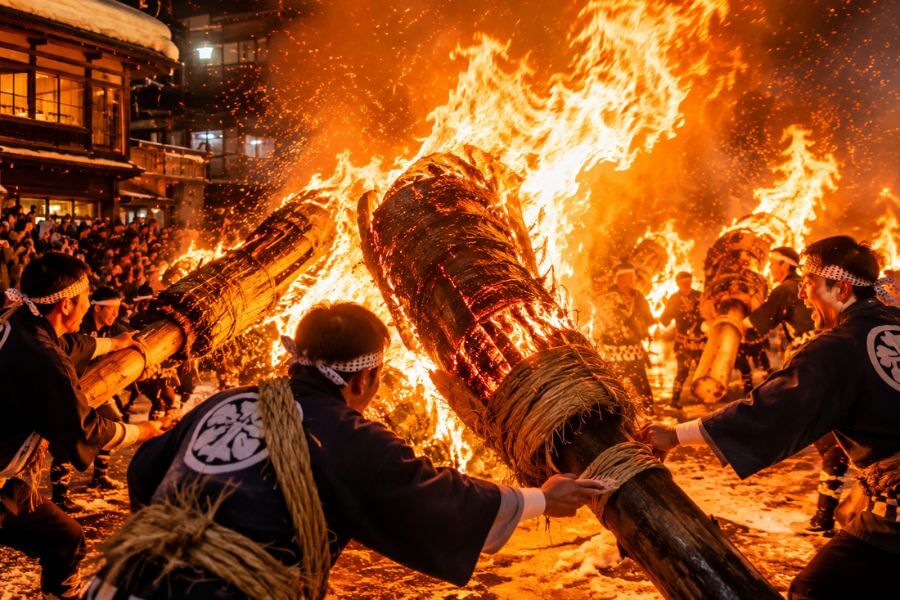
- The Main Event: The Nozawa Onsen Dosojin Matsuri is a famous fire festival held every year on January 15 in a snowy mountain village.
- The Battle: You will see a massive wooden shrine become a battleground between village men who defend it and villagers who try to burn it down.
- The Deep Meaning: This celebration is not just for fun; it protects the village, brings good luck for marriages, and keeps newborn babies healthy.
- The Cold and the Fire: You will stand in deep snow for hours while feeling intense heat from huge torches, so wearing the right clothes is critical.
- The Crowd: Thousands of visitors pack into a small space, meaning you must arrive early to get a view and follow strict safety rules.
Introduction to the Fire and Snow
Imagine standing in a beautiful village in Japan. Around you, mountains rise high into the dark night sky. The ground beneath your feet is covered in thick, white snow. The air is so cold that you can see your breath every time you breathe out. Your fingers feel stiff, and you stamp your boots to stay warm.
Suddenly, a loud shout echoes through the streets. You look up and see a glowing light coming around the corner. It is a huge torch, blazing with bright orange fire. The flames lick the cold night air, throwing long shadows across the snow. More torches appear, and soon, the smell of burning wood and sweet sake fills the air. You are about to watch one of the most exciting, wild, and ancient winter celebrations in Asia.
This is the Nozawa Onsen Dosojin Matsuri, known to many people around the world simply as the Nozawa Fire Festival. It is a time when a quiet ski village turns into a place of intense energy, loud chanting, and giant sparks. If you choose to travel here, you will not just watch a show. You will feel the heat on your face, hear the roar of the crowd, and see an old Japanese tradition come alive right in front of your eyes. This guide will help you understand every part of this special night so you can experience it safely and fully.
The Deep History of Nozawa Onsen
To truly appreciate the fire festival, you must first understand the village itself. Nozawa Onsen is a small town located in Nagano Prefecture, which is a mountainous area in the central part of Japan. For hundreds of years, this village has been famous for two main things: abundant winter snow and natural hot springs, which Japanese people call onsen. Water boiled by the earth bubbles up from underground, filling public bathhouses with steaming, mineral-rich water.
Long before international skiers discovered the ski slopes, the local people were farmers and woodworkers. During the long, dark winter months, heavy snow cut the village off from the rest of the world. The snow could easily reach higher than the roofs of the houses. In these conditions, life was tough and dangerous. The villagers needed a way to stay strong, connect with their neighbors, and ask the gods for protection against bad luck, sickness, and winter fires.
The festival center revolves around the Dosojin, who are the guardian gods of the roads and borders. You can find stone statues of these deities all over Japan, often standing quietly at crossroads or at the edges of villages. People believe these gods protect travelers and defend the town from evil spirits that try to enter from the outside world. In Nozawa Onsen, the Dosojin also have a special job: they protect newly married couples and bring health to young children. The fire festival is a giant gift and a dramatic play dedicated to these powerful spirits.
The Meaning of the Special Ages
The festival is built around a social structure called the Yakudoshi. In Japanese culture, people believe that certain ages in a person’s life bring more bad luck or big changes than others. For men, these critical ages are twenty-five and forty-two. When a village man reaches one of these ages, he must take on a major role in the fire festival to clean away his bad luck and prove his strength to the community.
The Young Defenders
The twenty-five-year-old men have a very active and physical job during the celebration. They are considered the front-line soldiers of the night. Their task is to sit at the very base of a massive wooden shrine and defend it from attack. They must physically block other villagers who rush forward with burning torches. It is a test of courage, stamina, and loyalty to their friends.
The Older Leaders
The forty-two-year-old men are the senior leaders. In traditional Japanese thinking, forty-two is the most critical age for a man, a time when he must be responsible and wise. These men do not fight on the ground. Instead, they climb up to the very top platform of the wooden shrine. They sit high in the air, singing traditional songs and guiding the younger men below. Their presence represents authority, history, and the steady spirit of the town.
Building the Massive Wooden Shrine
The festival does not just happen in one night; the preparation takes months of hard work. The center of the entire event is a giant wooden tower called the shaden. This structure is built completely from scratch every single year, using traditional methods that do not require a single metal nail or screw.
Gathering the Timber
In the autumn, before the first snow falls, village leaders head up into the mountains to select the perfect trees. They look for strong, straight beech and pine trees. Cutting these trees down is a sacred task, accompanied by prayers and small offerings of alcohol to the mountain spirits. Once the logs are ready, they are stored carefully until January arrives.
Constructing without Nails
A few days before January 15, the work begins in the main festival square. Master builders from the village join forces with the men of critical ages. They use thick ropes and clever wood joints to piece the massive beams together. The tower rises three stories high, topped with fresh pine branches and paper ornaments. It looks like a beautiful, rustic castle made of logs. Witnessing the construction process is a wonderful way to see Japanese teamwork in action.
The Action on the Big Day
When January 15 finally arrives, the atmosphere in the village shifts completely. The quiet morning gives way to a buzz of excitement. Shop owners prepare their stores, families cook large meals, and the air smells of anticipation.
The Gathering of the Men
In the afternoon, the men who will participate in the festival gather at a central meeting house. They wear traditional winter clothing made of heavy cotton and straw shoes designed to grip the slippery snow. Before they head out, they drink large amounts of local sake. This alcohol serves two purposes: it honors the gods and helps the men find the bravery they need to face roaring flames and freezing cold temperatures.
Carrying the Torches
As darkness falls, groups of villagers begin to carry huge bundles of reeds and wood through the narrow streets. These bundles will become the torches used to attack the shrine. The procession moves slowly, with men chanting rhythmic phrases that echo off the wooden walls of the houses. Visitors line the streets, watching the glow of the fire grow brighter as the groups march toward the main square.
The Epic Battle of Fire
By eight o’clock in the evening, thousands of people have crowded into the festival square. The wooden tower stands dark and proud in the center, surrounded by deep snowbanks. The twenty-five-year-old men take their places at the bottom, linking arms to form a human wall. High above, the forty-two-year-old men begin to chant their ancient songs, their voices cutting through the cold air.
The First Attack
The battle begins when a group of villagers rushes forward carrying burning branches. They shout loudly as they try to slam the fire against the base of the wooden tower. The young defenders yell back, using thick sticks and their own bodies to beat back the flames and push the attackers away. Sparks fly everywhere, lighting up the dark sky like gold dust.
The Intensity Grows
As the night continues, the attacks become faster and more aggressive. Wave after wave of villagers bring more fire to the tower. The young men at the bottom become covered in soot and ash. Their faces turn red from the heat, and their breath rises in thick clouds. Despite the danger, everyone follows strict, traditional rules. This is not a real fight; it is a ritual performance where everyone knows their role. The defenders must show their strength by holding out as long as possible.
The Spectacular Finale
After hours of intense fighting, the defenders finally step down. Their duty to the gods is complete, and their bad luck has been burned away by the flames. The remaining fire is brought directly to the support beams of the giant wooden tower.
The Tower Ablaze
Within minutes, the entire three-story structure catches fire. The flames roar high into the night, sometimes reaching as tall as a house. The heat is so strong that the crowd must step back several paces. The snow around the base melts into rushing water, and the dark sky turns a brilliant shade of crimson. It is a mesmerizing sight that leaves the audience completely silent.
The Final Collapse
As the main pillars burn through, the giant tower slowly collapses into a massive pile of glowing coals. The villagers stay to watch the final embers fade. People believe that warming your hands over these final flames will bring good health for the entire coming year. The long night ends with a feeling of deep peace, satisfaction, and shared community.
Traditional Clothes and What to Wear
If you want to enjoy this incredible night without freezing or getting hurt, you must choose your clothing with great care. The festival takes place outdoors in deep winter conditions, and you will be standing still for a very long time.
Choosing Your Base Layers
Start with high-quality thermal underwear that pulls moisture away from your skin. Avoid cotton clothing, because if you sweat or get wet from the snow, cotton stays cold and can make you freeze. Layer a warm fleece or a thick wool sweater over your underwear.
Selecting Your Outerwear
Your jacket and pants must be completely waterproof and windproof. A heavy ski jacket and ski pants are perfect choices. Look for materials that do not melt easily; remember, giant sparks will be floating through the air. Do not wear expensive nylon jackets that can easily get ruined by a single flying ember.
Protecting Your Extremities
Wear a warm beanie that covers your ears completely. Bring two pairs of gloves: a thin pair for warmth and a thick, waterproof pair to wear on top. Your boots are the most important item. They must be insulated, waterproof, and have excellent grip for walking on packed snow and ice. You can also buy small heat packs, called kairo in Japan, at local convenience stores to slide inside your pockets and boots.
Important Safety Rules for Visitors
The Nozawa Fire Festival is a real, raw event with live fire and massive crowds. There are no metal railings or security guards keeping you far away from the action. Your safety depends entirely on your own behavior and awareness.
Watch the Sparks
When the wind blows, it carries glowing ash and sparks across the entire audience area. Keep a close eye on the sky. If you see sparks falling toward you, duck your head or step back. It is smart to wear an old hat and a jacket that you do not mind getting dirty or slightly damaged.
Respect the Borders
The area directly around the wooden tower is strictly for the village participants. Do not try to cross the lines or run into the snowbanks near the fight to get a better photo. The men are moving fast and carrying heavy, burning objects; if you get in their way, you could cause a serious accident.
Move Carefully on the Ice
With thousands of people walking in the same area, the snow quickly turns into slick, dangerous ice. Walk slowly, take short steps, and keep your hands out of your pockets so you can balance yourself if you slip. If you fall, get up quickly so other people do not trip over you.
Understanding Village Rules and Etiquette
When you enter Nozawa Onsen during the festival, you are stepping into a living neighborhood, not a theme park. The local people are sharing their most sacred tradition with you, and it is vital to show them deep respect.
Keep the Streets Clean
Do not throw trash on the ground. There are very few public garbage cans in Japanese villages, so you must carry your empty cups, food wrappers, and bottles back to your hotel or guesthouse. Keeping the town beautiful is a top priority for the residents.
Be Mindful of Alcohol
While the village men drink sake as part of the ritual, visitors should control their alcohol intake. Being drunk in a packed, icy crowd surrounded by fire is incredibly dangerous. Enjoy a warm drink to stay cozy, but always maintain your balance and awareness.
Respect Private Properties
The streets of Nozawa are very narrow, and houses sit right next to the walkways. Do not step onto private porches, lean against personal vehicles, or block the doorways of residents who are trying to get into their homes. Treat the village with the same care you would want a guest to treat your own hometown.
How to Get to Nozawa Onsen
Reaching this mountain village is a wonderful journey that takes you from the bustling modern cities of Japan deep into the peaceful countryside. The country has an excellent public transportation system that makes travel straightforward.
Taking the Bullet Train
Your journey will likely begin in Tokyo. Head to Tokyo Station and board the Hokuriku Shinkansen, which is the famous Japanese bullet train. This sleek train glides smoothly through the countryside, passing through long tunnels and past beautiful winter fields. You will ride this train until you reach Iiyama Station, a trip that takes less than two hours.
The Local Bus Connection
Once you step off the train at Iiyama Station, look for signs directing you to the local bus area. A special bus called the Nozawa Onsen Liner runs regularly between the station and the village. The ride takes about twenty-five minutes, winding up into the snowy hills until you reach the main bus terminal at the entrance of the town.
Finding the Best Accommodations
Because the fire festival is incredibly popular, finding a place to sleep can be a challenge. You must plan your stay months in advance to secure a room near the action.
Traditional Ryokan Stays
For the ultimate Japanese experience, look for a ryokan. These are traditional inns where you sleep on soft futon mattresses laid out on tatami straw mats. Staying at a ryokan usually includes a beautiful, multi-course dinner made from fresh mountain vegetables and local meats, as well as access to the inn’s private hot spring bath.
Cozy Minshuku Guesthouses
If you are traveling on a smaller budget, a minshuku is a fantastic choice. These are family-run guesthouses that feel like you are staying in someone’s home. The facilities are often shared, but the hospitality is warm, and it offers an authentic look into daily life in a Japanese village.
Exploring the Famous Hot Springs
You cannot visit Nozawa Onsen without spending time in its wonderful hot waters. The town features thirteen public bathhouses called sotoyu, which are scattered through the neighborhoods.
The Rules of the Bath
Before you enter the water, you must follow traditional bathing customs. All clothes are removed in a changing area; you enter the water completely naked. Sit on a small stool at the washing stations and scrub your body thoroughly with soap and water before stepping into the communal pool. Never put your small towel into the hot spring water; balance it on your head or set it by the side.
Feeling the Heat
The water in Nozawa’s public baths is famous for being incredibly hot, often reaching temperatures that can surprise first-time visitors. Do not jump in quickly. Step in slowly, stay still, and let your body adjust to the heat. These baths are free to use, but you will see a small wooden donation box by the door. It is polite to drop a few coins inside to help the local community pay for cleaning and maintenance.
Delicious Foods to Try in the Village
Cold winter nights require hearty, warming food, and Nozawa Onsen has many unique local dishes that will keep you energized throughout the festival.
Savoring Nozawana Pickles
The most famous food item in the area is nozawana, a leafy green vegetable that belongs to the turnip family. Villagers wash these greens in the hot spring waters before pickling them with salt and spices. The result is a crunchy, slightly sour, and deeply savory snack that pairs perfectly with a bowl of hot rice or a glass of local sake.
Trying Hot Oyaki Dumplings
As you walk through the snowy streets, you will see steam rising from small wooden boxes outside shops. These are cooking oyaki, which are thick, chewy dumplings made from fermented buckwheat dough. They are stuffed with various fillings, such as sweet bean paste, local mushrooms, or chopped nozawana greens, and then steamed or grilled. Holding a hot dumpling in your hands is a delicious way to warm up your fingers.
Photography Tips for the Night
Capturing the magic of a fire festival in the middle of a snowstorm is a thrilling challenge for anyone who loves taking pictures. The contrast between dark shadows, white snow, and bright flames requires some thought.
Protecting Your Equipment
Cold weather drains electronic batteries very quickly. Keep your phone or camera batteries inside an inner pocket close to your body heat until the exact moment you want to take a photo. Bring a small plastic bag or a microfiber towel to wipe away melting snow that lands on your camera lens.
Adjusting Your Settings
The bright glare of the fire can confuse your camera, making the rest of the scene look completely dark. If you are using a smartphone, tap on the screen where the fire meets the people to balance the exposure. Avoid using your flash, because it will hit the falling snowflakes and create big, white blurry spots that block your view of the battle.
A Comparison of Famous Japanese Fire Festivals
Japan loves fire festivals, and various regions have their own unique ways of using flames to celebrate the seasons. Looking at how Nozawa compares to other famous events can help you see what makes it so distinctive.
| Festival Name | Location | Time of Year | Core Activity |
| Nozawa Dosojin Matsuri | Nagano Prefecture | January | Men defend a three-story wooden shrine from burning torches in the snow. |
| Kurama No Hi Matsuri | Kyoto Prefecture | October | Participants carry massive wooden torches through narrow mountain streets. |
| Nachikatsuura Ogi Matsuri | Wakayama Prefecture | July | Twelve giant fire torches are carried down the steps of a sacred waterfall shrine. |
The Next Morning: The Clean-Up and Renewal
When you wake up the morning after the festival, you will find a completely different village. The wild energy of the night is gone, replaced by a quiet, peaceful calm. The air smells faintly of woodsmoke, and a fresh layer of morning snow often covers the ground.
The Community Effort
If you walk down to the festival square, you will see the local residents already at work. Men, women, and children join together with shovels and brooms to clear away the black ash, charred wood, and leftover debris. By midday, the square is clean, and the site of the giant battle is once again just an open space in the snow.
A New Beginning
For the villagers, this clean-up is the final step of the ritual. The bad luck of the past year has been completely removed, the gods have been honored, and the town is ready to face the future with fresh energy. As a visitor, walking through the peaceful streets gives you a chance to reflect on the incredible hospitality and strength of this mountain community.
Frequently Asked Questions
What happens if the weather is extremely bad on the night of the festival?
The festival will continue even during intense snowstorms or heavy winds. The local people are used to severe winter conditions, and the celebration has a deep religious meaning that cannot be delayed. The only thing that might change is the speed of the construction or minor timing adjustments for safety, but the event itself is never canceled due to winter weather.
Can international visitors join the battle and help defend or attack the shrine?
No, visitors cannot participate in the physical battle. The roles of defending and attacking the wooden tower are strictly reserved for local village men who are of specific critical ages or belong to established community groups. This is a sacred religious ritual with specific safety rules, so your role as a visitor is to watch, cheer, and enjoy the spectacle safely from the audience area.
Is the Nozawa Fire Festival appropriate for families traveling with young children?
While children are welcome in the village, the main festival square during the peak of the battle can be overwhelming and hazardous for young kids. The crowd is very dense, the ground is icy, and flying sparks can be scary. If you are traveling with children, it is best to watch the early evening processions through the village streets or stand at the very back of the square where you have a clear exit path.
How much does it cost to enter the festival area and watch the main event?
There is no ticket price or admission fee to watch the fire festival. The event takes place in a public square within the village, making it completely free for anyone to attend. The entire celebration is funded and supported by the local community, guesthouses, and businesses who want to keep their ancient traditions alive.
Are there places to buy food and drinks directly inside the festival square?
There are no formal restaurant stalls inside the central square itself, but many local shops, convenience stores, and small stalls along the approach roads sell warm sake, hot beer, grilled meats, and steamed dumplings. It is smart to buy your food and drinks on your way to the square so you do not lose your viewing spot once the crowd fills in.