When you travel to Japan, you might think the whole country feels the same. You might expect to find the exact same bowl of soup, the same social rules, and the same lifestyle from north to south. But as soon as you step off the bullet train in a new region, you will see that Japan is beautifully split into different worlds.
The two most famous regions are Kanto and Kansai. Kanto is the eastern region that includes Tokyo, Yokohama, and Chiba. Kansai is the western region that includes Osaka, Kyoto, and Kobe. These two areas have been friendly rivals for hundreds of years. They speak differently, they view the world differently, and most importantly, they cook differently.
If you want to truly enjoy your next trip, you need to understand these differences. This guide will help you see Japan through the eyes of the people who live there. You will learn why a bowl of noodles in Tokyo tastes completely different from a bowl of noodles in Osaka, and why people stand on different sides of the escalator in each city.
Key Takeaways
- Tokyo and the Kanto region represent the historical home of the samurai warriors, which creates a culture that values order, privacy, and formal manners.
- Osaka and the Kansai region grew from a rich history of merchants and traders, which creates a lively culture that loves humor, bargains, and open conversation.
- Kanto cooking relies heavily on dark soy sauce and strong fish flakes, creating deep, salty flavors and dark noodle broths.
- Kansai cooking focuses on light soy sauce and kelp seaweed seaweed soup stock, creating delicate, elegant, and naturally sweet flavors.
- Street food is a major part of daily life in Kansai, while Kanto people usually prefer to eat inside restaurants or quiet dining spaces.
- Everyday habits change completely between the east and the west, including which side you stand on when using an escalator and how you pack a suitcase.
The Deep Roots of History
To understand why these two regions feel so different today, you have to look back at the past. Hundreds of years ago, Japan was ruled by different types of leaders in different cities. This old division still shapes how people talk, think, and interact with strangers today.
The Samurai Spirit of Kanto
During the Edo period, which started in the early 1600s, Tokyo was called Edo. This city became the political center of Japan. It was the place where the shogun, the military leader, lived with his thousands of samurai warriors.
Samurai lived by a strict code of honor and discipline. They had to follow rules about how to dress, how to speak, and how to behave in public. Because of this history, people in Tokyo today still appreciate order. They tend to follow public rules very carefully. They try not to bother the people around them on the train or in the street. You will notice that Kanto culture feels very polite, professional, and calm. People value their personal space and respect your privacy too.
The Merchant Mindset of Kansai
While Tokyo was a city of soldiers, Osaka was a city of business. Osaka was known as the kitchen of Japan because goods from all over the country arrived there by boat. The most important people in Osaka were merchants, traders, and shopkeepers.
Merchants did not care about strict military rules. They cared about making connections, talking to customers, and finding a good deal. To sell things, you have to be friendly, funny, and good at talking. This created a culture where people love to chat, joke around, and express their feelings openly. Kansai people are famous for being warm and expressive. If you look lost in Osaka, a stranger might walk up to you and start a friendly conversation.
The Imperial Elegance of Kyoto
Kansai also includes Kyoto, which was the old capital city where the Emperor lived for over a thousand years. Kyoto adds a layer of deep elegance to the Kansai region.
While Osaka is loud and commercial, Kyoto is quiet and traditional. However, both cities share a love for high quality ingredients and artistic presentation. The mix of Osaka’s practical business energy and Kyoto’s royal history gives Kansai a unique cultural depth that contrasts sharply with Tokyo’s modern corporate feel.
The Battle of the Soup Stock
The biggest difference between Kanto and Kansai shows up on your dinner plate. Even if you order the exact same dish in Tokyo and Osaka, it will look and taste different because of the liquid base used in Japanese cooking. This base is called dashi, or soup stock.
Kanto’s Bold and Salty Broth
In the Kanto region, chefs make their soup stock using a lot of katsuobushi. These are dried, smoked bonito fish flakes. They also use a thick, dark soy sauce called koikuchi shoyu.
When you mix these two ingredients, you get a dark brown broth with a strong, rich, and salty flavor. If you order a bowl of udon noodles in Tokyo, you will notice that you cannot see the bottom of the bowl because the soup is so dark. The strong flavor was perfect for the hardworking people and samurai of old Tokyo who needed a lot of energy and salt after working outside.
Kansai’s Delicate and Subtle Broth
In the Kansai region, water travels through different types of soil, making it softer than the water in Kanto. This soft water is perfect for drawing out the flavor of kombu, which is dried kelp seaweed.
Kansai chefs use kelp as their main ingredient for soup stock. They also use a light colored soy sauce called usukuchi shoyu. This soy sauce is actually saltier than dark soy sauce, but it has a pale color. As a result, Kansai noodle soup is beautifully clear and golden. You can see right through the soup to the bottom of the bowl. The flavor is gentle, sweet, and mild. It allows you to taste the natural flavor of the noodles and vegetables.
Why the Liquid Matters
This difference in soup stock changes almost every savory dish in Japan. It affects how people cook vegetables, how they simmer fish, and how they flavor their hot pot dinners. Kanto food aims for a deep, comforting saltiness that coats your tongue. Kansai food aims for a light flavor that cleanses your palate and feels refreshing.
White Noodles and Thick Slices
The love for specific ingredients extends to the types of grains and breads each region prefers. From your morning toast to your midnight noodle bowl, you will see a clear regional preference.
Soba Versus Udon
If you want noodles in Tokyo, most locals will guide you to a buckwheat noodle shop. These thin, grey brown noodles are called soba. Soba grows well in the colder mountainous areas around the Kanto region. Eating soba feels very Tokyo. You dip the cold noodles into a cup of strong, dark sauce, or eat them quickly in a hot broth while standing up at a train station counter.
If you want noodles in Osaka or Kyoto, you will likely eat udon. These are thick, white, chewy noodles made from wheat flour. The flat plains of Kansai were ideal for growing wheat. Kansai people love the soft, comforting texture of udon because it absorbs the delicate kelp broth perfectly.
The Thick Toast Tradition
Even when it comes to modern western food like sliced bread, the two regions cannot agree. If you walk into a grocery store in Tokyo, you will see packs of sliced white bread cut into six or eight thin slices. Kanto people like their toast thin and crispy.
If you walk into a grocery store in Osaka, you will find packs cut into four or five very thick slices. Kansai people love a soft, fluffy texture. They want their morning toast to be thick like a pillow, crispy on the outside but wonderfully soft and steamy on the inside.
Street Food and Table Cooking
The way people enjoy meals also reflects their historical roots. Kanto meals tend to be organized and individual, while Kansai meals are social and interactive.
Osaka’s Griddle Culture
Kansai is the capital of casual food. The region is famous for konamon, which means flour based foods. The two kings of this food style are takoyaki and okonomiyaki.
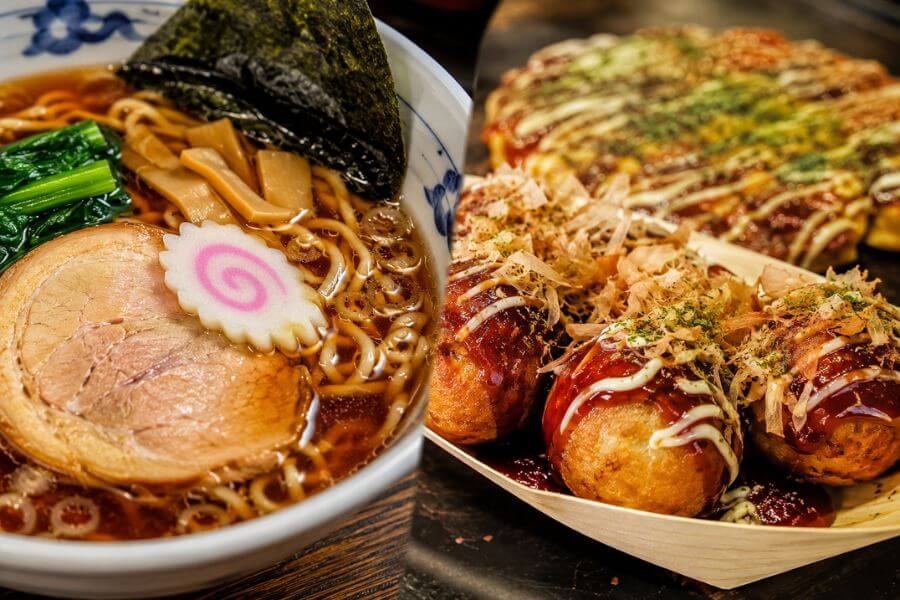
Takoyaki are round batter balls filled with pieces of octopus. Chefs cook them in special iron pans with half sphere holes, turning them quickly with small sticks. Okonomiyaki is a savory pancake filled with cabbage, pork, and whatever else you like. In Kansai, restaurants often have a hot iron griddle built right into your table. You cook your own pancake, flip it with a spatula, and eat it hot with your friends. It is loud, messy, and incredibly fun.
Tokyo’s Refined Dining
In Tokyo, street food is much less common. It is considered rude to walk down the street while eating a snack. Instead, Kanto people prefer to eat inside designated spaces.
Tokyo specializes in foods that require high level skills from a chef who trains for decades. Think of high quality sushi, crispy tempura, or beautifully arranged bento boxes. Even casual foods like monjayaki, which is Tokyo’s version of a savory pancake, are different. Monjayaki uses a much more liquid batter, creating a sticky texture that you scrape off the grill with a tiny spatula. It is a more precise and quiet way of eating compared to Osaka’s big pancake parties.
Everyday Customs and Public Spaces
The differences between east and west do not stop at the kitchen door. When you walk around the cities, you will notice that people use public spaces in completely different ways.
The Escalator Rule
This is the most famous trap for visitors in Japan. When you stand on an escalator, you must leave one side open so busy people can walk past you.
In Tokyo and the rest of the Kanto region, everyone stands on the left side and leaves the right side open for walkers. In Osaka and much of the Kansai region, the rule flips. People stand on the right side and leave the left side open. Interestingly, Kyoto sometimes follows the Tokyo rule because so many international tourists and students live there, which can make things confusing even for locals.
Train Manners and Noise levels
When you ride the subway in Tokyo, the silence can be shocking. Thousands of people stand shoulder to shoulder, but you can hear a pin drop. People look at their phones, read books, or sleep. Speaking loudly on a Tokyo train is seen as bad manners.
In Osaka, the trains feel much more alive. Friends talk out loud, people laugh at jokes, and mothers might share snacks with their children. Kansai people do not mind a little extra noise because they see public spaces as places to live and connect, rather than just places to move through quietly.
Money, Shopping, and Humor
Because Kansai was built by merchants and Kanto was built by rulers, money is viewed through two very different lenses.
The Art of the Bargain
In Tokyo, the price on the tag is the price you pay. It does not matter if you are buying a television or a shirt. Asking for a discount is considered unusual or embarrassing because it challenges the store’s rules.
In Osaka, haggling for a lower price is a traditional sport. If you buy electronics, furniture, or multiple items in a local shop, it is totally normal to smile and ask if the owner can make it a little cheaper. Shopkeepers enjoy this interaction. It shows that you are smart with your money. Kansai people love to brag about how cheap they bought an item, while Kanto people might feel prouder showing that they bought something expensive from a famous brand.
Fast Talk and Big Laughs
Humor is a serious business in Japan, and its heart beats in Kansai. Most of the famous comedians on Japanese television come from Osaka or nearby towns. They speak the Kansai dialect, which sounds fast, melodic, and rhythmic.
Kansai humor relies on quick comebacks, funny exaggeration, and self deprecating jokes. People love to laugh at themselves. In contrast, Kanto humor tends to be more understated, sarcastic, or polite. Tokyo speech sounds flatter and more controlled, which can make Kansai people feel that Tokyoites are a bit cold or distant, while Kanto people might find Kansai folks a little too loud or pushy.
Regional Comparisons
To help you visualize these differences easily, let us look at how these contrast points look side by side across various parts of daily life.
Daily Life and Culture
| Cultural Aspect | Kanto Region (Tokyo) | Kansai Region (Osaka/Kyoto) |
| Historical Roots | Samurai warriors and military leaders | Merchants, traders, and royalty |
| Public Personality | Reserved, polite, and private | Warm, outgoing, and expressive |
| Escalator Side | Stand on the left, walk on the right | Stand on the right, walk on the left |
| Train Atmosphere | Extremely quiet and orderly | Lively, conversational, and relaxed |
| Shopping Style | Pay the fixed price without asking | Love to haggle and look for discounts |
| Main Dialect | Standard Japanese | Fast, rhythmic Kansai dialect |
Food and Cooking Styles
| Food Item | Kanto Style | Kansai Style |
| Soup Stock Base | Smoked fish flakes (Bonito) | Dried kelp seaweed (Kombu) |
| Soy Sauce Preference | Thick, dark, and rich | Light, pale, and clear |
| Noodle Broth Color | Dark brown and opaque | Golden, clear, and see through |
| Favorite Noodle | Thin buckwheat soba | Thick wheat udon |
| White Bread Thickness | Thin slices (six to eight per loaf) | Thick slices (four to five per loaf) |
| Street Food Focus | Formal sushi, tempura, monjayaki | Takoyaki, okonomiyaki pancake |
Frequently Asked Questions
Which region has better food for someone who prefers mild flavors?
The Kansai region is definitely better for people who enjoy mild and delicate flavors. Because Kansai cooking relies heavily on dried kelp seaweed soup stock and light soy sauce, the food highlights the natural, clean taste of the ingredients. Kanto food uses a lot of dark soy sauce and smoked fish flakes, which makes the dishes taste much stronger, saltier, and deeper. If you do not like heavy or overly salty flavors, you will find Kansai noodle shops and simmered dishes very comforting and easy to enjoy.
Why do people stand on different sides of the escalator in Kanto and Kansai?
The origin of this difference comes from history and international events. In Tokyo, the samurai tradition meant that warriors wore their swords on their left hip. To avoid bumping swords with people walking past them, they naturally walked on the left side of the street. This habit carried over to modern escalators.
In Osaka, the change happened during the 1970 World Expo. Osaka wanted to welcome international visitors who were used to standing on the right side of escalators in many western countries. A major train station made an announcement asking people to stand on the right, and the habit stayed because Osaka merchants liked things that felt practical and globally minded.
Is the language difference between Tokyo and Osaka very big?
Yes, the language difference is quite significant. Tokyo uses standard Japanese, which is what you usually hear on news broadcasts and learn in textbooks. Osaka and the surrounding cities use the Kansai dialect, called Kansai-ben.
The Kansai dialect uses different words for common phrases. For example, instead of saying thank you with the standard word arigatou, people in Osaka might say ookini. They also change the endings of verbs and speak with a much more bouncy, melodic rhythm. It can sound like a completely different language at first, but it sounds very friendly and passionate once you get used to it.
I am planning a trip to Japan. Should I stay in Kanto or Kansai?
If you have enough time, you should absolutely try to visit both regions because they complement each other perfectly. However, if you have to choose just one, it depends on what you want to experience.
Choose Kanto if you love modern technology, grand architecture, fashion trends, clean streets, and high end dining experiences. Choose Kansai if you love ancient history, temples, casual street food, vibrant nightlife, and interacting closely with friendly local people. Kanto gives you a look at Japan’s efficient future, while Kansai gives you a taste of Japan’s warm heart.