Key Takeaways
- Book Far Ahead You must secure your traditional guesthouse lodging three to twelve months before your trip. Spots fill up fast because space is very limited.
- Select the Imperial Route The Nakahechi trail offers the best mountain signs, clear path infrastructure, and helpful bus access. This makes it perfect if you want a smooth journey.
- Train Your Body Expect serious mountain steps and steep gravel trails. Walking and climbing stairs weeks before you arrive will keep your knees and muscles happy.
- Pack Light and Waterproof The mountain region receives high rainfall all year long. Bring a high-quality rain jacket, water-resistant hiking boots, and use luggage transport services to move heavy bags between inns.
- Follow Local Customs Learn how to use public hot springs, remove your shoes inside traditional homes, and enjoy fixed local dinners without requesting changes.
Welcome to the Sacred Mountains of Japan
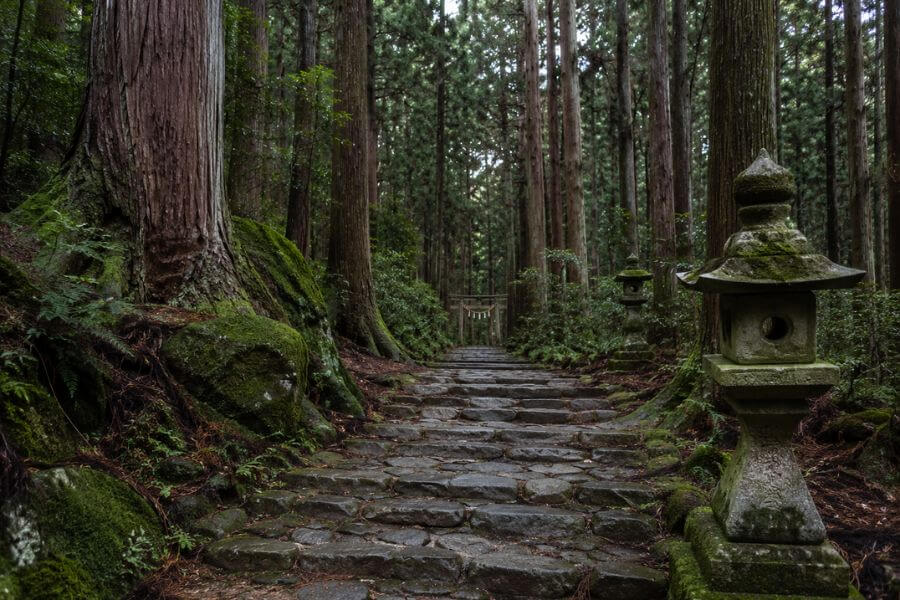
Imagine walking down an ancient path made of smooth stones. Green moss covers the ground like a soft blanket. Tall cedar trees stretch high into the sky, blocking out the noise of modern life. Around you, the only sounds are the wind moving through leaves and distant rivers rushing down mountain valleys. This is not just a vacation walk. This is a journey back in time. You are stepping onto a network of paths that people have walked for more than one thousand years.
Deep within the green peaks of the Kii Peninsula lies a special world. This region is south of Osaka and Kyoto. It is a place where mountains are not just rocks and dirt. For centuries, people believed these mountains were the physical homes of spirits and gods. Emperors, samurai warriors, and everyday travelers left their cities to walk here. They wanted to find peace, wash away their troubles, and start fresh.
Today, this trail system shares a rare honor with the famous Camino de Santiago path in Spain. They are the only two pilgrimage routes in the world protected as UNESCO World Heritage sites. Visiting this area allows you to experience old Japanese traditions that remain completely alive. You will stay in small village homes, eat food grown in local fields, and soak your tired muscles in hot water that bubbles straight out of the earth.
Preparing for a multi-day mountain journey can feel overwhelming. You might worry about finding your way, ordering food, or understanding local customs. This complete guide will clear away your doubts. It will help you plan your travel step by step. You will learn how to choose the right path, pack your bags, and feel comfortable every single mile of the way.
The Rich History Behind the Footsteps
To truly enjoy your time on the trail, it helps to understand who walked here before you. Long before big cities grew along the coast, early people in Japan practiced a deep form of nature worship. They looked at giant trees, massive waterfalls, and mist-covered peaks and felt a sense of wonder. They believed everything in nature had a living soul.
During the Heian Period, which lasted from the late eighth century to the late twelfth century, the royal court in Kyoto adopted these mountain beliefs. Emperors and their families would spend weeks traveling down from the capital. They did not have smooth roads or trains. They walked through mud and climbed steep cliffs because they believed the physical struggle would clean their spirits.
As the years passed, this spiritual journey changed. It was no longer just for the rich and powerful. By the fifteenth century, thousands of everyday citizens walked the paths together. Writers from that time described long lines of travelers looking like columns of ants moving through the green forests. People from all paths of life were welcome here. Women, elderly citizens, and people with physical difficulties were allowed to walk and pray equally. This open welcome was very unusual in ancient times, and it gave the region a reputation for kindness.
The ultimate goal of every traveler was to reach three grand shrines hidden deep in the forest. Together, these three holy places are known as the Kumano Sanzan. Each shrine looks distinct and honors the surrounding nature in its own way. Walking between them was a physical way to experience death and rebirth. When you finish the trail, you are supposed to emerge as a brand-new version of yourself, leaving your past mistakes behind in the trees.
Choosing the Best Route for Your Journey
The trail system is not just one long line. It is a web of multiple paths spread across the peninsula. Some paths are excellent for beginners who want comfortable guesthouses and clear signs. Others are incredibly rugged and require expert mountain skills. Choosing the path that matches your personal endurance is the most important decision you will make.
The Imperial Trail or Nakahechi
This is the most famous and historical path in the entire mountain network. In the past, royal families used this route to travel from the western coast into the spiritual heart of the mountains. Today, it remains the absolute best choice for first-time visitors.
The trail starts in a coastal town called Tanabe and heads straight east through the mountains toward the central grand shrine. It spans about forty-two miles if you walk the whole thing. The path features excellent infrastructure. You will find clear signs with numbers every five hundred meters, clean public restrooms, and reliable local buses that run parallel to many sections. If you get too tired or if the weather turns bad, you can easily hop on a bus to skip a difficult hill.
Along this trail, the path changes constantly. You will walk over ancient stone steps built hundreds of years ago, follow narrow dirt paths through thick bamboo groves, and pass through tiny farming villages where residents grow green tea and sweet oranges. Because it is popular, you will also find the widest selection of traditional family inns here.
The Mountain Route or Kohechi
If you are an experienced mountain hiker who loves a serious physical challenge, this path might catch your eye. It connects a famous mountaintop temple town called Koyasan with the grand shrines in the south.
This route cuts directly from north to south across the center of the peninsula. It is about forty-three miles long, but it crosses four massive mountain passes that reach high into the sky. You will climb up steep, rocky paths and slide down slippery gravel slopes every day. There are very few villages along this route. This means you must carry all your own lunch food, stay focused on your map, and be ready for sudden weather changes.
The rewards are incredible views of empty mountain peaks that stretch as far as your eyes can see. However, there are no easy public buses to save you if your knees hurt. Only attempt this route if you have excellent stamina, strong hiking legs, and experience walking in deep wilderness areas.
The Eastern Coastal Trail or Ise-ji
This beautiful path runs along the eastern coast of the peninsula. In ancient times, pilgrims would visit the massive Grand Shrine of Ise and then walk south along the ocean to reach the mountains of Kumano.
The trail offers a wonderful mix of ocean views and mountain forests. It is unique because it passes through coastal fishing towns where you can try fresh seafood. Many sections feature gorgeous stone pathways that look like works of art, built to stop the heavy coastal rains from washing away the earth.
Another huge benefit of this trail is the local train line. The train tracks run near the path for many miles. This allows you to walk a few hours, look at the waves crashing on the rocks, and then take a short train ride to your hotel at night. It is much less crowded than the main Imperial path, offering a peaceful and quiet journey.
Comparing the Three Main Trails
To help you see the differences clearly, look at how these three primary paths compare in terms of distance, difficulty, and support.
| Route Name | Total Distance | Physical Difficulty | Public Transportation Access | Best Traveler Match |
| Nakahechi | 42 Miles | Moderate | Excellent local buses | First-time visitors and families |
| Kohechi | 43 Miles | Strenuous | Very limited | Expert hikers wanting isolation |
| Ise-ji | 105 Miles | Moderate | Excellent local trains | Travelers who love coastal views |
Detailed Step-by-Step Multi-Day Itinerary
Most travelers choose the Nakahechi path because it provides the quintessential pilgrim experience. This detailed four-day plan covers the core section of the trail. It shows you exactly what to expect each day, including walking times, elevation challenges, and notable sights.
Day One: From the Trailhead to the Hilltop Village
Your journey begins at a historic shrine called Takijiri-Oji. This spot marks the traditional entrance to the sacred mountains. In the old days, pilgrims would stop in the cold river here to wash their bodies before stepping onto the holy ground. Inside the modern information center across the road, you can pick up physical maps and collect your very first ink stamp in your pilgrim passport book.
The moment you step behind the main shrine building, the trail goes up sharply. There is no gentle warm-up. You will immediately climb a steep hill over thick tree roots and large rocks. Your heart will beat fast, and you will need to watch your footing closely. Along this first hill, you will pass a unique rock formation with a small cave underneath. Local stories call this the breast rock. Legend says an ancient pregnant mother had to leave her baby in the cave to finish her pilgrimage, and the rock magically fed the infant until she returned.
After about three to four hours of steady climbing, the trees open up. You will arrive at a tiny, peaceful village called Takahara. This settlement sits high on a ridge looking over the valley below. It is often called the village in the mist because morning clouds sit right next to the houses. The local wooden shrine here is one of the oldest structures on the entire trail, surrounded by giant cedar trees that are hundreds of years old. Staying here on your first night gives you a chance to see a spectacular sunset over the distant mountain peaks.
- Distance: 2.5 Miles
- Time: 2 to 3 Hours
- Climb: 1,400 Feet Up
Day Two: Through Deep Forests to the River Valley
This is your first full day of walking, and it requires steady endurance. You will leave the hilltop village early in the morning and head deeper into the silent forest. The path continues to climb upward toward higher ridges. You will walk along old dirt tracks that loggers used for decades.
As you walk, look for small stone statues along the side of the path. These are called Oji shrines. They act as protective trail markers and places of rest. In ancient times, pilgrims would stop at each one to recite poetry, offer prayers, and rest their legs. One of the most famous sights on this section is a small stone statue of a man riding both a horse and a cow at the same time. It honors a historic emperor who traveled this route long ago.
The second half of the day takes you down a long, slow hill into a beautiful valley where a clear river flows. You will walk into a small town called Chikatsuyu. A crystal-clear stream cuts right through the middle of the village. You can walk across a modern footbridge, buy a cold drink from a small local shop, and sit by the water to soothe your feet. The village has several lovely family inns where you can enjoy a warm shower and a massive home-cooked meal.
- Distance: 8 Miles
- Time: 5 to 6 Hours
- Climb: 1,800 Feet Up, 1,500 Feet Down
Day Three: The Long Forest Journey to the Holy Center
This is the longest and most physically demanding segment of your journey. Many travelers choose to start their walk before the sun comes up to ensure they arrive at their destination before dark. The path leads out of the river valley and goes straight up into thick, dense pine forests.
You will cross several high passes where the air feels cool and crisp. One memorable spot is a grove of giant trees where clear water bubbles out of the ground near an old tea house ruin. This is an excellent place to sit on a wooden bench and eat your packed lunch box. The trail surface here features sections of beautiful old cobblestones that have survived centuries of rain and footsteps.
The final section of the day brings a wonderful shift in energy. As you descend toward the end of the trail, you will walk through an area called the gate of administrative contemplation. This is the exact spot where ancient travelers caught their very first glimpse of the grand shrine buildings down in the valley.
Your day ends as you walk directly into the courtyard of Kumano Hongu Taisha. This is the central grand shrine of the entire pilgrimage network. The main buildings feature massive wooden roofs made from layers of thick tree bark. The style looks elegant, natural, and timeless. After offering a silent thank you for your safe journey, you can take a short five-minute bus ride to one of the nearby hot spring villages to spend the night.
- Distance: 15 Miles
- Time: 7 to 9 Hours
- Climb: 3,100 Feet Up, 3,400 Feet Down
Day Four: The Final Dramatic Mountain Climb
After celebrating your arrival at the central shrine, your pilgrimage concludes with a dramatic final trek over a high ridge toward the eastern ocean side of the peninsula. You will take a local bus to a small settlement called Koguchi, which sits deep in a hidden river valley surrounded by steep green walls.
This final section is famous for a long, relentless uphill climb known as the body-breaking slope. The name is accurate. You will ascend over two thousand feet in a very short distance. The path consists of endless stone steps that wind upward through a silent forest. Take small, slow steps and breathe deeply.
When you reach the top of the pass, you will walk along a high ridge known as the three thousand six hundred peaks. On a clear day, look out through the trees to see rows of blue and green mountains stretching all the way to the horizon. It looks like a classic ink painting come to life.
The trail ends with a steep descent down beautiful stone stairs called Daimonzaka. This path is lined with massive cedar trees that are nearly one thousand years old. At the bottom of the stairs, you will find Kumano Nachi Taisha, a stunning grand shrine perched next to a roaring waterfall. The sight of the red three-story pagoda with the tallest waterfall in Japan dropping behind it is an image you will never forget.
- Distance: 9 Miles
- Time: 6 to 7 Hours
- Climb: 2,600 Feet Up, 2,900 Feet Down
Mastering Trail Logistics and Planning
A successful trip depends entirely on good planning. Because these trails sit in a remote and mountainous part of the country, you cannot just show up and hope things work out. You need to arrange your details well in advance to avoid getting stuck without a place to sleep.
When to Go: Understanding the Seasons
The mountain trails look beautiful throughout the year, but every season brings a completely different experience on the earth.
Spring is an incredibly popular time to visit. From April through May, the mountain weather feels comfortable and fresh. Wildflowers bloom along the paths, and the fresh green leaves look bright and vibrant. The temperatures are perfect for walking up long hills without overheating. However, because the weather is so good, accommodations book out many months in advance, and you will share the trail with more fellow travelers.
Summer brings intense heat, high humidity, and heavy tropical rains. Walking up steep mountain steps in July and August can feel like exercising inside a warm steam room. You will sweat a lot, and you must carry extra water to stay safe. Summer is also the typhoon season, which means heavy storms can cause mudslides that temporarily close sections of the trail. The benefit of summer is that the hot spring villages are quiet, and the rivers look beautiful.
Autumn is arguably the most spectacular season to experience the pilgrimage. From October through November, the intense summer heat disappears, replaced by cool mountain air and clear skies. The leaves on the maple trees turn bright shades of red, orange, and yellow, creating a stunning contrast against the green cedar trees. The trail feels crisp and inviting, though like spring, you must secure your rooms very early.
Winter brings silence and deep peace to the region. From December through February, the crowds vanish completely. You can walk for hours without seeing another human soul. The lower valley paths remain open all year long because temperatures stay relatively mild near the coast. However, the high mountain passes can experience freezing temperatures and slippery snow. Days are also much shorter, meaning you must start your walks very early to avoid getting caught in the dark forest.
Securing Your Place to Sleep
Unlike popular hiking trails in Europe or America, you cannot pitch a camping tent wherever you like along these paths. Camping is strictly banned in the villages and along the trails to protect the delicate environment and respect private property. You must stay in established local accommodations.
The main options are traditional family inns known as minshuku or historic Japanese hotels called ryokan. These are small businesses run by local families, often right inside their own homes. They usually have only three to five guest rooms available each night. This limited space is the biggest bottleneck for planning your trip. If you do not have a confirmed reservation, you cannot stay in the village.
To book these rooms, use the official local tourism community website based in Tanabe. This website acts as a central reservation system that connects international travelers directly with small village hosts. The staff speaks excellent English and will help coordinate your rooms, your dinners, and your packed lunches. Remember to start this process six months before your planned travel dates.
Moving Your Bags Between Inns
One of the best services available to modern travelers is the local luggage shuttle network. Walking up steep mountain passes for seven hours is much more enjoyable when you are not carrying a heavy suitcase or a massive backpack on your shoulders.
Local transport companies will come to your inn each morning after you check out. They will pick up your large luggage, load it into a small truck, and drive it down the narrow valley roads to your next destination. When you walk into your next guesthouse in the evening, your bags will already be waiting for you in the hallway.
This service allows you to walk with just a small, lightweight day pack. Inside your day pack, you only need to carry your rain jacket, a water bottle, your wallet, your camera, and your daily lunch box. You can arrange this luggage service through the same central reservation website when you book your rooms.
Essential Gear and Packing Checklist
Packing the right items will make the difference between a wonderful adventure and a miserable, painful walk. Because the region experiences high rainfall, your primary goal is to stay dry and comfortable.
Footwear: Protecting Your Feet
Your shoes are the single most important piece of gear you will own. Do not try to walk these ancient trails in casual running shoes or brand-new boots that you bought the week before your trip. The paths are full of sharp rocks, slick tree roots, and steep, uneven stone steps that become incredibly slippery when wet.
You need sturdy hiking boots or high-quality trail running shoes that feature deep rubber treads on the bottom. The shoes should offer good support for your ankles to prevent twists on the uneven stones. It is absolutely vital that you wear your shoes for several weeks at home before your trip. Walk up hills, climb stairs, and make sure your feet feel completely comfortable inside them to prevent painful blisters on the trail.
Pair your boots with high-quality hiking socks made from wool or synthetic materials. Avoid regular cotton socks completely. Cotton holds onto sweat and moisture, which softens your skin and causes terrible blisters within the first few miles.
Clothing: The Power of Layers
Mountain weather changes rapidly. You can start your morning in a cold valley fog, feel hot and sweaty while climbing a steep hill, and then get hit by a cold wind at the top of a pass. The secret to staying comfortable is wearing layers that you can put on or take off easily.
Your base layer, the shirt that touches your skin, should be made from a lightweight synthetic fabric that pulls sweat away from your body. Your middle layer should be a warm fleece jacket or a lightweight down sweater that keeps your body heat inside when you stop to rest.
Your outer layer must be a high-quality, completely waterproof rain jacket with a hood. Do not bring a cheap plastic poncho from a convenience store. The mountain rains can be intense and windy, and a good jacket will keep your core warm and dry. Consider bringing waterproof rain pants as well to protect your legs.
Gear Comparison for Different Styles
Depending on whether you choose to use the luggage shuttle service or carry everything yourself, your daily pack list will look very different.
Day Pack Style (With Luggage Service)
For travelers using the luggage shuttle service, you only need to carry a small backpack of about 20 liters. Inside, pack your waterproof rain jacket, a one-liter water bottle, a small first-aid kit with blister tape, a physical paper trail map, your pilgrim stamp passport book, and your packaged trail lunch and snacks.
Full Pack Style (Carrying All Belongings)
For travelers carrying all their gear, you will need a large backpack of 40 to 50 liters. This pack must hold a waterproof rain jacket and rain pants, a two-liter water bladder, a full first-aid kit and toiletries, physical maps, a backup battery, three changes of quick-dry clothing, and lightweight indoor clothes to wear at the inn during the evening.
Navigating the Trails and Staying Safe
The trails are generally safe and well-maintained, but you are still entering a remote mountain environment. You need to use common sense, respect nature, and know what to do if an emergency happens.
Following the Signs
You do not need to worry about getting lost in the deep woods if you stay on the official path. The main trails feature exceptional signage. At every major junction, you will find clear wooden signposts written in both Japanese characters and English script.
Along the Nakahechi route, look for small wooden posts with numbers on them every five hundred meters. These numbers match the locations on the official paper maps. If you ever need to call for help, you can look at the nearest post and tell the operator your exact number. This makes it incredibly easy for local rescue teams to find your precise location.
If you ever find yourself walking on a path and you have not seen a sign or a numbered post for fifteen minutes, stop walking. It is very likely that you missed a turn while looking at the trees. Turn around and walk slowly back the way you came until you see the last official wooden marker.
Trail Safety and Local Wildlife
The forests are full of life, and most animals will leave you alone if you give them space. However, there are a few local creatures you should know about.
The mountains are home to the Asiatic black bear. These bears are generally small and shy, and they prefer to avoid humans. To avoid surprising a bear, many local walkers attach a small brass bell to their backpacks. The constant ringing sound alerts animals that a human is coming, giving them plenty of time to walk away into the brush. If you do see a bear, stay calm, do not scream, and back away slowly without turning your back or running.
During the warm summer months, look out for the Japanese viper, a small venomous snake that blends in with dead leaves, and giant hornets. Watch where you place your hands and feet when climbing over rocks or old logs. If you stick to the middle of the well-worn dirt trail, you are highly unlikely to encounter any problems.
Always check the local weather report before you leave your inn each morning. The region is prone to sudden, heavy rainstorms. If a typhoon is approaching, do not try to be a hero. Stay in the village, take a local bus to your next destination, and wait out the storm in safety.
Cultural Etiquette and Traditional Inn Life
Staying in traditional mountain villages is one of the absolute best parts of this trip. However, Japanese homes and inns follow strict rules of politeness and cleanliness. Understanding these customs before you arrive will help you feel relaxed and prevent any embarrassing mistakes.
Stepping Into a Japanese Home
The most important rule to remember when entering any building along the trail is to look at the floor. Traditional homes, guesthouses, and shrines have a raised entrance area called a genkan. This is the boundary line between the dirty outside world and the clean inside world.
You must stop in this entrance area and remove your outdoor hiking boots before stepping up onto the wooden floor. Your host will usually provide a pair of soft indoor slippers for you to wear down the hallways. When you reach your bedroom, which will likely feature smooth straw mats called tatami, you must take off your slippers and walk only in your socks or bare feet. Never let outdoor shoes or indoor slippers touch the delicate straw bedroom mats.
The Art of the Japanese Bath
After walking up steep mountain ridges for seven hours, nothing feels better than soaking your tired body in a hot bath. Many villages along the trail sit on top of natural volcanic hot springs, known as onsen. Using these baths follows a precise ritual that emphasizes total cleanliness.
First, enter the changing room and remove all your clothing completely, as swimsuits are not allowed in the water. Second, step into the washing area before you touch the big communal bath, and sit down on a small plastic stool. Third, use the hand shower, soap, and shampoo to scrub your entire body until you are completely clean. Fourth, rinse away every single bubble of soap from your body and the floor around your stool. Finally, step slowly into the hot mineral water to soak, making sure to keep your small drying towel out of the bathwater.
Remember that these hot baths are places for quiet relaxation. It is polite to speak in low, gentle whispers and avoid splashing water around the room. The water can be incredibly hot, so take breaks by sitting on the edge of the tub if you start to feel dizzy.
Enjoying Village Dinners
When you stay in a small family inn, your host will usually serve a massive dinner around six o’clock in the evening. They spend hours preparing these meals using fresh ingredients from the local mountains and nearby rivers. You might find grilled river fish, mountain mushrooms, pickled plums, and bowls of hot rice.
It is important to understand that these remote inns serve a fixed menu. They cook the exact same meal for every guest based on what is fresh that day. They do not have big restaurant kitchens, so they cannot accommodate sudden dietary changes or food dislikes on the spot. Embrace the experience as a culinary adventure and try a little bit of everything.
When using chopsticks, remember a few key rules of politeness. Never stick your chopsticks straight up into a bowl of rice, as this looks like a traditional ritual used at funerals. Instead, rest them flat across the side of your small plate when you are not eating. Also, never pass a piece of food directly from your chopsticks to another person’s chopsticks.
Frequently Asked Questions
Can I walk the trails alone or do I need to hire a mountain guide?
You can absolutely walk the main paths entirely on your own without a guide. The Nakahechi route features exceptional signs, clear trail markers, and constant maps that make it very simple to stay on track. Thousands of solo travelers finish the walk safely every year. However, hiring a local guide is a wonderful option if you want to learn about the deep history, local folklore, and specific myths connected to each shrine along the path.
What should I do if I get too tired to finish a day of walking?
The local bus system is your safety net. The Imperial route runs parallel to a major valley road where local buses operate multiple times a day. If your knees hurt or you feel exhausted, you can simply walk down to the nearest village bus stop and take a short ride directly to your next inn. Always carry a paper copy of the current bus timetable and some cash coins to pay the driver.
Is it possible to find vegetarian or vegan meals at the village inns?
Finding strict vegetarian or vegan food can be very difficult in these remote mountains. Most traditional dishes use a basic cooking stock called dashi, which is made from dried fish. Even a dish that looks like plain vegetables has often been cooked in fish broth. If you have strict dietary needs, you must communicate them months in advance through the central reservation system so your hosts can buy alternative ingredients.
Do I need to carry a lot of physical cash with you on the trail?
Yes, you must carry plenty of physical cash paper money and coins. The small villages deep in the mountains do not use credit card machines. You will need cash money to pay for your daily bus rides, buy drinks from vending machines, purchase trail snacks, and collect your decorative ink stamps at the shrines. Do not rely on finding automatic teller machines once you leave the large coastal towns.
How difficult is the trail compared to a regular walk in a park?
The trails are significantly more difficult than a casual park walk. While you do not need technical mountain climbing gear like ropes or helmets, you will face long, steep climbs over uneven stone steps, exposed tree roots, and loose gravel. Walking up and down these steep slopes for six to eight hours a day requires a solid baseline of physical fitness and good leg strength.
What is the dual pilgrim program and how do I join it?
The dual pilgrim program is a unique honor that celebrates travelers who have finished both the Kumano Kodo in Japan and the Camino de Santiago in Spain. To participate, you can pick up a special joint passport booklet. Collect ink stamps at the major shrines along both international trails. Once you finish, you can visit the tourism office in Tanabe to receive a beautiful handmade certificate and a special pin.