Key Takeaways
- Japanese festivals, or Matsuri, are deeply rooted in history, honoring local deities and seasonal transitions.
- Most festivals feature portable shrines called Mikoshi, traditional music, and vibrant street food.
- Major events like Gion Matsuri and Awa Odori offer unique cultural insights into regional traditions.
- Planning your trip around these dates requires early booking due to high local demand.
- Respecting local customs and participating in the energy of the crowd is the best way to experience a festival.
An Introduction to the Soul of Japan
When you step into the world of Japan, you quickly realize that the heartbeat of the country is not just found in its quiet temples or busy train stations. It is found in the streets, under the glow of paper lanterns, and within the thunderous sound of taiko drums. You are looking at the Matsuri, or traditional Japanese festivals. These are not just parties; they are centuries-old rituals that bring communities together to honor the land, the seasons, and the spirits that people believe look over them.
Imagine standing on a cobblestone path in Kyoto. The air is thick with the scent of grilled squid and sweet mochi. You hear the rhythmic chanting of hundreds of people pulling a massive, ornate wooden float. You are not just a spectator; you are part of a living history. This is what it feels like to witness a Matsuri. It is a sensory explosion that stays with you long after the lights fade. Whether you are seeking spiritual peace or the raw excitement of a summer dance, these festivals offer a gateway into the heart of the Japanese spirit.
The Cultural Significance of Matsuri
To truly enjoy a festival, you have to understand why they exist. Most Matsuri are connected to Shinto, the ancient religion of Japan. They are held to appease local deities, ask for a good harvest, or celebrate the arrival of a new season. In a society that values harmony and tradition, these events serve as a vital link between the past and the present. When you watch a procession, you are seeing movements and hearing songs that have been passed down through generations.
The word Matsuri literally means to serve or entertain the gods. This is why you see so much energy, dance, and music. The goal is to bring joy to the divine and, in doing so, bring luck and prosperity to the neighborhood. For you, this means witnessing a display of community spirit that is rarely seen elsewhere in the world. It is a time when the stresses of daily work are set aside, and everyone, regardless of age or status, becomes part of the celebration.
Gion Matsuri: The King of Festivals
If you only attend one festival in your life, make it the Gion Matsuri in Kyoto. It is famous not just for its size but for its history, dating back over a thousand years. Held throughout the month of July, it reaches its peak on the 17th and 24th. This is when the Yamaboko Junko, or the parade of massive floats, takes place. These floats are so tall and heavy that they are often called mobile museums because of the intricate tapestries and carvings that decorate them.
As you walk through the streets of Gion, you will see the local residents open their traditional townhouses to display family treasures. This is a rare chance to see behind the closed doors of Kyoto culture. The evening celebrations, known as Yoiyama, are even more special. The streets become pedestrian-only zones filled with food stalls, music, and people wearing light summer robes called yukata. The energy is infectious, and you will likely find yourself walking for hours without ever feeling tired.
Awa Odori: The Dance of Fools
While Kyoto offers grace and history, Tokushima offers pure, unadulterated energy. Awa Odori is Japan’s largest dance festival, held every August. The legend says that a group of people, having consumed a bit too much sake, started dancing in the streets with such abandon that others just joined in. Today, thousands of dancers fill the streets of Tokushima City. They are divided into groups called Ren, each with their own unique style and costumes.
What makes this experience so captivating for you is the philosophy behind it. There is a famous chant that says, The dancers are fools and the watchers are fools; if both are fools, why not dance? You do not need to be a professional dancer to join in. The rhythm of the flutes and drums is so catchy that you will find your feet moving on their own. It is a high-octane celebration that shows you the more playful, boisterous side of Japanese culture.
Nebuta Matsuri: A Sea of Light
Head to the northern region of Aomori in August, and you will encounter something truly surreal. The Nebuta Matsuri features enormous, illuminated floats shaped like legendary heroes, warriors, and mythical beasts. These floats are constructed from wire and paper, and they glow from within, lighting up the night sky. The sheer scale of the art is breathtaking. You are looking at months of hard work by local craftsmen, all created to be seen for only a few days before being dismantled.
As the floats move through the city, they are accompanied by hundreds of dancers called Haneto. They wear bright, colorful costumes and jump to the beat of massive drums. If you want to participate, you can actually rent a costume and join the dancers. Being in the middle of that crowd, surrounded by glowing giants and thumping drums, is an experience that feels like stepping into a fantasy novel. It is a loud, bright, and unforgettable display of artistic pride.
Tenjin Matsuri: The Festival of Fire and Water
Osaka is known for its outgoing people, and the Tenjin Matsuri is the perfect reflection of that spirit. Held in late July, this festival honors the god of scholarship. What makes this event stand out is its unique blend of land and water celebrations. The festival reaches its height with a massive boat procession on the Okawa River. Imagine hundreds of boats decorated with lanterns gliding across the dark water while fireworks explode overhead.
The reflection of the fire and the lanterns on the water creates a magical atmosphere. You will see people on the riverbanks cheering, eating, and singing along with the performers on the boats. It is a festival that feels like a massive family reunion. Because Osaka is a city of food, the stalls at Tenjin Matsuri are some of the best in the country. You can try takoyaki, okonomiyaki, and many other local treats while you wait for the fireworks to begin.
Comparison of Major Festivals
To help you decide which event fits your travel plans, consider this breakdown. Each festival offers a distinct atmosphere based on its location and history.
| Festival | Main Season | Key Feature | Vibe |
| Gion Matsuri | July | Huge wooden floats | Historical and elegant |
| Awa Odori | August | Group street dancing | Energetic and fun |
| Nebuta Matsuri | August | Glowing paper floats | Artistic and bold |
| Tenjin Matsuri | July | Boat procession | Festive and social |
Understanding the Mikoshi
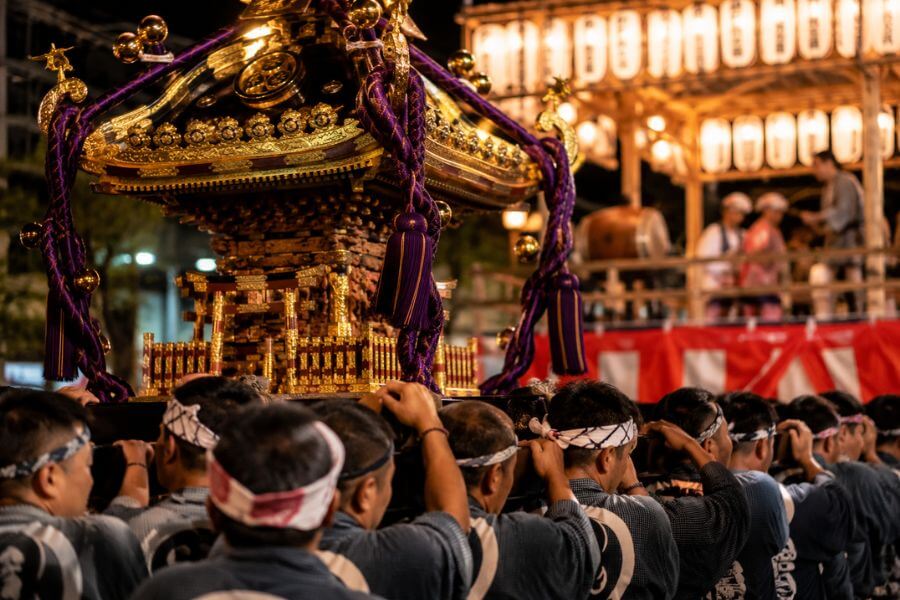
No matter which festival you choose, you will almost certainly see a Mikoshi. This is a portable shrine, often gilded and incredibly ornate, that houses the local deity. The idea is that for a few days a year, the god leaves the temple to tour the neighborhood and bring blessings to the people. You will see groups of men and women, often wearing matching happi coats, carrying the heavy shrine on their shoulders.
They do not just walk; they bounce, shout, and sweat. The rhythmic movement is meant to stir up the spirit of the deity. For you, the observer, it is a moment of intense focus. It is impressive to see the dedication of the participants as they carry the weight for miles. If you see a Mikoshi passing by, show respect by giving the group space. It is a sacred act disguised as a physical challenge, and it remains one of the most iconic sights in all of Japan.
How to Prepare for Your Matsuri Adventure
Attending a festival requires a bit of planning. First and foremost, book your accommodation early. In cities like Kyoto during Gion Matsuri, hotels can sell out months in advance. You should also check the local transportation schedules. During big festivals, train stations become extremely crowded, and some streets are completely closed to vehicles. Walking is your best friend during these times, so bring comfortable shoes.
When it comes to clothing, consider wearing a yukata if you feel adventurous. You can rent them at many shops in tourist areas. They are breathable and perfect for the summer heat. If you prefer your own clothes, prioritize comfort and layers. Remember that summer in Japan can be very humid, so stay hydrated. Carry a small towel, which is something you will see every local doing. Most importantly, keep an open mind. You might get lost or caught in a massive crowd, but that is often when the best memories are made.
Essential Festival Etiquette
While these events are meant for celebration, they are still significant cultural and religious moments. Always be mindful of your surroundings. Do not block the path of the parade or the participants. If you are taking photos, do so without interfering with the ritual itself. Avoid using flash in areas where it might distract the dancers or the people carrying the shrines.
Keep your trash with you until you find a proper bin. Japanese streets are famously clean, and festival organizers work very hard to keep them that way. If you are unsure about a rule, just watch what the locals are doing. If they are sitting, you sit. If they are clapping, you clap. Being a respectful guest goes a long way in making your experience more welcoming. You will find that people are often eager to explain their local traditions if you show a genuine interest.
Frequently Asked Questions
What should I wear to a Japanese festival?
Most people wear a yukata, which is a light cotton summer kimono. It is easy to find rental shops that will help you put it on. If you prefer modern clothes, stick to light fabrics and comfortable walking shoes. It is very common to see people in casual summer wear, so you will not feel out of place.
Is it expensive to attend these festivals?
Attending the festivals themselves is free because they take place on public streets. Your main costs will be travel, accommodation, and food. The food stalls are quite affordable, allowing you to try many different things without spending a fortune.
Are these festivals safe for solo travelers?
Japan is very safe, and festivals are generally family-friendly environments. The crowds can be dense, so just keep your belongings secure and stay aware of your path. You will find that the festive spirit makes people very friendly and open.
How do I find out the exact dates for each year?
Most major festivals happen on the same dates every year. You can search for the festival name followed by the current year to find the specific schedule. Local tourism offices are also excellent resources once you arrive in the city.
Can I participate in the dances?
In some festivals, like the Awa Odori, you are encouraged to join the dancing. Other events are more about observation. Always check the festival website or ask local staff if there are sections where guests are invited to dance. When in doubt, enjoy the show and clap along with the crowd.