Key Takeaways
- Japan experiences distinct seasons, meaning your packing strategy must change depending on the time of year you visit.
- Comfortable, broken-in walking shoes are the most important item in your suitcase, regardless of the season.
- Layering is the golden rule of Japanese travel, allowing you to adapt quickly to indoor heating or outdoor temperature swings.
- Public transport involves lots of walking and stairs, so prioritize lightweight luggage that you can carry easily.
- You do not need to pack for every possible emergency, as Japanese convenience stores and pharmacies are incredibly well-stocked.
- Modest dress is generally preferred in Japan, so prioritize versatile items that cover your shoulders and knees.
- Always leave room in your suitcase, as you will inevitably want to bring home souvenirs, stationery, and snacks.
Introduction to Japanese Travel Preparation
Planning a trip to Japan feels like a beautiful puzzle. You are likely dreaming of glowing lanterns in Kyoto, the neon pulse of Tokyo, or the quiet, snowy slopes of Hokkaido. However, the practical side of that dream involves getting your bags ready. Japan is a country where your environment changes rapidly. You might start your day in a chilly mountain temple and end it in a humid, bustling city center. Because of this, how you pack matters deeply. This guide serves as your roadmap to packing smart, ensuring you spend less time worrying about your suitcase and more time enjoying the magic of your journey.
The Foundation of Your Luggage
Before diving into seasonal specifics, we must talk about the gear that stays the same no matter the calendar. Think of this as your core survival kit.
The Footwear Strategy
In Japan, you will walk. You will walk through train stations, across sprawling intersections, and along stone paths in ancient gardens. Your shoes are your most valuable investment. Do not pack brand-new shoes for your trip. Bring a pair that you have worn for weeks so your feet are used to them. You also need shoes that are simple to take on and off. You will be removing your shoes frequently when entering traditional restaurants, temples, and ryokans. Slip-on sneakers or shoes with reliable velcro or elastic closures are far superior to complicated boots with dozens of eyelets.
Luggage Logistics
Japan is a land of stairs. While major stations have elevators, they are not always right where you need them. If you bring a massive, heavy suitcase, you will regret it the moment you step off your first train. Aim for a medium-sized suitcase that rolls smoothly. Better yet, try to travel with a carry-on size if you can manage a week or two with it. If you have a large bag, know that Japan offers a fantastic luggage forwarding service called takkyubin. You can send your large bag from your hotel in one city to your hotel in another for a small fee, allowing you to travel light on the high-speed trains.
The Essential Tech and Documents
Your passport is your lifeline. Keep it in a secure pouch along with your printed flight details and hotel addresses. While Japan is very safe, it is wise to keep a digital copy of these documents on your phone or in the cloud. Bring a universal power adapter. Japan uses two-pin flat plugs, which are similar to those in North America but often without the third grounding pin. If your devices have three prongs, ensure your adapter can handle that. Finally, a portable battery bank is non-negotiable. You will use your phone for maps, translation apps, and photography, and it will drain your battery by mid-afternoon.
Packing for Spring
Spring in Japan is legendary. It is the time of the cherry blossoms, when the world turns shades of pink and white. However, spring is also a fickle season. One day is warm and sunny, while the next can be windy and rain-soaked.
Mastering the Layered Approach
The secret to spring is layers. Mornings are often crisp, requiring a light jacket or a warm sweater. By noon, the sun comes out, and you will want to peel off that extra layer. A light trench coat or a water-resistant windbreaker is perfect. Underneath, wear simple cotton t-shirts or breathable long-sleeve shirts. This allows you to adjust your body temperature without changing your entire outfit.
Dealing with the April Showers
Spring brings a fair amount of rain. Do not weigh yourself down with a heavy umbrella. You can buy a clear, sturdy umbrella at any convenience store in Japan for a very low price. Instead, pack a lightweight, packable rain jacket. If you are prone to cold, a light scarf is a great addition. It takes up almost no space in your bag but provides significant warmth when the wind kicks up near the rivers or lakes.
Spring Essentials Table
| Category | Item | Purpose |
| Clothing | Light Trench Coat | Wind protection and style |
| Clothing | Cotton Layers | Temperature regulation |
| Footwear | Slip-on sneakers | Comfort for long walks |
| Accessory | Light Scarf | Extra neck warmth |
| Gear | Portable Battery | Phone power for photos |
Packing for Summer
Summer in Japan is intense. It is hot, it is humid, and it is glorious. If you are visiting between June and August, you must prepare for a climate that feels like a warm, wet blanket. The humidity is the real challenge here.
Breathable Fabrics are Key
Avoid synthetic fabrics that trap heat. Your best friends during a Japanese summer are linen, light cotton, and performance fabrics designed to wick away moisture. If you wear clothes that don’t breathe, you will feel uncomfortable within an hour of stepping outside. Light colors are also better than dark ones, as they reflect the sun rather than soaking it up.
Cooling Accessories
The Japanese have perfected the art of staying cool. When you arrive, look for a small hand towel or a tenugui. These are thin, cotton cloths that you can use to wipe away sweat. It is perfectly normal to see people walking around with these. You might also want a small handheld fan. Whether it is a traditional folding paper fan or a modern battery-operated one, it will make waiting for the bus or walking between shrines much more manageable.
The Sun Protection Protocol
The Japanese sun is stronger than many visitors expect. A hat is essential. Choose something that provides shade for your face and neck. Sunglasses are also a must. Pack a high-quality sunscreen, although you will find excellent Japanese brands in every drugstore if you prefer to buy them once you arrive. These local sunscreens are often lighter and less greasy than what you find at home.
Packing for Autumn
Autumn is perhaps the most comfortable time to visit Japan. The air turns crisp, the leaves ignite with color, and the temperatures are generally mild. It is a season that feels like a long, golden afternoon.
The Transition to Cooler Temps
Autumn requires a mix of what you packed for summer and what you will need for winter. In early autumn, you can still get away with light clothes, but as November approaches, the chill starts to bite. A denim jacket or a light wool cardigan becomes a wardrobe staple. This is the time for comfortable trousers or dark jeans.
Celebrating the Fall Style
Japanese fashion in autumn is elegant and understated. This is a great time to pack items that you enjoy wearing. You will see many locals wearing soft sweaters, scarves, and boots. If you plan to visit the mountains to see the changing leaves, prepare for significantly colder air. A vest or a packable down jacket is a great way to stay warm without looking like you are ready for a polar expedition.
Autumn Packing Comparison
| Feature | Early Autumn | Late Autumn |
| Jacket | Denim or Light Bomber | Wool coat or Down vest |
| Layers | Long-sleeve tees | Thick sweaters |
| Pants | Chinos or jeans | Corduroy or thick denim |
| Footwear | Comfortable walking shoes | Fashionable leather boots |
Packing for Winter
Winter in Japan is stark, beautiful, and cold. If you are heading to the north, like Hokkaido, expect heavy snow. If you are staying in Tokyo or Kyoto, you will experience cold, dry air and occasional icy winds.
The Importance of Heat-Tech
Technology has changed how people dress for winter in Japan. You should visit a Uniqlo store either before you leave or immediately upon arriving in Japan to buy heat-tech underlayers. These are thin, lightweight shirts and leggings that trap your body heat. They are incredibly effective and take up zero space in your suitcase. You can wear them under your regular clothes, and you will stay warm even on the coldest days.
The Winter Wardrobe
You need a solid, warm coat. It should be wind-resistant, as the breeze through the city streets can be biting. A down jacket is the standard choice. If you want to dress more formally, a wool coat works, but ensure it is thick enough to handle the temperatures. Gloves, a warm hat, and a scarf are not optional. You will want these items to be easy to stuff into your coat pockets when you duck into a warm café or shop.
Dealing with Indoor Heating
A strange thing about Japan in winter is that the transition between outdoor and indoor temperatures is extreme. The trains and stores are very well-heated. If you wear a heavy sweater, you might find yourself overheating the moment you go inside. This is why the layer system is so important. If you wear a base layer, a light sweater, and a warm coat, you can peel away the layers to stay comfortable throughout the day.
Specialized Gear for Unique Activities
Depending on what you plan to do, you may need a few extras that go beyond standard city travel.
Visiting Temples and Shrines
While Japan is quite casual, visiting temples and shrines is a respectful act. You do not need formal clothes, but you should aim for modest attire. This means avoiding very short shorts or shirts with offensive language. Having a cardigan or a light wrap that you can throw over your shoulders is always a good idea if you are wearing a tank top on a hot summer day.
Hiking and Nature Walks
If your trip includes the Nakasendo Trail or a hike up Mount Takao, your city sneakers might not cut it. Bring a pair of trail shoes with good grip. The terrain can be uneven, and if it has rained, trails can get muddy. A small daypack is also useful for these excursions. It should be big enough to hold your water, a light snack, your camera, and that portable battery bank we discussed earlier.
The Ryokan Experience
Staying in a ryokan is a highlight for many travelers. These traditional inns provide you with a yukata, which is a light cotton robe. You wear this inside the inn, often even to dinner. You do not need to pack pajamas for your nights in a ryokan. However, it is polite to bring a pair of clean socks to wear when you are not in your room, as you will be walking on tatami mats.
The Art of Packing Light
The more you pack, the more stress you will feel. Japan is a consumer paradise, and you will almost certainly find things you want to buy.
The Rule of Three
A good rule is to pack only three of everything significant. Three shirts, three pairs of socks, three pairs of underwear. You can easily do laundry at almost any hotel or hostel in Japan. Many hotels have coin-operated washing machines and dryers. This means you can travel with a week’s worth of clothes even if you are staying for a month.
Toiletries and Personal Care
Do not overpack toiletries. Your hotel will almost certainly provide shampoo, conditioner, body wash, a toothbrush, toothpaste, and a razor. Japanese quality in these areas is very high. If you have specific brands you cannot live without, bring travel-sized versions. Otherwise, trust the hotel. Pharmacies in Japan are also a joy to explore. You can find everything from foot masks to cooling patches if you find yourself tired and sore after a long day of sightseeing.
Final Preparations Before You Leave
As your departure date nears, do a final check. Lay everything out on your bed. Look at every item and ask yourself if you truly need it. If you are on the fence, leave it at home. Your future self, carrying your bag through a crowded train station, will thank you.
Organize for Efficiency
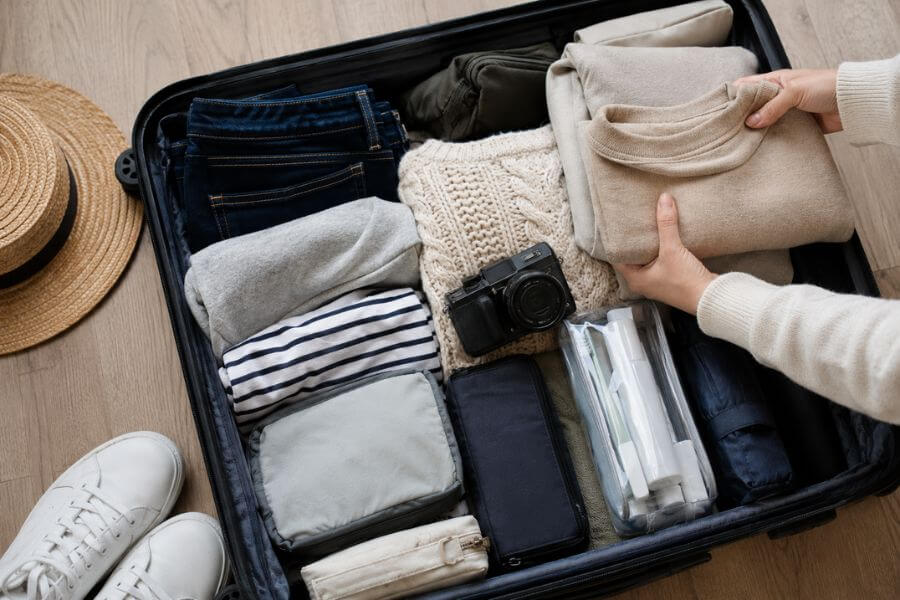
Use packing cubes. These are small fabric containers that hold your clothes in place. They help you compress your items and keep your bag organized. When you arrive at a hotel, you don’t need to unpack your whole bag; you just pull out the cube with your shirts and the cube with your pants. It makes a huge difference in staying organized during a trip.
The Weight Check
Weigh your bag before you head to the airport. Airlines have strict limits, and you don’t want to pay extra fees or be forced to leave items behind at the check-in counter. Remember, if you are bringing a heavy camera or a laptop, factor that into your total weight.
Frequently Asked Questions
Is it necessary to bring a power converter for all my electronics?
Most modern electronics like phone chargers and laptop bricks are dual-voltage, meaning they can handle the electricity in Japan without a converter. You only need an adapter to fit the physical plug shape of your devices into the Japanese wall socket. Check the label on your chargers to be sure they list 100-240V.
Should I bring an umbrella from home?
You really don’t have to. Japan is famous for its clear umbrellas, which are cheap and readily available at every train station and convenience store. They are sturdy, easy to replace if you lose them, and look great in photos. Bringing your own just adds bulk to your luggage.
How much cash should I carry versus relying on cards?
While Japan is becoming more accepting of credit cards, it is still a cash-heavy society, especially for small shops, temple entry fees, and local buses. It is smart to carry a decent amount of yen with you. You can withdraw cash from ATMs located in 7-Eleven or Lawson convenience stores, which are found everywhere and accept most international cards.
What should I do if I forget something important?
Do not worry. Japan is one of the easiest places in the world to replace lost items. If you forget toothpaste, a charger, a shirt, or even a pair of shoes, you can find a replacement within a few blocks of almost any major location. The quality of Japanese goods is excellent, and you might even end up with a better version of what you left behind.
Do I need to dress up to eat at nice restaurants?
Japan is generally quite relaxed regarding dress codes. Even at upscale restaurants, you do not need to wear a suit or a formal gown. Smart casual attire, such as a nice pair of trousers and a collared shirt or a clean, modest dress, is perfectly acceptable almost everywhere. Being neat and tidy is more important than being formal.
Can I do laundry during my trip?
Yes, absolutely. Most hotels and nearly all hostels in Japan offer laundry facilities for guests. They are usually coin-operated and include both washers and dryers. They are highly efficient, and you can often get your laundry done in under two hours, allowing you to pack much less than you think you need.