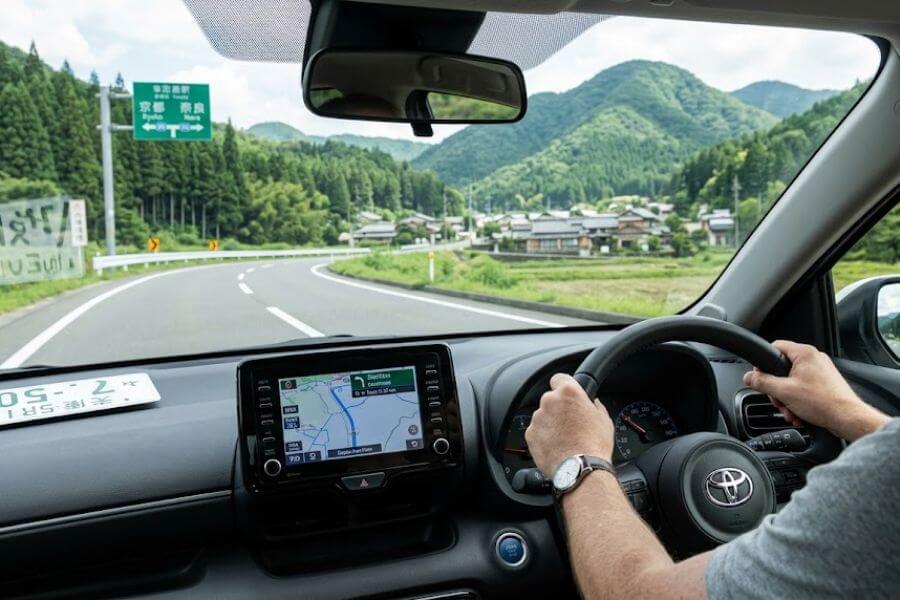
Dreaming of cruising down winding mountain roads in Hakone, catching glimpses of Mount Fuji, or pulling into a neon-lit highway pit stop for some legendary convenience store fried chicken? Road-tripping through Japan gives you total freedom to explore hidden villages and coastal views that trains simply cannot reach. But if you are an American used to wide open highways, driving on the right side of the road, and giant SUVs, sitting behind the wheel in Japan can feel a bit overwhelming.
Do not worry. Navigating Japan by car is incredibly smooth once you know the rules. This ultimate guide will walk you through everything from getting your paperwork ready to conquering narrow streets and high-tech parking lots.
Key Takeaways for Driving Success in Japan
Before diving into the fine details, here are the absolute essentials you need to remember. Think of this as your quick-reference dashboard checklist.
- Paperwork is Non-Negotiable: You cannot rent a car with just your American driver’s license. You must get an International Driving Permit before you leave the United States.
- Keep to the Left: Cars drive on the left side of the road in Japan, and the steering wheel is on the right side of the vehicle.
- Zero Tolerance for Alcohol: Japan has a strict blood-alcohol limit of zero percent. If you drink even a single sip of beer, do not get behind the wheel.
- Bring Cash for Tolls: Highways are fantastic but expensive, and while electronic payment is common, having Japanese yen on hand is a lifesaver.
- Train Station Stops are Mandatory: You must come to a complete stop before every single railroad crossing, even if the guard rails are up and no train is coming.
The Essential Paperwork You Need Before Leaving America
You cannot simply show up at a rental counter in Tokyo, flash your state license, and drive away. Japan is extremely strict about legal documentation. If you forget your paperwork, your road trip ends before it even begins.
The Power of the International Driving Permit
Your golden ticket to the roads of Japan is an International Driving Permit. In the United States, you can get this document through the American Automobile Association. You must obtain this permit before you leave for your vacation.
The permit is essentially a paper booklet that translates your state driver’s license into multiple languages. When you go to get one, make sure it is the 1949 Geneva Convention format, as this is the specific version Japan recognizes. The process is simple, costs around twenty dollars, and requires a couple of passport-style photos.
Your Essential Document Checklist
When you walk up to the rental car desk in Japan, the agent will ask for a specific bundle of papers. Keep these together in your travel folder:
- Your physical United States driver’s license (must be valid and not expired).
- Your physical International Driving Permit booklet.
- Your physical passport showing your standard tourist entry stamp.
Keep in mind that digital copies or photos of these documents on your smartphone will not work. Japanese rental companies need to see and photocopy the physical versions by law.
Picking the Perfect Car and Rental Agency in Japan
Car rentals in Japan are incredibly efficient, but the vehicles themselves might look a bit different from what you see in the suburbs of America. Understanding your choices will help you pick the right ride for your journey.
The Big Names in Japanese Car Rentals
You will find a mix of familiar global brands and local Japanese companies. The local companies are often operated by major car manufacturers or railway corporations, and they are incredibly reliable.
Major Rental Providers to Choose From
- Toyota Rent-A-Car: Boasts the largest network of shops across the country, making it incredibly easy to find a pickup or drop-off location.
- Nippon Rent-A-Car: Very popular with international travelers, offering great English support and a modern fleet.
- Times Car Rental: Run by a massive parking lot company, often offering convenient locations near major train stations.
- Orix Rent-A-Car: A large, dependable agency that frequently offers competitive deals on various car sizes.
Decoding the Vehicle Sizes
In the United States, a compact car is often considered small. In Japan, cars get much smaller. You will need to choose between two main categories of smaller vehicles.
Yellow Plates Versus White Plates
Kei cars are a unique category of tiny vehicles in Japan. You can spot them easily because they have yellow license plates. They have small engines, use very little fuel, and are shaped like little boxes to maximize interior space. They are absolutely perfect for navigating tight country lanes and narrow city streets. However, if you have four passengers and heavy luggage, a Kei car will feel incredibly cramped.
Standard compact cars have white license plates. These include standard hatchbacks and small sedans like a Toyota Yaris or Honda Fit. They offer more power for mountain climbing and highway cruising, plus better trunk space for your suitcases.
Transmission and Navigation Choices
The vast majority of rental cars in Japan are automatic. If you prefer a manual transmission, you will have to search hard and pay a premium.
When booking, always make sure to request an English language navigation system. Most modern rental cars come equipped with GPS units where you can change the display and voice guidance to English.
Instead of typing in complicated Japanese addresses, these GPS systems let you type in a phone number or a special location number called a Mapcode. You can find Mapcodes online for major tourist sites, which makes getting directions completely stress-free.
Understanding the True Cost of Your Rental
Renting a vehicle involves more than just the daily base rate. To avoid surprise charges on your credit card statement, you should account for all the extra travel expenses ahead of time.
Rental Fee Breakdown
| Expense Item | Average Cost Estimates | Why You Need It |
| Daily Base Rate | $50 to $100 per day | Covers the basic vehicle hire based on size. |
| Collision Insurance | $10 to $20 per day | Protects you from massive out-of-pocket repair bills. |
| ETC Toll Card Fee | $3一次性 fee plus usage | Allows you to pass through highway toll booths without stopping. |
| One-Way Drop Fee | Varying by distance | Charged if you leave the car in a different city. |
The Importance of Peace of Mind Insurance
When you sign your contract, the agent will offer you standard insurance and an optional waiver called the Collision Damage Waiver or Non-Operation Charge waiver.
In Japan, if a car is damaged and cannot be rented out while it is being repaired, the rental shop charges you a flat fee for that lost business time. Buying the complete insurance package wipes this fee out completely. It is highly recommended to purchase the full protection so a tiny scratch does not ruin your vacation budget.
Getting Used to Driving on the Left Side
The biggest mental hurdle for any American driving in Japan is flipping your worldview to the left side of the asphalt. It takes focus, but your brain will adapt surprisingly fast.
The Classic Turn Signal Mistake
When you climb into the driver’s seat, you will notice that the steering wheel is on the right. Because everything is mirrored, the turn signal lever and the windshield wiper lever are often swapped too.
During your first couple of days, you will undoubtedly try to signal a right turn and turn on your windshield wipers instead. Do not panic when this happens. Just laugh it off, turn off the wipers, and flip the signal. Every tourist makes this mistake at least a dozen times.
Staying Centered and Safe
When you drive on the left, your body is positioned on the right side of the lane. This can mess with your depth perception. Americans often tend to drift too far to the left side of the lane because they are trying to stay away from oncoming traffic.
Keep an eye on your left side mirror to ensure you are not riding the edge of the road or clipping the curb. A great trick is to follow the lead of the car in front of you and align yourself with their tire tracks.
Making Turns Correctly
Turning at intersections requires your full concentration, especially when you are tired.
- Left Turns are Tight: When turning left, you hug the curb closely and enter the nearest lane.
- Right Turns are Wide: When turning right, you must cross oncoming traffic lanes and arc widely into the far left lane.
Always remember the golden rule: look right, then look left, and then look right again before pulling out into any intersection.
Decoding Japanese Road Signs and Symbols
Many traffic signs in Japan use international symbols, but there are several unique markers you must memorize to stay safe and avoid costly traffic tickets.
The Elusive Stop Sign
The Japanese stop sign is a red triangle pointing downward. It has the word “Tomare” written on it in white Japanese characters. Sometimes, newer signs also have the word “STOP” written in English underneath, but in rural areas, you will only get the Japanese lettering. You must bring your vehicle to a complete halt behind the white line when you see this triangle.
Speed Limit Markers
Speed limit signs are circular with a blue number surrounded by a red border. The speeds are written in kilometers per hour, not miles per hour. Luckily, your rental car speedometer will also be in kilometers per hour, so you can simply match the numbers.
If you see a speed sign with a blue diagonal line cutting through it, that means the specific speed zone has ended, and the road reverts to the default regional speed limit.
Key Traffic Signs to Recognize
- No Entry: A red circle with a white horizontal bar across the middle. Do not drive down these streets.
- One-Way Traffic: A blue rectangle with a white arrow pointing in the direction of legal travel.
- No Parking: A blue circle with a red border and a single red diagonal slash across the center.
- Pedestrian Crossing: A blue triangle showing a silhouette of a person walking on zebra stripes.
Mastering Intersections and Right-of-Way Rules
Intersections can feel chaotic when you are unfamiliar with local driving customs. Knowing who has the right-of-way will prevent close calls and keep traffic flowing smoothly.
The No Turn on Red Rule
In the United States, turning right on a red light after a complete stop is standard practice in most places. In Japan, there is absolutely no turning on a red light. Red means stop and stay stopped, no matter which direction you want to go. You must wait patiently for the light to turn green, unless there is a specific green arrow sign pointing in your direction.
Understanding Hook Turns and Arrow Lights
At busy intersections, you will often see traffic lights with a row of green arrows underneath the main colored circles. The main light might turn red, but a green arrow pointing right will illuminate. This means you are legally allowed to proceed with your right turn because oncoming traffic has been stopped by a red light.
Yielding to Oncoming Traffic
When you are waiting to turn right at a green light, you do not have automatic right-of-way. You must pull forward into the middle of the intersection, wait in the designated turning box, and yield to all oncoming vehicles going straight or turning left. Only make your move when there is a large, safe gap in traffic.
Conquering Japan’s Highway System
The expressways in Japan are immaculate, beautifully maintained, and incredibly fast. They are also heavily tolled, meaning you have to pay to use them.
The Electronic Toll Collection Miracle
When you rent your vehicle, always ask the rental agency for an ETC card. This is a plastic card embedded with a microchip that slides directly into a card reader built into your rental car dashboard.
As you drive through highway toll gates, electronic sensors read your card, lift the barrier automatically, and record your toll fees. You do not have to stop to fumble with cash or coins. When you return the vehicle at the end of your trip, the rental shop will read the card data and give you a total bill for all the toll roads you used.
Navigating Toll Gates Safely
When you approach a highway toll plaza, the lanes will be split into different categories. Look at the glowing colored signs hanging above the lanes:
- ETC Only (Blue Signs): These lanes are exclusively for cars with an active ETC card. You must slow down to twenty kilometers per hour as you approach the gate so the scanner can read your card and lift the bar.
- Cash/General (Green Signs): These lanes are for drivers paying with cash or credit cards. You must stop completely, pull a paper ticket from the machine, and pay a human attendant or a machine when you exit the highway.
- ETC/General Mixed Lanes: These lanes can handle both types of payments.
Highway Speed Expectations and Etiquette
Expressway speed limits generally range between eighty and one hundred kilometers per hour, though certain stretches allow for higher speeds. Japanese drivers generally follow excellent lane etiquette.
The rightmost lane is strictly for passing. Do not cruise along in the right lane; stay in the left or middle lanes, use the right lane to pass slower vehicles, and immediately signal and move back over to the left once you are clear.
Navigating Narrow Streets and Urban Traffic
While highway driving is a breeze, pulling off the expressway into a traditional Japanese town or major city center can cause your palms to sweat. The spatial scale is much more compact than back home.
The Reality of Tiny Residential Roads
Outside of major modern avenues, Japanese residential streets are incredibly narrow. Many are technically two-way roads but are only wide enough for a single vehicle to pass through at a time.
You will need to drive slowly and look far ahead. If you see an oncoming vehicle approaching down a narrow lane, look for a small cutout or widening in the road. It is customary for one driver to pull into this space, stop, and flash their headlights to invite the other driver to pass safely.
Dealing with Blind Corners and Curved Mirrors
Because buildings and traditional walls sit right up against the edge of the pavement, street corners have almost zero visibility. To fix this, the Japanese government installs large, bright orange convex mirrors at almost every single blind intersection.
Get into the habit of looking up at these mirrors as you approach a corner. They will show you if a pedestrian, a cyclist, or another car is coming around the bend before you can see them directly through your windshield.
Sharing the Pavement Safely
In Japan, pedestrians and bicyclists are highly respected and always have the absolute right-of-way. In many smaller neighborhoods, there are no raised sidewalks. People walk right along the edge of the street, and school children walk home in neat lines.
Give pedestrians a wide berth and slow down to a crawl when passing cyclists. Japanese cyclists often carry groceries or children on their bikes and might sway unexpectedly.
The Absolute Golden Rules of Traffic Safety
Japan takes road safety incredibly seriously, and the legal consequences for breaking traffic laws are swift and severe. Memorize these specific regulations to stay out of trouble.
The Railroad Crossing Rule
This is a rule that catches almost every single foreign driver off guard. In the United States, you only stop at a train track if the red lights are flashing. In Japan, you must bring your car to a complete, dead stop before the white line at every single railroad crossing, regardless of whether a train is coming.
After stopping, you must look left, look right, listen for a moment, and then drive across. If you roll through without stopping, you can face a hefty fine from police officers who frequently watch these spots.
Mobile Phones and Distracted Driving
Using a handheld smartphone while driving is strictly illegal in Japan. This includes holding your phone to check navigation maps or texting while stopped at a red light.
If you need to adjust your route or look at your phone, you must pull over into a safe parking space and turn off the engine. The police will issue strict tickets for distracted driving.
The Strict Law of Alcohol Consumption
Japan operates under a zero-tolerance policy regarding drinking and driving. The legal limit is effectively zero. If you have any alcohol in your system, you are considered driving under the influence.
Even crazier, under Japanese law, passengers sitting in a car driven by an intoxicated driver can also be arrested and fined just for being in the vehicle. If you plan to sample some sake or cold beer during dinner, leave your car parked at your hotel and take a taxi or a local train.
Parking Secrets: Mechanical Towers and Flap Locks
Parking in Japan is a fascinating, high-tech experience, but the systems can be confusing if you have never encountered them before. You cannot just park your car on the side of the street; street parking is virtually nonexistent in Japan.
How Coin Parking Lots Work
Small, automated parking lots called “Coin Parking” are scattered all over Japanese towns. You drive into a numbered stall, and after a few minutes, a metal plate or flap rises up from the ground underneath your car, locking it into place.
The Coin Lot Payment Steps
- Pull cleanly into an open, numbered stall and make sure your tires are inside the white lines.
- The mechanical flap will lift automatically after a short delay, securing your vehicle.
- When you are ready to leave, walk over to the central automated payment machine.
- Type in your specific parking stall number on the keypad.
- The machine will display your total cost. Insert your cash, coins, or credit card.
- Once paid, the machine will lower the ground flap. Walk to your car and drive away immediately before the flap resets.
Mechanical Tower Parking Lots
In crowded urban areas like Tokyo or Osaka, you will encounter mechanical tower parking. You drive your vehicle onto a flat metal platform inside a garage bay. An attendant will ask you to fold in your side mirrors, pull your emergency brake, and step out of the car.
The automated system then whisks your car up into a giant vertical puzzle tower. When you return, you present your ticket, pay the fee, and the machine rotates your car back down to ground level, often turning it around on a lazy Susan platform so you can drive straight out into traffic.
Fueling Up: Regular Gas Versus Diesel
When your fuel gauge starts dipping toward empty, you will need to find a gas station, known locally as a “Gas Stand.” These come in two varieties: full service and self service.
Full-Service Station Phrases
At a full-service station, an energetic team of staff members will jog out to your car, bow, guide you to the pump, and take care of everything. They will even wipe down your side mirrors and empty your car trash can for you.
Useful Japanese Phrases for Fueling
- Regular full tank: “Regula mantanu” (This is standard gasoline for most rental cars).
- Cash payment: “Genkin”
- Credit card payment: “Kurejitto kado”
Conquering Self-Service Stations
Self-service stations are marked with the Japanese katakana characters for “Self.” The touchscreens are usually in Japanese, but many modern pumps have an English language button on the starting screen.
You select your payment method, insert your cash or card, choose your fuel type, and pump the gas. The color coding for fuel nozzles is highly standardized across Japan:
- Red Nozzle: Regular gasoline (what ninety-nine percent of rental cars require).
- Yellow Nozzle: Premium high-octane gasoline.
- Green Nozzle: Diesel fuel.
Always double-check your rental agreement packet to make absolutely sure you are putting the correct fuel type into the tank. Putting diesel into a regular gasoline engine will completely destroy the motor.
What to Do in an Emergency or Accident
No one wants to think about getting into a car accident on vacation, but being prepared will help you handle an unexpected emergency calmly and legally.
Handling a Fender Bender
If you scrape a guardrail or clip another car’s mirror, you must stop immediately. Even if there is no visible damage, you must call the police.
In Japan, failing to report any minor accident can invalidate your rental insurance completely, leaving you responsible for thousands of dollars in costs. Dial 110 to reach the police department. If you do not speak Japanese, say the word “English” slowly, and they will connect you to a translator.
Contacting Your Rental Agency
After speaking with the police and securing an official accident report number, call the emergency telephone number provided in your rental car document folder.
Most major rental agencies have dedicated English hotlines for international tourists. They will walk you through the insurance paperwork steps and arrange for a replacement vehicle if your car is too damaged to drive safely.
Frequently Asked Questions
Can I drive in Japan using just my digital American driver’s license on my phone?
No, you cannot. Japan requires you to carry the physical copy of your United States state driver’s license alongside your physical International Driving Permit booklet and your actual passport. Digital licenses or paper printouts of scanned documents are not accepted by rental car agencies or police officers.
What happens if I accidentally drive through an ETC toll lane without a card?
If you enter an ETC lane without a working card, the gate arm will stay down, a loud alarm will sound, and a glowing red sign will tell you to stop. Do not try to reverse your car, as this can cause a massive highway pileup. Stay calm, sit tight, and wait for a tollway worker to walk out to your vehicle or speak to you through an intercom speaker to give you a paper payment slip.
Are there speed cameras on Japanese highways and how do they work?
Yes, Japan uses automated speed cameras on both major expressways and standard city avenues. These cameras are suspended on metal gantries over the lanes and take high-resolution photos of your license plate and face if you exceed the limit significantly. The traffic violation ticket will be sent directly to your car rental company, which will charge your credit card for the fine amount plus administrative fees.
Is it difficult to find public car parking spaces near major sightseeing spots?
In rural locations like Hokkaido or Okinawa, parking is incredibly easy and often free at shrines, parks, and viewpoints. However, near famous historic sites in cities like Kyoto or Tokyo, parking spaces are limited and can be quite expensive. It is usually best to check if your destination has a dedicated lot or search for an automated coin parking lot nearby before you set off.
What should I do if my rental car breaks down in a remote mountain area?
Every rental car comes with a roadside assistance booklet in the glove compartment. You should pull your vehicle safely off the road, turn on your hazard lights, and call the emergency assistance number provided by your rental agency. If you are stuck in a dead zone with no cellular phone service, look for emergency roadside telephone boxes which are placed along mountain roads and expressways at regular intervals.