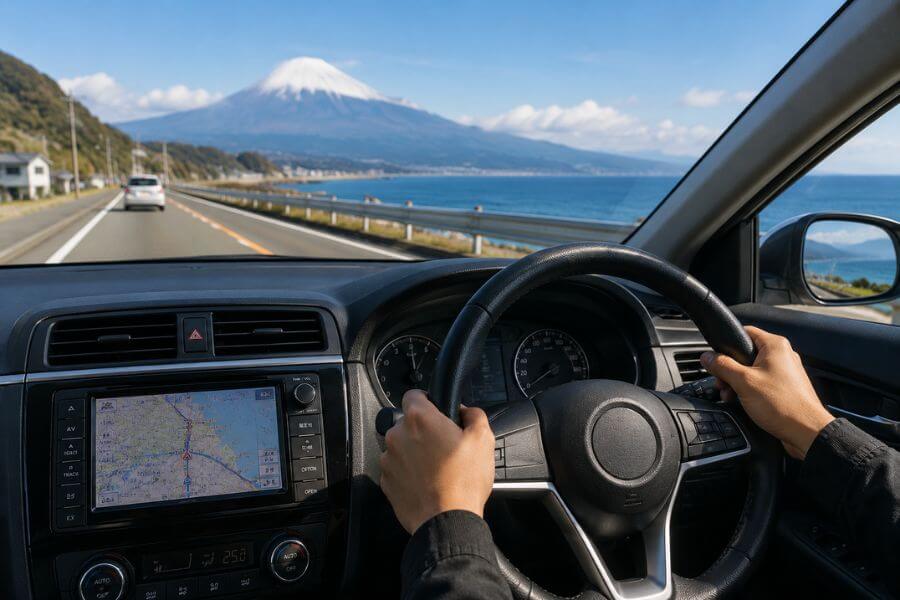
Exploring Japan by train is a wonderful way to see major cities like Tokyo, Kyoto, and Osaka. However, the true magic of the country often waits far beyond the bullet train tracks. If you want to visit the hidden hot spring villages of Tohoku, the rugged coastlines of Hokkaido, or the beautiful ocean lookouts of Okinawa, you will need a car.
Driving in a foreign country can feel intimidating, especially when the signs are in a different language and cars travel on the opposite side of the road. This comprehensive guide will walk you through everything you need to know about driving in Japan as a United States citizen using an International Driving Permit.
Key Takeaway
- Advance Preparation is Mandatory: You cannot obtain an International Driving Permit after arriving in Japan. You must secure it in the United States before your departure.
- The Geneva Convention Rule: Japan only recognizes permits issued under the 1949 Geneva Convention. Card-style permits or digital versions are completely invalid.
- Drive on the Left: Vehicles travel on the left side of the road, and the steering wheel is on the right side of the car.
- Absolute Zero Tolerance: Japan enforces strict laws against driving under the influence of alcohol, with severe punishments for drivers and passengers alike.
- Mandatory Railroad Stops: You must come to a full stop before crossing any railroad tracks, regardless of whether a train is approaching.
Understanding the Legal Requirements
Before you can book a rental vehicle or start planning a road trip through the Japanese countryside, you must understand the exact legal papers required to sit behind the wheel. Japan is strict about traffic laws, and operating a vehicle without the correct paperwork can lead to arrest, heavy fines, and deportation.
As a tourist from the United States, your standard state driver’s license is not enough to legalise your driving in Japan. You cannot simply walk up to a rental counter, show your home state license, and drive away. You must possess a secondary document that translates your driving privileges into a format recognized by Japanese authorities.
The document you need is an International Driving Permit. This document is a small paper booklet that translates your licensing information into several languages. It acts as an official extension of your domestic license, not a replacement for it.
Japan operates under specific international agreements regarding road traffic. The country is a signatory to the 1949 Geneva Convention on Road Traffic. This detail is critical because there are multiple types of driving permits issued globally, and Japan only recognizes the specific version tied to the 1949 convention. If you mistakenly acquire a permit based on the 1968 Vienna Convention, Japanese rental companies and police officers will reject it immediately.
How to Obtain Your International Driving Permit in the US
Securing your permit is a process you must complete while you are still on American soil. The government of Japan does not issue these permits to foreign tourists, and the United States Embassy in Tokyo cannot assist you in getting one once you land.
In the United States, the Department of State has authorized specific organizations to issue these official booklets. The primary organization responsible for this service is the American Automobile Association. You do not need to be a member of this automobile club to utilize their licensing services.
To apply for the booklet, you have two choices. You can visit a local office in person, or you can mail your application paperwork to their processing center. Going in person is generally faster, as the staff can often print and hand you the booklet during your visit.
Required Documents for the Application
- A completed official permit application form, which is available on the automobile club website or at their local branch offices.
- Two original passport-style photographs, signed by you on the back of each photo.
- Your valid, unexpired United States driver’s license.
- A small processing fee, which typically ranges between twenty and thirty dollars.
If you choose to submit your application by mail because you do not live near a physical office, you must plan well in advance. Mail processing can take several weeks. When mailing your application, you must include a clear photocopy of both sides of your domestic driver’s license, the completed form, the two photos, the payment, and a self-addressed, prepaid return envelope.
The legal age requirement to drive a standard passenger car in Japan is eighteen years old. Therefore, even if your home state allows younger individuals to hold a full license, you cannot obtain a valid permit for Japan unless you have reached your eighteenth birthday.
Document Validity and Limitations
Once you hold the permit booklet in your hands, you need to know how long it remains valid and what restrictions apply to its use. Misunderstanding these timelines can lead to serious legal complications while traveling.
The permit is legally valid for exactly twelve months from the date of its issuance, or until your domestic driver’s license expires, whichever comes first. However, Japan places an additional restriction on top of this rule. The booklet is only valid for use within Japan for up to one year from your official date of entry into the country.
This distinction is important for individuals planning long stays, such as students, English teachers, or corporate workers on extended assignments. The permit is strictly intended for short-term visitors and tourists. It is not a permanent solution for residents.
The Three Month Re-entry Rule
If you hold a long-term visa for Japan and attempt to bypass the one-year limit by taking a short vacation outside the country to obtain a fresh permit, you will run into a legal barrier known as the three-month rule. Under Japanese road traffic laws, if a resident leaves Japan and returns in less than three consecutive months, their new permit is considered invalid for driving. To use a new booklet obtained abroad, you must remain outside of Japan for at least three full months before your return.
Furthermore, you must always carry your original United States driver’s license and your physical passport alongside the permit booklet whenever you drive. The permit has no legal standing on its own. If a police officer pulls you over and you only show the booklet without your actual domestic license and passport, you can be charged with driving without a license.
Reserving and Picking Up Your Rental Car
The rental process in Japan is highly organized, and major companies have desks at international airports like Narita, Haneda, and Kansai. Booking your vehicle online before your trip is highly recommended, especially if you require specific vehicle features or are traveling during peak holiday seasons like Cherry Blossom week or New Year’s.
When choosing a vehicle, consider the geographic layout of Japan. The streets in traditional towns, historic villages, and residential neighborhoods are incredibly narrow compared to American roads. Choosing a compact vehicle, often referred to in Japan as a “Kei car,” can make navigation much less stressful. These small cars have yellow license plates, smaller engines, and boxy shapes designed to fit into tight spaces.
Document Checklist for the Rental Counter
- Your physical passport containing the tourist entry stamp provided by immigration officers at the airport.
- Your valid International Driving Permit booklet.
- Your physical United States driver’s license.
- A major credit card matching the name on your identification documents.
If you entered Japan through an automated immigration gate and did not receive a physical stamp in your passport, you must inform the rental counter staff. They will need to verify your official arrival date using alternative methods, such as your boarding pass or your digital travel history card, to ensure you are within the legal one-year window.
Key Differences Between Driving in the US and Japan
Transitioning from American highways to Japanese roads requires a mental shift. The structural layout of the vehicles and the traffic patterns are fundamentally reversed from what you experience at home.
The most obvious difference is that traffic moves on the left side of the road. Consequently, the driver’s seat is positioned on the right side of the vehicle. This setup changes your spatial perspective. Your left hand will be responsible for operating the gear shift, while your right hand stays closer to the door window.
A common mistake made by American drivers during their first few hours on the road is confusing the windshield wiper lever with the turn signal lever. In Japanese cars, the turn signal stalk is typically located on the right side of the steering wheel, and the wiper control is on the left. You may find yourself turning on your wipers every time you try to signal a turn until your muscle memory adjusts.
The physical dimensions of the driving environment are also distinct. Lane widths are narrower, and shoulders are minimal or non-existent on rural routes. Roads are often bordered by deep, concrete drainage ditches called “gairosu.” These ditches do not have covers, meaning a minor steering error can cause a wheel to drop into a deep trench.
Crucial Japanese Traffic Rules to Memorize
Obeying local traffic laws is essential for your safety and to avoid costly penalties. Several rules in Japan are strictly enforced and differ significantly from common practices in the United States.
The Absolute Stop at Railroad Crossings
In the United States, you only stop at a railroad crossing if the red lights are flashing or a barrier is lowering. In Japan, the law requires every single vehicle to come to a complete, dead stop before crossing any train tracks, regardless of the visual signals. You must stop before the white line, look both ways, listen for oncoming trains, and then proceed. Even if there is a long line of cars ahead of you, each car must stop individually at the line before crossing. Failing to do so is a frequent reason tourist drivers get ticketed by local police.
Traffic Signals and Turns on Red
When an American traffic light turns red, many states allow drivers to make a cautious right turn after stopping. In Japan, a red light means an absolute halt for all directions. You cannot turn left on a red light under any circumstances unless there is a specific, illuminated green arrow pointing left alongside the main red light. If the light is red and no arrows are showing, your vehicle must remain completely stationary.
Right-of-Way at Intersections
When navigating intersections where traffic signals are absent, right-of-way rules favor vehicles turning left. Oncoming traffic traveling straight also maintains priority over vehicles attempting to turn right across the oncoming lane. When you are waiting to make a right turn, you must wait patiently until the oncoming lane is entirely clear or until oncoming vehicles have safely completed their left turns.
Understanding Japanese Road Signs
While many international road signs utilize universal symbols, Japan features several unique signs that you must memorize before your trip. Most major highways include English subtitles, but local roads and rural paths rely purely on Japanese characters and distinct shapes.
The most critical sign to recognize is the stop sign. In the United States, stop signs are red octagons with eight sides. In Japan, the stop sign is an inverted red triangle pointing downward. It contains the white Japanese characters “止まれ,” which translates to “Tomare” (Stop). You must bring your vehicle to a full stop before the white line whenever you encounter this triangle.
Another common sign is the “No Entry” symbol, which indicates a one-way street heading in your direction. This sign features a solid red circle with a horizontal white bar running through the middle. Because Japanese urban areas are filled with tiny, one-way alleys, watching for this red circle is vital to avoid driving head-first into oncoming traffic.
Speed limit signs are circular with a blue border and red numbering against a white background. The number displayed represents kilometers per hour, not miles per hour. If you see a sign with the number 40, you must adjust your speed to forty kilometers per hour, which is roughly twenty-five miles per hour.
Navigating Speed Limits and Expressways
Speed limits in Japan are generally much lower than those in the United States. The country prioritizes pedestrian safety and accident prevention through conservative speed regulations.
When you are driving through residential neighborhoods, narrow city streets, or commercial districts, the default speed limit is usually thirty or forty kilometers per hour. On standard undivided rural highways, the limit rises to sixty kilometers per hour. The fastest routes are the national expressways, where limits range between eighty and one hundred kilometers per hour depending on weather conditions and terrain.
Japanese expressways are high-quality toll roads that connect major regions across the islands. These toll highways are essential for long-distance travel, as driving on local roads can take twice as long due to traffic lights and lower speed caps.
The Electronic Toll Collection System
When entering an expressway, you will encounter toll gates divided into distinct lanes. Some lanes are marked with purple signs reading “ETC,” which stands for Electronic Toll Collection. Other lanes are marked with green signs reading “一般” (Ippan), which means General.
If your rental car is equipped with an active Electronic Toll Collection card, you can drive slowly through the purple lanes without stopping. The system will automatically scan the card, register your entry point, and open the barrier. If your vehicle does not have this card, you must use the green General lanes, pull a physical paper ticket from an automated machine at the entrance, and pay the toll fee using cash or a credit card when exiting the highway. Most rental companies offer card rentals for a small fee, which simplifies highway travel.
Parking Rules, Culture, and Etiquette
Parking in Japan requires adherence to strict social norms and legal regulations. Street parking is virtually non-existent in major cities, and leaving your car on the side of a road where no parking signs are displayed can result in your vehicle being towed immediately.
When visiting shops, restaurants, or hotels, you must utilize designated parking structures or lots. Japanese drivers practice specific parking etiquette that differs from typical American habits.
The Custom of Backing Into Spaces
In Japan, it is standard practice to reverse into parking spaces rather than driving in nose-first. Backing into a spot ensures that you have maximum visibility when leaving the space later, which enhances safety for pedestrians walking through the parking area. Many rental cars are equipped with rear-facing cameras and proximity sensors that beep continuously while reversing to assist you with this maneuver.
Using Coin Parking Lots
In urban zones, you will frequently utilize small, automated parking structures called coin lots. These lots often use mechanical yellow bars that rise underneath your car’s chassis after you park in a designated stall. The bar locks the vehicle in place.
To exit the lot, you walk over to a central payment machine, type in your specific parking space number, and pay the required fee using coins or bills. Once payment is confirmed, the mechanical bar drops back down into the ground, giving you a short window of time to safely drive your vehicle out of the space.
Fueling Your Vehicle at Japanese Gas Stations
When your fuel gauge runs low, you will need to pull into a gas station. Japan features two distinct styles of fueling stations: full-service stations and self-service stations.
Full-service stations are traditional businesses where a team of employees handles the entire process for you. When you pull into the lot, an attendant will guide your vehicle to a pump using hand signals. Once stopped, they will ask you what type of fuel you require, wash your front windshield, and offer to empty your car’s small trash bins.
Communicating at Full-Service Stations
To communicate your fuel needs, you can use simple Japanese terms. Regular unleaded gasoline is called “Regular” (Regula), high-octane premium fuel is called “High-Ocu” (Haioku), and diesel fuel is called “Keiyu.” If you want to fill your tank completely with standard unleaded fuel, you can say the phrase “Regular, Mantan,” where “Mantan” translates to full tank. When the refueling is complete, the attendant will process your credit card or cash payment through a portable machine.
Self-service stations are marked with signs containing the Japanese characters “セルフ” (Serufu). These stations operate similarly to American gas pumps, featuring an automated touch screen where you select your language, choose your fuel type, and swipe your payment card before pumping the fuel yourself. The fuel handles are color-coded across the country: red represents regular unleaded, yellow signifies high-octane premium, and green indicates diesel.
Drinking and Driving Laws: Zero Tolerance
Japan maintains some of the strictest anti-drunk driving laws on Earth. The legal blood alcohol concentration limit for drivers is effectively zero. There is absolutely no acceptable margin for social drinking if you intend to operate a motor vehicle.
If a police breathalyzer test detects even a minute trace of alcohol in your system, you can be charged with driving under the influence. The legal penalties include lengthy prison sentences, thousands of dollars in financial fines, and immediate revocation of your driving privileges followed by deportation.
Legal Penalties for Passengers
What surprises many American travelers is that Japan’s zero-tolerance laws extend far beyond the individual sitting in the driver’s seat. Passengers riding in a vehicle operated by an intoxicated driver are subject to criminal prosecution and heavy fines under the law, provided they knew the driver had consumed alcohol.
Furthermore, a bartender or restaurant owner who serves alcohol to an individual known to be driving can also face severe legal punishments. If you plan to consume a single alcoholic beverage during dinner, you must utilize public transportation, call a standard taxi, or use a specialized service known as “Daikon” (a dual-driver service where two professionals arrive to drive both you and your personal vehicle safely back to your lodging).
What to Do in Case of an Accident or Emergency
Despite your best efforts to drive carefully, unexpected emergencies can happen. Knowing how to handle an accident or vehicle breakdown in Japan will help you manage a stressful situation efficiently.
If you are involved in a collision with another vehicle or a pedestrian, your first responsibility is to stop your vehicle immediately in a safe location, turn on your hazard lights, and check for injuries. You must assist anyone who requires medical attention.
The next step is to contact the local emergency services. In Japan, the telephone number for reporting a vehicle accident to the police is 110. If an individual is injured and requires medical transport, you must call 119 to summon an ambulance or fire rescue team. Even if the collision is a minor scrape against a stationary object like a guardrail or a parking post, you are legally required to report the incident to the police. Failing to report a minor accident can invalidate your rental car insurance coverage.
Language Assistance on the Phone
When calling emergency numbers, speak clearly. Many emergency dispatch centers in major tourist regions have English-speaking operators available or can utilize a three-way translation service to assist foreign callers.
After speaking with the authorities, you must contact your specific car rental company using the emergency customer service number listed inside your rental paperwork agreement folder. The rental staff will guide you through the insurance claim process and coordinate towing services if the vehicle is too damaged to operate safely.
Roadway Comparisons: United States vs. Japan
To help visualize the practical differences you will encounter when transitioning from American roads to Japanese terrain, review the structural details outlined below.
| Feature Category | Driving Environment in the United States | Driving Environment in Japan |
| Side of the Road | Vehicles travel on the right side. | Vehicles travel on the left side. |
| Driver Seat Position | Positioned on the left side of the vehicle. | Positioned on the right side of the vehicle. |
| Standard Speed Units | Measured in miles per hour (MPH). | Measured in kilometers per hour (KM/H). |
| Turns on Red Signals | Right turns are generally permitted after a stop. | Turns on red are prohibited unless an arrow shows. |
| Stop Sign Design | Red octagon with eight sides. | Inverted red triangle pointing downward. |
| Railroad Crossing Rule | Stop only if lights flash or barriers lower. | A full stop is mandatory for every single vehicle. |
| Alcohol Limit Rules | Defined legal limits (typically 0.08 BAC). | Absolute zero tolerance for any alcohol trace. |
Geographic Challenges and Seasonal Considerations
Driving conditions in Japan vary dramatically depending on the specific region you are visiting and the time of year you choose to travel. The geographical landscape consists largely of mountainous terrain, which creates unique driving situations.
If your road trip takes you into mountain passes, prepare for winding roads with sharp curves called “toge.” These routes are popular for scenic views but require constant focus. Because visibility around mountain corners is limited, large curved mirrors are mounted on tall metal poles at every major bend. You must look into these mirrors to check for oncoming traffic before entering a blind turn.
Winter Driving Risks
Seasonal winter weather introduces major hazards, particularly in northern regions like Hokkaido, Tohoku, and the mountainous areas of the Japanese Alps. These zones receive some of the heaviest snowfall totals in the world.
When driving in these snowy regions between November and April, your rental vehicle must be equipped with dedicated winter snow tires or tire chains. Driving on icy, snow-packed roads requires gentle braking and significantly reduced speeds to maintain traction.
Additionally, many rural mountain passes close entirely during the winter months due to avalanche risks. Always verify weather updates and road closure reports before departing on a long journey through high-altitude corridors.
Navigating Urban Traffic and Navigational Tools
Driving through massive metropolitan complexes like Tokyo or Osaka presents a completely different set of challenges compared to peaceful country roads. Urban traffic can be dense, and multi-level highway systems can confuse drivers unfamiliar with the layout.
GPS navigation systems are indispensable tools for foreign drivers in Japan. Most modern rental vehicles come equipped with an in-dash navigation unit. Many of these units can be configured to display menus and broadcast audio driving directions in English.
Navigating via Phone Numbers and Mapcodes
A helpful feature of Japanese car navigation systems is the ability to search for destinations using telephone numbers or unique strings of digits called “Mapcodes.” Because typing in complex Japanese kanji addresses can be difficult for foreigners, entering a destination’s official ten-digit phone number or specific Mapcode into the console is an efficient way to plot a route. You can look up Mapcodes for major tourist destinations, lookouts, and trailheads online before your journey begins.
When driving through busy cities, watch out for dedicated bus lanes marked with painted characters on the asphalt. These lanes are reserved exclusively for public buses and taxis during peak commuter morning and evening hours. Driving a rental car in a restricted bus lane during these times can result in a traffic ticket from monitoring police officers.
Frequently Asked Questions
Can I buy an International Driving Permit after I arrive in Japan?
No, you cannot. International Driving Permits must be issued by an authorized organization located within your home country before you depart. The Japanese authorities, local licensing centers, and the United States Embassy cannot issue this booklet to you once you have arrived in Japan. If you land without the physical permit booklet in your possession, you will be unable to rent a car or drive legally.
Will a digital version or a card-style driving permit work in Japan?
No, digital documents, scanned phone images, or plastic card-style international licenses are completely invalid under Japanese law. Japan only recognizes the official, physical paper booklet version issued under the terms of the 1949 Geneva Convention. The booklet must contain the official stamps matching the vehicle classifications you are authorized to operate.
What happens if I get a parking ticket while driving a rental car?
If you receive a parking citation, you must address it immediately before returning the vehicle to the rental company. You should take the physical ticket to the nearest police station, fill out the required paperwork, and pay the financial penalty at a local bank or post office. You must present the official payment receipt to the rental counter staff when you return the car. If you fail to pay the fine before returning the vehicle, the rental company will charge a much higher penalty fee directly to your credit card.
Are children required to use special safety seats in Japanese cars?
Yes, Japanese road safety laws dictate that any child under the age of six years old must be securely fastened into an approved child safety seat or booster seat appropriate for their size and weight. When making your online vehicle reservation, you must request child safety seats from the rental company so they can be installed in the vehicle prior to your arrival.
How do I pay toll fees on the expressways if I do not speak Japanese?
Paying tolls is straightforward even if you do not speak the local language. If your vehicle does not have an Electronic Toll Collection card, you simply enter the green lane marked “一般” (General) at the highway entrance and take a paper ticket from the automated machine. When you exit the expressway, enter another General lane, hand the paper ticket to the human toll collector or insert it into the automated exit payment machine, and the total cost will display numerically on a digital screen. You can pay using cash bills or major credit cards.