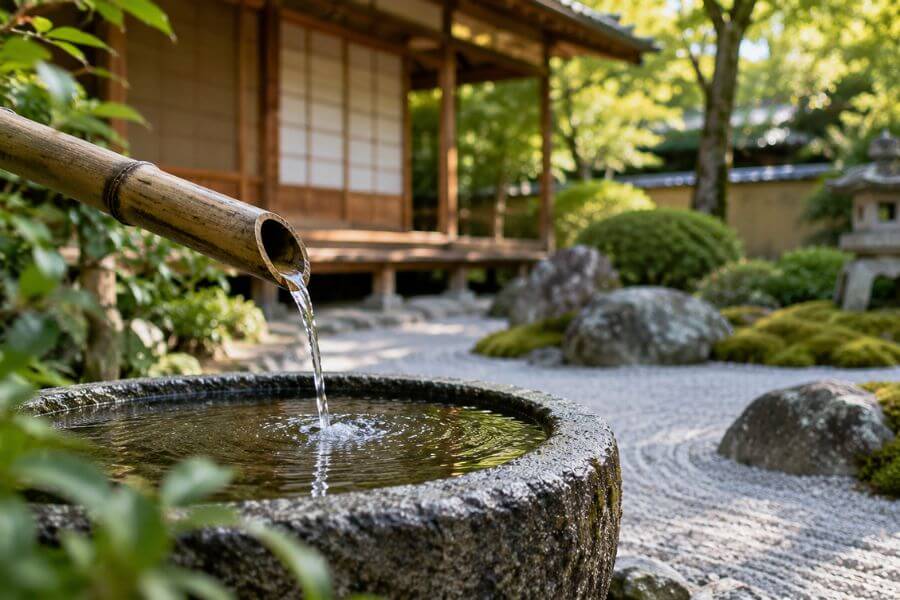
When you step into a traditional Japanese garden, the first thing you notice is a sudden shift in your breathing. The world outside the gate, with its constant noise and frantic pace, seems to vanish. You find yourself in a space that feels like a deep breath caught in time. These gardens are not merely plots of land filled with plants; they are living mirrors of the human spirit. They are designed to help you look inward, quiet your thoughts, and find a sense of balance that is often lost in the busyness of modern life.
Zen philosophy, which traveled from China to Japan centuries ago, focuses on the importance of the present moment and the beauty of simplicity. It teaches that you do not need to look far to find enlightenment or peace. In a garden, this translates into a deliberate arrangement of stones, water, moss, and trees, all working together to represent the vastness of nature and the stillness of the mind. By walking through these spaces, you are participating in a conversation between yourself and the natural world, a conversation that is conducted without words.
Key Takeaways
- Zen gardens prioritize simplicity, balance, and the beauty of natural imperfection to bring peace to your mind.
- The design process is guided by the philosophy of capturing the spirit of nature rather than just copying its physical form.
- Stones and sand often represent mountains and water, inviting you to use your imagination to complete the picture.
- These spaces are meant for meditation, encouraging you to sit quietly, breathe deeply, and observe the changing seasons.
- Every element, from the placement of a small rock to the path of a stream, serves a purpose to ground you in the present.
- By slowing down your pace, you can learn to see how the garden reflects your own inner state of being.
The History and Origins of Zen Gardens
The roots of the Japanese garden are tangled with religious practice. Long before they became popular sites for tourists, these gardens were places for monks to train their minds. Zen Buddhism emphasizes meditation, and these gardens served as tools for that practice. By cleaning the sand, pruning the trees, and arranging the rocks, a monk was practicing mindfulness in action. Every movement was intentional, every placement was a reflection of the self.
Over time, these spaces evolved. They moved from being strictly for monks in isolated temples to being enjoyed by nobility and eventually the general public. However, the core goal never changed. Whether you are in a massive public park or a tiny courtyard garden, the intention remains the same: to create a sanctuary where the mind can reset. History shows us that these gardens were born out of a deep respect for the landscape, viewing humanity as a small part of a much larger, beautiful, and sometimes wild cycle of life.
The Influence of Early Temples
In the early days, temples were built away from the noise of major cities. Monks sought the silence of mountains and deep forests to find a clear path to understanding. When they began to build gardens within the temple walls, they wanted to bring that mountain silence with them. They did not want a place that felt artificial or prideful. Instead, they gathered local stones and shapes that felt familiar to the natural wilderness.
As you explore these historical contexts, you see that the gardens were born out of necessity. The monks needed a physical space that could match the quiet they were trying to build inside their hearts. A garden was a controlled piece of nature where nothing distracted from the ultimate goal of sitting still and watching the mind settle.
The Evolution Across Generations
As the centuries rolled on, the rulers of Japan took notice of these peaceful havens. Emperors and military leaders began to invite garden masters to build similar spaces in their palaces. While these secular gardens grew grander and sometimes included large ponds for boating, they still held onto the core Zen ideas. They kept the focus on the natural shape of things and avoided flashy, bright displays that might overstimulate the eyes.
This transition from sacred temple grounds to royal backyards allowed the philosophy to spread into the everyday culture of the country. It created a unique viewpoint where even the most powerful people in the land recognized that true luxury was not found in gold or jewels, but in a single, perfectly placed leaf or a smooth stone that invited quiet thought.
The Core Elements of a Zen Garden
To understand these gardens, you must look at the building blocks. There is no clutter here. Every object has a reason for existing. The landscape is stripped down to its most essential parts so that you can see the beauty of the materials themselves.
Rocks and Stones
In a Zen garden, rocks are not just boulders. They are considered the bones of the earth. They provide structure and permanence. A single, well-placed stone can represent a mountain range, an island in a vast sea, or even a standing figure deep in prayer. You will often see rocks placed in odd numbers, as this creates a sense of harmony that avoids the stiff feeling of perfect symmetry. The goal is to make the garden look as if it were born from the earth itself, rather than placed there by human hands.
When you look at a group of stones, notice how they seem to talk to one another. One rock might be tall and strong, while another is low and flat, leaning in toward the larger one. This creates a sense of family and relationship among the inanimate objects, reminding you that nothing in this world stands entirely alone.
Water and Sand
Water is the lifeblood of the earth. In many gardens, you will see actual ponds with koi fish or trickling streams. However, when water is not present, dry landscape gardens use raked gravel or sand to represent the flow of water. Raking these patterns is a meditative act. The lines can represent calm ripples or crashing waves. By staring at these patterns, you are invited to feel the movement of the ocean or the gentle flow of a river, even when everything around you is perfectly still.
The sand is not just a floor; it is a canvas. The gardener rises early in the morning to draw these lines, knowing that the wind, the rain, or a stray animal might ruin them by nightfall. This teaches a lesson about letting go. You spend your energy creating something beautiful, yet you accept that it will eventually fade away.
Moss and Trees
Moss is highly valued in Japanese gardens for its ability to soften the hard edges of stone and time. It turns a garden into a lush, green carpet that feels ancient and quiet. It thrives in the shade and reminds us of the beauty that grows when we are willing to step out of the bright, demanding spotlight of life.
Trees are carefully pruned, not to control them, but to highlight their natural character. You might see a tree that has been shaped to look as if it has been buffeted by the wind for decades, showing the resilience of life. This honors the cycle of birth, growth, decay, and rebirth. The gardener looks at the tree and asks what the tree wants to be, helping it reveal its true inner self to the world.
Comparing Types of Gardens
Not all gardens are the same, even if they share the same philosophy. You can look at the following comparison to see how different styles focus on different aspects of nature.
| Garden Type | Primary Focus | Key Visual Characteristics | Your Physical Experience |
| Dry Landscape | Abstract Meditation | Rocks, raked gravel, no actual water, minimal plants | You sit on a porch and view it from a distance |
| Stroll Garden | Journey and Discovery | Large paths, actual ponds, bridges, changing views | You walk along a path that reveals new scenes |
| Tea Garden | Transition and Preparation | Rustic stone lanterns, water basins, mossy gates | You walk slowly to prepare your mind for tea |
The Philosophy of Imperfection
There is a concept in Japanese culture known as Wabi-sabi. It is the practice of finding beauty in things that are incomplete, impermanent, and imperfect. In a Western sense, we often look for the perfect bloom, the straightest line, or the symmetrical arrangement. In a Zen garden, you might find a mossy rock that is cracked, or a tree that grows at an odd angle. Rather than seeing this as a flaw, Zen teaches us to see it as a mark of time.
The Beauty of Aging
Everything in the garden is destined to change. The moss will grow, the leaves will fall, and the stones will weather. This is not a sad thing; it is the truth of existence. By sitting in a garden, you are accepting that nothing stays the same, and there is a deep, quiet comfort in that acceptance. You learn to let go of your need for control and simply witness the unfolding of the moment.
Think about a stone lantern that has grown green with lichen over fifty years. If you scrubbed it clean, you would destroy its value. Its beauty comes from its age, from the fact that it has stood through storms, snow, and sunny days. This reminds you to value your own wrinkles, your own scars, and your own history, seeing them as badges of a life fully lived.
The Art of Leaving Space
An important part of imperfection is leaving things unfinished. A garden that is packed with plants from corner to corner leaves no room for your mind to move. Zen gardens use empty space as a design element. This empty space is called Ma. It is the pause between notes in a song; it is the silence between words in a conversation.
When you look at a wide patch of empty gravel with only one stone in the corner, your mind can rest in that emptiness. You do not feel pressured to look at everything at once. The emptiness gives you permission to breathe, to think, and to just be. It shows you that you do not need to fill every moment of your day with activity to have a meaningful life.
How to Experience a Zen Garden
If you ever find yourself visiting one of these spaces, do not feel like you need to rush to see every corner. The point is not to gather information or take a hundred photos, but to cultivate an experience. Start by finding a bench or a spot to sit on the wooden floor of a viewing veranda. Take a few deep breaths and let your eyes wander slowly across the landscape.
Slowing Down Your Senses
Do not try to analyze what you see. Just let the colors and shapes come to you naturally. Watch how the light moves across the gravel. Notice the way the shadows change as the sun moves overhead. If your mind starts to drift to your to-do list, your emails, or your worries, that is okay. Gently bring your focus back to the sound of the wind in the leaves or the texture of the stone nearest to you.
This is the meditation. This is the garden doing its work on your spirit. You are not just looking at a landscape; you are learning to inhabit your own mind with more peace. The longer you sit, the more the small details will start to show themselves to you, like the tiny insects moving through the moss or the subtle reflection of the sky in a water drop.
Engaging Your Imagination
Many Zen gardens, especially the dry ones, require you to bring your own mind to the table. When you see a large rock surrounded by circles of raked sand, what do you see? You might see an island in the middle of a vast ocean. You might see a mountain rising above a sea of clouds. There is no single correct answer.
The garden is a puzzle that you complete with your imagination. By forcing you to think metaphorically, the garden wakes up a part of your brain that is often asleep during your daily routine. It reminds you that the way you look at the world changes what the world looks like. If you look with a peaceful mind, the garden looks peaceful. If you look with an angry mind, the garden might look cold and distant. It becomes a mirror for your inner life.
The Role of Borrowed Scenery
One of the most clever techniques used in these gardens is called Shakkei, or “borrowed scenery.” Designers would carefully frame the garden to include distant mountains, forests, or even the sky outside the garden walls. By doing this, the garden feels much larger than it actually is. It connects the tiny space you are standing in to the infinite beauty of the world beyond.
Connecting the Near and Far
Imagine looking past a small stone lantern and seeing a massive mountain peak miles away, perfectly framed by two pine trees in the foreground. The designer has used the mountain as part of their own composition without owning the mountain or changing it. It is an act of pure appreciation.
This technique teaches a powerful lesson for your own life. It reminds you that you are connected to everything around you. Your small, daily life is part of a much larger, vast reality. You do not need to own something to enjoy its beauty or to let it enrich your life. You can borrow the beauty of the sky, the clouds, and the stars every single night just by looking up.
Overcoming Material Boundaries
In our modern lives, we spend a lot of time building walls and defining what is ours versus what belongs to someone else. The borrowed scenery technique breaks down those walls. It says that the boundary of the garden is not where the wooden fence stands, but where your vision ends.
When you feel trapped by your circumstances or overwhelmed by your current space, remember the lesson of Shakkei. Look for the open windows in your life. Look for the ways you can connect with nature, with community, and with the world outside your immediate bubble. It helps you realize that your boundaries are often softer than you think they are.
Creating a Zen Space at Home
You do not need an acre of land or a massive budget to bring the Zen spirit into your life. You can create a small, intentional space in your home, on your balcony, or even on a corner of your desk. Start with one simple container, some river stones, and a small, hardy plant like a fern or a piece of bamboo.
Setting Up a Small Sanctuary
Keep this designated area clean and free from clutter. The goal is to have a place where you can sit for five minutes every morning and simply exist without any pressure to perform. Remove all electronic distractions from this area. Put away your phone, your laptop, and your books. Just have your stones and your greenery.
| Element | Small Scale Option | Purpose in Your Home |
| Foundation | A shallow wooden or ceramic tray | Keeps the space contained and orderly |
| Ground Cover | Fine white sand or small pebbles | Gives you something to arrange and focus on |
| Focus Point | One or two dark, interesting stones | Acts as an anchor for your eyes and thoughts |
| Life | A small potted plant or a patch of moss | Connects you to the changing seasons |
When you arrange these elements, do it with care and attention. Move a rock an inch to the left, then to the right, and notice how the energy of the space changes. By the time you are finished, you will have created a small world that belongs entirely to you, a place where you can go to find your center whenever the world feels too loud or chaotic.
The Maintenance as a Ritual
Once your home space is set up, do not just leave it there to gather dust. The magic of a Zen garden comes from caring for it. Make it a routine to wipe the dust from the stones, to water the plant with a small spray bottle, or to smooth out the sand with a small wooden stick.
This act of maintenance is not a chore; it is a ritual. It is a physical way of saying that you value your own peace of mind enough to tend to it every day. As you clean the sand, imagine you are cleaning away the stressful thoughts that have built up in your head over the last twenty-four hours.
Why Silence Is a Tool
We live in a world that is obsessed with noise. We have background music in every store, notifications pinging on our wrists, and the constant chatter of our own inner thoughts. In a Zen garden, silence is treated as a physical object. It has weight, texture, and presence. When you are in a truly quiet garden, you start to notice sounds you usually ignore completely.
Listening to the Unheard
You begin to hear the rustle of bamboo leaves as they rub against one another. You hear the distant drip of water from a bamboo pipe onto a stone basin. You notice the way your own pulse feels when the air around you is perfectly still. These sounds do not break the silence; they define it. They act as anchors for your wandering attention.
When you practice sitting in this kind of silence, you are training your brain to tolerate the lack of input. We have become so used to constant entertainment that silence can sometimes feel uncomfortable or scary. A garden provides a safe, beautiful environment to practice being quiet, showing you that silence is not empty, but full of subtle wonders.
Carrying the Silence With You
The true test of a Zen garden happens after you leave its gates. If you can only find peace when you are sitting in a perfect, quiet temple garden, then the garden is just an escape. The real goal is to practice sitting in silence so deeply that you become better at carrying that quiet space with you into your everyday life.
Months after your visit, you might find yourself stuck in a crowded subway train, or sitting in a stressful meeting at work. If you have spent time training your mind in a garden, you can close your eyes for a brief second and find a tiny sliver of that garden silence inside your own heart. It becomes a portable sanctuary that nobody can take away from you.
The Balance of Nature and Humanity
Japanese gardens are not wild forests, even though they look incredibly natural. They are highly disciplined, carefully planned creations. If a forest is left alone, it becomes overgrown, tangled, and chaotic. A Zen garden is the result of human hands working in total partnership with the natural world.
The Hidden Hand of the Gardener
The gardener works tirelessly to make it look as though they were never there. They trim branches so the tree looks like it grew that way on its own over a hundred years. They place rocks so they look like they tumbled down from a high cliffside naturally. They sweep away dead leaves, but they might leave two or three on the moss to make it look like the wind just dropped them there a moment ago.
This balance between human touch and natural wildness is the secret to their success. It shows that we do not have to choose between destroying nature or leaving it completely alone. We can participate in nature, shape our environments to be supportive and healthy, provided we respect the inherent nature of the materials we use. We are not meant to conquer the earth, but to work alongside it, learning its rhythms and respecting its boundaries.
Applying Design Rules to Daily Life
This balance offers an excellent template for how you can manage your own life. Think about your schedule. If you leave it entirely wild, it becomes a chaotic mess of urgent tasks and forgotten goals. But if you control it too tightly with rigid, unforgiving rules, you crush the joy and spontaneity right out of it.
The Zen gardener teaches you to find the middle path. Guide your life with a gentle, invisible hand. Set up structures that keep you organized, but leave enough room for nature to take its course. Be structured enough to stay grounded, but flexible enough to bend when the wind blows hard, just like a well-pruned Japanese pine tree.
The Seasonal Journey
A Zen garden is never finished, and it is never exactly the same from one day to the next. It is a living being that breathes through the seasons. If you look at a garden only once, you have only read a single page of a very long and beautiful book.
Spring and Summer Lessons
In the spring, the garden is a riot of new, bright green life. Soft shoots push through the soil, and cherry blossoms flash their brief, glorious colors before falling to the ground. This season teaches you about the hope of new beginnings and the fragile nature of youth. It reminds you to enjoy beautiful moments while they last, because they are inherently brief.
In the summer, the garden turns deep green and full. The thick shade of the maple trees provides a cool relief from the burning sun. The air is heavy with the sound of cicadas. Summer shows us the fullness of life, the strength of maturity, and the joy of finding a cool place to rest when the world outside is hot and demanding.
Autumn and Winter Wisdom
As autumn arrives, the leaves turn into a fiery display of red, orange, and gold. It is perhaps the most famous time for these gardens, as people travel from all over to see the colors. Yet, the underlying lesson of autumn is about decay and letting go. The trees are shedding their clothes, preparing for the cold months ahead. It reminds you that there is immense beauty in letting things go when their time has come, rather than clinging to them past their expiration date.
Finally, winter arrives, and the garden is stripped down to its barest, most honest form. The leaves are gone, and a blanket of white snow highlights the raw shapes of the stones and the naked branches. Winter teaches us the strength that comes from resting and waiting. It shows us that beneath the cold, quiet surface, life is saving its energy, getting ready to start the cycle all over again.
Understanding Design Concepts
To dive deeper into the mind of the garden masters, it helps to look at the specific words they use to describe their design goals. These concepts are not just art terms; they are ways of viewing reality.
Fukensei: Asymmetry
In many Western styles, if you plant a rose bush on the left side of a gate, you plant an identical rose bush on the right side. Zen completely rejects this idea. Asymmetry, or Fukensei, is the rule here. The world is not symmetrical, so a garden should not be either. By avoiding matching pairs, the design forces your eyes to move around the space, searching for balance in a more dynamic way. It feels alive because it mimics the irregular patterns of nature.
Kanso: Simplicity
Kanso means eliminating clutter. It means looking at a space and asking what you can take away, rather than what you can add. If a rock does not add to the overall sense of peace, it is removed. This concept asks you to examine your own life. What are you carrying around that you do not actually need? What obligations, thoughts, or physical items could you remove to make your daily existence cleaner and more focused?
Shizen: Naturalness
Shizen means that the garden must never feel fake or forced. Even though every single element is planned down to the inch, the final result must feel completely natural. It should feel as if you stumbled upon a secret clearing in a forest that just happened to be perfectly beautiful. This requires a deep understanding of materials. You cannot force a pine tree to look like an oak tree; you must help the pine tree look like the most authentic version of itself.
Yugen: Subtle Mystery
Yugen is the concept of a beauty that is hinted at rather than fully shown. A path might turn sharply behind a large boulder, hiding what comes next. A stone lantern might be half-buried in a thick clump of ferns, so you can only see a glimmer of its stone roof. This mystery invites you forward. It tells you that you do not need to understand everything at once. It teaches you to comfortable with the unknown, showing you that a life with a little bit of mystery is far more interesting than one where everything is laid bare under a harsh light.
The Materials of the Landscape
Let us take a closer look at the physical items that the gardeners choose. They do not pick things at random; they spend days or even weeks searching for the exact right piece of material to complete their vision.
Selecting the Perfect Stones
When a garden master looks for rocks, they do not look for smooth, manufactured blocks. They go to riverbeds and mountain slopes to find stones that have been shaped by water, wind, and time. They look for rocks with deep lines, interesting colors, and unique shapes.
They categorize stones into different types: tall standing stones, low flat stones, arching stones, and leaning stones. They combine these types to create a small community of rocks that feels balanced. When they plant a stone in the earth, they bury a large portion of it underground. This gives the illusion that the stone is just the tip of a massive underground mountain, making the garden feel deeply rooted and incredibly ancient.
The Role of Gravel Over Sand
While many people refer to dry gardens as “sand gardens,” gardeners actually prefer to use fine gravel. Small gravel is heavy enough that it will not blow away in a gentle summer breeze, and it holds the lines of the rake much better than fine beach sand.
The color of the gravel is also carefully chosen. Pure white gravel can be too bright under the afternoon sun, hurting the eyes of those who want to meditate. Therefore, they often choose a light gray or a speckled granite mix that absorbs the light gently, creating a soft, soothing surface that is easy to look at for hours at a time.
The Use of Bamboo
Bamboo is everywhere in a Japanese garden. It is used to make fences, water pipes, gates, and small tool handles. It is highly valued because it grows quickly, it is strong, and it is incredibly flexible.
When a storm hits, a massive oak tree might snap because it resists the wind. Bamboo, however, bends all the way to the ground, letting the storm pass over it, and then snaps right back up when the danger has gone. This is a classic Zen lesson for your own life. Do not fight every single hardship with stiff, angry resistance. Learn to bend, learn to adapt, and you will survive the storms of life without breaking.
Summary of Core Concepts
To help keep these ideas clear in your mind as you plan your own thinking or space, you can review this summary table of how garden design translates directly into mental habits.
| Garden Element | Design Technique | Mental Habit Developed |
| Uncut, raw rocks | Asymmetry (Fukensei) | Accepting things as they are without needing to fix them |
| Raked gray gravel | Simplicity (Kanso) | Clearing your mind of unnecessary daily worries |
| Hidden pathways | Subtle Mystery (Yugen) | Becoming comfortable with the unknown future |
| Framed outer views | Borrowed Scenery (Shakkei) | Seeing yourself as part of a much larger world |
| Growing green moss | Natural Imperfection (Wabi-sabi) | Finding value in aging and the slow passing of time |
The Art of Maintenance as Meditation
For a Zen monk, working in the garden is not a distraction from their spiritual training; it is the training itself. We often separate our lives into “important work” like meditation, reading, or studying, and “boring work” like washing the dishes, sweeping the floor, or weeding the yard. Zen says there is no difference between the two.
Mindfulness in Motion
When you sweep the leaves from a mossy patch, your entire universe should be the broom, the leaf, and the moss. If you are sweeping while thinking about your financial problems or what you want to eat for dinner, you are not truly sweeping. You are splitting your mind into pieces, which creates stress.
By focusing entirely on the simple physical sensation of the broom moving across the ground, you ground yourself in the physical reality of the present moment. Your thoughts slow down, your heart rate drops, and you find a sense of peace in the performance of a simple duty. The garden becomes clean, and your mind becomes clean along with it.
The Joy of Repetitive Tasks
There is a great beauty in repetitive tasks. They do not demand heavy choices or stressful decisions. They allow your brain to switch out of its constant problem-solving mode and enter a state of flow.
The next time you have to do a repetitive task around your own home, try to treat it like a Zen monk treats the garden. Do it slowly, do it with care, and pay attention to the small details. Notice the smell of the soap, the warmth of the water, or the sound of the cloth against the table. You might find that the chores you used to hate become some of the most peaceful moments of your entire day.
The Soundscape of Zen
A garden is not just a treat for your eyes; it is an experience for your ears as well. The sounds of a Zen garden are carefully managed to help you drop deeper into a state of relaxation.
The Shishi-odoshi: The Deer Scarer
You have likely seen this device in movies or documentaries. It is a simple bamboo tube attached to a pivot. Water trickles slowly into the top of the tube. When the tube fills up, it becomes top-heavy, tilts forward, and dumps the water out into a stone basin. Once empty, it snaps back into its original position, and the wooden bottom hits a hard stone, making a loud, hollow “clack” sound.
Originally designed to scare away deer and birds from temple crops, this device became a staple of Zen gardens for a different reason. The sudden, rhythmic sound breaks the silence every few minutes. It acts as an alarm clock for your mind. If you have fallen into a deep daydream or a spiral of worries while sitting in the garden, that sharp “clack” instantly pulls you back to the reality of the present room. It reminds you that the past and the future are just illusions; the only thing that is real is the right now.
The Water Basin (Tsukubai)
Before guests enter a tea house or a sacred part of the garden, they stop at a low stone water basin called a Tsukubai. The basin is set low to the ground, forcing you to bend over or kneel down to scoop up the water with a wooden ladle.
This physical act of bending over is an exercise in humility. It forces you to bow to nature before you enter its inner sanctum. As you wash your hands and rinse your mouth with the cool water, you are symbolically washing away the dust of the outside world. You are leaving your ego, your job title, and your worldly importance at the gate, entering the space as a simple, clean human being who is ready to listen and learn.
The Ultimate Goal: Peaceful Awareness
At the end of the day, a Zen garden is an invitation. It is an invitation to stop running, to stop striving, and to stop trying to change everything around you. It asks you to sit still, open your eyes, and realize that the peace you are searching for is not something you need to build from scratch. It is already inside you, waiting to be discovered once the noise of your life quiets down.
By studying the design, the history, and the philosophy of these beautiful spaces, you learn to become the gardener of your own mind. You learn which thoughts to prune away, which spaces to leave empty, and how to value the imperfect, changing journey of your own life. You do not need to fly across the world to a temple in Kyoto to find this state of being. You just need to step away from the clutter, take a deep breath, and look at the world with a patient, loving eye.
Frequently Asked Questions
What is the primary difference between a Zen garden and a typical Western garden?
A Western garden often focuses on a vibrant display of colorful flowers, symmetry, and human control over nature, aiming to impress the viewer with variety and abundance. A Zen garden focuses on minimalism, asymmetry, and natural imperfection, using simple elements like rocks, sand, and moss to create a quiet space that encourages inward reflection and meditation.
Why do they rake the gravel in circles around the rocks?
The circles raked around the rocks are meant to mimic the patterns of ripples that form when a stone is dropped into a calm pond or when ocean waves hit an island. This design choice helps your mind visualize the movement of water, creating a dynamic sense of life and flow within an environment that is physically still.
How often do the patterns in the gravel need to be raked?
In traditional temples, the monks rake the gravel patterns every few days, or sometimes every single morning depending on the weather. Rain, wind, and falling leaves can quickly soften or erase the lines, so regular raking is required to keep the garden sharp. This repetitive maintenance is treated as an active form of daily meditation for the monks.
Can a Zen garden have bright flowers like roses or tulips?
Generally, traditional Zen gardens avoid bright, seasonal flowers because their flashy colors can be distracting to someone trying to clear their mind. Instead, they favor evergreen trees, green moss, and gray stones that maintain a consistent, soothing color palette throughout the entire year, allowing for a deeper, uninterrupted focus.
What does the empty space in a garden design represent?
The empty space represents the concept of Ma, which is the intentional pause or void that gives meaning to the objects around it. In life, it represents the vital moments of rest and silence between activities, reminding you that your days do not need to be packed with constant action to be considered valuable or complete.
Is it okay to walk across the raked gravel areas?
No, you should never walk on the raked gravel sections of a Zen garden. These areas are sacred canvases meant solely for visual observation and mental focus. The paths made of flat stones or wooden walkways are the designated areas for human movement, keeping the meditative sand patterns completely undisturbed.
Why are stone lanterns used if the gardens are meant to be natural?
Stone lanterns were originally introduced to light the pathways for evening tea ceremonies, but they now serve a deeper symbolic purpose. Made from local stone and often covered in moss, they represent the five elements of Buddhist philosophy: earth, water, fire, wind, and space, serving as a subtle reminder of how these forces combine to create our universe.