Key Takeaways for Your Ramen Adventure
Before we dive deep into the steam and savory aroma of a Japanese ramen shop, here are the golden rules to remember:
- Buy your ticket first: Most local shops use a ticket vending machine at the entrance. Cash is king here, so keep small bills and coins ready.
- Customize your bowl: Don’t be afraid to choose your noodle texture, broth thickness, and oil level if the shop offers a checklist.
- Slurp with pride: Slurping isn’t rude; it is actually necessary to cool down the noodles and pull the rich broth flavors into your mouth.
- Eat quickly: Ramen noodles absorb broth and get soggy within ten minutes. Focus on the bowl and enjoy it while it is piping hot.
- Be a courteous guest: Leave your seat as soon as you finish eating so the next hungry person in line can sit down.
Forget everything you know about those cheap instant noodle packs you microwave at home. True Japanese ramen is an art form. It is a comforting, soul-satisfying meal built on years of tradition, intense kitchen labor, and regional pride. For locals, a trip to a ramen shop is a quick, intense, and deeply satisfying ritual. Navigating a traditional shop might feel a little intimidating at first if you do not know the unwritten rules, but once you understand the rhythm of the shop, you will blend right in. Let us walk through exactly how to order, customize, and eat your ramen just like a local.
Understanding the Four Main Broth Styles
Before you can order like a pro, you need to know what is going into your bowl. Ramen is generally categorized by its soup base. Chefs spend anywhere from several hours to multiple days simmering ingredients to create these liquid masterpieces. While there are dozens of regional styles across Japan, four classic bases rule the country.
Shio Ramen
Shio translates directly to salt, and this is the oldest style of ramen broth. Do not let the name fool you; it does not just taste like seawater. Shio ramen features a pale, clear, yellowish broth made by boiling chicken bones, pork bones, seafood, and vegetables at a gentle simmer so the liquid stays completely transparent.
The chef seasons this delicate broth with a special salt-based sauce called a tare. Shio ramen is light, clean, and elegant. It allows the natural flavor of the noodles and the subtle notes of the chicken or seafood to shine through without overwhelming your taste buds. If you prefer a lighter meal that will not leave you feeling weighed down, shio is a fantastic choice.
Shoyu Ramen
Shoyu means soy sauce, and this style is arguably the most common variety you will find in Tokyo. The broth typically uses a base of chicken and vegetable stock, though some shops add pork or seafood to give it more depth. The defining element is the shoyu tare, a deeply flavorful blend of high-quality Japanese soy sauces mixed with secret ingredients like mirin, sake, or kelp.
A great bowl of shoyu ramen has a clear, dark-brown appearance. It strikes a beautiful balance between sweet, savory, and tangy flavors. It tastes deeply comforting and has a rich layer of umami, which is that deeply satisfying savory taste you get from roasted meats or rich broths. It is the quintessential old-school ramen experience.
Miso Ramen
Miso ramen is a younger style that originated in the snowy northern island of Hokkaido during the mid-twentieth century. To combat the freezing winter weather, chefs created a thick, hearty soup by blending rich pork or chicken broth with fermented soybean paste, known as miso.
This broth is completely opaque, thick, and incredibly robust. It often features a layer of rendered pork fat or butter on top to trap the heat, keeping the soup boiling hot until the very last drop. The flavor profile is complex: earthy, slightly sweet, salty, and packed with garlic and ginger. It is a heavy, warming meal designed to fill you up and keep you cozy.
Tonkotsu Ramen
Hailing from the southern region of Kyushu, tonkotsu ramen is a beast of its own. It is vital not to confuse tonkotsu, which means pork bones, with tonkatsu, which is a fried pork cutlet. To create tonkotsu broth, chefs boil pork leg bones and fat over a roaring high flame for twelve to twenty-four hours.
This intense, high-heat boiling process breaks down the marrow and collagen in the bones, emulsifying the fat directly into the water. The result is a thick, creamy, milky-white broth that coats your spoon and your lips. It is incredibly rich, deeply savory, and has a velvety texture. It is a favorite among younger crowds and anyone looking for a high-energy, deeply satisfying comfort food experience.
Broth Profiles Comparison
| Broth Type | Style | Main Base | Texture | Flavor Profile |
| Shio | Traditional | Chicken / Seafood | Clear and Thin | Light, clean, gentle saltiness |
| Shoyu | Classic Tokyo | Chicken / Vegetable | Clear and Medium | Savory, tangy, rich soy umami |
| Miso | Northern Style | Chicken / Pork / Miso | Thick and Opaque | Earthy, bold, sweet, garlic notes |
| Tonkotsu | Southern Style | Pork Bones | Creamy and Heavy | Milky, rich, deeply savory, fatty |
The Anatomy of a Perfect Bowl
Ramen is much more than just soup and noodles. Every single element inside that ceramic bowl is carefully engineered to work in harmony. When you look down at your food, you are looking at five distinct components layered together with absolute precision.
The Tare (The Flavor Core)
The tare is the concentrated seasoning paste or liquid that sits at the very bottom of the empty ramen bowl before any soup is poured in. It is the soul of the shop, and chefs guard their tare recipes with their lives. Without tare, the broth would just taste like unsalted meat water. The tare provides the specific salty, savory, or sweet direction for the entire bowl.
The Broth (The Body)
As we explored above, the broth is the liquid foundation. It gives the soup its weight and volume. Chefs carefully monitor the temperature and cooking time to extract the perfect amount of gelatin and flavor from their chosen ingredients.
The Noodles (The Vehicle)
Ramen noodles are made from wheat flour, water, salt, and a special alkaline mineral water called kansui. This alkaline water is the magic ingredient. It gives the noodles their yellowish color, their signature bouncy texture, and prevents them from disintegrating into mush when submerged in boiling hot soup. Noodles can range from thin and straight (typical for tonkotsu) to thick and wavy (typical for miso).
The Toppings (The Personality)
Toppings add color, texture contrasts, and extra bursts of flavor to your bowl. While toppings vary wildly depending on the shop, a standard bowl usually includes a few iconic items:
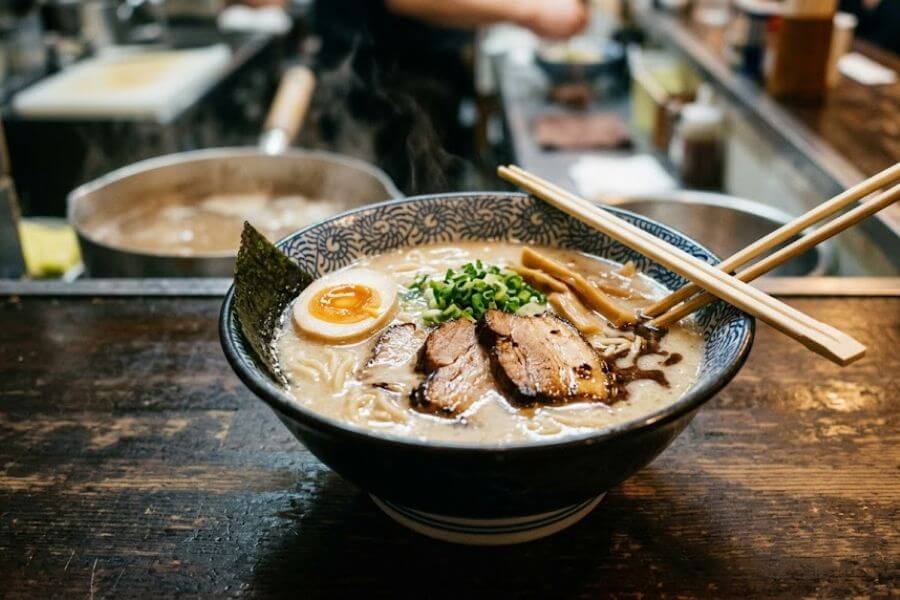
- Chashu: Slices of tender, slow-braised pork belly or pork shoulder that melt in your mouth.
- Ajitsuke Tamago: A soft-boiled egg marinated in soy sauce and mirin, featuring a perfectly gooey, jam-like yolk.
- Menma: Fermented bamboo shoots that offer a sweet, earthy flavor and a satisfying, crunchy texture.
- Nori: A crisp square of dried seaweed tucked into the side of the bowl, which adds an ocean-like aroma.
- Negi: Finely chopped green onions or scallions that cut through the richness of the fat with a sharp, fresh bite.
The Aroma Oil (The Finishing Touch)
Right before serving, many chefs drizzle a spoonful of flavored oil across the surface of the soup. This might be black garlic oil, chili oil, or rendered pork lard flavored with scallions. This oil creates a shiny skin on top of the broth, trapping the aromas inside the bowl so they hit your nose the second you lean in to take a bite.
How to Find a Great Local Ramen Shop
When you are in Japan, you will see ramen shops everywhere: inside train stations, tucked into basement malls, and standing alone on quiet residential street corners. With thousands of options, how do you pick a great one?
Look for the Line
The absolute easiest way to find a fantastic local spot is to look for a line of people waiting outside. Japanese food lovers are incredibly patient and will happily wait for an hour or more for a superior bowl of noodles. If you see a line of salarymen, workers in business suits, standing patiently on the sidewalk at lunch time, you have found a winner.
Spot the Red Curtain
Traditional ramen shops often hang a split fabric curtain, called a noren, over the front door. These curtains usually feature the name of the shop written in bold kanji characters. If the curtain is hanging outside, the shop is open for business. If the curtain is pulled inside, they are either closed for the day or have run out of broth.
Avoid the Heavy Tourist Zones
While famous chain restaurants are convenient and delicious, the truly legendary local spots are small, independent shops. They might only have eight or ten counter seats. Do not worry if the shop looks old, slightly worn down, or is located in a quiet neighborhood. In Japan, some of the most complex, award-winning food is served in tiny spaces that look like simple hole-in-the-wall diners.
Conquering the Ticket Vending Machine
Step inside a local ramen shop, and you will immediately face your first challenge: the ticket machine. Known as a kenbeiki, this machine replaces a human waiter for taking orders. This system speeds up the process, keeps things hygienic by keeping money away from the food preparation area, and ensures the kitchen knows exactly what to cook the moment you sit down.
Step-by-Step Machine Navigation
Using these machines is straightforward once you understand the layout. Do not panic if you see a wall of text with zero English translation. Follow this routine to get your food without any stress:
- Locate the machine: It is almost always standing right next to the entrance door, either just inside or just outside the shop.
- Insert your money first: This is the step that trips up most newcomers. The buttons will not light up until you put money in. Feed in a one-thousand-yen bill or drop in some coins.
- Find the master button: The top-left button on the machine is almost universally the shop’s signature dish. It is usually the recommended bowl that includes all the standard toppings. If you feel completely overwhelmed, just press the top-left button.
- Select your main bowl: The upper rows of buttons usually feature the main ramen options, often accompanied by small photos. Press the button for your chosen style.
- Add extra toppings: The lower rows usually feature individual toppings or side dishes. If you want an extra marinated egg, more pork slices, or a side of gyoza dumplings, press those buttons now.
- Take your tickets and change: Once you press your buttons, the machine will drop small paper tickets into a tray at the bottom, along with your change. Grab everything and head toward the counter.
Deciphering the Common Button Symbols
If the machine has no pictures and no English words, you can look for these common Japanese characters to guide your selection:
- ラーメン (Ramen): The standard bowl of noodles.
- チャーシュー麺 (Chashumen): A bowl loaded with extra slices of braised pork.
- 特製 (Tokusei): The deluxe or special version of the bowl, packed with every topping they offer.
- 大盛り (Omori): A large portion of noodles. Press this if you are extra hungry.
- トッピング (Topping): The section for extra add-ons.
- 玉子 / 味玉 (Tamago / Ajitama): The soft-boiled marinated egg.
- ライス (Raisu): A bowl of white rice, which locals love to dump into their leftover broth at the end of the meal.
The Counter Experience and Customization
Once you have your paper tickets, you will be seated. In a traditional shop, this almost always means a seat at a long, narrow wooden counter looking directly into the open kitchen. There are rarely individual tables. This layout creates an intimate, fast-paced environment where you can watch the steam rise and see the chefs working with rhythmic precision.
Handing Over Your Tickets
Sit down and place your paper tickets on the raised counter ledge directly in front of you. A kitchen worker will reach over, grab the tickets, tear them in half to confirm the order, and pass one half back to you or keep them in their system.
Customizing Your Bowl
At many modern and traditional shops, particularly those serving tonkotsu ramen, the staff will ask you a series of quick questions right after taking your tickets. They might point to a laminated menu card with English options, or they might just ask you verbally. They are looking for your personal preferences on three key factors:
- Noodle Texture (Men no kata-sa): You can choose how long your noodles are boiled. Locals almost always prefer their noodles firm because they continue to cook and soften up inside the hot broth. Ask for kata-me for firm, futsuu for regular, or yawa-me for soft. If you are eating super thin tonkotsu noodles, you can even ask for bari-kata, which means extra firm or crunchy.
- Broth Richness (Aji no ko-sa): This controls how much concentrated tare flavor goes into the bowl. You can ask for koi-me for a strong, salty, punchy flavor, futsuu for standard, or usu-me for a lighter, less intense seasoning.
- Oil Content (Abura no lyo): This determines how much aroma oil or melted fat is ladled onto the top of your soup. Choose oo-me for a heavy, rich, fatty layer that traps heat, futsuu for standard, or sukuna-me for less oil.
Setting Up Your Workspace
While your food is being prepared, take a look at the counter in front of you. You will find a collection of chopsticks, napkins, and seasonings. Locals use these tools carefully to tweak their food as they eat. You will usually find a jar of grated garlic, a bottle of black pepper or white pepper, a container of chili flakes, and sometimes a jar of pickled red ginger. Leave these alone for now; you should always taste the chef’s pure creation before adding anything to it.
You will also see a pitcher of ice water and a stack of clean plastic cups. Service in a local ramen shop is largely self-service when it comes to drinks. Pour yourself a glass of water and enjoy the view of the kitchen.
The Art of Slurping and Eating
A few minutes pass, and the chef lifts a heavy, steaming ceramic bowl and places it onto the counter ledge right in front of you. It looks beautiful, smells incredible, and is screamingly hot. This is the main event. Now it is time to eat like someone who has lived in Tokyo their entire life.
The Sacred First Sip
Do not immediately grab a mountain of noodles with your chopsticks. That is a rookie mistake. Instead, pick up the large flat spoon, usually called a renge, and gently push the toppings aside. Ladle up a small pool of pure broth from the center of the bowl and blow on it gently to cool it down.
Bring the spoon to your lips and sip. Let the broth coat your tongue. This allows you to appreciate the hours of hard work the chef put into creating the soup base. Is it earthy? Is it creamy? How does the saltiness balance against the richness of the fat? This first sip sets the stage for the rest of your meal.
How to Slurp Properly
Now, put the spoon down and pick up your chopsticks. Pull a small bundle of noodles up from the depths of the soup, lifting them entirely out of the broth for just a split second to let the cool air hit them. Bring the bundle to your mouth, trap the ends of the noodles between your lips, and inhale sharply.
Slurp!
Yes, it will be loud. Yes, it might feel incredibly strange if you grew up being told that making noise at the dinner table is rude. In Japan, slurping is not just accepted; it is actively encouraged. There are three excellent reasons why locals slurp their noodles:
- Temperature Control: The broth is boiling hot. By pulling air into your mouth along with the noodles, you create a built-in cooling system that protects your tongue from burns.
- Flavor Enhancement: Slurping vaporizes the liquid broth, turning it into a fine mist inside your mouth. This sprays the complex aromas right into the back of your throat and nasal passages, making the flavor taste twice as intense.
- Broth Transportation: Straight noodles do not hold much liquid on their own. When you slurp with force, you create suction that pulls a healthy dose of soup up into your mouth along with the wheat noodles, ensuring you get a perfect balance of food and broth in every single bite.
Managing Your Toppings
Do not eat all your pork or your egg right at the beginning. Treat them as delicious side items to enjoy between mouthfuls of noodles.
Let the slices of chashu pork sit submerged in the hot broth for a minute or two. The heat will melt the pork fat, turning the meat incredibly tender until it practically falls apart when you lift it with your chopsticks.
When it comes to the marinated egg, bite it in half carefully over your spoon so the rich, liquid gold yolk does not leak out and disappear into the soup. Eat half the egg, let the other half soak up some broth, and eat it a few minutes later.
Changing the Flavor Midway
Once you have eaten about half of your noodles, you can start experimenting with the counter seasonings. This keeps the meal exciting and prevents your palate from getting tired of a single rich flavor.
If you are eating a heavy tonkotsu ramen, try dropping in a small spoonful of crushed garlic or a pinch of pickled red ginger. The sharp acidity of the ginger cuts through the pork grease instantly, refreshing your mouth. If you are eating shoyu or shio ramen, a dash of white pepper or a sprinkle of chili flakes can add a beautiful, warming kick that shifts the entire character of the clear broth.
Advanced Local Traditions
If you want to look like a true ramen veteran, there are two advanced techniques you can deploy depending on how hungry you are.
Kaedama (The Noodle Refill)
If you are eating thin, southern-style tonkotsu ramen, you will notice that the noodle portions can sometimes feel a bit small. This is intentional. Because thin noodles get soggy very quickly, chefs prefer to give you a smaller portion first so you can finish them while they are perfectly firm.
If you finish your noodles and still have plenty of hot broth left in your bowl, do not drink the soup! Instead, place your cash on the counter or look for a special button on the ticket machine and call out to the chef: “Kaedama, kudasai!”
This means, “Noodle refill, please!” The chef will grab a fresh bundle of noodles, boil them for less than a minute, shake off the water, and drop the hot, fresh noodles directly into your remaining broth. You get a whole second round of food for just a dollar or two, and the noodles will be perfectly firm all over again.
The Rice Drop
If you are eating a thick, heavy miso ramen or a rich shoyu ramen where kaedama is not traditional, you can order a small bowl of plain white rice, called a raisu. Eat your noodles as normal until they are completely gone. Now you are left with a bowl of incredibly flavorful, savory, seasoned leftover soup.
Dump the entire bowl of white rice straight into the soup. Stir it around with your spoon. The grains of rice will absorb the savory broth like a sponge, turning your leftover soup into a rich, comforting savory porridge. It is an incredibly satisfying way to finish every single scrap of food.
Etiquette and Unwritten Rules
Ramen shops operate on a system of speed, efficiency, and deep mutual respect between the cook and the diner. Because these shops are tiny and margins are tight, keeping things moving smoothly is essential. Follow these unwritten rules to show respect and blend in perfectly:
- No long conversations: A local ramen shop is not a cafe or a casual bar. It is an eating station. Locals sit down, focus completely on their food, eat with intense speed, and leave. Keep your phone in your pocket and save the long, casual chats with your friends for a coffee shop afterward.
- Do not linger when finished: The moment you swallow your last bite of food and drink your final sip of soup, put your chopsticks down. Gather your belongings, stand up, and vacate your seat. There is almost certainly a line of tired, hungry people waiting outside on the sidewalk, and staying to look at your phone is considered quite inconsiderate.
- The Ledge Clean: When you stand up to leave, pick up your empty ramen bowl, your water glass, and your spoon, and place them up on the high counter ledge where the chef first gave them to you. Grab a damp towel from the counter, wipe down the wooden space directly in front of you, and drop the towel back on the ledge.
- Say thank you: As you walk out the door, turn toward the kitchen and call out cheerfully: “Gochisousama deshita!” This translates to, “Thank you for the wonderful feast.” It is the ultimate sign of respect to the hardworking kitchen crew, and you will almost certainly hear a chorus of warm goodbyes as you step back out onto the street.
Frequently Asked Questions
Is it rude to leave broth behind at the bottom of the bowl?
No, it is not rude at all. While finishing every drop of broth is a massive compliment to the chef, ramen soup is incredibly packed with sodium and rich fats. Many health-conscious locals will eat all the noodles and toppings but leave a good portion of the liquid behind to avoid feeling overly full or consuming too much salt. Drink as much as you comfortably enjoy, and do not feel guilty about leaving the rest.
Can I ask for a container to take my leftover ramen back to my hotel?
Traditional Japanese ramen shops almost never allow you to take leftovers home. Noodles will expand and turn into a mushy paste within fifteen minutes of sitting in liquid, destroying the quality of the dish. Food safety rules are also incredibly strict in Japan. Expect to finish your meal at the counter or leave what you cannot manage behind.
Why do some shops serve ramen with a separate plate of noodles and a bowl of soup?
You have stumbled upon a style called tsukemen, which means dipping ramen. In this style, the noodles are boiled, rinsed in ice water to give them an incredibly chewy, firm texture, and served cold on a plate. The broth is served on the side in a separate bowl and is reduced down to be incredibly thick, concentrated, and intensely salty. You take a bundle of cold noodles with your chopsticks, dip them into the hot, thick soup for a brief moment, and slurp them down. It is a fantastic variation to try, especially during the hot summer months.
Can I share a single bowl of ramen with my friend if we are not very hungry?
Generally, no. Because local shops are tiny and often have fewer than ten seats, it is standard policy that every single person who occupies a seat must order their own individual bowl of food. If you are not hungry enough for a full meal, it is best to visit a shop when you have worked up a healthy appetite. Some shops offer a smaller size portion on their ticket machines if you want a lighter snack.
Are there vegetarian or vegan options available at standard local ramen shops?
Traditional Japanese ramen relies heavily on animal products. Even if a broth looks clear, it is almost certainly built from chicken, pork, or fish stocks, and the aroma oils often use rendered pork fat. However, because of growing international demand, specialized vegan and vegetarian ramen shops have opened up across major cities like Tokyo and Kyoto. If you have dietary restrictions, look for shops specifically advertised as vegetarian-friendly rather than walking into a standard local neighborhood spot.