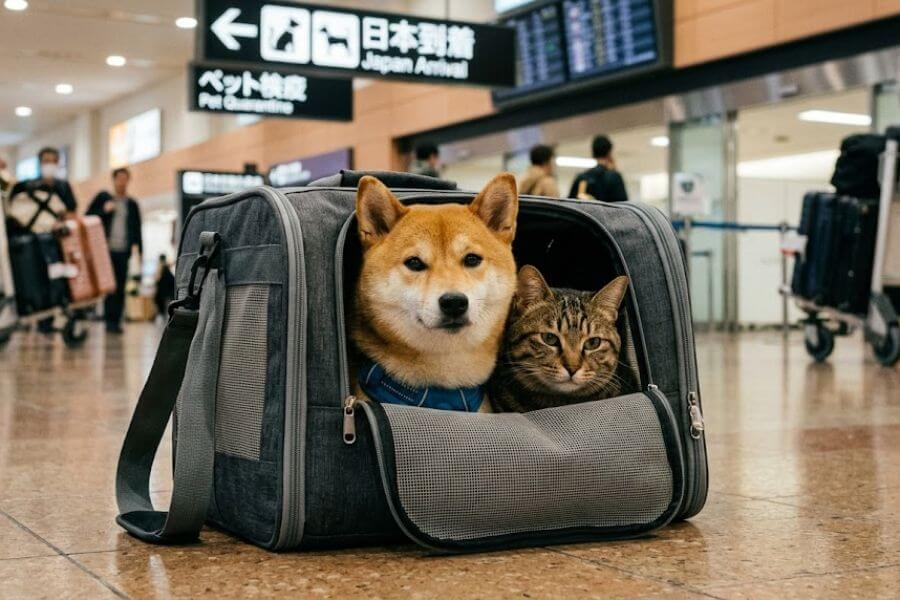
So, you are packing your bags for the land of vending machines, ancient temples, and sushi, and you want your furry best friend by your side. Bringing your dog or cat from the United States to Japan is an incredible adventure. Imagine walking your pup under the pink cherry blossoms or watching your kitty curl up in a cozy Tokyo apartment.
But here is the truth. Japan is a rabies-free island nation, and they are very strict about keeping it that way. Moving a pet there requires a lot of steps, precise timing, and a mountain of paperwork. If you miss one detail, your pet could face a long quarantine at the airport.
Do not panic. This guide will walk you through every single step of the process so you and your pet can land smoothly in Japan.
Key Takeaways for a Smooth Journey
Before diving into the details, look at the most critical points you need to remember. This is your master checklist.
- Start early: The entire process takes at least seven to eight months because of a mandatory waiting period.
- Microchip first: Your pet must have an international microchip before getting any vaccines.
- Two rabies shots: Your pet needs two separate rabies vaccines given at specific times.
- Blood test success: A special blood test must prove your pet has rabies antibodies.
- The 180-day wait: After the blood test, your pet must wait 180 days in the US before traveling.
- Advance notice: You must tell the Japanese government you are coming at least 40 days before you land.
- Final health check: A government vet must sign off on your pet’s health right before departure.
Understanding the Microchip Requirement
The absolute first step in this entire process is getting your pet a microchip. Think of a microchip as a permanent, digital ID tag that sits safely under your pet’s skin. Japan uses this chip to verify that the dog or cat standing in front of them matches the paperwork exactly.
Why the Chip Comes First
This is a rule you cannot bend. Any vaccine or blood test your pet receives before getting a microchip does not count in the eyes of the Japanese Animal Quarantine Service. The microchip establishes your pet’s identity. Every piece of paper you collect from this day forward must list your pet’s unique microchip number.
The Right Type of Chip
Not all microchips are the same. Japan requires an ISO 11784 or 11785 compliant microchip. This is a standard fifteen-digit chip that operates on a 134.2 kHz frequency.
Most vets in the United States use this standard chip nowadays, but you must ask and double-check. If your pet has an older, eleven-digit or nine-digit chip, it will not work with standard Japanese scanners.
What to Do If Your Pet Has the Wrong Chip
If your pet has a non-standard chip, you have two choices. You can ask your vet to implant a second, ISO-compliant chip. If you do this, the new chip becomes the official ID, and you must restart all your medical steps.
Your second choice is to buy your own portable microchip scanner that can read your pet’s old chip. You will have to carry this scanner with you through the airports and hand it to the officers in Japan so they can scan your pet. Most pet parents find it much easier to just get the correct chip from the start.
The Two-Step Rabies Vaccine Process
Once the microchip is in place and working, your pet is ready for their rabies shots. Japan requires dogs and cats to have at least two rabies vaccines in their lifetime, and the timing must be perfect.
The First Shot
Your pet can get their first rabies vaccine on the exact same day they get their microchip, as long as the chip goes in first. The vet will scan the chip, inject the chip if needed, and then give the rabies shot. This vaccine must be an inactivated or recombinant type. Live vaccines are not allowed. Your pet must be at least ninety days old when they receive this first shot.
The Second Shot
Your pet cannot get the second shot right away. You must wait at least thirty days after the first shot before your pet can receive the second one. For example, if the first shot happens on January 1, the earliest day for the second shot is January 31.
Additionally, this second shot must happen while the first shot is still active. If your pet received a one-year vaccine for their first shot, the second shot must happen before that year runs out.
Tracking the Details
Every time your pet gets a rabies shot, your vet needs to write down specific details. Make sure you get a certificate for each shot that includes:
- The date the vaccine was given.
- The manufacturer of the vaccine.
- The product name and lot number.
- The expiration date of the vaccine.
- The signature of the veterinarian.
The Rabies Blood Test
After your pet has received both rabies shots, it is time for a special blood test. This test is called a Rabies FAVN test. FAVN stands for Fluorescent Antibody Virus Neutralization. This test measures the amount of rabies antibodies in your pet’s blood to prove the vaccines actually worked.
Timing the Blood Test
You can have your vet draw your pet’s blood on the same day as the second rabies vaccine, or you can wait a couple of weeks. Waiting two to three weeks often gives the pet’s body time to build up more antibodies, which makes it more likely they will pass the test.
Approved Laboratories
You cannot send this blood sample to just any local lab. The Japanese government only accepts results from specific, officially approved laboratories. For pet owners in the United States, there are two primary options:
- The Kansas State University Rabies Laboratory.
- The Department of Defense Food Analysis and Diagnostic Laboratory.
Your vet will spin the blood down into serum, pack it carefully, and mail it off to one of these approved facilities.
Passing the Test
To pass the test and be allowed into Japan without quarantine, your pet’s blood must show an antibody level of at least 0.5 IU per milliliter. This shows that your pet has a strong immune system shield against rabies.
The laboratory will send a formal paper report back to your vet with the results. Keep the original copy of this certificate in a safe place. You will need to present this physical paper when you arrive in Japan.
The Great 180-Day Wait
This is the step that surprises most pet parents and requires the most patience. Once the laboratory draws the blood for the successful FAVN test, a countdown clock starts. Your pet must wait at least 180 days in the United States before they can board a plane to Japan.
Why Does Japan Make Pets Wait?
The incubation period for rabies can be up to six months. Japan wants to ensure that your pet stays perfectly healthy in the United States for the entire duration of this potential incubation window. This proves your pet was not carrying the virus before the vaccines took full effect.
Calculating the Days
Day zero is the day the vet drew the blood for the test. You start counting on the next day. If you arrive in Japan on day 179, your pet will fail the entry requirements. The officers will place your pet in a quarantine facility at the airport for the remaining days.
For example, if you arrive on day 175, your pet must stay in an airport kennel for five days until the full 180-day period finishes. You will have to pay for the kennel and food during that time. To avoid this stress, aim to travel on day 181 or later.
Keeping Vaccines Up to Date During the Wait
The 180-day wait takes roughly six months. During this long pause, you must monitor the expiration dates of your pet’s rabies vaccines. If the vaccines expire while you are waiting or while you are traveling, the entire process breaks down, and you have to start all over again. Ensure your pet’s vaccine coverage remains continuous without a single day of lapse.
Filing the Advance Notice
As your 180-day waiting period draws to a close, you need to let Japan know you are coming. You must submit an official document called the Notification for Import of Animals to the Japanese Animal Quarantine Service.
The 40-Day Deadline
This notification must reach the airport authorities in Japan at least 40 days before your flight lands. If you try to submit it 39 days before, they can deny your entry or force your pet into quarantine. It is always smart to send this paper in around 50 or 60 days before travel just to be safe.
Choosing Your Port of Entry
You must send this notification to the specific airport where your plane will land. Not every airport in Japan is equipped to handle pet imports. You must fly into an approved port of entry. The main international airports that accept pets include:
- Narita International Airport (Tokyo)
- Haneda International Airport (Tokyo)
- Kansai International Airport (Osaka)
- Chubu Centrair International Airport (Nagoya)
- Fukuoka Airport (Fukuoka)
Receiving the Approval
Once the Japanese agricultural authorities review your notification and see that your dates align correctly, they will send you a document called the Approval of Notification. This paper confirms they are expecting you and have reserved a spot for your pet’s inspection. Print this document out and pack it with your travel essentials.
The Final Health Checks and Forms
The final weeks before your flight are busy. You need to secure official health certificates that prove your pet is healthy and free of pests. This requires coordination between your local vet and the United States Department of Agriculture, known as the USDA.
Form AC and Form BC
Japan has specific health certificates that you must use. They are commonly referred to as Form A and Form B.
- Form A: This form is filled out and signed by you, the pet owner. It lists basic details like your name, address, and your pet’s description.
- Form B: This multi-page form is filled out and signed by an USDA-accredited veterinarian. It contains the history of your pet’s microchip, rabies vaccines, blood test results, and final clinical inspections.
The Final Clinical Examination
Within ten days of your departure flight, you must take your pet to an USDA-accredited vet for a physical exam. The vet will scan the microchip to verify the pet’s identity one last time. They will check your pet’s temperature, eyes, ears, and skin to ensure they do not show signs of rabies or external parasites like ticks and fleas.
While Japan does not strictly require treatments for ticks, fleas, or internal worms for pets coming from the US, it is highly recommended to have your vet perform these treatments during this visit and record them on Form B. It shows the inspectors in Japan that you are a responsible pet owner.
USDA Endorsement
After your vet signs Form B, the paperwork is still not complete. The forms must be officially endorsed by a USDA Area Veterinarian-in-Charge. This means a federal government official must review all the signatures, dates, and certificates to stamp them with an official seal.
You can do this by mailing the documents to your regional USDA office using an express shipping service, or you can use the digital USDA system called VEHCS if your vet is registered for it. Because of the tight ten-day window, many pet owners prefer to make an in-person appointment at a USDA office if they live near one.
Booking Your Airline Tickets
Flying across the Pacific Ocean with a pet requires careful airline selection. Every airline has different rules regarding pet weight, carrier sizes, and cabin allowances.
Cabin Travel versus Cargo Travel
Depending on the size of your pet, you will have to choose how they travel on the plane.
Pets in the Cabin
If you have a small dog or a cat, some airlines will allow them to ride under the seat in front of you inside a soft-sided carrier. This is usually the least stressful option for both you and your animal companion. However, Japanese airlines like Japan Airlines and All Nippon Airways do not allow pets in the passenger cabin on international flights. You will need to look at United Airlines, Delta Air Lines, or American Airlines if you want your pet in the cabin.
Pets in Checked Baggage or Cargo
If your dog is too large to fit under a passenger seat, they must travel in the cargo hold. This area is temperature-controlled and pressurized, just like the cabin above. Your pet will need a sturdy, hard-plastic crate that allows them to stand up, turn around, and lie down comfortably.
Be aware of summer heat restrictions. Many airlines will not accept pets in the cargo hold if the temperature at any airport on your route exceeds eighty-five degrees Fahrenheit.
Comparing Airline Pet Accommodations
| Feature | US Legacy Carriers (Delta, United, American) | Japanese Carriers (JAL, ANA) |
| In-Cabin Option | Allowed for small cats and dogs on select flights | Not allowed on international routes |
| Cargo Option | Available, but with strict temperature rules | Available with excellent pet care systems |
| Carrier Requirements | Soft-sided for cabin, hard-plastic for cargo | Hard-plastic IATA-approved crates only |
| Booking Window | Limited spots, book months in advance | Limited spots, reserve during ticket purchase |
What to Pack for Your Pet’s Flight
Your pet needs a suitcase just like you do. Packing the right items ensures they stay comfortable during the long journey and helps you breeze through the quarantine check in Japan.
Essential Crate Items
If your pet is flying in cargo, their crate needs specific gear. Attach two small bowls to the inside of the crate door, one for food and one for water. It is a good idea to freeze water in the water bowl the night before the flight. This prevents the water from splashing out while the baggage handlers move the crate onto the plane. As the ice melts during the flight, your pet will have fresh water to drink.
Line the bottom of the crate with absorbent puppy pads or a familiar blanket that smells like home. Do not put hard toys or bones in the crate, as these can rattle around and hurt your pet during turbulence.
The Document Folder
Keep all your pet’s paperwork in a sturdy, waterproof folder inside your carry-on bag. Never pack these papers in your checked luggage. You will need to show them multiple times before you even leave the United States. Your folder should contain:
- The original USDA-endorsed Form A and Form B.
- The original rabies vaccine certificates.
- The original FAVN blood test result sheet.
- The Japanese Approval of Notification printout.
- Your pet’s regular vaccination records.
Arriving at the US Airport
On the day of your flight, arrive at the airport at least three to four hours before departure. Checking in with a pet takes extra time because the counter agents must verify your paperwork and measure your pet’s carrier.
The Check-In Process
Go straight to the full-service check-in counter. Tell the agent you are traveling with an international pet. They will look over your USDA health certificate and confirm your pet’s reservation in their system. If your pet is flying in the cabin, they will weigh the pet inside the carrier to ensure you meet the airline limits.
Going Through TSA Security
If your pet is traveling in the cabin, you will need to take them through the TSA security checkpoint. You will have to take your pet out of their carrier and walk or carry them through the metal detector while the empty carrier goes through the X-ray machine.
Ensure your pet is wearing a secure collar or harness with an ID tag, but remove any leashes with metal clips before walking through the scanner. If your pet is nervous around crowds, ask the TSA officers for a private screening room so your pet does not bolt.
Landing in Japan and Animal Quarantine Service
Welcome to Japan. Once you step off the plane, your first priority is getting through the official pet inspection.
Finding the Quarantine Office
Follow the signs toward immigration and baggage claim. Before you clear passport control or pick up your luggage, look for the signs marked Animal Quarantine Service. If your pet traveled in the cargo hold, an airline representative will usually bring your pet in their crate directly to this area to meet you.
The Final Physical Inspection
A Japanese quarantine officer will take your pet to an examination table. They will use a handheld scanner to read the microchip under your pet’s skin. They will compare the fifteen-digit number on the scanner screen to the numbers written on your USDA certificates.
Next, a vet will look over your pet to ensure they look healthy, bright, and free of sickness. If your paperwork is flawless and the microchip matches perfectly, this entire process takes less than an hour.
Receiving the Import Certificate
Once the officers approve your pet, they will print out an official piece of paper called the Import Certificate. They will also attach a small plastic tag to your pet’s carrier to show they passed inspection. You are now free to take your pet through regular customs and walk out into Japan. Keep this import certificate forever. If you ever decide to move back to the United States, you will need this paper to leave Japan.
Adjusting to Pet Life in Japan
Once you leave the airport, you and your pet have to adapt to a new culture and environment. Japan is very pet-friendly, but they have unique rules that you need to follow to be a good neighbor.
Registering Your Dog
If you are moving to Japan long-term with a dog, you must register your pup with the local city hall or ward office within thirty days of arrival. This is a legal requirement.
You will show them your airport import certificate, and they will give you a metal license tag to attach to your dog’s collar. Cats do not need to be registered with the local government, but they must stay indoors.
Understanding Walk Etiquette
When you walk your dog in Japan, carry a small bottle of water along with your waste bags. It is a Japanese custom to pour water over the spot where your dog urinates to clean the pavement and keep the streets smelling fresh. Always keep your dog on a short leash. Letting dogs greet each other on the sidewalk without permission is uncommon, so give other walkers plenty of space.
Finding Pet Supplies
Japanese pet stores are filled with amazing toys, high-quality food, and stylish outfits. However, the food brands might be different from what your pet eats at home.
If your pet has a sensitive stomach, pack enough of their regular food in your suitcases to last for the first few weeks. You can slowly transition them to Japanese brands later, or order American brands online through specialty import sites.
Frequently Asked Questions
What happens if I move to Japan before the 180-day waiting period ends?
If you bring your pet to Japan before the full 180 days have passed, your pet will not be allowed to go home with you right away. The Animal Quarantine Service will hold your pet in an official quarantine facility at the airport for the remaining days.
For example, if you arrive on day 150, your pet must stay in an airport kennel for thirty days. You are responsible for paying the daily kennel fees, which cover housing and basic care. You will also have to provide your pet’s food. While you can visit your pet during specific hours at the facility, you cannot take them out until the clock hits day 180.
Can my local vet do all the paperwork, or do I need a special doctor?
Your regular neighborhood vet can perform the microchip placement, give the rabies shots, and draw the blood for the FAVN test, but they must hold a specific credential. They must be an USDA-accredited veterinarian.
Most companion-animal vets in the United States hold this accreditation, but some do not. Call your clinic ahead of time and ask directly if the doctor who will see your pet is USDA-accredited. If they are not, you will need to find a vet who is, because the federal government will not endorse paperwork signed by a non-accredited doctor.
Does Japan require a quarantine for pets coming from the United States if all steps are followed?
No. If you follow every single step in this guide perfectly, your pet will face zero quarantine time. The airport vet will scan the microchip, check your endorsed USDA forms, look at your pet’s physical condition, and release them to you within roughly thirty to sixty minutes. The 180-day wait you perform in the United States acts as the quarantine period, allowing your pet to wait comfortably at home with you instead of in an airport kennel.
What should I do if my pet fails the rabies blood test?
If your pet’s FAVN blood test results come back with an antibody level lower than 0.5 IU per milliliter, it means their body did not create a strong enough immune response to the vaccines. Do not worry, this happens sometimes.
You will need to take your pet back to the vet for another rabies booster shot to boost their immune system. After waiting a few weeks for the new vaccine to work, your vet will need to draw blood and mail a new sample to the approved laboratory. The 180-day countdown clock will reset and start over from the day of the new, successful blood draw.
Are there any specific dog breeds that Japan bans from entering the country?
Unlike some countries that ban specific breeds like Pit Bulls or Rottweilers, Japan does not have a nationwide ban on specific dog breeds. Any domestic dog can enter the country as long as they pass the health and rabies entry requirements.
However, you must check with your airline and your future housing provider. Many airlines ban short-nosed breeds like Pugs, Bulldogs, and Boxers from flying in the cargo hold because their short airways make it hard for them to breathe in stressful situations. Additionally, many apartments in Japan have strict weight limits or bans on large dog breeds.