Key Takeaways
- Tipping is not a part of Japanese culture and is generally not expected in any situation.
- Excellent service is considered a standard professional duty, not something that requires extra money.
- Offering a tip can sometimes cause confusion or be viewed as rude because it may imply the worker is underpaid.
- Instead of money, you can show your appreciation through polite words, a smile, or a small bow.
- The only exceptions are very rare situations involving private tour guides or specific traditional hospitality settings where a gift or cash in a decorative envelope might be acceptable.
- Always use the provided cash tray at counters when paying to show respect for the transaction process.
The Philosophy of Service in Japan
When you travel to a new country, one of the first things you learn is how to pay for things. In many parts of the world, leaving a little extra money for your server or driver is a way to say thank you. However, when you step off the plane in Japan, you will find that this rule does not apply. In Japan, the entire approach to service is built on a foundation that does not involve extra payments.
This is deeply rooted in the concept of omotenashi. This word represents a style of hospitality that is wholehearted and selfless. It means that the person serving you is anticipating your needs before you even realize you have them. Because this level of care is seen as the baseline for any professional interaction, it is already included in the price of your meal or your hotel stay. To add money on top of that feels strange to a local worker because they have already done exactly what they set out to do, which is to provide you with the best possible experience.
Why Tipping Can Cause Confusion
You might think that leaving a few extra coins or bills is a kind gesture. In your home country, it is a way to show that you liked the service. In Japan, however, the message might get lost. A server who finds extra money on the table might think you accidentally left your change behind. They might even run out of the building to find you and return your money, which can lead to a very awkward moment for both of you.
Beyond that, the idea of giving someone extra money can sometimes feel like a slight to their professional pride. By offering a tip, you might be accidentally suggesting that their boss does not pay them enough. Since every worker is treated with great dignity and respect, the idea that they need charity from a customer is something that simply does not fit into the social rhythm of the country.
Common Myths Versus Reality
There is a common belief among many travelers that you must leave money to get good service. If you are used to a system where servers work for tips, it can feel like you are doing something wrong by not leaving anything. You may worry that you will be treated poorly if you do not add a percentage to your bill.
The reality is that the level of service you receive in a ramen shop, a fancy restaurant, or a hotel will be consistently high regardless of whether you leave a tip. The staff does not work harder because they hope for a reward at the end. They work hard because it is their job and their personal standard of excellence. You can walk into any shop, café, or taxi and expect the same high level of care, and you never have to worry about your total bill increasing just to show your gratitude.
How to Show Gratitude Without Money
If you find that the service you received was truly special, you might still feel a strong urge to show your thanks. Fortunately, there are many ways to do this that are far more meaningful in Japan than money.
Use Your Words
One of the most powerful tools you have is language. A simple, sincere phrase goes a long way. After a meal, you can say, “Gochisousama deshita.” This phrase means, “Thank you for the meal,” and it carries a lot of weight. It shows that you appreciate the time and effort that went into preparing and serving your food. A smile and a slight bow to the staff as you leave are also universally understood as signs of genuine gratitude.
The Power of Being a Regular
If you really love a place, the best way to show it is to come back. In Japan, becoming a repeat customer is one of the highest compliments you can pay to a business owner. It shows that you value their work and that their service made an impact on you.
Proper Payment Manners
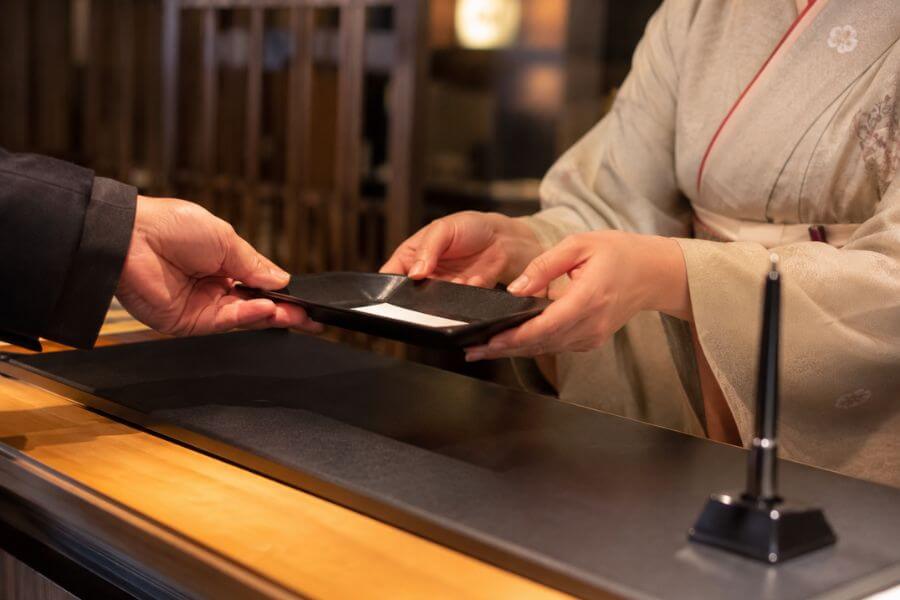
A big part of being a polite guest in Japan is how you handle money at the register. You will notice that most places have a small tray near the cash register. This is called a “karuton.” Instead of handing your cash or card directly to the clerk, you should place it on this tray. This is done to avoid the awkwardness of physical contact and to make the transaction clean and clear for both parties. Using this tray is a small but important way to show that you understand and respect local customs.
Exceptions to the Rule
While it is almost never appropriate to tip, there are a few very rare cases where you might see people offer a small gift or a gratuity. These are usually in high-end traditional settings or when someone has gone truly above and beyond their normal duties over a long period.
Traditional Inns and Private Guides
At a high-end traditional inn, or ryokan, you might have a personal attendant who takes care of your room and your meals. Some travelers choose to give a small gift or a bit of cash in a special envelope as a token of thanks. If you choose to do this, remember that it should never be loose cash. It must be in an envelope, handed over with two hands, and done in a quiet, private manner.
The Role of Envelopes
If you find yourself in a situation where you feel a tip is absolutely necessary—like when a private guide has spent days helping you navigate the country—you should always use a small decorative envelope. This makes the money look like a gift rather than a transaction. You should present it with two hands and a slight bow. If the person refuses, you must accept that refusal with grace and not push the issue further.
Comparison of Tipping Customs
| Country | Tipping Expectation | Reason |
| Japan | None | Professionalism and pride in work. |
| United States | High (15-25%) | Supplementing low base wages. |
| Europe | Low/Moderate | Small rounding or service charges. |
| Australia | Rare | Fair wages included in pricing. |
Frequently Asked Questions
Is it rude to not leave a tip in a restaurant?
Not at all. In fact, it is the standard way to behave. Not leaving a tip is seen as normal and respectful, as it shows you understand that the service is already part of the total price.
What should I do if a server chases me down after I leave money on the table?
Do not worry. Simply smile, bow slightly, and let them know that it was a gesture of thanks, but then accept your money back. Do not insist on them taking it, as this can make the situation very uncomfortable for them.
Can I tip my taxi driver?
No, you should not tip taxi drivers in Japan. The fare is set by the meter and is exactly what you should pay. If you try to give them extra, they will likely be confused or attempt to return the change to you.
Are there any situations where I should leave a tip?
Only in very rare circumstances, such as hiring a private guide for an extended period or staying at a high-end traditional inn. Even then, it is never required. If you feel compelled to show extra appreciation, small, wrapped snacks or a polite thank-you card are often better received than cash.
How do I pay for my bill if there is no tipping?
Most restaurants will have you pay at the front register near the door rather than at your table. Simply walk to the counter with your bill, place your money or card on the provided tray, and you are all set.
Is it common for service charges to be added to my bill?
In some upscale hotels or restaurants, a service charge of around 10 percent might be added to your final bill. This is clearly stated, and you do not need to add anything on top of that amount. This fee is distributed among the staff by the business.