Key Takeaways
- Dotonbori is open all day and night, but arriving just before sunset allows you to see the transition from daylight charm to neon-lit magic while keeping the dinner crowds manageable.
- Always carry Japanese yen in cash because many street food stalls are small, family-run operations that do not accept credit cards or digital payments.
- You should never walk while eating in Dotonbori. It is customary to stand directly in front of the stall where you made your purchase, finish your food, return the waste to the shop, and then move along.
- Takoyaki, Okonomiyaki, and Kushikatsu are the holy trinity of Osaka food. Do not leave the district without sampling all three.
- Use your nose to find the best spots. Long lines often indicate fresh batches of hot food, which is the most important factor for quality in this district.
- Do not double-dip your Kushikatsu skewers in the communal sauce bin. It is a major social mistake, and many modern places have switched to individual squeeze bottles to prevent this issue.
Welcome to the Kitchen of Japan
You are standing at the threshold of one of the most vibrant culinary destinations on the planet. Dotonbori is not just a street; it is an atmosphere that wraps around you the moment you step off the train at Namba Station. The air smells of sizzling batter, savory dashi broth, grilled seafood, and sweet pastries. Giant mechanical crabs wave from the sides of buildings, and the famous Glico Man neon sign beams down upon the canal, reflecting the energy of millions of visitors who come here every year with one specific goal: to eat until they cannot eat anymore.
In Osaka, there is a concept called Kuidaore, which roughly translates to eating yourself into ruin. It is the pride of the city. While other parts of Japan might focus on refined, subtle flavors, Osaka focuses on bold, satisfying, and comforting tastes. You are here to experience this, and this guide is your roadmap to navigating the sensory overload of Dotonbori. You will find that the best food here does not hide behind fancy decor or reservation lists. It is served on paper trays, wooden sticks, and small plates, cooked right in front of you on sizzling metal griddles.
As you wander the narrow lanes, you will notice that Dotonbori is a collection of sights, sounds, and smells. The clatter of metal spatulas against iron plates creates a rhythmic beat that defines the district. The vendors are loud, passionate, and eager to serve you. You might feel overwhelmed at first by the sheer number of choices. There are thousands of items to try, and you only have so much space in your stomach. That is why you must approach your meal plan with strategy and enthusiasm.
This guide will walk you through the essential dishes, the history behind them, the proper etiquette for eating in public, and how to spot a master chef versus a tourist trap. Prepare your senses, bring your appetite, and get ready to dive into the heart of Osaka.
The Takoyaki Revolution
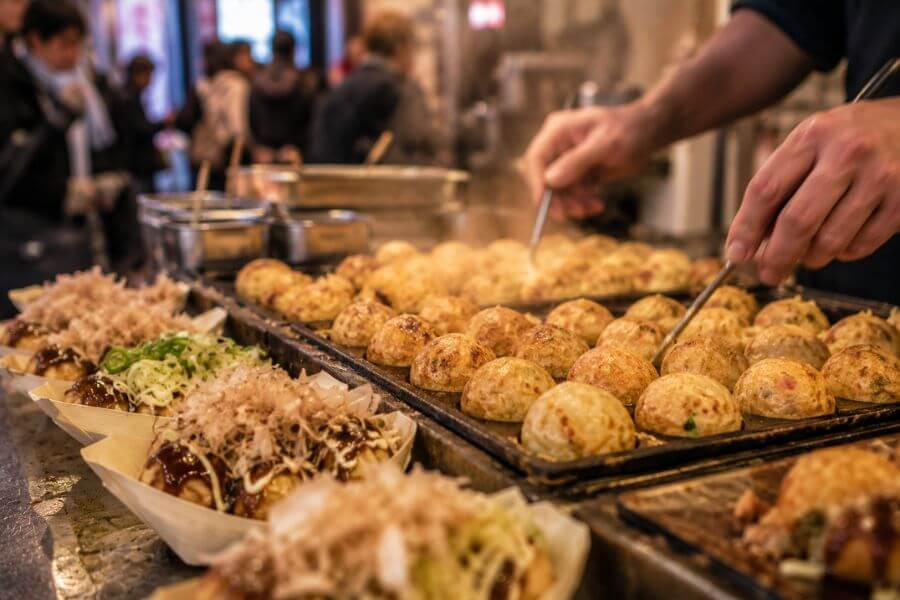
If there is one dish that represents the soul of Dotonbori, it is Takoyaki. These little golden spheres of octopus-filled batter are more than just a snack; they are a religion in Osaka. You will see shops lined up one after another, their storefronts dominated by large, dimpled cast-iron plates. The chefs here are masters of their craft. They move with lightning speed, flipping the batter with metal picks to create perfectly round balls that are crispy on the outside and molten on the inside.
You should pay close attention to the technique. A true master chef flips the takoyaki at the exact moment the crust sets. If they flip it too early, the center spills out. If they wait too long, the crust becomes tough. When you order your takoyaki, you usually get a small paper boat with six, eight, or twelve pieces. Do not rush into the first bite. The center of a takoyaki is effectively lava. It is filled with steam, ginger, green onion, and a chunk of octopus. Bite into it too quickly, and you will burn your tongue. You must poke a small hole in the top to let the steam escape before you savor the flavor.
The sauce is the next component to understand. Traditional takoyaki comes with a brown, tangy, savory sauce, a swirl of mayonnaise, a sprinkle of aonori seaweed powder, and a generous heap of katsuobushi, or dried bonito flakes. These flakes are so thin that they move and dance on top of the hot takoyaki due to the rising heat. It is a mesmerizing sight. The combination of the chewy octopus, the soft batter, and the sharp bite of the pickled ginger creates a harmony of textures and tastes.
When you look for a stall, look for the ones with a line of locals. You want a place that turns over their inventory constantly. If the takoyaki has been sitting under a heat lamp for twenty minutes, you are missing out on the crispy exterior that makes this dish special. The best stalls in Dotonbori are those that use a high-quality dashi broth in their batter, which gives the dough a savory, rich depth that you can taste even without the sauce. If you want to be adventurous, ask for the soy sauce version or the version with just salt and green onion. It highlights the quality of the batter better than the heavy brown sauce.
The Art of Okonomiyaki
Okonomiyaki is often called a Japanese savory pancake, but that description does not do it justice. It is a hearty meal, a construction project, and a communal experience all rolled into one. The name comes from two words: okonomi, meaning as you like, and yaki, meaning grilled. You are essentially building a meal based on what you enjoy most.
The base of the okonomiyaki is a mixture of flour, grated mountain yam, eggs, shredded cabbage, and dashi. From there, the ingredients vary. You can add pork belly, squid, shrimp, octopus, or even cheese and mochi. In Dotonbori, you will often find shops where you are invited to cook the okonomiyaki yourself on a hot griddle embedded in your table. If you are not confident, do not worry; the staff will be happy to assist or cook it for you in the kitchen.
Watching the cooking process is half the fun. The chef or you will pour the batter onto the hot iron. It creates a satisfying sizzle. You shape it into a thick round disk. Then, you layer the thinly sliced pork belly on top. As the bottom cooks and forms a golden, crunchy crust, the steam cooks the vegetables and the protein in the center. After several minutes, you flip the entire thing. The smell of the browning pork fat and the searing cabbage is intoxicating.
Once it is cooked through, you apply the sauce. It is a thick, dark, sweet, and savory sauce similar to Worcestershire but much denser. You then brush on the mayonnaise, sprinkle with seaweed powder, and finish with the bonito flakes. You use a metal spatula, called a kote, to cut the pancake into geometric sections and eat directly from the griddle. The texture is a beautiful contrast between the crispy fried edges, the tender pork, and the sweet, almost creamy cabbage center. It is a dish that makes you feel at home. It is heavy, it is filling, and it is absolutely essential to the Dotonbori experience.
Kushikatsu Mastery
Kushikatsu is the fried food of your dreams. Imagine a variety of ingredients—meat, vegetables, cheese, seafood—dipped in a light, airy batter, coated in fine breadcrumbs, and deep-fried until they reach a state of golden perfection. They are served on long bamboo skewers, making them the ultimate portable food.
The variety you will find in Dotonbori is staggering. You can find lotus root, which provides a satisfying crunch. You can find quail eggs, which are creamy and rich. You can find beef, pork, shrimp, asparagus, shiitake mushrooms, and even sweet potato. Each skewer is fried to order, ensuring that you receive it piping hot.
There is a specific culture surrounding Kushikatsu. You will see deep, rectangular stainless steel containers of sauce on the tables. This is the communal sauce for dipping your skewers. The golden rule of the Kushikatsu world is simple: you must never double-dip. Because the sauce is shared, you cannot take a bite of your skewer, realize you want more sauce, and put the skewer back into the bin. You must dip the entire skewer into the sauce before you take your first bite. If you need more sauce later, you can use a piece of cabbage—which is usually served on the side—to scoop the sauce from the container and pour it onto your skewer.
This rule is about hygiene, but it is also about respect for your fellow diners. Do not worry if you forget; the servers will likely remind you with a friendly nod or a sign. Many modern restaurants have moved away from the communal bin to individual squeeze bottles to remove the pressure of the rule entirely. When you eat Kushikatsu, you should pair it with a refreshing beverage, as the deep-fried nature of the food can be quite rich. The crunch of the panko breadcrumbs combined with the tender interior of the ingredients makes this a addictive snack that you will find yourself ordering again and again.
Sweet Endings
After the savory onslaught of takoyaki and kushikatsu, your palate will crave something sweet. Dotonbori does not disappoint in this department either. The dessert scene here is just as varied and exciting as the main course.
One of the most popular items is Taiyaki. This is a fish-shaped cake, usually filled with red bean paste, custard, or sometimes chocolate or sweet potato. The mold is made of iron, and it creates a crispy, waffle-like exterior that encloses a soft, warm filling. Eating a fresh taiyaki, especially on a chilly evening, is one of the most comforting experiences you can have. The balance between the crispy, slightly charred outer layer and the smooth, sweet filling is a masterclass in texture.
Another iconic treat is Melon Pan. Do not let the name fool you; it does not taste like melon. It is a sweet bread roll covered in a cookie-dough crust that has been scored to look like a melon. It is fluffy, airy, and topped with sugar crystals. You can find variations where it is filled with ice cream or whipped cream. It is a simple snack, but it hits the spot perfectly.
If you are looking for something more traditional, search for warabi mochi. This is a jelly-like confection made from bracken starch, coated in a roasted soybean flour called kinako, and drizzled with a dark sugar syrup called kuromitsu. It is cool, refreshing, and has a unique, silky texture that is difficult to describe but impossible to forget. It provides a light, clean finish to your meal that acts as a palate cleanser after the heavy, fried foods you have enjoyed throughout the day.
Navigating the Dotonbori Chaos
Dotonbori is a crowded, bustling, and energetic place. If you are not used to dense city centers, the sheer volume of people can be overwhelming. The secret to navigating the district is to have a plan but be prepared to deviate from it.
Timing is everything. If you arrive at noon on a Saturday, you will be fighting for space with thousands of other visitors. If you come later in the evening, say around 8:00 PM, you will see the district at its most beautiful. The neon lights reflect off the canal, and the energy is at its peak. However, if you want a more relaxed experience, try arriving around 4:00 PM. The shops are open, the lines are manageable, and you get the benefit of both daylight and the early evening glow.
When it comes to walking, stay to the side. The main pathways are arteries for thousands of people. Stopping suddenly in the middle of the path to look at your phone or take a photo is a sure way to disrupt the flow of traffic. Find a spot near a wall or an open space to stop. This is also where you should eat. Osaka culture dictates that you eat where you buy. Do not walk around with your food. You will notice that there are very few public trash cans in Japan, so you will often find that the stalls you buy from have a bin where you can discard your empty trays or skewers.
If you are worried about the language barrier, do not be. Most stalls have photos of their menu items. You can simply point to what you want and use your fingers to indicate how many you need. The vendors are accustomed to international visitors and are very helpful. A simple smile and a polite nod go a long way. If you are looking for the best spots, ignore the ones with the massive, over-the-top displays that seem more interested in marketing than cooking. Look for the stalls that have a continuous stream of people, a chef who is focused on the griddle, and a simple menu.
Comparison of Osaka Street Flavors
To help you decide what to prioritize during your visit, look at this list of textures and flavor profiles for the main dishes.
- Takoyaki:
- Texture: Crispy shell, creamy/molten interior, chewy octopus.
- Flavor Profile: Savory, dashi-forward, salty, tangy from the sauce.
- Best For: A quick, hot snack that provides an instant burst of comfort.
- Okonomiyaki:
- Texture: Crunchy exterior, soft/steamed vegetable interior, tender pork.
- Flavor Profile: Very savory, sweet/tangy sauce, rich umami from the bonito and pork fat.
- Best For: A substantial meal that keeps you full for hours.
- Kushikatsu:
- Texture: Extremely crispy, light breading, tender and juicy interior.
- Flavor Profile: Savory, oily/rich, brightened by the acidic dipping sauce.
- Best For: Trying a variety of ingredients in small, bitesize portions.
- Taiyaki (Sweet):
- Texture: Crispy waffle exterior, soft/gooey warm interior.
- Flavor Profile: Sweet, nutty (from red bean or custard).
- Best For: A dessert to finish your meal or a quick energy boost.
Frequently Asked Questions
Is it safe to eat street food in Dotonbori?
Yes, it is very safe. Japan maintains high standards for food hygiene and preparation. The stalls in Dotonbori are regulated and inspected, and the intense heat of the cooking process—whether it is the griddle for takoyaki or the fryer for kushikatsu—ensures that the food is safe to consume. Just be aware of your own allergies, as some dishes may contain ingredients like shrimp, egg, or flour that are not immediately obvious.
What should I do with my trash after I finish eating?
This is one of the most common questions for visitors. In Japan, public trash cans are rare. The general rule is that you should return your trash to the shop where you purchased the item. Most street food stalls have a designated bin next to their counter for this purpose. If you bought something at a convenience store, you should either dispose of it in the trash can inside that store or carry it with you until you find a public bin or return to your hotel.
Do I need to make reservations for street food?
For the vast majority of street food stalls, no, you do not need reservations. These places are designed for quick service and high turnover. You walk up, order, pay, and eat. However, if you are looking for a sit-down restaurant that specializes in these dishes, particularly for okonomiyaki where you cook at your table, it is often wise to check if they take reservations, especially on weekends or during holidays.
Can I use my credit card at the stalls?
You should assume that most street food stalls in Dotonbori are cash-only. While Japan is becoming more digital, many of these small, local vendors rely on a rapid cash exchange to keep the lines moving. Carrying a sufficient amount of Japanese yen in small bills and coins will make your life much more convenient. Do not expect to use a card for a small order of takoyaki.
What is the best time of year to visit Dotonbori for food?
Every season has its charm, but autumn and spring are particularly pleasant because the weather is mild. Osaka summers can be quite hot and humid, which can make eating hot food on the street a bit intense, but it is also the season for festivals and outdoor events. Winter is excellent if you enjoy the contrast between the cold air and the steaming, hot food. Honestly, there is never a bad time to eat in Osaka.
How much money should I budget for a day of eating?
This depends on your appetite, but you can have a very satisfying experience for a reasonable amount of money. Takoyaki, okonomiyaki, and kushikatsu are all affordably priced. You could easily have a full, memorable meal for the equivalent of fifteen to twenty-five dollars. If you plan on drinking alcohol or visiting multiple high-end sit-down establishments, you should adjust your budget accordingly, but for street food snacking, it is a very cost-effective way to experience the local culture.
Can I find vegetarian or vegan options in Dotonbori?
It can be a challenge. Much of the classic Osaka street food is built around meat, seafood, and dashi, which is a fish-based broth. For example, okonomiyaki batter often includes dashi, and takoyaki is literally stuffed with octopus. However, as tourism grows, more shops are beginning to offer plant-based alternatives. You should look for specialty restaurants that cater to dietary restrictions, or be prepared to ask questions about ingredients. It is helpful to have a card or a translation on your phone that explains your dietary needs in Japanese.
What is the Glico Man sign and why is everyone taking pictures of it?
The Glico Man sign is an iconic neon billboard located near the Ebisu Bridge in Dotonbori. It depicts an athlete running on a track and has become a symbol of Osaka itself. It was first installed in the 1930s and has been updated several times since. It is essentially the central landmark of the district. Taking a photo in front of it is a rite of passage for visitors, marking their arrival in the heart of Osaka. It is the perfect place to meet friends before you start your food tour.