Key Takeaways for Your Izakaya Adventure
Before diving into the detailed guide, here is a quick-reference summary to get you ready for your first Japanese pub experience:
- The Vibe is Everything: An izakaya is not a formal restaurant. It is a casual, lively space meant for sharing small plates, enjoying drinks, and unwinding with friends after a long day.
- The Otoshi Rule: Expect a small, mandatory appetizer called otoshi served when you sit down. It serves as a seating fee and a preview of the kitchen’s style.
- Order in Waves: Do not request your entire meal at once. Order a few items at a time, starting with cold dishes and moving toward heavier, fried, or grilled items.
- Sharing is Caring: Plates are placed in the center of the table. Use the shared chopsticks or your own to move food to your personal small plate.
- The Drink Protocol: It is customary to order drinks first. Pour drinks for your companions rather than topping off your own glass, and start the night with a collective shout of Kanpai!
Imagine walking down a narrow, neon-lit alleyway in Tokyo or stepping through a sliding wooden door in a bustling American neighborhood. The air carries the rich scent of charcoal, grilled meats, and simmering soy sauce. A loud, energetic chorus of voices greets you the moment you cross the threshold. Welcome to the world of the izakaya.
For anyone unfamiliar with Japanese culture, these establishments are often described as Japanese pubs. However, that comparison only scratches the surface. An izakaya is a unique combination of a tapas bar, a neighborhood tavern, and a cozy diner. It is a place where formal etiquette melts away, and people gather to eat, drink, and talk for hours. If you want to experience food culture in its most authentic, joyful form, learning how to navigate an izakaya is your golden ticket. This guide will teach you everything you need to know to walk in like a newcomer and dine like a seasoned local.
What Exactly is an Izakaya
To truly appreciate the experience, it helps to understand what makes these spaces so special. The word izakaya is made of three Japanese characters that roughly translate to “stay-drink-roof.” In simple terms, it is a place where you are invited to sit down, enjoy a drink, and stay comfortable for a while.
Historically, these shops began as simple liquor stores during the Edo period in Japan. Customers would buy sake and stand around the store to drink it. Over time, store owners began offering simple, savory snacks to keep their customers happy. This brilliant business move transformed liquor shops into sit-down social hubs. Today, they are a fundamental part of daily life in Japan and are rapidly growing in popularity across the United States.
Unlike a traditional American restaurant where you order one large main dish for yourself, the izakaya experience centers on variety. The food is served on small plates, similar to Spanish tapas. The dishes are designed to complement the beverages, featuring bold flavors that are salty, savory, tangy, or sweet. The atmosphere is loud, energetic, and completely unpretentious. It is a space where coworkers vent about their jobs, friends celebrate milestones, and families enjoy weekend dinners together.
Choosing the Right Izakaya for Your Night Out
Not all izakayas are created equal. Depending on the city you are in, you will find several different styles, each offering a distinct mood and menu. Finding the one that matches your personal style is the first step toward a great night.
The Traditional Red Lantern Spot
In Japan, these are known as akachochin, named after the bright red paper lanterns hanging outside the front door. These spots are often small, cozy, and filled with nostalgic charm. They might feature low wooden tables, smoky air from the charcoal grill, and handwritten menus plastering the walls. If you want an old-school, ultra-authentic experience where the recipes have been passed down for generations, look for the red lantern.
The Modern and Trendy Lounge
In many American cities, you will find contemporary iterations. These spots combine the traditional small-plate concept with sleek interior design, ambient lighting, and creative background music. The menu might feature fusion dishes that mix Japanese techniques with local ingredients, alongside an extensive menu of craft cocktails. These are perfect for date nights or trendy group gatherings.
The Specialized Concept Shop
Some locations choose to master one specific type of cooking rather than offering a massive variety. For example, a yakitori-focused spot will specialize almost entirely in grilled chicken skewers. A seafood-centric spot might source fresh fish daily and focus heavily on sashimi and grilled seafood. Knowing what a shop specializes in can help you choose the perfect destination based on your specific cravings.
Stepping Through the Door and Getting Settled
Walking into a busy establishment can feel a little overwhelming at first, but knowing what to expect will instantly make you feel at home. The process of arriving and seating follows a beautiful, energetic rhythm.
The Giant Welcome Shout
The moment you open the door, the entire staff will usually scream out a phrase in unison: Iraesshaimase! This means “welcome to the shop!” It is loud, sudden, and can startle you if you are not expecting it, but it is a sign of deep hospitality and enthusiasm. You do not need to shout anything back. A polite smile, a small nod, or holding up your fingers to show how many people are in your party is the perfect response.
Understanding the Seating Options
Depending on the layout, the host might offer you a few different places to sit:
- Counter Seating: This is often the best seat in the house, especially if you are dining alone or with one other person. You sit directly in front of the kitchen or the grill master. You get to watch the smoke rise from the charcoal, see the chefs slice fresh fish, and interact directly with the people making your food.
- Table Seating: Standard Western-style tables and chairs are common in most modern and American locations. This is ideal for groups of four or more who want to face each other and chat easily.
- Zashiki Seating: This is the traditional option where you sit on tatami mats on the floor at low tables. In most modern versions, there is a recessed well under the table for your legs, so you do not have to sit cross-legged the entire night. Crucial rule: you must remove your shoes before stepping onto the straw mats. Look for a shoe cubby near the seating area.
The Golden Rule of the Opening Drink
In Western restaurants, we often look at the food menu for a long time before deciding on our drinks. At an izakaya, the order is completely flipped. You want to get a drink on the table as fast as humanly possible.
Why You Order Drinks First
The philosophy is that the party cannot officially begin until everyone has a glass in hand. The servers will often approach your table within seconds of you sitting down to take your beverage order. If you need a moment to look at the food, that is completely fine, but go ahead and lock in your drinks right away.
Popular Drink Choices to Consider
You do not have to drink alcohol to enjoy yourself, as there are plenty of fantastic options for every age and preference:
- Draft Beer: Usually ordered by asking for nama-biiru. Japanese draft beers are incredibly crisp, clean, and refreshing, served in frosted mugs. They are the universal standard for starting the night.
- Highballs: A wildly popular option consisting of Japanese whiskey and highly carbonated club soda, served over clear ice with a lemon wedge. It is light, bubbly, and cuts through rich, fried foods beautifully.
- Sour Cocktails: Often called chuhai, these drinks combine a distilled spirit called shochu with carbonated water and fruit juice. Popular flavors include green apple, white peach, grape, and fresh-squeezed grapefruit. They are sweet, fruity, and very easy to drink.
- Sake: Known as nihonshu in Japan, this brewed rice beverage can be served chilled, at room temperature, or warm. If you are new to sake, ask the server for a crisp, dry, chilled version to pair with seafood.
- Non-Alcoholic Drinks: Oolong tea, green tea, and melon soda are staples. Calpis, a sweet and tangy yogurt-based soft drink, is a massive hit with younger crowds and goes incredibly well with savory snacks.
The Mystery of the Otoshi Explained
Shortly after your drinks are ordered, your server will bring out a small, unexpected dish for each person at the table. You did not order this, but it is not a mistake. This dish is called otoshi.
What is an Otoshi
Think of it as a table charge or a seating fee wrapped up in a culinary treat. It is a mandatory appetizer that changes daily depending on what the chef feels like making. It could be a small bowl of potato salad, simmered seaweed, pickled vegetables, or a single piece of braised pork belly.
How to Approach It
In the United States, we are used to free bread on the table, so paying a few dollars for an unrequested appetizer can surprise some diners. Look at it as a token of appreciation for the space you are occupying. It keeps you from getting hungry while your main food is being cooked, and it gives you a quick glimpse into the kitchen flavor profile. Accept it with an open mind and enjoy the surprise.
The Art of Ordering Food in Waves
One of the biggest mistakes a beginner can make is treating an izakaya like a standard steakhouse or diner. If you open the menu, pick one dish, and say “I will take this,” you are missing out on the entire concept.
Do Not Order All at Once
The menu is a roadmap for a long, leisurely journey. If you order ten dishes right at the start, your table will instantly overflow with plates, the hot items will get cold, the cold items will get warm, and you will feel rushed to finish everything. Instead, order your food in waves of two or three dishes at a time.
The Ideal Food Progression
To maximize your enjoyment and give your palate a wonderful experience, try following this classic ordering sequence:
| Order Wave | Food Category | Specific Examples | Why It Works |
| Wave 1 | Quick and Refreshing | Edamame, pickled cucumbers, chilled tofu, tomato salad | These dishes require almost zero cooking time. They arrive at your table instantly to keep you happy while the grill heats up. |
| Wave 2 | Raw and Delicate | Tuna sashimi, yellowtail carpaccio, tataki | Clean, delicate fish flavors are best enjoyed early before your tastebuds are overwhelmed by heavy sauces. |
| Wave 3 | Simmered and Steamed | Agedashi tofu, clams cooked in sake, chawanmushi | Warm, comforting dishes that introduce deeper savory notes and dashi-based broths. |
| Wave 4 | Grilled and Fried | Yakitori skewers, chicken karaage, tempura, grilled mackerel | The heavy hitters. Rich, smoky, crispy, and deeply satisfying savory foods that pair perfectly with drinks. |
| Wave 5 | The Finale (Carbs) | Yaki onigiri, fried noodles, ochazuke, yakisoba | Carbs are eaten at the very end to fill any remaining hunger gaps and settle your stomach. |
Navigating the Menu: Must-Order Dishes
Izakaya menus can be massive, sometimes featuring dozens of items across multiple pages. If you do not speak Japanese or are unfamiliar with the terminology, it can feel like trying to solve a puzzle. Here is a breakdown of the iconic dishes you should absolutely look for.
The Grill: Yakitori and Kushiyaki
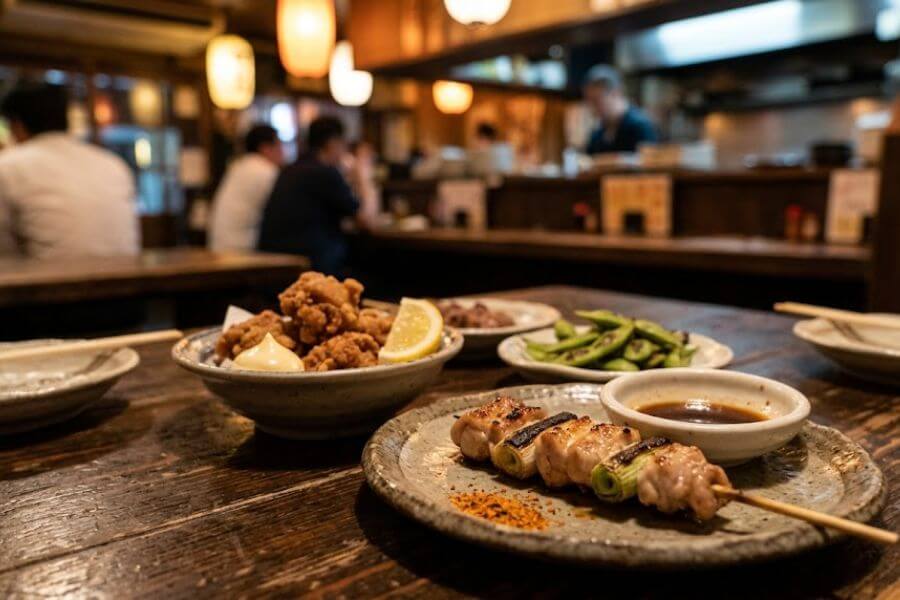
Yakitori literally translates to grilled chicken, but in an izakaya context, it refers to all kinds of ingredients threaded onto bamboo skewers and grilled over hot charcoal.
When ordering skewers, the server will usually ask you a critical question: shio or tare? Shio means salt, which is a clean, simple seasoning that lets the natural flavor of the meat shine through. Tare is a sweet, savory, soy-based glaze that caramelizes over the fire. Both are incredible, so try ordering a mix of both.
Beyond chicken breast and thigh, do not be afraid to try unique cuts like chicken meatballs (tsukune), chicken wings (teba), pork belly (butabara), or vegetable skewers like shiitake mushrooms and cherry tomatoes.
The Fryer: Karaage and Agemono
Fried food is an absolute cornerstone of the pub experience. The undisputed king of this section is chicken karaage. This is Japanese-style fried chicken, where bite-sized pieces of chicken thigh are marinated in soy sauce, garlic, and ginger, coated in potato starch, and fried to an extreme crisp. It is light, crunchy, and bursting with juices, usually served with a lemon wedge and a dollop of Japanese mayonnaise.
Other fried favorites include agedashi tofu, which consists of cubes of silken tofu lightly coated in starch, fried until delicate, and served swimming in a warm, savory fish broth. Hamikatsu, or fried bologna slices coated in panko breadcrumbs, is another nostalgic comfort food option you might find.
The Raw and Fresh Section
While an izakaya is not a dedicated sushi restaurant, fresh raw fish is almost always on the menu. Look for a sashimi moriawase, which is a chef-selected assortment of sliced raw fish like salmon, tuna, and red snapper. It is served with fresh wasabi and soy sauce, offering a clean, clean contrast to the heavy fried items.
You will also find refreshing salads, such as a traditional Japanese potato salad, which is incredibly creamy and often contains small bits of cucumber, carrot, and soft-boiled egg.
The Comfort Carbs
Remember, rice and noodles are saved for the very end. A favorite choice is yaki onigiri, which are triangular rice balls brushed with soy sauce or miso paste and grilled until a crispy, crunchy crust forms on the outside while the inside remains fluffy. Another comforting option is ochazuke, a bowl of warm rice topped with savory ingredients like salmon or pickled plum, with hot green tea or dashi broth poured directly over the top.
Table Manners and Sharing Etiquette
Because these establishments are casual spaces, you do not need to worry about rigid, ultra-formal dining rules. However, practicing good sharing etiquette ensures that everyone at the table has a fantastic time.
The Collective Toast
Never take a sip of your drink the moment it arrives if your companions are still waiting for theirs. Wait until every single glass is on the table. Once everyone is ready, raise your glasses together and shout Kanpai! This is the Japanese equivalent of saying “cheers,” and it officially signals the start of the festivities.
How to Share Plates Correctly
Every dish that arrives at the table belongs to the entire group. Do not pull a whole plate of yakitori toward yourself and eat from it directly. Instead, use the small personal plate in front of you, called a torizara, as your home base.
Move a bite-sized portion of food from the main platter to your personal plate before eating it. If you are using your own chopsticks to move food from a shared plate, it is considered polite to use the clean, opposite ends of your chopsticks if you have already been eating with them, though close friends often do not worry about this detail.
What to Do with Skewers
When a plate of yakitori arrives, it can be tempting to slide all the meat off the wooden skewers using your chopsticks to create a pile for the table. While this makes sharing easy, purists argue that eating the meat directly off the skewer is the best way to enjoy it, as it keeps the juices locked inside the meat. A good compromise for a group is to pull the meat off only if the pieces are large, but if they are small, let everyone grab their own individual skewer. When you finish a skewer, look for a wooden cup or jar on the table; this is where you drop the empty bamboo sticks.
The Pouring Protocol
If you are drinking sake or bottled beer, there is a beautiful tradition of hospitality to keep in mind: never pour your own drink. Keep an eye on your friends’ glasses. If you notice their glass is getting low, pick up the bottle or carafe and fill it up for them. When they notice your glass is low, they will return the favor. It is a subtle, continuous way of showing care and keeping the conversation flowing naturally.
The Magical Phrase: Omakase
If you ever find yourself looking at an extensive menu and feeling completely lost, do not panic. There is a magical word that will instantly save your night: Omakase.
Leaving It to the Chef
Omakase translates to “I leave it up to you.” By telling your server this phrase, you are handing the steering wheel over to the kitchen staff. You can specify if you want a selection of skewers, seafood, or just a general mix of the kitchen’s best dishes.
Why It Can Lead to the Best Experience
Chefs love omakase requests because it allows them to showcase the freshest ingredients they have in the kitchen that day. It takes the pressure off you to make decisions and guarantees you will receive dishes that are perfectly timed and balanced. It is an amazing way to step outside your comfort zone and try unique flavor combinations you might have overlooked on your own.
Frequently Asked Questions
Can I visit an izakaya if I do not drink alcohol?
You can absolutely visit and have an incredible time without touching a drop of alcohol. While these spots are historically rooted in drinking culture, modern locations place a massive emphasis on high-quality food. The non-alcoholic beverage menus are often fantastic, featuring unique Japanese sodas, high-quality iced teas, and fruit juice blends. It is a welcoming space for anyone who loves great food and a lively atmosphere, regardless of what is in their glass.
Is an izakaya a good place to bring kids or a younger family?
Many locations are incredibly family-friendly, especially during the early evening hours between five and seven in the evening. The small-plate format is perfect for younger diners because it allows them to try tiny portions of different items like fried chicken, grilled corn with butter, and sweet rice balls without committing to a giant entree. The naturally loud and energetic environment also means you do not have to worry about your kids being perfectly silent, as the ambient noise easily absorbs the sound of a happy family conversation.
How does the final bill work, and do I need to tip?
If you are dining in Japan, tipping is non-existent and can actually be seen as confusing or impolite; you simply pay the exact total on the bill. However, if you are dining at an izakaya located within the United States, you should follow standard American tipping customs, leaving an eighteen to twenty percent tip for your server. Additionally, do not be surprised to see a small per-person charge on your bill labeled as the otoshi or table cover fee; this is a standard practice and covers the opening appetizer you received.
What should I do if I have a food allergy or dietary restriction?
Because many traditional stocks, sauces, and marinades rely heavily on soy sauce, wheat, and fish broth, navigating an izakaya with strict dietary restrictions can require a bit of planning. If you are vegetarian, vegan, or gluten-free, communicate this clearly to your server right away. Many kitchens are happy to prepare skewers seasoned simply with salt instead of soy-based glazes, or provide simple vegetable dishes like edamame and salted cucumbers to ensure you have a safe and delicious meal.