Key Takeaways for Your Mount Fuji Adventure
Climbing Mount Fuji is an incredible experience that stays with you forever. Before you dive into the deep details of the trails, huts, and gear, here are the most important things to keep in mind for your journey up Japan’s highest peak:
- Pick the Right Trail: The four main routes offer completely different experiences. Beginners usually love the Yoshida Trail for its many mountain huts and helpful support, while experienced hikers might prefer the quiet challenge of the Gotemba Trail.
- Book Your Mountain Hut Early: Sleeping on the mountain is the best way to prevent altitude sickness and see the sunrise. Hut reservations fill up months in advance, so you must secure your bed as soon as the booking season opens.
- Pack in Layers: The weather changes fast on the mountain. You might start your hike in a short-sleeve shirt in the warm afternoon and need a heavy winter jacket, gloves, and a beanie by the time you reach the freezing summit at dawn.
- Pace Yourself to Beat Altitude Sickness: The air gets very thin as you climb past 10,000 feet. Walking slow, taking regular breaks, and drinking plenty of water are your best defenses against headaches and dizziness.
- Bring Plenty of Cash: Mountain huts and toilets do not take credit cards. You will need small coins to use the restrooms and cash to buy warm food, bottled water, and your official souvenir stamps.
Standing at the edge of a massive volcanic crater, watching the morning sun break through a sea of fluffy white clouds, is a moment you will never forget. Mount Fuji, or Fujisan as people call it in Japan, is a beautiful mountain that calls to thousands of travelers every single summer. Climbing to its snowy-white and rocky peak is a dream for many, but it takes careful planning to reach the top safely. If you want to stand on the roof of Japan, this comprehensive guide will show you exactly how to choose your trail, book your mountain huts, and pack your backpack for the ultimate hiking adventure.
Choosing Your Perfect Path: The Four Main Trails
Mount Fuji has four main paths that lead to the top. Each trail starts at a different station halfway up the mountain, which people call the fifth station. These trails have their own distinct personalities, challenges, color codes, and views. Choosing the right one depends on how much you have hiked before, how much you like crowds, and what kind of scenery you want to see along the way.
The Yoshida Trail: The Popular Choice
The Yoshida Trail is the superstar of Mount Fuji. It is located on the north side of the mountain in Yamanashi Prefecture and uses yellow as its official color. Most people who climb Mount Fuji for the first time choose this route because it has the most services, the most mountain huts, and two separate paths for walking up and walking down.
When you start at the Yoshida Fifth Station, you are already high up the mountain. The first part of the hike takes you through a cool, green forest with flat paths. Soon, the trees disappear, and you find yourself on a wide, zigzagging path made of loose volcanic gravel and red dirt.
The biggest benefit of the Yoshida Trail is safety. If you feel sick or need a snack, you are never too far from a mountain hut. There are first-aid stations with doctors available during the peak summer weeks. Because the trail faces east, you can actually watch the beautiful sunrise from almost anywhere on the path, even if you do not make it to the very top before dawn.
The main downside to this trail is the crowd. Because it is the most well-known route, thousands of tour groups hike here every day. During the weekend, the trail can become so crowded that you have to walk in a slow, single-file line, especially near the summit. The descent path is a long, winding road of loose gravel that can feel boring and tough on your knees, but it gets you back down to the bus station quickly.
The Fujinomiya Trail: The Short and Steep Route
The Fujinomiya Trail is the second most popular route. It sits on the south side of Mount Fuji in Shizuoka Prefecture, and its signs are bright blue. This trail starts at the highest elevation of all the fifth stations, which means you have less vertical distance to climb to reach the peak.
Because it starts so high up, the Fujinomiya Trail gets you to the rocky terrain almost immediately. The path is made of hard volcanic rock, large steps, and sturdy boulders. You will need to use your hands sometimes to balance as you step up the steep rocky stairs.
A unique feature of this trail is that the up-path and the down-path are exactly the same. This means you do not have to worry about getting lost on a different side of the mountain when you head back down. It also means you will pass other hikers coming from the opposite direction, so you must be polite and step aside to let people pass on narrow ledges.
The Fujinomiya Trail offers amazing views of the Pacific Ocean and Suruga Bay on a clear day. However, because it rises so quickly, your body has less time to adjust to the thin air. You must walk at a relaxed pace on this trail to avoid getting a bad headache from the altitude. There are plenty of huts along this route to rest and restock your supplies.
The Subashiri Trail: The Forest Adventure
If you want to experience nature and escape the massive crowds for the first half of your hike, the Subashiri Trail is an excellent option. Located on the east side of the mountain, this path uses red as its color code. It starts at a lower elevation than the Yoshida and Fujinomiya trails, meaning your total hiking time will be longer.
The first few hours of the Subashiri Trail take you through a beautiful, thick forest filled with trees, birds, and green plants. The trees protect you from the hot afternoon sun and the strong mountain winds. This green scenery is a wonderful contrast to the dry, rocky landscape that covers the rest of Mount Fuji.
Around the eighth station, the Subashiri Trail joins together with the popular Yoshida Trail. This means the quiet, peaceful hike suddenly becomes busy and crowded for the final push to the summit. You will get to experience the best of both worlds: a peaceful forest walk followed by a lively, energetic atmosphere near the top.
The best part of the Subashiri Trail happens on the way down. The descent features a famous section called the Sunabashiri, which means the sand run. This is a massive, wide slope covered in deep, soft volcanic ash. You can take giant, leaping strides down this section, sliding safely in the soft sand like you are running on a giant moon dune. It is incredibly fun, but it kicks up a lot of dust, so you will need specific gear to keep your shoes clean.
The Gotemba Trail: The Ultimate Challenge
The Gotemba Trail is the longest, toughest, and quietest route on Mount Fuji. Its color code is green, and it starts on the southeast side of the mountain. This trail begins at a very low elevation, which means you have a massive distance to climb to reach the summit. It is designed for experienced hikers who want a quiet, solitary experience with nature.
The first few hours of the Gotemba Trail take you through a vast, empty landscape of dark volcanic gravel. There are no trees and very few mountain huts on this route. You must carry all of your own water, food, and emergency supplies because you cannot rely on buying things along the way. The distances between the lower stations are very long, and it can feel like you are walking on an endless treadmill of dark sand.
Because so few people choose this trail, you will often find yourself completely alone with the mountain. The silence is beautiful, and the views of the surrounding plains are vast and open. You do not have to worry about bumping into tour groups or waiting in lines to climb over rocks.
Like the Subashiri Trail, the Gotemba descent features its own incredible Great Sunabashiri. This sand run is even longer and wider, allowing you to slide down the mountain at high speeds for several miles. While it saves you hours of walking on the way down, the long journey up requires strong legs, a tough mind, and excellent physical fitness.
Trail Comparison Matrix
To help you decide which path fits your adventure style best, look at how the four routes compare in terms of starting heights, average times, and difficulty levels.
| Trail Name & Color | Starting Elevation | Average Ascent Time | Average Descent Time | Number of Huts | Best Feature |
| Yoshida (Yellow) | 7,550 feet | 6 to 7 hours | 3 to 4 hours | Very High (Over 20) | Lots of huts, safest for beginners |
| Fujinomiya (Blue) | 7,870 feet | 5 to 6 hours | 3 to 4 hours | High (Around 10) | Highest start, shortest distance |
| Subashiri (Red) | 6,560 feet | 6 to 7 hours | 3 hours | Moderate (Around 10) | Beautiful forest, fun sand run |
| Gotemba (Green) | 4,720 feet | 7 to 8 hours | 4 hours | Very Low (Around 4) | Quiet trails, great wilderness feel |
Life on the Mountain: A Guide to Mountain Huts
Mountain huts, known as Yamagoya in Japanese, are basic wooden shelters built directly onto the rocky slopes of Mount Fuji. They are not luxury hotels, but they provide a warm, safe place to sleep, eat, and rest your tired legs during your journey. Staying at a hut is highly recommended because it splits your long hike into two smaller parts and gives your body time to get used to the high altitude.
What to Expect Inside a Mountain Hut
When you step inside a mountain hut, you are entering a shared space built for survival and rest. The space inside is limited, so everything is clean, compact, and organized. You will be asked to take off your muddy hiking boots at the front door and put them into a plastic bag to keep the sleeping areas clean.
The sleeping arrangements are usually dormitory-style. This means you will sleep side-by-side with other hikers on long wooden platforms covered with futons, sleeping bags, or blankets. Some modern huts offer small privacy curtains or capsule-style bunks, but you should expect to hear people snoring, rustling their gear, and moving around throughout the night. Bringing earplugs and an eye mask is a smart idea if you want to get some solid rest.
Huts do not have running water for showers or brushing teeth, so you will need to rely on wet wipes to clean your face and hands. The toilets are clean but basic, and they use special eco-friendly systems to process waste at high altitudes. Most huts charge a small fee of 200 to 300 yen to use the restroom to cover the high cost of maintaining them on a volcano.
The food served in the huts is simple, hot, and filling. The most common dinner is a warm plate of Japanese curry rice with a small hamburger patty or a sausage. For breakfast, they usually give you a portable meal box containing rice, fish, or bread that you can eat in the morning or pack into your bag for the trail. These meals are designed to give you instant energy and warmth when the mountain air turns cold.
How to Make a Reservation
Booking a mountain hut is a critical step that you must complete months before your trip. The climbing season is short, running only from early July to early September. Because of this, thousands of people compete for the limited number of beds every single night.
Most huts open their reservation systems online or by phone in the spring, usually around April or May. Each trail has its own dedicated website that lists all the available huts, their locations, and links to their booking pages. Many huts now have English websites where you can select your date, choose a meal plan (such as dinner only, dinner and breakfast, or no meals), and pay with a credit card.
When you book, think carefully about which station you want to sleep at. If you choose a hut at the seventh station, your first day of hiking will be shorter, but you will have a very long, steep climb in the dark the next morning to reach the summit for sunrise. If you choose a hut at the eighth or eighth-and-a-half station, your first day will be tougher, but you will be much closer to the top when it is time to wake up for the sunrise.
If you try to book a hut and find that everything is full, do not lose hope. Keep checking the websites for cancellations, which happen often as people change their travel plans. Avoid climbing the mountain without a hut reservation. Trying to hike the entire mountain in one single go without sleeping, known as bullet climbing, is dangerous and increases your risk of getting injured or sick.
Mountain Hut Etiquette and Rules
Living on a mountain means following strict rules to ensure everyone stays safe and comfortable. Because space and resources are rare, being a polite guest makes the experience better for you and the people around you.
First, respect the quiet hours. Most huts turn off their main lights early, around 8:00 PM or 9:00 PM, because hikers need to wake up around 2:00 AM to catch the sunrise. When the lights go out, pack your gear away quietly, turn your phone on silent, and use a dim headlamp if you need to find something in your bag. Avoid talking loudly or crinkling plastic bags while others are trying to sleep.
Second, manage your trash carefully. There are no garbage cans on Mount Fuji because it is a protected national park and hauling trash down the mountain is incredibly difficult. Anything you bring up the mountain must go back down in your backpack. Do not leave empty water bottles, snack wrappers, or used wipes in the hut bathrooms or sleeping areas.
Finally, be mindful of your water use. Since water is carried up the mountain by small tractors or helicopters, it is an incredibly valuable resource. Do not use bottled water to wash your clothes or perform long cleaning routines. Use your water strictly for drinking and staying hydrated.
Master Packing List: Gear, Clothing, and Essentials
Packing for Mount Fuji is a balancing act. You need enough gear to stay warm and safe in extreme weather, but your backpack must be light enough that you can carry it up steep mountain slopes for hours. The secret to success is choosing high-quality, lightweight gear and dressing in smart layers.
The Three-Layer Clothing System
The weather at the bottom of Mount Fuji can feel like a hot summer beach, while the summit can feel like a freezing winter storm. To stay comfortable, you must use a three-layer clothing system that you can adjust as you climb higher.
The first layer is your base layer. This is the shirt and underwear that touches your skin. It should be made of synthetic materials like polyester or natural merino wool, which pull sweat away from your skin and dry quickly. Never wear cotton t-shirts or denim jeans on Mount Fuji. Cotton holds onto water when you sweat, which makes you feel freezing cold and miserable as soon as the mountain wind blows.
The second layer is your insulation layer. This layer traps your body heat to keep you warm. A lightweight fleece jacket or a packable down jacket works perfectly. You will want to keep this layer near the top of your backpack so you can put it on quickly whenever you stop for a rest break and your body begins to cool down.
The third layer is your outer shell, which protects you from wind, rain, and snow. A high-quality rain jacket and rain pants made of breathable, waterproof fabrics are absolutely mandatory. Even if the weather forecast looks sunny, violent rainstorms can appear out of nowhere on an isolated volcano. Your outer shell will also block the fierce summit winds that can make thirty-degree weather feel like zero degrees.
Footwear and Leg Protection
Your feet are your engine on this hike, so taking care of them is your number one priority. You need proper footwear to handle the rough, rocky paths and the slippery gravel slopes.
A sturdy pair of mid-top or high-top hiking boots is highly recommended. These boots provide essential ankle support when you are stepping over uneven volcanic rocks and prevent you from twisting your ankle. Make sure your boots are broken in before your trip by wearing them on smaller walks at home. Wearing brand-new boots on Mount Fuji is a guaranteed way to get painful blisters.
Pair your boots with thick, moisture-wicking hiking socks made of wool or synthetic blends. Avoid thin everyday socks. Some hikers like to wear a thin liner sock underneath their thick sock to reduce friction and protect their skin from rubbing against the inside of the boot.
If you choose the Yoshida, Subashiri, or Gotemba trails, you should absolutely bring a pair of gaiters. Gaiters are protective sleeves that wrap around your lower legs and cover the tops of your boots. On the descent paths, you will be sliding through deep, loose volcanic ash and pebbles. Without gaiters, your shoes will instantly fill up with sharp rocks and dust, forcing you to stop every few minutes to empty them out.
Crucial Gear and Gadgets
Beyond clothes and shoes, several specific tools will make your climb much easier, safer, and more enjoyable.
- A Reliable Headlamp: If you want to see the sunrise from the summit, you will be hiking for several hours in total darkness. A headlamp keeps your hands free so you can balance on rocks and hold onto ropes. Make sure to bring extra batteries or a charging cable, as cold mountain air can drain battery life quickly.
- Trekking Poles: A pair of sturdy hiking poles is a lifesaver for your joints. On the way up, they help pull your body forward and share the work with your arms. On the long gravel descent, they act as brakes, taking massive pressure off your knees and helping you stay balanced on slippery slopes.
- A Comfortable Backpack: You need a backpack with a capacity of 30 to 40 liters to hold all your gear, clothes, food, and water. Look for a pack with a supportive hip belt, which shifts the weight of the bag from your shoulders to your strong leg muscles. Do not forget a waterproof pack cover to keep your spare clothes dry inside the bag if it rains.
- A Portable Power Bank: Cold weather drains smartphone batteries fast. You will want plenty of phone battery to take photos of the sunrise, look at maps, and stay in touch with your friends. Bring a compact power bank to keep your electronics charged.
Food, Water, and Cash
You cannot look at a packing list without considering the fuel your body needs to keep moving up the mountain.
Plan to carry at least two liters of water with you when you start from the fifth station. You can buy extra water bottles at the mountain huts as you climb higher, but the price increases the higher you go because it is difficult to transport supplies up the volcano. Staying hydrated is one of the most effective ways to prevent altitude sickness, so take small sips of water every ten minutes.
Pack plenty of high-energy snacks that are easy to eat while walking. Energy bars, nuts, dried fruit, chocolates, and rice balls are perfect choices. You will also want to bring electrolyte powder packets to mix into your water, which replace the essential salts you lose when you sweat.
Finally, bring a large amount of cash in Japanese yen. Prepare at least 10,000 to 15,000 yen in cash, and make sure a large portion of it is in 100-yen coins. Mountain huts do not take cards or mobile payments, and you will need coins to pay for the restrooms, buy hot drinks, and get your wooden walking stick stamped at each station.
Preparing Your Body and Mind: Physical and Mental Readiness
Climbing Mount Fuji is a rewarding challenge, but it is physically demanding. You will be walking uphill for six to eight hours, often in thin air and changeable weather conditions. Preparing your body and mind before you arrive in Japan will make your trip much safer and more comfortable.
Cardio and Strength Training at Home
You do not need to be a professional athlete to climb Mount Fuji, but having a good base of cardiovascular fitness will make the journey much more fun. Start training at least two to three months before your climb to build up your stamina.
Focus on exercises that mimic the motion of walking uphill. Running, cycling, swimming, and using the stairclimber machine at the gym are fantastic ways to strengthen your heart and lungs. If you have access to local hiking trails, spend your weekends walking up hills while wearing the actual backpack and boots you plan to use in Japan. This helps your body get used to carrying extra weight for hours.
Do not forget to strengthen your leg muscles. Squats, lunges, and calf raises will build up the power in your quadriceps and calves, which you will need to push yourself up the steep volcanic steps. Strong core exercises, like planks, will also help you keep your balance when carrying a heavy pack over uneven terrain.
Understanding and Managing Altitude Sickness
Altitude sickness, also known as Acute Mountain Sickness, is the biggest reason why some hikers fail to reach the summit of Mount Fuji. It happens because the air pressure drops as you climb higher, meaning there is less oxygen in each breath you take. It can affect anyone, regardless of how young, old, fit, or strong they are.
The symptoms usually start with a mild headache, feeling tired, dizziness, or a slight loss of appetite. If you ignore these early signs and keep pushing up the mountain too fast, the sickness can get worse, causing vomiting, extreme weakness, and confusion.
The best way to prevent altitude sickness is to give your body time to adapt to the thin air. When you arrive at the fifth station by bus or car, do not start hiking immediately. Sit down at a local restaurant, buy a light meal, look at the shops, and relax for at least one to two hours. This simple rest break allows your lungs to adjust to the initial change in altitude before you start exercising.
When you are on the trail, practice the pace of the mountain. Walk in slow, deliberate, rhythmic steps. A good rule of thumb is to walk at a speed where you can easily hold a full conversation with a friend without gasping for breath. Take a short five-minute rest break every hour to drink water and eat a small snack. If you begin to feel unwell, stop and rest at the next mountain hut. If your symptoms get worse, the only cure is to turn around and walk back down to a lower elevation.
Mental Toughness on the Trail
Your mind plays a massive role in getting you to the top of Mount Fuji. There will be moments during the hike when your legs feel heavy, the wind is blowing cold air into your face, and the summit still looks incredibly far away. Staying positive and focused is key to pushing through these challenging moments.
Break the long hike down into smaller, manageable goals. Instead of constantly looking at the distant peak, focus on simply reaching the next mountain hut or the next turn in the path. Celebrate these small victories along the way to keep your spirits high.
Remember to look around and enjoy the unique environment. You are walking on an active volcano, surrounded by stunning views that look like pictures from another planet. Chat with your fellow hikers, share a smile with the hut staff, and soak in the wonderful energy of the mountain. With a steady pace, a prepared backpack, and a positive attitude, you will find yourself standing proudly on the summit, watching the sunrise over Japan.
Frequently Asked Questions About Climbing Mount Fuji
When is the official climbing season for Mount Fuji?
The official climbing season runs from early July to early September. The exact opening and closing dates change slightly every year depending on how much snow is left on the trails and when the mountain huts are ready to open. During these summer months, the trails are free of snow, the public buses run frequently, and the mountain huts are open to provide food, shelter, and medical support. It is highly dangerous to attempt a climb outside of this official window, as the weather becomes extremely cold, the paths freeze over, and there are no emergency rescue services available on the mountain.
Do I need to buy a permit or pay a fee to climb the mountain?
Yes, there is an official system to manage the crowds and protect the environment. Hikers are asked to pay a voluntary preservation donation of 1,000 yen at the entrance of each trail’s fifth station. This money is used to keep the trails clean, maintain the eco-friendly public restrooms, and fund the emergency first-aid tents. Additionally, popular trails like the Yoshida Route have implemented daily hiker limits and mandatory entry fees to prevent extreme crowding. You should check the official Mount Fuji climbing websites before your trip to see if you need to pre-register and pay your entry fee online.
Can children and older adults safely climb Mount Fuji?
Yes, many children and older adults successfully climb Mount Fuji every summer. However, because the trail involves hours of steep walking and thin air, everyone in your group must have a good level of physical fitness and hiking experience. Children should be old enough to carry their own small pack and follow instructions carefully, while older adults should consult with a doctor before tackling high altitudes. The secret for families and senior hikers is to choose a trail with plenty of huts, take an extra-long rest break at the fifth station, and spread the hike over two full days with a long night of sleep in a pre-booked mountain hut.
What should I do if it starts raining heavily while I am hiking?
If a rainstorm hits while you are on the trail, stop safely and immediately put on your waterproof rain jacket and rain pants before your inner clothes get wet. Put the waterproof cover over your backpack to protect your spare gear. If the rain is light and there is no strong wind, you can continue walking slowly and carefully, as volcanic rocks can become slippery when wet. However, if the rain becomes a heavy downpour, or if you hear thunder and see lightning, you must stop hiking and seek shelter inside the nearest mountain hut until the storm passes. Safety should always come before reaching the summit.
What is the wooden walking stick and how do I get stamps on it?
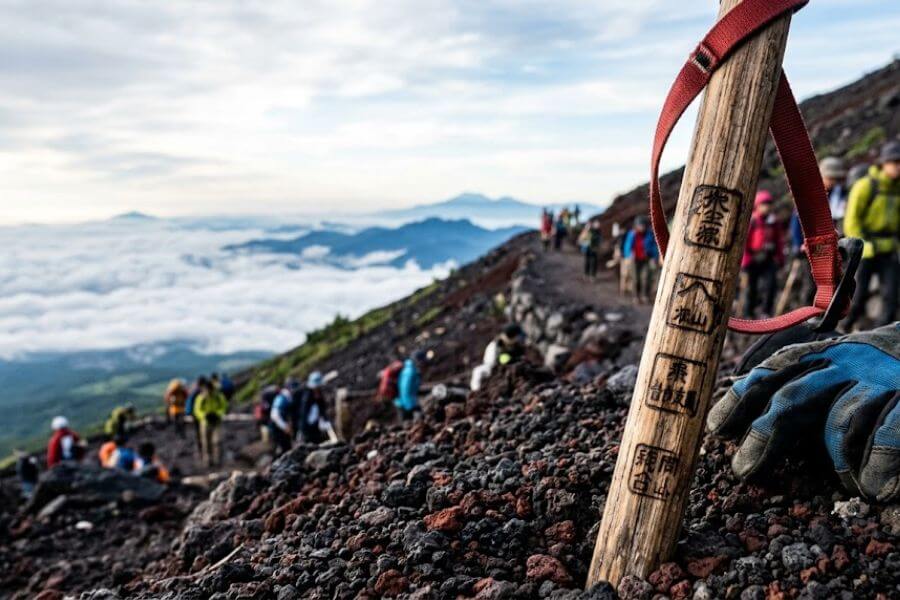
The traditional wooden walking stick, called a Kongojo, is one of the most popular and meaningful souvenirs you can get on Mount Fuji. You can buy these long octagonal sticks at any of the fifth station shops before you start your hike. As you climb up the mountain, each individual mountain hut offers a unique service where they use a hot iron to burn a beautiful, custom stamp directly into the wood for a small fee of a few hundred yen. By the time you reach the summit, your plain wooden stick will be covered in gorgeous, dark brands that tell the complete story of your journey to the top.
Is there cell phone service and internet access on Mount Fuji?
Yes, you will find surprisingly good cell phone service across most of Mount Fuji. Japan’s major mobile networks have installed special antennas on the mountain, meaning you can easily send text messages, look at weather maps, and make calls from almost anywhere on the main trails. Many of the mountain huts also offer access to public wireless internet connections for their guests. Keep in mind that your phone battery will drain much faster than usual due to the cold mountain temperatures and the constant searching for signals, so carrying a portable power bank in your backpack is essential.