Imagine stepping out of Akihabara Station. Your senses instantly ignite. Neon signs tower into the sky, towering anime murals stare down at you, and the chaotic symphony of arcade game soundtracks spills into the streets. Welcome to Electric Town, the ultimate playground for anyone who loves anime, manga, and retro video games.
Whether you want to track down a rare 1990s Game Boy cartridge, find the latest limited-edition anime figure, or just soak in the incredible subculture, Akihabara is the place to be. Navigating these packed streets and multi-story buildings can feel overwhelming at first. This ultimate shopping guide will help you explore Akihabara like an expert, find hidden treasures, and make the most of your shopping adventure.
Quick Shopping Blueprint for Akihabara
If you are short on time or want a quick cheat sheet before diving into the detailed neighborhoods, here is your essential guide to conquering the electronics district.
| Category | Best Shopping Spots | What You Will Find |
| New Anime Figures | AmiAmi, Tokyo Figure, Radio Kaikan | Official releases, scale figures, and pre-order items. |
| Used/Rare Merchandise | Mandarake Complex, Surugaya, Lashinbang | Vintage goods, rare collectibles, and discounted open-box items. |
| Retro Video Games | Super Potato, Retro Game Camp, Surugaya Specialty Stores | Vintage consoles, classic cartridges, and gaming memorabilia. |
| Budget Discoveries | Book-Off, Gachapon Halls, Lashinbang Clearance | Character pins, keychains, and small treats under five dollars. |
Your Key Takeaways for the Ultimate Akihabara Shopping Trip
Before packing your bags and heading into the stores, keep these golden rules in mind. They will save you time, money, and stress.
- Look Up and Look Down: The best shops are rarely on the ground floor. Akihabara builds vertically. Look at building directories and take elevators up to find the true hidden gems.
- Carry Cash Every Single Day: While big retail chains accept credit cards, many small retro game stalls and capsule toy machines only accept Japanese Yen coins and bills.
- Keep Your Passport Handy: Bring your physical passport everywhere you shop. Many large stores offer tax-free shopping if you spend over five thousand yen, which instantly saves you money.
- Inspect Used Items Carefully: Japanese second-hand shops use strict rating systems. A grade-B figure is often in near-perfect condition, but always check the box stickers to know exactly what you are buying.
- Do Not Buy the First Thing You See: Akihabara is highly competitive. A vintage game or figure in one shop might be significantly cheaper just two doors down or three floors up.
Navigating Akihabara A Guide to the Main Streets
To find the best anime merchandise and retro games, you need to understand how the neighborhood is laid out. Akihabara is roughly split into a few major zones, and knowing where to go will keep you from walking in circles.
Chuo-Dori The Main Highway of Geek Culture
Chuo-Dori is the massive main street that runs directly through the heart of Akihabara. On Sundays, this entire road closes to car traffic, allowing shoppers to walk freely in the middle of the street.
Along Chuo-Dori, you will find giant, easily recognizable mega-stores like GiGO arcades, massive multi-floor Sofmap buildings, and the multi-story Mandarake Complex. This street is bright, loud, and perfect for your first hour in the area. It serves as a great landmark. If you ever get lost, just head back to Chuo-Dori to find your bearings.
The Side Streets and Back Alleys
While the main street is spectacular, the real magic happens when you turn off Chuo-Dori into the narrow side streets. The alleys to the west of the main road are packed with tiny, independent shops.
These back alleys are where you find specialized retro game repair shops, tiny rooms filled with rental showcase boxes, and smaller second-hand anime stores. The prices in these alleys are often lower than the prices on the main road because the store rents are cheaper. Do not be afraid of dark stairwells or narrow doorways. Some of the coolest shops require you to walk up a creaky flight of stairs.
The Radio Kaikan Hub
Located just steps outside the Akihabara Station Electric Town Exit, Radio Kaikan is a legendary ten-story building. If it is raining or you only have two hours to shop, this single building has almost everything you need.
It contains multiple independent hobby shops, including massive branches of AmiAmi and K-Books. It is clean, well-lit, and very welcoming for global travelers. However, because it is so close to the station, it can get incredibly crowded in the afternoons.
Hunting for Anime Merchandise and Figures
Anime merchandise comes in many different forms, from massive high-end statues to tiny rubber keychains. Understanding what is available and where to look will make your search much easier.
Scale Figures versus Prize Figures
When shopping for character figures, you will generally see two main types. Knowing the difference will help you manage your budget.
- Scale Figures: These are high-quality, highly detailed statues created by specialized manufacturers. They are exact replicas of characters, often built at one-seventh or one-eighth of their actual size. They come in large boxes, feature beautiful paint jobs, and can cost anywhere from one hundred dollars to several hundred dollars.
- Prize Figures: These figures are originally made to be won inside claw machines at arcades. Because they are mass-produced for games, their plastic quality and paint details are simpler. However, they still look fantastic on a shelf. You can buy these second-hand in shops for ten to thirty dollars, making them perfect for younger fans or budget-conscious collectors.
Top Stores for Brand-New Releases
If you want the latest figures that just hit the market, you want to shop at stores that sell brand-new merchandise.
AmiAmi
AmiAmi is one of the most famous hobby retailers in the world. They have two massive locations inside Akihabara, with their largest presence inside the Radio Kaikan building.
Walking into AmiAmi is like entering a museum of modern pop culture. They carry everything from popular mainstream shows to niche collector items. Their shelves are clearly organized by series, making it easy to find items from your favorite show.
Kotobukiya
Kotobukiya is both a manufacturer and a retail store. Their standalone building in Akihabara is colorcoded by floor, focusing on specific franchises like Star Wars, Marvel, Nintendo, and classic anime.
Their goods are always official, beautifully displayed, and they often stock exclusive merchandise that you cannot find anywhere else in Tokyo. It is an incredibly friendly store with wide aisles, making it very comfortable to explore.
Unearthing Treasures in Second-Hand Anime Shops
The second-hand market in Japan is legendary. Japanese collectors take immaculate care of their possessions. When someone sells a figure back to a store, the item is usually spotless, and the box is often kept in pristine condition. Shopping second-hand is the best way to find discounted items or rare goods from older shows.
Mandarake Complex
Mandarake is an eight-story black building located slightly off the main street. Each floor is dedicated to a specific type of vintage culture.
One floor is completely packed with rare retro toys, another is filled with vintage manga, and another focuses entirely on cosplay gear and anime music. Mandarake is dark, mysterious, and feels like a treasure hunt. It is a must-visit store for anyone looking for items that went out of print years ago.
Surugaya
Surugaya has multiple specialized stores scattered throughout Akihabara. Some buildings focus entirely on trading cards, while others focus on character goods like plushies, pins, and keychains.
Surugaya is famous for its blue plastic bargain bins. These bins are filled with miscellaneous character merchandise sorted by anime title or color. If you are willing to dig through these bins, you can find amazing keychains, acrylic stands, and small toys for just a dollar or two.
Lashinbang
Lashinbang is another massive second-hand chain that is highly organized. They have a massive selection of prize figures and character goods.
If you are looking for a specific character pin or an art book that came bundled with a Japanese Blu-ray, Lashinbang is one of your best bets. Their pricing is fair, and they often run sales where you can get extra discounts if you buy multiple items.
Navigating the World of Retro Video Games
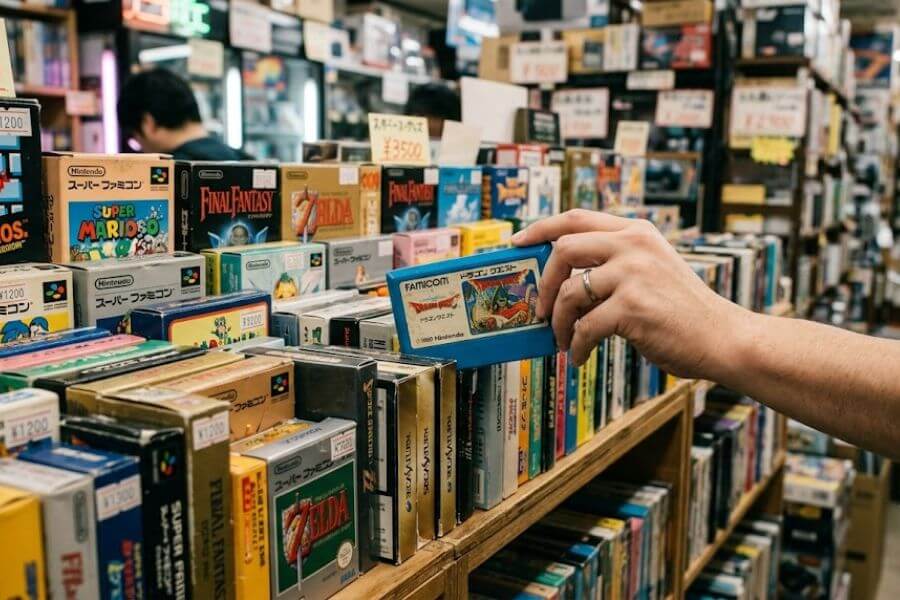
Akihabara is the historic capital of classic gaming. Whether you grew up playing the original Nintendo Entertainment System, the Sega Genesis, or the Sony PlayStation, walking into an Akihabara game shop feels like stepping into a time machine.
Understanding Japanese Regional Lockouts
Before you spend your money on classic games, you must understand a critical technical detail: regional compatibility.
Many older home consoles, such as the Super Nintendo, Nintendo 64, and Sega Saturn, have regional lockouts. This means a cartridge bought in Japan will not physically fit or electronically load into a console purchased in North America or Europe without a special adapter or modification.
Fortunately, many handheld systems are completely region-free. Game Boy, Game Boy Color, Game Boy Advance, and Nintendo DS systems can play games from any country without any issues.
Modern home consoles like the Nintendo Switch and PlayStation 4 or 5 are also region-free. For older home consoles, make sure you research your specific system at home before purchasing Japanese game cartridges.
Legendary Retro Game Stores You Must Visit
Several stores in Akihabara are world-famous for their dedication to preservation and classic gaming history.
Super Potato
Super Potato is the most famous retro game store on the planet. Located across the upper floors of a narrow building, it is an absolute sensory overload.
The walls are lined from floor to ceiling with classic game boxes, retro consoles, and vintage strategy guides. You will hear classic video game music playing from old cathode-ray tube televisions on every corner.
The fifth floor features a mini-arcade filled with vintage candy-cabinet arcade machines where you can play retro fighting games and classic shooters while sipping on vintage Japanese sodas.
While Super Potato is an incredible cultural experience, its global fame means its prices are often higher than other shops. Go there for the amazing atmosphere and to see incredibly rare items, but compare prices before making major purchases.
Retro Game Camp
Located right on Chuo-Dori, Retro Game Camp is a compact, street-level shop that blasts retro game themes out onto the sidewalk. This shop is fantastic because they take refurbishing very seriously.
They have technicians who clean the internal cartridge contacts and replace old internal save-game batteries before putting items on shelves. They often place english informational stickers on the game packaging to let you know if a game requires knowledge of the Japanese language to be enjoyed.
Surugaya Retro Game Specialty Store
Surugaya has a dedicated retro gaming branch that many local collectors prefer over Super Potato. The aisles are tight and packed with cardboard boxes full of loose cartridges.
If you do not mind buying a game without its original box or manual, you can find loose Game Boy and Famicom cartridges here for incredibly low prices. It is a fantastic spot for pure bargain hunting.
Hard-Off and Book-Off
While these are general second-hand recycling chains rather than gaming specialties, the massive Book-Off near the Akihabara Station contains a massive electronics and gaming section.
Because people visit these stores to quickly sell off old household items, the staff sometimes prices rare games lower than the dedicated collector shops do. It is always worth a quick look to see what has been recently traded in.
Decoding the Hidden Showcase Box Shops
As you wander the side streets of Akihabara, you will see signs for rental showcase shops. These stores look very different from normal retail environments.
The walls are lined with clear acrylic glass cubes, and each cube is packed with random anime figures, video games, and rare collectibles.
How Rental Showcases Work
These glass cubes do not belong to the store itself. Instead, the store rents out individual boxes to private collectors and independent sellers. The box owners can put whatever items they want inside their cube and set their own custom prices.
Because of this unique system, a single shop can contain hundreds of mini-stores, each with completely different pricing and inventory.
Step-by-Step Guide to Buying from a Showcase
Buying from these stores requires a specific routine, as you cannot simply grab the items off the shelf.
- Grab a Clipboard and Paper: Near the shop entrance, you will find clipboards with order forms and pencils.
- Browse the Boxes: Walk slowly down the narrow aisles. Each individual glass box has a unique identification number prominently displayed on the glass.
- Write Down the Details: When you see an item you want to buy, look for its individual price tag inside that box. Write down the box number, the item letter or description, and the listed price onto your order form.
- Take the Form to the Counter: Hand your completed clipboard to the store clerk.
- Wait for Retrieval: The employee will walk out into the shop with a special master key, open the specific glass box, safely retrieve your item, and bring it back to the cash register for you to pay.
Pros and Cons of Showcase Shopping
Showcase shops are incredible for finding ultra-rare items that sold out years ago, as passionate collectors often use these boxes to sell off their personal stashes. You can sometimes find incredible mispriced deals if an owner just wants to clear out space quickly.
However, you must be careful. Because the items come from private sellers, the store cannot guarantee that every item is a hundred percent official.
Look closely through the glass to check for official holographic stickers on anime figure boxes, which prove the item is authentic and not a cheap counterfeit. Also, remember that all sales in showcase shops are final, meaning you cannot return an item if you change your mind later.
Exploring the Magic of Gachapon and Small Collectibles
Not every souvenir from Akihabara needs to break the bank. Some of the most fun shopping experiences involve small, pocket-sized collectibles that cost just a few coins.
The Phenomenon of Gachapon
Gachapon machines are Japan’s famous capsule toy vending machines. The name comes from the distinct sound the machine makes: gacha for the turning of the plastic crank, and pon for the plastic capsule dropping into the retrieval slot.
These are not the cheap plastic trinkets you find in grocery store machines back home. Modern Japanese capsule toys are highly detailed, officially licensed, and incredibly creative.
You can find capsule toys for every major anime series, miniature replicas of retro video game consoles, tiny realistic plastic food items, and hilarious animal figurines. They generally cost between two hundred and five hundred yen per turn.
Where to Find the Best Machine Halls
While individual machines sit outside almost every store in Akihabara, there are dedicated halls containing hundreds of machines under one roof.
Akihabara Gachapon Kaikan
This is one of the oldest and most famous capsule toy halls in the area. It is a long, narrow room packed from floor to ceiling with hundreds of machines.
The inventory changes constantly, with new machines arriving every single week. It has an old-school, chaotic charm that makes it incredibly fun to explore.
Gashapon Bandai Official Shop
Located inside larger commercial centers like the Akihabara Station building or major department stores, these modern shops are clean, bright, and run directly by Bandai.
They feature the absolute highest-quality capsule toys, including premium machines that accept electronic payments or larger coins for larger, high-end collectible figures.
Tips for Completing a Capsule Toy Set
If you are trying to collect a full set of characters from a specific capsule series, trying to win them all from the machine can lead to a lot of duplicate items.
If you keep getting the same character over and over, stop turning the crank. Walk over to the second-hand shops in the side alleys or look through the bargain bins at Surugaya.
Many shops buy unwanted capsule duplicates from local collectors and sell them individually on shelves. You might pay a small premium for the exact character you need, but it is much cheaper than gambling your coins away on a machine that will not cooperate.
Master Strategies for Smart Akihabara Shopping
To get the absolute best deals and avoid common tourist mistakes, you should employ a few simple shopping strategies during your trip.
The Golden Rule of Comparison Shopping
Akihabara is incredibly dense, and many stores carry identical items. A prize figure that costs forty dollars in a brightly lit tourist shop right next to the train station might only cost twenty dollars if you walk three blocks away and climb to the fourth floor of a back alley second-hand shop.
Before you make a major purchase, take a quick photo of the item and its price tag, and note the name of the store. Walk around for another hour to check at least two other shops.
Chances are very high that you will find the exact same item somewhere else for a better price or in better condition. Never buy the very first version of an item you see unless you know it is an ultra-rare piece of history.
Deciphering Japanese Second-Hand Quality Ratings
Japanese shops are incredibly honest about the condition of used items. They use a strict lettering system to grade everything they sell, usually displayed clearly on a sticker attached to the packaging.
- Rank A: The item is practically brand-new. The box has been opened, but the internal figure or toy was never displayed and remains in perfect condition.
- Rank B: The item has been opened and displayed, but it is clean and free of visible damage. All accessories and structural parts are included.
- Rank C: The item has visible scratches, minor paint fading, or slight wear. Alternatively, a minor accessory might be missing from the box. The sticker will usually explain the exact flaw in Japanese or with a small drawing.
- Box Damage Ratings: Stores will also rate the condition of the cardboard box itself. If a sticker says Box Damaged, the internal toy is usually completely fine, but the outer cardboard might have a bent corner or a small tear. If you plan on opening the item and putting it on your shelf at home, buying a box-damaged item is an easy way to save twenty to thirty percent off the price.
Maximize Your Budget with Tax-Free Shopping
Japan offers an incredible tax exemption program for international tourists. The consumption tax in Japan is ten percent, and saving that amount can add up significantly if you are buying expensive collectibles or multiple video games.
To qualify for tax-free shopping, you must spend a total of five thousand yen or more inside a single store on the same calendar day. When you are ready to pay, look for the dedicated tax-free counter inside the store.
You must present your physical passport containing your tourist landing stamp. The store clerk will deduct the ten percent tax directly from your total bill at the register. Keep in mind that photocopies or digital photos of your passport are not accepted, so you must carry the physical booklet with you.
Planning Your Shopping Day Practical Tips
A successful shopping trip to Akihabara requires more than just knowing which stores to visit. Taking care of your physical needs and managing your logistics will ensure you have a wonderful time from morning until night.
The Best Time of Day to Arrive
Do not arrive in Akihabara too early in the morning. Unlike traditional business districts or fish markets that open at dawn, Akihabara is a late-starting neighborhood.
Most major anime shops, retro game stores, and hobby centers do not open their doors until eleven o’clock in the morning or even noon.
If you arrive at eight or nine in the morning, you will find closed shutters and empty streets. Plan to have a nice breakfast near your hotel, arrive around half past ten, and prepare for a long day of walking.
The streets become beautiful at night when the neon lights turn on, and most shops stay open until eight or nine in the evening.
Managing Your Luggage and Purchases
Anime figure boxes are bulky and take up a massive amount of physical space. Carrying five large plastic shopping bags through crowded aisles and busy train stations will quickly drain your energy.
Fortunately, Tokyo is filled with coin lockers. Akihabara Station has massive banks of lockers located both inside the ticket gates and around the exterior exits.
If you buy a couple of large figures in the morning, walk back to the station, rent a locker for a few hundred yen, and lock your purchases away safely. This keeps your hands free so you can continue exploring the narrow side streets without feeling like a pack mule.
Staying Energized Food and Drink Options
Shopping is hard work, and you will easily walk thousands of steps over the course of a full afternoon. Akihabara has plenty of quick dining options to keep you fueled up.
If you want a fast, delicious meal, head to the lanes beneath the train tracks or check the upper floors of major department buildings like Yodobashi Camera, which feature massive restaurant floors serving ramen, katsu, and sushi.
For a unique subculture experience, you can visit a maid cafe, where waitresses dressed in elaborate outfits serve cute food and perform fun table songs.
If you just need a quick five-minute break, look for the ubiquitous drink vending machines located on every single corner. Grabbing a hot canned coffee or a cold green tea for a dollar is a true Japanese ritual.
Frequently Asked Questions
Do I need to speak Japanese to shop in Akihabara?
You do not need to speak Japanese to have a successful shopping trip in Akihabara. Because the neighborhood is a global tourist destination, almost every major retail store has signage in English, Chinese, and Korean.
Most employees know basic English phrases to help you complete your transaction, tell you the total price, or direct you to the tax-free counter.
If you are shopping in a smaller second-hand alley shop and need to ask a question, you can simply use a translation application on your smartphone or use polite gestures. Pointing at an item behind a glass case and saying Sumimasen (excuse me) is all it takes to get an employee to assist you.
How can I make sure that the anime figures I buy are authentic?
Counterfeit figures, often called bootlegs, do occasionally pop up, especially in unmonitored online spaces, but Japanese retail stores are incredibly strict about authenticity. Major chains like AmiAmi, Mandarake, Kotobukiya, and Lashinbang have expert staff members who thoroughly inspect every single item before it goes on display.
To protect yourself when shopping in open marketplaces or rental showcases, always look for the official licensing sticker on the box. Major animation studios like Toei Animation, Sunrise, and Good Smile Company place shiny, holographic stickers directly onto their packaging.
If a figure box lacks these stickers, has blurry character printing, or feels unusually cheap and lightweight, it is best to leave it behind.
Will retro video games purchased in Akihabara work on my home console?
This depends entirely on the specific gaming system you own. Classic handheld systems, including the original Nintendo Game Boy through the Nintendo 3DS family, are completely region-free, meaning Japanese game cartridges will click into your home system and boot up instantly.
Modern home consoles like the Nintendo Switch, PlayStation 4, and PlayStation 5 are also region-free. However, retro home consoles from the 1980s and 1990s, such as the Super Nintendo, Nintendo 64, and Sega Genesis, have physical and electronic regional lockouts.
A Japanese Famicom or Super Famicom cartridge will not physically fit into an American console without a pass-through adapter or mechanical modification. Always research the specific regional rules of your home console before buying retro cartridges.
Is it acceptable to negotiate or haggle over prices in Akihabara shops?
Haggling is not a part of retail culture in Japan. The price listed on the tag is the final price you are expected to pay, whether you are shopping at a giant electronics department store or a tiny retro game stall in a back alley.
Attempting to negotiate prices with a store clerk is considered impolite. The only true way to get a discount on an item in Akihabara is to take advantage of the official ten percent tax-free shopping program by presenting your passport at checkout, or by hunting through the second-hand clearance bins to find items marked down due to box damage.
What should I do if a retro game cartridge does not load when I get home?
Nine times out of ten, if an old cartridge game does not boot up, the issue is simply dust or oxidation on the metal contact pins, not a broken game. Do not blow into the cartridge, as moisture from your breath can cause long-term corrosion.
Instead, purchase a small bottle of high-purity isopropyl alcohol and some cotton swabs. Lightly moisten the cotton swab with the alcohol and gently scrub the flat copper teeth inside the bottom opening of the cartridge.
You will likely see black grime come off onto the swab. Let the cartridge dry completely for two minutes before sliding it back into your console, and it should load up perfectly.