Key Takeaways
- Stunning Island Scenery: You will bike across six beautiful islands in the Seto Inland Sea, enjoying incredible ocean views, lush green hills, and fresh sea breezes along the entire path.
- World-Class Bike Paths: The route features incredibly safe, well-marked paths with blue lines on the road to guide you, making it impossible to get lost even if it is your first time visiting Japan.
- Flexible Rental Options: You can choose from standard city bikes, high-performance road bikes, or comfortable electric bicycles at multiple drop-off terminals along the way.
- Accessible via Bridges: Massive, beautifully engineered bridges connect the islands, offering unique high-altitude views and dedicated lanes completely separated from highway car traffic.
- Rich Local Culture: The journey allows you to experience authentic Japanese island life, taste fresh seafood, visit ancient shrines, and relax at local cafes.
Introduction to the Shimanami Kaido
Imagine a place where the deep blue ocean meets bright green islands, and the only sound you hear is the gentle spinning of your bicycle wheels. This magic place exists in Japan, and it connects the main island of Honshu to the smaller island of Shikoku. The route is named the Shimanami Kaido, and it is widely known as one of the most beautiful bicycle rides in the entire world.
When you decide to take this journey, you are not just choosing a workout. You are choosing an unforgettable adventure through the heart of the Seto Inland Sea. You will pedal across massive suspension bridges, pass through quiet farming villages, and see orange groves growing on steep hillsides.
The route stretches for about sixty kilometers, which is around thirty-seven miles. It links Onomichi City in Hiroshima Prefecture to Imabari City in Ehime Prefecture. Along the way, the path introduces you to six distinct islands, each with its own special personality, local foods, and hidden treasures.
You do not need to be a professional athlete to enjoy this ride. The path is designed for everyday people who want to explore Japan at their own pace. Whether you want to finish the whole ride in one single day or stretch it out over a weekend, this guide will show you everything you need to know.
The Six Islands on Your Journey
Mukaishima Island
Your adventure begins the moment you leave Onomichi City. The very first island you will encounter is Mukaishima. To get here, most people take a short, charming ferry boat ride across the narrow channel. It takes only a few minutes, but it sets the perfect mood for the rest of your day.
Once your feet and tires touch Mukaishima, you will feel the busy atmosphere of the mainland melt away. The island is famous for its quiet beaches and lovely agricultural fields. As you ride through the northern part of the island, look around for local orchards. People here grow sweet figs and a variety of citrus fruits.
One of the best stops on Mukaishima is a nostalgic soda factory that has been making drinks in glass bottles for many decades. Trying a cold, sweet ramune soda here gives you a taste of old-school Japan. The roads here are mostly flat, which gives your legs a gentle introduction to the day before you meet your very first bridge.
Innoshima Island
After crossing the first major bridge, you arrive on Innoshima Island. This island has a thrilling history connected to ancient Japanese pirates called the Murakami Suigun. These were not bad pirates; they were actually powerful naval clans who protected the local waters and charged fees to safely guide trading ships through the fast ocean currents.
You can visit a unique castle museum built on a hill that displays real pirate armor, sharp swords, and old maps. The climb up to the castle requires some effort, but the historical items inside are worth the look.
Innoshima is also highly famous for its oversized citrus fruit called Hassaku. It tastes like a mix between an orange and a grapefruit. Local sweet shops wrap pieces of this fresh fruit inside soft, chewy rice cakes called mochi. Eating a Hassaku mochi provides the perfect burst of energy for your legs. The paths on Innoshima take you through a mix of coastal roads and forested inland areas.
Ikuchijima Island
The third island on the path is Ikuchijima, and many travelers call it the art island. As you ride along the coastline, you will spot several colorful, modern sculptures standing right next to the water. These are part of an open-air museum project, and they make great spots to stop and take photos.
Ikuchijima is also the absolute lemon capital of Japan. The hillsides are covered in lemon trees, and the air often smells sweet and clean. You must stop in the main town area to try local lemon ice cream or hot lemon cakes.
Aside from fruit and art, this island holds one of the most spectacular temple complexes in the country, known as Kosanji Temple. It features bright red buildings modeled after famous historic temples across Japan, plus a massive hill made of pure white marble imported all the way from Italy. Walking through this white marble landscape feels like stepping onto another planet.
Omishima Island
Omishima is the largest island on the route, and it is often called the Island of the Gods. This name comes from Oyamazumi Shrine, an ancient and deeply important spiritual site hidden among giant, ancient cedar trees. Some of these trees have been growing for more than three thousand years.
Samurai warriors used to visit this exact shrine to pray for victory in battle, and they left their helmets and swords here as gifts to the gods. Today, the shrine houses a massive collection of real samurai armor, making it a dream stop for history lovers.
Because Omishima is so large, it offers a wonderful variety of routes. You can stick to the main path or head to the western coast to find empty beaches and quiet fishing ports. The island also features modern art museums built right on the edge of cliffs, offering great views of the sea below.
Hakatajima Island
Hakatajima is a smaller, peaceful island that is world-famous in Japan for one specific thing: sea salt. For generations, the people here have collected salt from the ocean water, and they use it to flavor all kinds of local treats.
When you take a break on Hakatajima, you should head to the beachside rest stop and order salt-flavored soft-serve ice cream. It sounds unusual, but the tiny hint of salt actually makes the sweet milk taste even richer. You can also try savory ramen noodle soup made with a delicious salt broth.
The bike path on Hakatajima is relatively short, hugging the coast and giving you beautiful views of shipyards and passing cargo boats. It is a fantastic place to slow down, relax your shoulders, and enjoy the quiet rhythm of rural Japanese life.
Oshima Island
The final island before you reach the Shikoku mainland is Oshima. This island offers some of the most dramatic views on the entire trip, but it also presents the biggest physical challenge. The terrain here features more hills than the other islands.
The crown jewel of Oshima is the Kirosan Observatory Park. It sits at the top of a steep mountain on the southern tip of the island. The bike ride up to the top is very steep and will make your heart beat fast, but the reward is a panoramic view of the world’s first triple suspension bridge.
If you prefer to stay on the flat path, Oshima still delivers beautiful sights. You can ride past active shipyards where massive ocean vessels are built, or watch the water swirl in dangerous, fast-moving currents under the final bridge. It is an island of raw natural power and beauty.
The Spectacular Bridges
Mukaishima to Innoshima Bridge
The Innoshima Bridge is a double-deck suspension bridge, which means it has two levels. Cars drive on the top deck, while bicycles and pedestrians walk on the lower deck. Riding on the lower deck feels like moving through a giant, secure steel tunnel.
Because you are inside the steel frame, you are fully protected from the sun and the wind. The view through the metal grid shows the ocean far below your feet. The approach path wraps around the green hillside in a gentle slope, helping you climb up to the bridge deck without getting too tired.
Innoshima to Ikuchijima Bridge
Known as the Ikuchijima Bridge, this structure is a cable-stayed bridge. Instead of hanging from thick cables that span from end to end, the road deck is held up by long, straight steel cables that attach directly to two tall towers. It looks like a pair of giant white fans stretching into the sky.
Riding across this bridge feels open and airy. The bicycle lane is wide and completely separated from the car lanes by concrete barriers. As you cruise across, you can look down at the small fishing boats moving through the water and see the green hills of Ikuchijima waiting for you ahead.
Ikuchijima to Omishima Bridge
The Tatara Bridge connects Ikuchijima to Omishima, and it is one of the longest cable-stayed bridges in the entire world. Its shape is incredibly elegant, resembling a giant bird with its wings spread wide over the blue ocean water.
This bridge features a fun interactive feature called the Tatara鸣き龙 (Crying Dragon). Underneath the main towers, there are wooden clapping pieces. If you clap them together, the sound echoes off the high steel towers and bounces back down, sounding like the roar of a mythical dragon.
The border between Hiroshima Prefecture and Ehime Prefecture is painted right on the bike lane of this bridge. You can stand with one foot in Hiroshima and one foot in Ehime for a classic souvenir photograph.
Omishima to Hakatajima Bridge
The Omishima Bridge is different from the others because it uses a large steel arch shape instead of long hanging cables. It is shorter than the massive suspension bridges, but it has a powerful and historic appearance.
As you pedal through the center of the arch, you are very close to the water below. The channel here is narrow, and you can easily see the trees and rocky beaches on both sides. The short length of this bridge makes it a quick and satisfying crossing.
Hakatajima to Oshima Bridge
The Hakata-Oshima Bridge is actually two different styles of bridges joined together in the middle of a tiny, uninhabited island. One half uses a concrete box girder style, while the other half is a classic suspension bridge.
When you ride across, you get to stop briefly on the tiny island in the middle, which feels like a secret park in the ocean. The heights here offer great views of the local beaches where families gather to swim during the warm summer months.
Oshima to Imabari Bridge
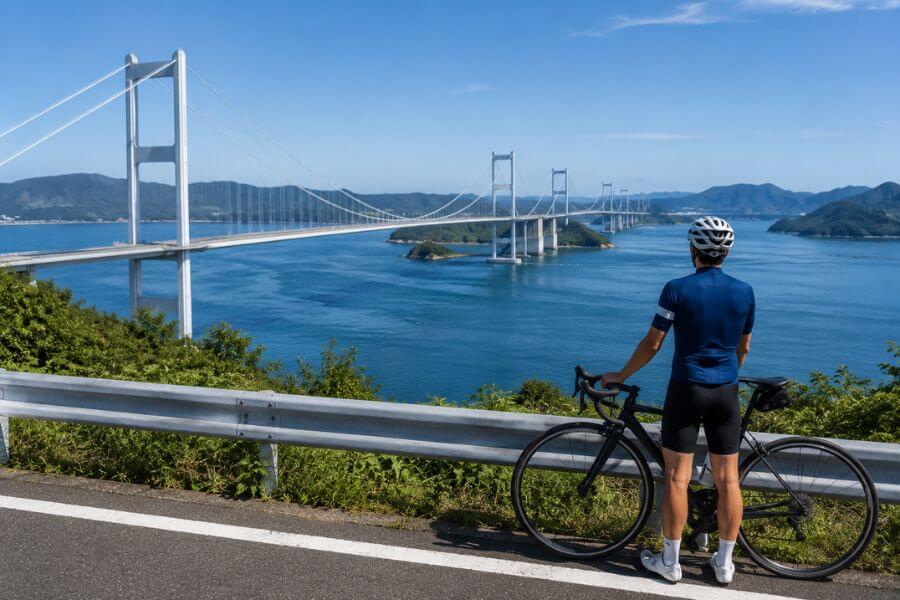
The Kurushima-Kaikyo Bridge is the grand finale of your journey. It is the world’s very first triple suspension bridge, spanning over four kilometers in length. It is a massive structure that takes quite a long time to cross, giving you plenty of time to celebrate the end of your ride.
The bridge sits high above the water, and the views from the bike lane are breathtaking. You will look down on small green islands that look like stepping stones in the sea. The water below moves like a rushing river due to the powerful tides.
To get down to the mainland at Imabari, you ride down a massive concrete spiral ramp that spins you gently downward like a slow amusement park ride. It is an incredible way to finish your island-hopping journey.
Bicycle Rental System and Options
Public Shimanami Rental Bikes
The local government operates a highly convenient public bike rental system with around ten different stations scattered along the entire route. This system is perfect for travelers who want flexibility and simple options.
You can pick up a bicycle at the beginning of the trail in Onomichi and drop it off at any of the public terminals along the way, including the final station in Imabari. They offer standard city bicycles, which often come with a front basket for your backpack, as well as basic cross bikes and smaller folding bikes.
The rental cost is very budget-friendly. You pay a daily fee, plus a deposit. If you return the bicycle to a station on a different island, you simply leave your deposit behind. The bikes are well-maintained, but they are heavier than professional sports bikes.
Specialized Giant Store Rentals
If you want a fast, lightweight bicycle that makes climbing hills feel effortless, you can rent a premium bike from the Giant stores located at both ends of the route. One store sits inside the Onomichi U2 building, and the other is right inside the Imabari Train Station.
These shops offer high-end aluminum and carbon fiber road bikes, mountain bikes, and modern fitness hybrids. Every bike is fitted precisely to your height by professional staff, and they provide high-quality helmets and bike locks.
You can book these bicycles online months in advance, which is highly recommended for busy holiday weekends. While they cost significantly more than the public rental bikes, the comfort and speed they provide can change your entire riding experience for the better.
Electric Bicycles
Electric bikes, or e-bikes, are becoming incredibly popular on the Shimanami Kaido. These bicycles look like regular bikes but have a small battery-powered motor that helps you when you pedal.
When you start riding up the long ramps that lead to the bridges, the e-bike motor kicks in and makes the hill feel completely flat. It removes the stress of getting tired and allows people of different fitness levels to ride together happily.
If you choose an e-bike from the public rental system, you must remember that you usually have to return it to the exact same station where you hired it, as the batteries need specific charging setups. Premium rental shops offer longer-lasting e-bikes that can sometimes be dropped off at the opposite end of the route.
Summary of Bike Rental Choices
| Bike Type | Best Used For | Comfort Level | Speed Potential |
| City Bicycle | Short rides, casual exploring, carrying bags | High | Low |
| Cross Hybrid | Full-day trips, general fitness, versatile paths | Medium | Medium |
| Road Bicycle | Fast riding, experienced cyclists, long distances | Low | High |
| Electric Bike | Climbing bridge ramps easily, mixed fitness groups | High | Medium |
Planning Your Itinerary
One-Day Speed Itinerary
If you are fit and love a physical challenge, you can complete the entire sixty-kilometer route in a single day. To do this successfully, you need to wake up early and start your ride by eight o’clock in the morning.
Spend the morning riding through Mukaishima, Innoshima, and Ikuchijima. Aim to reach the Tatara Bridge around midday. This makes the salt-processing island of Hakatajima or the large island of Omishima the perfect place to stop for a hearty lunch.
During the afternoon, you will tackle the rolling hills of Oshima and the long Kurushima-Kaikyo Bridge. You will likely arrive in Imabari around late afternoon or early evening, just as the sun begins to set over the harbor. This schedule leaves little time for long museum visits, but it delivers an incredible feeling of achievement.
Two-Day Relaxed Itinerary
For the absolute best experience, you should spread the journey over two full days. This allows you to slow down, explore side roads, visit historic temples, and eat plenty of local snacks without feeling rushed.
On day one, ride from Onomichi to Ikuchijima or Omishima. Spend your afternoon exploring the marble hills of Kosanji Temple or walking through the ancient forests around Oyamazumi Shrine. Check into a traditional Japanese inn for the night.
On day two, enjoy a large breakfast before heading out to cross the final islands. You can spend hours relaxing on the beaches of Hakatajima or climbing up to the viewpoint on Oshima. You will arrive in Imabari with fresh legs and plenty of time to enjoy a celebratory dinner.
Half-Route Option
You do not have to ride the entire trail to experience the beauty of the area. Many travelers choose to ride halfway and then catch a local ferry boat back to their starting point.
A popular choice is to ride from Onomichi to the town of Setoda on Ikuchijima Island. This section is about thirty kilometers long and features three beautiful bridges and plenty of flat coastal riding. After spending the afternoon eating lemon gelato and exploring the town, you simply wheel your bicycle onto a passenger ferry.
The ferry takes you directly back to Onomichi port in less than an hour. It is an amazing option for families with younger children or anyone who wants a relaxing day on the water without sore leg muscles the next morning.
Comparison of Itinerary Styles
| Itinerary Name | Total Distance | Time Needed | Fitness Level Required |
| One-Day Challenge | 60 kilometers | 6 to 8 hours | Medium to High |
| Two-Day Explorer | 60 kilometers | 2 full days | Low to Medium |
| Half-Way Highlight | 30 kilometers | 3 to 4 hours | Low |
What to Pack for the Ride
Essential Clothing
Choosing the right clothes will make a massive difference in how much you enjoy your day on the bike. You should wear comfortable, athletic pants or shorts that do not rub against your skin when you move your legs.
Dress in layers because the weather on the islands can change quickly. A lightweight, windproof jacket is highly useful, especially when crossing the high bridges where the ocean winds feel much stronger and colder than on the ground.
Wear sturdy closed-toe shoes like running sneakers. Avoid sandals or flip-flops, as they can easily slip off the pedals and cause you to lose your balance. A pair of inexpensive cycling gloves can also protect your hands from getting sore after gripping the handlebars for hours.
Gear and Electronics
You do not need heavy backpacks, but a few small items are essential. Bring a lightweight backpack or a waist pack to hold your personal belongings. Most rental bikes have front baskets, which can hold your bag for you while you ride.
Your smartphone is your best tool for finding your way, checking ferry times, and taking photos. Bring a fully charged portable battery bank and a charging cable so your phone does not run out of power in the middle of an island.
Do not forget sunglasses to protect your eyes from the bright glare of the sun reflecting off the ocean water. A small tube of sunscreen is also highly important, as you will be outdoors in direct sunlight for many hours.
Money and Documents
While Japan is a very modern country, many small shops, fruit stands, and ferry boats on the islands only accept physical cash. Before you leave Onomichi or Imabari, make sure you visit an automated teller machine to withdraw plenty of Japanese yen coins and bills.
You will need cash to pay for bridge tolls, small snacks, fresh fruit from roadside stalls, and local bus or ferry rides if you get too tired to continue cycling. Keep your cash in a waterproof pouch or a small wallet that fits easily into your pocket.
Carry a copy of your passport or identification card with you at all times. If you rent a premium bicycle, the shop staff will need to see your official identification before they can hand over the keys to the bike.
Food and Dining Guide
Fresh Local Seafood
Being surrounded by the ocean means the islands offer some of the freshest and most delicious seafood in Japan. The sea currents here are fast and clean, which makes the fish healthy and flavorful.
Look for local restaurants serving sea bream, known as tai in Japanese. A popular local dish is tai-meshi, which is fresh sea bream cooked with seasoned rice in a clay pot. The fish meat is sweet, tender, and incredibly satisfying after a long ride.
You can also find casual outdoor seafood barbecue places near the ports. You can select fresh fish, clams, and shrimp from a counter and grill them yourself at a table over hot coals. It is a fun, social way to enjoy a meal right next to the water.
Citrus Treats and Sweets
The islands of the Seto Inland Sea are world-famous for growing incredible citrus fruit. Because of the warm sunshine and mild ocean climate, farmers can grow dozens of different varieties of oranges, lemons, and limes.
Every rest stop along the route offers unique citrus snacks. You can try lemon soft-serve ice cream, orange juice slushies, and dried citrus peels coated in sweet sugar.
A must-try treat is the Hassaku pastry, where fresh, slightly bitter orange slices are paired with sweet bean paste inside soft rice dough. These sweets provide quick energy for your muscles and keep your mouth feeling fresh and hydrated during your ride.
Island Ramen and Savory Dishes
If you want a hot, savory meal to recharge your body, look for restaurants serving Onomichi ramen. This style of noodle soup features a rich broth made from a mix of chicken bones and local seafood, topped with tender slices of pork and savory soy sauce.
On the southern islands like Hakatajima, you will find salt ramen. This broth is lighter and clearer, highlighting the clean taste of the natural sea salt made on the island.
Many small cafes also offer island curry, which is a comforting dish of thick Japanese curry sauce poured over rice, often made with locally grown vegetables like sweet potatoes and onions. It is filling, warm, and perfect for refueling your body.
Navigation and Safety Tips
Following the Blue Line
You never have to worry about getting lost on the Shimanami Kaido because the entire route features a bright blue line painted right onto the side of the road. If you keep your tires next to this line, it will guide you safely from one end of the trail to the other.
The blue line also displays helpful numbers painted on the asphalt. These markings tell you how many kilometers you have traveled and how far it is to the next island or major bridge.
When you approach a bridge, the blue line will split away from the main car road and lead you onto a dedicated bicycle ramp. These ramps climb up the hillsides at a very gentle angle, ensuring you do not have to pedal up steep steps or dangerous highway cliffs.
Understanding Bridge Access Ramps
The bridges sit high above the ocean to allow massive cargo ships to pass underneath safely. This means that before you cross any bridge, you must ride up an access ramp to reach the path height.
These ramps are engineering marvels. They twist around the hills in long, looping circles or gentle curves. The slope is kept at a very low angle, usually around three percent, which means it feels like a long, slow hill rather than a short, steep wall.
Use the low gears on your bicycle when you start moving up these ramps. Take your time and pedal slowly. If your legs feel tired, it is completely acceptable to get off your bicycle and push it up the ramp. The paths are wide enough for both riding and walking.
Safety Rules of the Road
In Japan, bicycles are generally expected to ride on the left-side edge of the road, moving in the same direction as car traffic. Always stay inside the designated bicycle lanes whenever they are available.
When you are riding down the long ramps after crossing a bridge, your bike can pick up speed very quickly. Always keep your hands near your brakes and control your speed. Watch out for sharp turns at the bottom of the ramps.
Be polite and share the path with other travelers. If you want to pass a slower cyclist, call out a friendly hello or ring your bike bell gently before you move past them. Always wear your helmet properly secured under your chin throughout the entire journey.
Accommodation and Lodging
Traditional Japanese Inns
To experience authentic Japanese hospitality, consider spending the night at a traditional inn, known as a ryokan or a minshuku. These are often family-run businesses located in the quiet villages along the coast.
When you stay at a traditional inn, you will sleep on thick, comfortable futon mattresses laid out on woven straw tatami mats. The rooms are simple, elegant, and peaceful, offering a wonderful place to rest your mind and body.
The best part of staying at an inn is the food. The hosts will prepare massive home-cooked dinners and breakfasts featuring fresh local seafood, seasonal vegetables from their own gardens, and hot miso soup. Many of these inns are highly welcoming to cyclists and provide safe indoor spaces to store your rental bicycle for the night.
Modern Bicycle-Friendly Hotels
If you prefer western-style beds and modern amenities, there are fantastic bicycle-friendly hotels located at both ends of the route. The most famous is Onomichi U2, a beautifully restored old harbor warehouse that now holds a stylish hotel, a bike shop, a restaurant, and a bakery.
At these modern cycling hotels, you can actually wheel your bicycle right into your bedroom. They feature special wall hooks where you can hang your bike safely next to your bed.
They also offer convenient laundry facilities where you can wash and dry your sweaty cycling clothes in the evening, ensuring you have fresh, clean gear to wear the next morning. The front desks can also help you arrange luggage delivery services to your next destination.
Guesthouses and Hostels
For travelers on a tight budget or those who want to meet other adventurers from around the world, the islands offer a great selection of cozy guesthouses and shared hostels.
These properties offer affordable dormitory beds or private rooms with shared bathrooms and communal kitchens. They have a relaxed, social atmosphere where everyone gathers in the evening to share stories about their day on the road.
The owners of these guesthouses are usually passionate locals or cycling fans who know the islands perfectly. They can give you amazing recommendations for hidden beaches, quiet sunset viewpoints, and cheap local restaurants that standard tourist guidebooks often miss.
Best Times of Year to Visit
Spring and Autumn Seasons
Spring and autumn are the absolute best times of year to ride the Shimanami Kaido. During these months, the weather is mild, the skies are often clear blue, and the temperature is perfect for outdoor exercise.
In spring, which lasts from late March through May, you can see beautiful cherry blossoms blooming on the hillsides and in the local parks. The air feels crisp and fresh, and the islands look bright and full of life.
Autumn, spanning from October through November, brings cooler temperatures and stable weather conditions. The leaves on the mountain trees turn vibrant shades of red, orange, and yellow, creating a stunning contrast against the blue ocean water. These seasons are highly popular, so you should book your bikes and hotels well in advance.
Summer Considerations
Summer in Japan, which runs from June through August, is hot, humid, and full of intense sunshine. If you choose to ride during these months, you must prepare carefully for the extreme heat.
The long coastal roads offer very little shade, and the sun reflecting off the water can make you feel extra warm. You will need to drink massive amounts of water and sports drinks to stay hydrated, and apply high-quality sunscreen throughout the day to avoid painful sunburns.
However, summer also brings beautiful benefits. The island beaches look spectacular, and you can jump into the cool ocean water to refresh your body during your ride. The days are long, giving you plenty of daylight hours to complete your journey at a slow, relaxed pace.
Winter Cycling
Winter, from December through February, is the quietest season on the Shimanami Kaido. The temperatures drop significantly, and cold winds blow down across the sea from the north.
If you don’t mind the cold, winter can actually be a wonderful time to visit. You will have the bicycle paths entirely to yourself, and the cold air makes the distant views look incredibly sharp and clear. You can see distant mountains covered in pure white snow.
You must dress warmly in thick windproof jackets, warm long pants, thick gloves, and a cozy beanie that fits under your bicycle helmet. Keep in mind that some small island cafes and ferry services reduce their operating hours during these quiet winter months.
Frequently Asked Questions
What happens if it starts to rain during my bicycle ride?
If it begins to rain while you are out on the path, you can still continue your ride safely because the bicycle paths are paved with high-quality asphalt that does not become overly slippery. You should slow down your speed, especially when riding down the long bridge ramps, and use your brakes early and gently. Many rest stops and convenience stores along the blue line sell inexpensive plastic rain ponchos that can keep your body dry. If the rain becomes too heavy or you feel uncomfortable, you can stop at the nearest port and take a passenger ferry boat with your bicycle back to the main cities of Onomichi or Imabari.
Do I need to bring my own bicycle helmet from home?
You do not need to bring your own helmet from home unless you have a specific favorite one that you prefer to use. Every single bicycle rental shop along the route, including both the public rental terminals and the premium private stores, will provide a clean, safety-tested helmet included with your bicycle rental fee. The staff will help you adjust the straps so that it fits securely on your head. Wearing a helmet is highly recommended for your safety and is legally expected for young riders in Japan.
Is the bicycle route difficult for people who do not exercise regularly?
The route is designed to be highly accessible for people of all fitness levels because the paths are mostly flat as they follow the island coastlines. The only sections that require uphill climbing are the access ramps that lead up to the bridges. Because these ramps use a gentle, looping design with a low slope, you can ride up them slowly using the easy gears on your bike. If you feel tired or out of breath, you can simply step off your bicycle and walk it up the ramp. If you are worried about your energy levels, renting an electric bicycle will give you a powerful boost that makes the hills feel completely effortless.
Can I ride the route in the opposite direction from Imabari to Onomichi?
You can absolutely ride the Shimanami Kaido in either direction, starting in Imabari on Shikoku island and finishing in Onomichi on the main island of Honshu. The blue navigation line is painted clearly on both sides of the road, guiding you safely no matter which direction you choose to pedal. Starting in Imabari means you will tackle the longest bridge, the Kurushima-Kaikyo Bridge, at the very beginning of your journey when your legs are completely fresh. Both cities have great train connections, making it easy to start and finish your trip wherever you prefer.
Where can I store my heavy luggage while I am cycling between the islands?
You do not have to carry your heavy vacation suitcases on your bicycle while you ride. If you are doing a one-day ride, you can leave your large bags at the luggage storage counters or coin lockers located inside the train stations at Onomichi or Imabari. If you are doing a multi-day trip and crossing from one side to the other, you can use a highly convenient luggage delivery service called Same-Day Delivery or use Japan’s reliable Takkyubin shipping services. For a small fee, these services will pick up your bags from your hotel in the morning and deliver them directly to your destination hotel by the evening, allowing you to ride freely with just a small, lightweight backpack.