Key Takeaways for Your Tea Ceremony Journey
- Embrace the Stillness: The ceremony is less about the tea and more about the quiet connection between you, the host, and the present moment.
- Mind Your Movements: Focus on graceful, deliberate gestures; everything has a purpose, from how you hold the bowl to how you bow.
- Respect the Tools: Treat the tea utensils with care, as they are often treasured pieces of art that tell a story of history and craftsmanship.
- The Power of One: Focus entirely on this singular encounter, for it will never occur in exactly this way again.
- Sweetness First: Always eat the served sweet before drinking the bitter matcha to balance the flavors on your palate perfectly.
Introduction to the World of Tea
Stepping into a Japanese tea ceremony is like stepping out of the noisy, rushing stream of modern life and into a quiet, hidden pool. You are invited to leave your worries at the door, quite literally, as you often have to bow low to enter the tea room through a small, modest door. This humble entrance reminds everyone that no matter who you are outside—a CEO, a traveler, a student—you are equal within this space.
The ceremony, known as chado or the way of tea, is an ancient practice deeply rooted in Zen Buddhism. It is a choreographed dance of hospitality, mindfulness, and aesthetics. While it might seem complicated at first with all the specific rules and movements, the core of the experience is truly accessible to anyone with an open heart. You do not need to know everything to appreciate the beauty of a single bowl of tea served with kindness. In this guide, we will walk through every aspect of this beautiful tradition so that when your moment comes, you can fully settle into the rhythm of the room.
Preparing Your Mind Before You Arrive
Before you even see the tea room, your preparation begins. The ceremony is designed to be a peaceful escape, so arriving in a state of agitation defeats the purpose. Try to give yourself a few minutes of quiet time before your appointment. Clear your mind of your to-do list, your emails, and your upcoming appointments.
Wear comfortable, modest clothing. You will likely be sitting on tatami mats, which are woven straw mats that cover the floor. This means you will be sitting in a kneeling position for a period of time. Choose trousers or a skirt that allows you to move and sit without discomfort. Also, wearing clean, white socks is considered proper etiquette because you are entering a space where the floor is treated with great respect. Avoid wearing heavy perfumes or colognes, as the tea room is meant to be filled with the subtle, natural scents of tatami, iron, and green tea.
The Architecture of the Tea Room
The space itself, called a chashitsu, is an architectural marvel of simplicity. You will notice that it is usually quite small. This smallness is intentional; it creates an intimate environment where you are very close to the host and the other guests. Look around as you enter. You will likely see a tokonoma, which is an alcove featuring a simple scroll with calligraphy or perhaps a single, seasonal flower arrangement.
The lighting is often muted and soft, filtering through paper screens. This creates shadows that are as important as the light itself. Everything in the room is chosen to celebrate the season and the concept of wabi-sabi, which is the beauty found in things that are imperfect, weathered, and natural. Do not feel the need to fill the silence with conversation. The room is designed to be a place where silence is a welcomed guest.
Understanding the Sequence of Movements
When you enter the room, take a moment to observe the host. They have spent hours preparing for this exact moment. Their movements are practiced and precise. You will notice they do not rush. When it is your turn to receive the tea, there is a specific way to accept the bowl.
Place your hands on the mat and bow in a gesture of respect. When you receive the bowl, place it on the palm of your left hand and support the side with your right. Before you take that first sip, rotate the bowl twice in a clockwise direction. This is done to avoid drinking from the most decorative or “front” side of the bowl, which is a sign of humility. It shows that you do not believe yourself worthy of the most beautiful part of the vessel. Drink the tea in a few slow, thoughtful sips, and upon finishing, wipe the rim of the bowl with your fingers or a piece of special paper, then rotate it back to its original position.
The Role of the Seasonal Sweet
One of the most delightful parts of the ceremony is the wagashi, or the traditional sweet served before the matcha. This is not just a dessert; it is a vital part of the tea experience. The matcha tea itself is quite intense, grassy, and bitter. The sweet is designed to be sugary and soft to contrast with the tea.
When the sweet is placed before you, eat it completely before the host begins to whisk the tea. The interplay between the lingering sweetness on your tongue and the earthy, robust flavor of the tea is what creates the perfect balance. If you are served more than one piece, enjoy them slowly. The appearance of the sweet is often designed to reflect the current season, perhaps shaped like a cherry blossom in spring or a maple leaf in autumn.
The Art of the Host and the Guest
The relationship between the host and the guest is a partnership of mutual respect. The host performs a service, and the guest provides an appreciative audience. You do not need to be an expert to be a good guest. Being a good guest simply means being attentive and present.
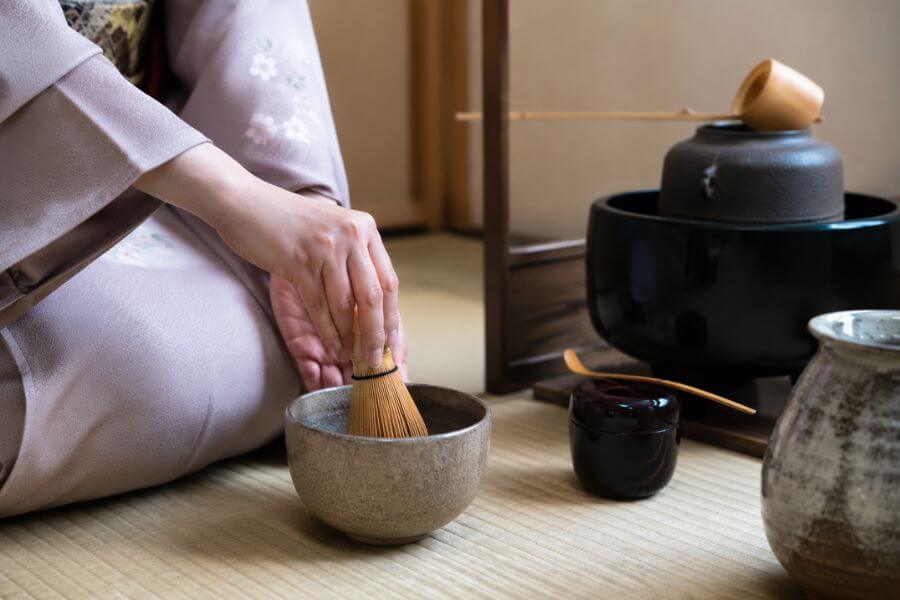
Watch how the host handles the ladle, the whisk, and the tea caddy. These tools are the soul of the ceremony. Each one has a specific place and a specific history. The host is not just making a drink; they are creating a shared experience. As a guest, you contribute to this by focusing on the process. When the host finishes, they may invite you to examine the tools. You can pick up the tea bowl and look at its shape, its weight, and the way the glaze feels in your hands. This is the moment to appreciate the craft behind the object.
Differences Between Types of Tea Gatherings
Not all tea gatherings are exactly the same. They vary based on the formality of the event and the time of day. Below is a simple way to look at the different styles you might encounter.
Table 1: Comparing Tea Ceremony Styles
| Style of Gathering | Formality Level | Typical Duration |
| Chaji | High | Long (3-4 hours) |
| Chakai | Moderate | Short (1 hour) |
| Nodate | Casual | Variable (Open air) |
The Chaji is the most complete form of the ceremony, often including a meal. The Chakai is a more common, shorter event that focuses primarily on tea and sweets. Nodate is a beautiful experience where the ceremony is held outdoors, perhaps in a garden, allowing you to connect with nature while you enjoy your tea.
The Philosophy of Ichigo Ichie
At the heart of every ceremony is a concept called ichigo ichie. This translates to “one time, one meeting.” It is a beautiful and somewhat heavy thought: the combination of guests, the specific season, the weather, the flowers in the alcove, and the mood of the host will never happen again in exactly this way.
This philosophy encourages you to hold the moment tightly. It prevents you from taking the experience for granted. When you are sitting in that room, realize that this specific gathering is a once-in-a-lifetime occurrence. This makes every sip of tea and every quiet exchange more meaningful. It turns a simple act of drinking tea into a profound meditation on the passage of time and the importance of being fully awake to your life.
Preparing for the Unexpected
Sometimes, you might feel nervous about “doing it wrong.” Please let this fear go. While there are many strict rules for a formal tea master, your host is likely more interested in your genuine enjoyment than in your ability to follow every single rule perfectly. If you are uncertain, simply observe others. If you are the only guest, it is perfectly acceptable to bow respectfully and admit that you are new to the practice.
Your host will appreciate your honesty. The point is not to pass a test of etiquette but to participate in a shared tradition of peace. If you drop a sweet or struggle to rotate the bowl correctly, do not let it ruin your focus. Acknowledge the moment with a small smile or a nod, and continue. The tea ceremony is a human experience, and human experiences are always a bit messy.
Integrating the Tea Spirit Into Daily Life
Once you leave the tea room, the ceremony does not have to end. You can take the spirit of the experience home with you. Consider how you drink your morning coffee or tea. Do you drink it standing up, scrolling through your phone, or rushing to start your day? Try to change that.
Take five minutes to sit in a quiet chair. Focus only on the warmth of the mug in your hands, the aroma of the drink, and the taste. Breathe slowly. By bringing this level of attention to the small moments of your day, you transform mundane tasks into little ceremonies. You do not need a formal room or special tools to practice the mindfulness of chado. You only need the intention to be fully present.
Frequently Asked Questions
Do I need to know the Japanese language to participate?
No, you do not need to speak Japanese. While some terms are used in the ceremony, the experience is largely visual and sensory. Most hosts who conduct ceremonies for international guests are prepared to guide you through the process, and non-verbal communication through gestures and bows is the universal language of the tea room.
Is it acceptable to ask questions during the ceremony?
In a formal, traditional setting, it is usually better to wait until the end of the ceremony to ask questions. The ceremony is intended to be a silent, flowing experience. Once the formal part concludes, there is often time for conversation where you can ask the host about the history of the tea bowl or the meaning behind the scroll in the alcove.
What should I do if my legs go numb while sitting on the floor?
Sitting in the traditional kneeling position can be difficult if you are not used to it. If you find your legs falling asleep or experiencing pain, try to shift your position slightly or ask the host if it is acceptable to sit with your legs crossed. Most hosts understand that this posture is challenging for guests and will prioritize your comfort over rigid adherence to the standard seating form.
Can I take photographs during the ceremony?
It is generally considered impolite to take photographs during the ceremony. The goal is to be present in the moment rather than capturing it for a screen. Your focus should be on the connection between you and the host. If you truly wish to have a memory of the event, ask the host after the ceremony if they would allow a photo once the formal ritual has concluded.
Is the matcha green tea very bitter?
Matcha has a very distinct, earthy, and vegetal flavor that can be quite intense if you are used to sweetened or milky tea drinks. Because it is made of finely ground tea leaves, it is much stronger than a standard tea bag. However, the tradition of eating a sweet before drinking the tea is specifically designed to balance out the bitterness and highlight the deeper, more complex notes of the matcha.