Key Takeaways
- The samurai evolved from provincial warriors into the aristocratic ruling class of Japan, blending military might with refined culture.
- The code of Bushido, or the Way of the Warrior, emphasized honor, loyalty, and self-discipline above all else.
- Their role shifted drastically from battlefield combatants to government administrators and scholars during the long era of peace.
- The decline of the samurai was triggered by the modernization of Japan during the Meiji Restoration, which abolished their special privileges.
- Today, the spirit of the samurai remains embedded in Japanese identity through values like persistence, integrity, and respect.
The Origins of the Samurai Class
You might wonder how a group of sword-wielding warriors became the most iconic symbol of Japan. To understand the samurai, you must look back to the Heian period, which lasted from the 8th to the 12th century. During this time, the central government in Kyoto relied on local landowners to keep order and collect taxes. These landowners hired armed men to protect their property from bandits and rivals. These guards were the ancestors of the samurai.
The word samurai itself comes from the verb saburau, which means to serve. Originally, they were humble servants to the imperial court and high-ranking nobles. However, as the central government became weaker, these warriors grew in power. They developed their own military organizations, built fortifications, and eventually became the dominant force in the provinces. By the end of the 12th century, the era of the warrior had truly arrived.
From Guards to Warlords
As these warriors gained influence, they began to recognize their own strength. They were no longer just hired protection; they were becoming the rulers of their own territories. This transition hit a turning point with the Genpei War, a massive conflict between two powerful clans, the Taira and the Minamoto. This war ended in 1185, and it marked the beginning of military rule in Japan.
Minamoto no Yoritomo established the first shogunate, or military government, in Kamakura. This was a radical change. The Emperor remained the ceremonial head of state, but the Shogun held the actual power. The samurai now stood at the top of the social ladder. They were the ones making the laws, managing the economy, and leading the armies. They were no longer followers; they were masters of the nation.
The Life and Code of the Warrior
If you were to step back in time to the height of the samurai era, you would see that being a warrior was not just a job. It was a total way of life. The samurai were expected to be masters of both the pen and the sword. While they were trained to be deadly in combat, they were also expected to be educated in poetry, calligraphy, and tea ceremonies. This balance between violence and beauty defined their identity.
The heart of their life was the code of Bushido. This was not always a written rulebook, but rather a set of expectations that governed how a warrior should behave. Loyalty to one’s lord was the most important value. A samurai was expected to give his life if necessary to protect his master or keep his word. Failure brought shame, and shame was often considered worse than death.
The Significance of Honor and Seppuku
Honor was the oxygen of the samurai spirit. Everything they did was weighed against how it would reflect on their clan and their ancestors. If a samurai lost his honor—perhaps through a failure in battle or a betrayal of his lord—he had to reclaim it. This is where the practice of seppuku comes in.
Seppuku was a form of ritual suicide, often performed by disembowelment. It sounds brutal, and it was, but it was viewed as the ultimate expression of courage and sincerity. By taking his own life, a warrior could prove that his spirit was still pure and that he accepted responsibility for his actions. It was not a punishment, but a way to die with dignity. Only the samurai class had the right to perform this, and it remained a central part of their culture for centuries.
The Weapons and Armor of the Samurai
When you imagine a samurai, you likely see the curved blade of the katana. This sword was not just a weapon; it was considered the soul of the samurai. The process of making a katana was treated as a sacred art. Masters of the forge spent weeks folding steel thousands of times to create a blade that was both incredibly sharp and nearly impossible to break.
Beyond the katana, the samurai carried the wakizashi, a shorter sword. Together, these two swords were known as daisho. Only a samurai was allowed to wear both, and this pair served as a constant reminder of their status. They were rarely separated from their swords, even when indoors or dining.
Protective Gear and Battle Aesthetics
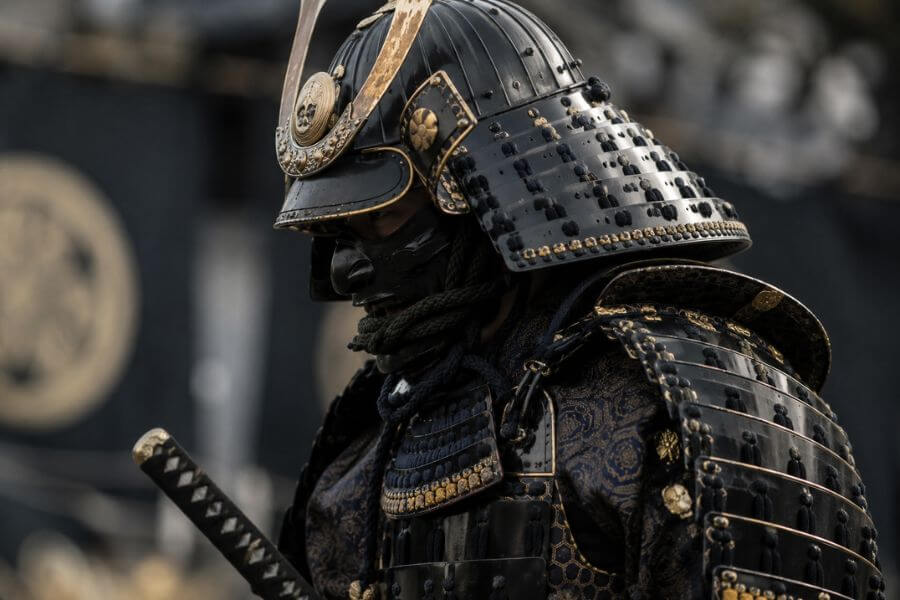
Armor was also an essential part of the samurai image. Unlike the heavy metal suits you might see in European medieval history, samurai armor was designed for mobility. It was made from small plates of iron or leather, laced together with silk or leather cords and coated with lacquer to prevent rust. This construction allowed a warrior to move quickly, dodge attacks, and ride a horse comfortably.
The helmet, or kabuto, was often a work of art in itself. Many featured fierce masks or intricate designs that were meant to strike fear into the hearts of their enemies. A samurai wanted to look terrifying on the battlefield, but also elegant and powerful. The aesthetics were a way of showing the world who they were and which clan they represented.
The Era of Constant War: The Sengoku Period
History is rarely a straight line, and the 15th to the 17th centuries were a time of chaos known as the Sengoku period, or the Age of Warring States. During this time, the central power of the shogun had collapsed. Japan was split into hundreds of small territories, each controlled by a local warlord called a daimyo.
Every day was a struggle for survival. Daimyo fought for land, resources, and eventually, control over all of Japan. It was a time of shifting alliances, backstabbing, and massive battlefield clashes. The samurai were at the center of it all. This was their golden age of combat, where a warrior could rise from poverty to greatness simply by proving his skill with a blade on the battlefield.
Table: Comparison of Roles During War and Peace
| Feature | War Period (Sengoku) | Peace Period (Edo) |
| Primary Duty | Battlefield Combat | Administrative Governance |
| Focus | Martial Arts | Scholarship and Art |
| Status | Rising through Merit | Fixed by Social Class |
| Daily Life | Living in Fortresses | Living in Castles or Cities |
The Pax Tokugawa: A Shift in Purpose
After decades of bloodshed, a powerful leader named Tokugawa Ieyasu finally unified Japan in the early 17th century. He established the Tokugawa Shogunate, which lasted for over 250 years. This era brought peace to a country that had known only war for centuries. But for the samurai, this peace created a problem.
What does a warrior do when there are no more wars to fight? The samurai had to adapt. They transitioned from being soldiers to being government bureaucrats, clerks, and scholars. They took on the roles of administrators who managed taxes, maintained records, and enforced the laws of the shogunate. Their swords remained symbols of their status, but they were rarely drawn in anger.
The Development of Culture
Because the samurai had more time on their hands, they turned their attention toward refining Japanese culture. The tea ceremony, which had military roots, became a sophisticated social ritual. Noh theater became a favorite pastime, reflecting themes of loyalty and tragedy that the samurai loved.
They also became the scholars of the nation. They studied history, philosophy, and Confucianism, which taught the importance of hierarchy and duty. By the end of this long era of peace, the samurai were more like civil servants than soldiers. They were the educated elite who kept the wheels of Japanese society turning.
The Decline and Final Days of the Samurai
The 19th century brought massive changes to Japan. Western powers were arriving on the shores, demanding trade and showing off advanced technology. The samurai leadership realized that if Japan did not modernize, it would be colonized. This led to the Meiji Restoration in 1868, a political revolution that returned power to the Emperor and dismantled the old feudal system.
The changes were swift and harsh. The samurai lost their status. They were no longer allowed to carry swords in public, and their special stipends from the government were cut off. The government began building a modern national army, replacing the samurai with soldiers who were trained in modern firearms. The world that had defined the samurai for seven hundred years was disappearing.
The End of an Era
By the end of the 1870s, the samurai class had essentially ceased to exist as a formal institution. There were a few final uprisings where traditionalists tried to fight back against the changes, but they were defeated by the new national army. It was a painful transition, but it was necessary for Japan to survive in the modern world.
Although the samurai vanished, their influence did not. Their stories, their art, and their code of ethics remained a deep part of the Japanese psyche. They were no longer men with swords, but they became the ideals that later generations looked to for inspiration during difficult times.
Summary: The Evolution of the Samurai
| Era | Core Role | Social Status |
| Heian | Provincial Guard | Low to Moderate |
| Kamakura | Military Ruler | High |
| Sengoku | Battlefield Warrior | Peak Influence |
| Edo | Administrator | Elite Class |
| Meiji | Disestablished | Removed |
Frequently Asked Questions
What was the main purpose of the samurai?
Originally, the samurai served to provide protection for wealthy landowners and the imperial court. Over time, they evolved into a ruling class that held both political and military power, eventually acting as the administrators of Japan during periods of peace.
Did all samurai own swords?
Yes, the ability to carry two swords, the katana and the wakizashi, was the defining mark of the samurai class. It was a legal right and a privilege that separated them from commoners, such as farmers or merchants.
Were samurai always rich?
Not always. While high-ranking samurai lived in luxury, many lower-ranking samurai lived quite modest lives. During the long peace of the Edo period, some lower-ranked samurai even had to take up side jobs to make ends meet, though they still maintained their social status.
How did the samurai influence modern Japan?
The samurai influenced Japan through their emphasis on discipline, honor, and loyalty. These values helped shape the work ethic and social expectations that are still seen in Japanese business and society today. You can see this legacy in how seriously people take their commitments and the way they treat others with deep respect.
Is the code of Bushido still practiced today?
Bushido is not a formal system that is practiced in the same way it was in the past. However, the core principles, such as self-improvement, integrity, and putting the needs of the group before the individual, remain highly valued in contemporary Japanese culture.