Planning a trip to Japan is an amazing adventure. You get to think about flashing neon lights, quiet temples, and delicious bowls of hot ramen. However, you also have to think about how you will get from place to place. Japan has one of the best transportation networks on the planet, but it can look like a giant puzzle at first. You have super-fast bullet trains, local commuter trains, subway networks, and plenty of airplanes.
Do not worry about getting lost or confused. This guide will take you through every single step of booking your rides. You will learn exactly how to secure your seats, save your money, and travel like a total pro. Let us dive straight into the best ways to move around Japan.
Key Takeaways for Smart Travel in Japan
If you are short on time, here are the most important things to remember for your journey.
- Book Shinkansen tickets early during holidays: Golden Week, Obon, and New Year are incredibly busy times in Japan.
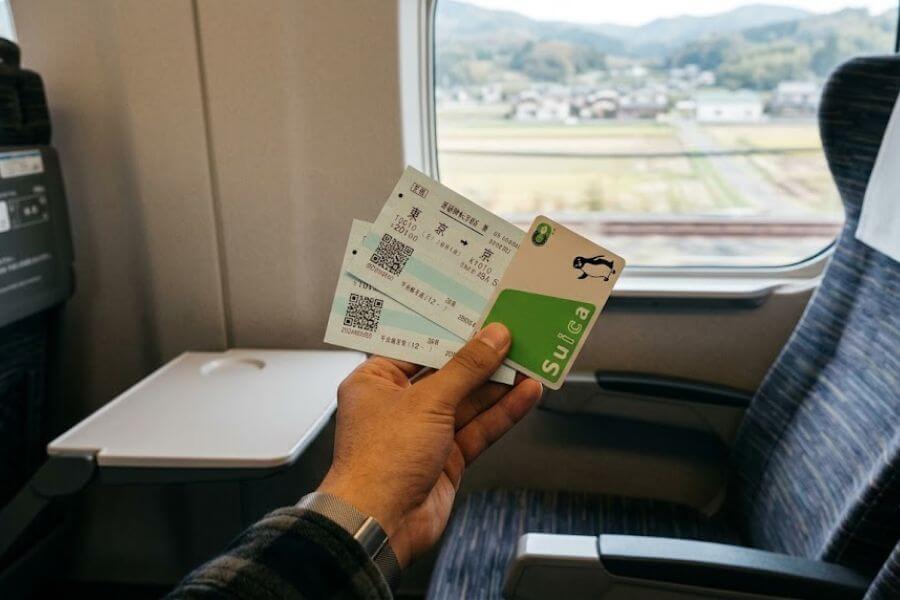
- Get an IC card immediately: A tap-and-go card like Suica or Pasmo saves you from buying individual local tickets every single time you ride.
- Compare planes and trains for long distances: The bullet train is amazing for medium trips, but flying is often cheaper and faster if you are heading all the way from Tokyo to Hokkaido or Okinawa.
- Watch the luggage rules: Large suitcases on the bullet train require a special seat reservation, so you must plan ahead or ship your bags.
- Keep your physical tickets safe: Small paper train tickets are easy to lose, but you need them to pass through the exit gates.
Mastering the Famous Shinkansen Bullet Train
The Shinkansen is the crown jewel of Japanese travel. These sleek, high-speed trains look like space rockets and move almost as fast. They connect major cities like Tokyo, Kyoto, Osaka, and Hiroshima with perfect punctuality. If a bullet train is even one minute late, it is a massive surprise to everyone in the country. Riding one is a highlight of any trip, but you need to know how the ticketing works before you step onto the platform.
Understanding Ticket Types and Seating Choices
When you buy a bullet train ticket, you are actually paying for two different things combined into one. The first part is the basic fare, which is the cost of moving your body from station A to station B. The second part is the super express fee, which is the premium price you pay for using the ultra-fast tracks.
You also have to pick what kind of seat you want. There are three main options available on most trains.
- Non-reserved seats: These are first-come, first-served seats located in specific cars, usually cars one through three. They are the cheapest option. You just walk into the car and look for an empty spot. If the train is completely packed, you might have to stand in the aisle until someone gets off.
- Reserved seats: You pay a small extra fee to secure a specific seat number in a specific car. This is highly recommended if you are traveling with family or friends and want to sit together. It gives you great peace of mind because nobody else can take your spot.
- Green Car seats: This is Japan’s version of first class. The seats are bigger, they recline further, there is more legroom, and the cars are usually very quiet. You get extra amenities, but the price is much higher.
Some special ultra-fast trains, like the Hayabusa on the Tohoku line or the Kagayaki on the Hokuriku line, only have reserved seats. You cannot buy a non-reserved ticket for those specific routes.
How to Book Shinkansen Tickets Online Before You Arrive
Booking online is the most convenient way to secure your seats before you even pack your bags. Japan has split its rail network into different regional companies, which means there are a few different official websites depending on where you want to go.
If you are traveling between Tokyo, Mt. Fuji, Kyoto, and Osaka, you are using the Tokaido-Sanyo line. The official website and app for this route is called SmartEX. You can register your credit card on the website, pick your exact train time, choose your seats from a seat map, and pay online. The best part about SmartEX is that you can link your digital ticket directly to an IC card. When you get to the station, you just tap your phone or card at the gate.
If you are traveling north of Tokyo toward places like Sendai, Aomori, or Nagano, you need to use the JR-East Train Reservation website. This site allows you to book tickets for the northern bullet trains. You can pick up your physical paper tickets at special digital kiosks inside the stations by scanning a QR code that the website sends to your email.
For trips around western Japan or the island of Kyushu, you can use the JR-West or JR-Kyushu official booking sites. If you find these regional sites confusing, you can also use third-party travel websites like Klook or Rakuten Travel. These platforms charge a tiny service fee, but they combine all the regions into one simple interface.
Buying Tickets In Person at the Train Station
If you prefer to buy your tickets after you arrive in Japan, you have two great choices at any major railway station.
The first option is the green ticket vending machines. These machines have a large button in the top corner that changes the language to English. The screen will guide you through the process. You choose your starting station, your destination, the date, your preferred time, and whether you want a reserved or non-reserved seat. You can pay with cash or a credit card. The machine will spit out two or three small paper tickets.
The second option is the JR Ticket Office, which is easily recognized by a green sign showing a person reclining in a train seat. These offices are called Midori-no-Madoguchi. You walk inside and talk to a real human worker behind the counter. Even if their English is limited, they are incredibly polite and helpful. You can write down your destination and desired time on a piece of paper or show it on your phone screen. They will find the best train for you, process your payment, and hand you your tickets.
The Special Rules for Oversized Baggage
The space inside a bullet train is highly organized. There are overhead racks above the seats, but they can only hold medium-sized bags and small backpacks. If you are traveling with massive suitcases, you must follow the strict oversized baggage rules that apply to the busiest lines.
Any bag whose total dimensions (length plus width plus height) add up to between 160 and 250 centimeters is considered oversized. If your bag falls into this category, you cannot just bring it onto the train and put it anywhere. You must reserve a special “Seat with an Oversized Baggage Area” or a “Seat with an Oversized Baggage Compartment.”
These special seats are usually the very last row of chairs in the car. The empty space behind these seats is where your big suitcase goes. There is no extra fee to reserve these seats, but they are limited in number. If you do not make this reservation and bring a giant bag anyway, the train conductor will charge you a penalty fee at your seat and move your bag to a secure area.
Navigating Local Trains and Subways
While the bullet train connects the big cities, local trains and subways are the veins of Japan’s daily life. They carry millions of students, office workers, and tourists every single day. Walking into a massive station like Shinjuku or Umeda can feel scary because there are hundreds of signs and exits. However, once you learn the basic layout, you will find it incredibly logical.
The Wonder of IC Cards: Suica, Pasmo, and Icoca
The absolute best tool for local travel in Japan is an IC card. This is a plastic card with a tiny computer chip inside that you load with money. Instead of standing in front of a giant fare map trying to calculate how much your subway ride costs, you simply tap your card on the glowing blue reader at the ticket gate. The gate opens instantly, and when you exit at your destination, the correct fare is deducted automatically.
In the past, everyone bought physical plastic cards like the Suica or Pasmo in Tokyo, or the Icoca in Osaka. These cards are highly compatible, meaning a Suica bought in Tokyo works perfectly on the subways in Kyoto and Osaka.
Today, you can easily add a digital Suica or Pasmo directly to your smartphone wallet. If you use an Apple iPhone, you can go to your wallet app, press the plus sign, search for Suica, and load it instantly using a credit card linked to your phone. For Android users, things can be a bit more complicated depending on where you bought your phone, but physical guest cards are always available at major airport train stations for tourists.
How to Read Station Signs and Find Your Platform
Every train line in Japan is color-coded and assigned a specific letter. For example, the famous loop line that circles central Tokyo is the Yamanote Line, and it is always represented by a bright green circle and the letter Y. Every station on that line also has a specific number. If you are at station Y-15 and want to go to Y-18, you know exactly how many stops away you are.
When you enter a station, look up at the large overhead signs. They are written in Japanese characters, English, and often Chinese and Korean. Follow the arrows for your specific line color.
Once you get to the platform, look at the electronic screens. They show the time of the next train, the type of train, and the final destination. Pay attention to the train type.
- Local trains: These stop at every single station along the track. They take the longest time but are perfect if your hotel is at a minor stop.
- Rapid trains: These skip a few minor stations to get down the track faster.
- Express and Limited Express trains: These only stop at major hub stations. Be careful when boarding a Limited Express train, because some of them require an extra premium ticket in addition to your basic fare.
Important Train Etiquette to Keep Locals Happy
Japanese train cars are famously quiet and peaceful. This is because people follow a strict set of unspoken social rules to show respect to their fellow passengers. If you want to blend in and be a polite traveler, keep these points in mind.
First, turn your cell phone to silent mode as soon as you step on board. People in Japan call this “manner mode.” You should never make or receive voice calls while inside a train car. If your phone rings, scramble to silence it immediately.
Second, keep your speaking voice very low. It is fine to talk to your travel companions, but keep your volume down so that the people sitting next to you cannot hear your whole conversation. Many locals use their commute time to sleep, read books, or listen to music through headphones.
Third, manage your backpack carefully. When a train gets crowded, take your backpack off your shoulders and hold it in front of your body or place it on the metal luggage rack above the seats. This prevents you from accidentally bumping into people when you turn around. Also, avoid eating messy or smelly foods on local commuter trains, though eating is perfectly acceptable on long-distance bullet trains.
Booking Domestic Flights in Japan
Many travelers forget that Japan is a long island nation with rugged mountains running down the middle. While the train is wonderful, sometimes flying is the smartest choice for your itinerary. If you want to go from Tokyo to the snowy wilderness of Hokkaido in the north, or the tropical beaches of Okinawa in the south, a domestic flight will save you hours of travel time and often a lot of money.
Comparing Legacy Carriers and Low-Cost Airlines
Japan’s sky is divided between traditional full-service airlines and budget low-cost carriers. Knowing the difference helps you pick the right balance of comfort and cost.
The two giant full-service airlines are Japan Airlines (JAL) and All Nippon Airways (ANA). They fly out of major central airports like Haneda in Tokyo and Itami in Osaka. When you buy a ticket with JAL or ANA, your price includes a generous checked baggage allowance, free drinks on board, and excellent service. They also have special discount programs for foreign tourists, such as the JAL Japan Explorer Pass or ANA’s special domestic fares, which allow you to book fixed-price flights across the country.
On the other side, you have low-cost carriers like Peach Aviation, Jetstar Japan, and Spring Airlines Japan. These airlines offer incredibly cheap base fares, sometimes costing less than a train ticket. However, they operate on a strict pay-for-everything model. You have to pay extra to check a suitcase, choose your seat, or get a cup of water on the plane. They also frequently fly out of more distant airports or specific low-cost terminals, like Terminal 3 at Narita Airport, which requires extra walking time to reach.
Step-by-Step Online Flight Booking Process
Booking a domestic flight online is straightforward because all Japanese airlines have high-quality English websites. Here is how you do it smoothly.
First, use a flight comparison website like Google Flights or Skyscanner to view all the available options for your dates. Make sure to check which airport the flight leaves from. Tokyo has two airports: Haneda is close to the city center, while Narita sits quite far out in the countryside.
Once you find a flight that fits your schedule, go directly to the official website of that airline to make the booking. Enter your personal details exactly as they appear on your passport. Double-check your email address because that is where your confirmation and digital tickets will be sent.
During the booking process, you will be asked to select your add-ons. If you chose a budget airline, make sure to purchase your checked baggage allowance now. Buying baggage allowance online during the booking is much cheaper than waiting until you get to the airport counter, where they charge premium penalty rates. Pay with a major credit card, print out your booking confirmation page, or save the digital PDF onto your phone.
What to Expect at the Airport: Check-in and Security
Domestic travel inside Japan is incredibly efficient and fast. You do not need to arrive three hours early like you do for international flights. For most domestic departures, arriving sixty minutes before your flight takes off gives you plenty of time.
When you walk into the departure terminal, look for the automated self-service check-in kiosks. You can scan the QR code from your mobile ticket or insert the credit card you used to buy the flight. The machine will print out your paper boarding pass and long sticky luggage tags if you have bags to check. Take your bags over to the automated baggage drop machines or the staffed counters.
Next is the security checkpoint. The process is very smooth. You need to place your small liquids, laptops, and large metal objects into plastic bins. One unique thing about Japanese domestic security is that you can often keep your shoes on unless they are heavy boots with thick soles. The security officers will hand you a small slip of paper that confirms your seat number. Hold onto this paper, walk straight to your departure gate, and wait for your zone to be called for boarding.
Comparing the Options: Train versus Plane
Choosing whether to ride the rails or fly through the clouds depends on a few major things: your total budget, how much time you have, and your final destination. It is not always an obvious choice, so comparing them side-by-side helps you optimize your vacation days.
The City-Center Advantage of Railways
When you look at pure travel times, a flight might look faster on paper. For example, a flight from Tokyo to Osaka takes about one hour, while the Shinkansen takes two and a half hours. However, the plane time does not tell the whole story.
Airports are almost always located far outside the city center. To catch a flight at Narita, you must spend an hour riding an express train out of Tokyo. Then you must arrive an hour early for security, fly for an hour, land at Kansai Airport, and spend another hour riding a train into central Osaka. Suddenly, your one-hour flight has turned into a four-hour journey.
The Shinkansen, however, leaves from Tokyo Station right in the middle of the city and drops you off at Shin-Osaka Station, which connects directly to the local subway lines. There are no long security lines, no liquid restrictions, and no waiting around luggage carousels. You simply walk onto the train two minutes before it leaves, sit down, and relax.
When Flying is the Smarter Choice
Flying becomes the clear winner when you want to travel very long distances across the Japanese archipelago.
If you want to visit Sapporo in Hokkaido to see the beautiful winter snow festival, riding trains all the way from Tokyo would take over eight hours and require changing tracks deep underground. A flight from Haneda to Sapporo takes just one and a half hours and lands you right next to the city.
Flying is also the only reasonable option for visiting isolated tropical islands like Ishigaki or Miyako in Okinawa. The table below shows a quick comparison of popular travel routes to help you see which method wins the battle of speed and convenience.
| Route From Tokyo | Shinkansen Travel Time | Flight Travel Time (Air Only) | Best Choice |
| To Nagoya | 1 hour 40 minutes | Not practical | Train (Faster and easier) |
| To Kyoto | 2 hours 15 minutes | No direct airport | Train (Direct center-to-center) |
| To Hiroshima | 4 hours | 1 hour 30 minutes | Tie (Train is relaxing, plane is slightly faster) |
| To Fukuoka | 5 hours | 2 hours | Plane (Saves significant time) |
| To Sapporo | 8-plus hours | 1 hour 30 minutes | Plane (Much faster and often cheaper) |
| To Okinawa | Impossible | 3 hours | Plane (The only way to go) |
Money-Saving Passes and Smart Travel Hacks
Japan can be an expensive place to visit, but it does not have to drain your wallet. There are several clever passes and strategies created specifically to help independent travelers save money on long journeys.
Regional Rail Passes: The New Way to Save
For many years, almost every tourist bought a national Japan Rail Pass, which allowed unlimited travel on every JR train across the entire country. However, the price of that national pass increased significantly, making it hard to get your money’s worth unless you spend every single day riding trains for hours.
Instead, you should look closely at regional rail passes. These are smaller, targeted passes that cover specific parts of Japan for a lower cost.
- JR East Tohoku Area Pass: Gives you five consecutive days of unlimited travel around the beautiful northern region above Tokyo.
- Kansai Thru Pass: Covers subways, railways, and buses around Kyoto, Osaka, Nara, and Kobe.
- JR West Sanyo-San’in Area Pass: An excellent choice if you want to travel from Osaka down through Hiroshima and over to Hakata.
Before you buy any pass, use a free online map tool like Google Maps to check the individual ticket costs for your planned route. Total up the costs of your separate trips and compare that sum to the price of the pass to make sure you are actually saving money.
Flying for Cheap with Tourist Air Passes
If you decide that flying is better for your long-distance legs, do not buy standard domestic tickets at retail price. Take advantage of special fares designed exclusively for international visitors.
Both ANA and JAL offer special fixed-rate tickets for tourists. To qualify for these low fares, you must live outside of Japan and hold a return international flight ticket back to your home country. You can book these special fares on their international websites before you leave home. They allow you to fly between almost any two domestic cities for a low, flat fee, even during peak travel seasons when regular tickets skyrocket in price.
Frequently Asked Questions About Booking Travel in Japan
Can I use my regular credit card to buy train tickets at the station machines?
Yes, most modern ticket machines at major Japanese stations accept international credit cards like Visa, Mastercard, and American Express. However, your home bank might occasionally block the transaction because it looks like unusual foreign activity. It is always a smart idea to carry some physical Japanese yen cash with you as a backup, because cash is widely accepted everywhere in Japan, and some smaller regional stations might only take cash coins and bills at their machines.
What happens if I accidentally miss my reserved bullet train?
If you miss the specific train time printed on your reserved ticket, do not panic. Your ticket is not completely ruined. You can still board any later bullet train on that exact same day, but you lose your specific reserved seat number. You will have to walk down the platform and board one of the non-reserved cars. Look for an open seat and sit down. If you want to get a new reserved seat instead, you must go to a ticket counter and pay a small fee to change your reservation.
Is there a limit to how much liquid I can bring on a domestic flight?
Unlike international flights where you can only bring tiny travel bottles, Japanese domestic flights are much more relaxed about liquids. You can bring full bottles of water, green tea, or juice through the security checkpoint. They have a special machine at security that tests the liquid inside your bottle without opening it to make sure it is safe. Just take your drinks out of your bag and place them on the tray for scanning.
Do children need to pay full price for train and plane tickets?
In Japan, the rules for children are very generous. On local trains and the Shinkansen, children under the age of six can ride completely free if they sit on an adult’s lap and do not occupy their own separate seat. Children between the ages of six and eleven get a fifty percent discount on train fares. Once a child reaches twelve years old, they must pay the adult rate. For domestic flights, budget airlines usually require a full ticket for any child over two years old, while full-service airlines often allow babies under two to fly free on a parent’s lap.
How do I return a physical IC card at the end of my trip?
If you have a physical Suica or Pasmo card with leftover money inside and you do not plan to return to Japan, you can get a refund. Take the card to a customer service ticket office belonging to the same company that issued it. For example, turn in a Suica at a JR East office in a Tokyo airport. They will return the five-hundred-yen deposit you paid for the plastic card, along with any remaining balance, minus a very small processing fee. If you have a digital card on your phone, you cannot get a cash refund at the station, so it is best to spend your balance down to zero at a convenience store before you head home.