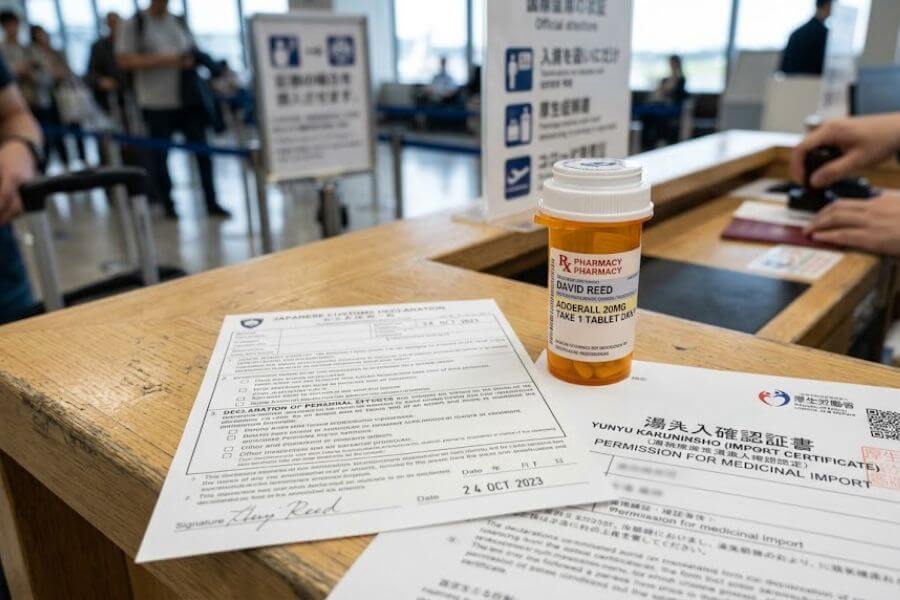
Planning a trip to Japan is incredibly exciting. You are probably dreaming about neon streets in Tokyo, peaceful shrines in Kyoto, and more sushi than you can eat. But if you rely on prescription medications, especially something like Adderall, your trip planning needs a very important extra step. Japan has incredibly strict laws regarding what medicines can cross its borders. What is perfectly legal and normal in your home country could be completely banned or heavily regulated there.
Getting caught with the wrong pill at customs is not just an inconvenience. It can lead to intense questioning, confiscation, or even legal trouble. Do not let that scare you off, though. Navigating these rules is totally doable if you know the steps ahead of time. Let us look at exactly how to keep your health on track while making sure your Japanese vacation stays stress-free and completely legal.
Key Takeaways for a Smooth Arrival
Before we dive into the deep details, let us look at the most important rules you need to remember. Think of this as your quick checklist before we break down the paperwork.
- Stimulants Are a No-Go: Standard Adderall and Vyvanse are completely illegal to bring into Japan, even with a doctor’s note or prescription.
- The 30-Day Rule: You can generally bring up to a 30-day supply of standard, legal prescription medications without needing special advance permission.
- Yunyu Kakuninsho is Your Ticket: If you need more than a 30-day supply of legal medication, or if you are bringing specific restricted medicines, you must apply for an official import certificate called a Yunyu Kakuninsho before you leave.
- Keep Original Bottles: Always keep your pills in their original pharmacy containers with your name clearly printed on the label.
- Declare Everything: When you arrive at the Japanese border, honestly declare your medications on your customs forms if you are carrying anything beyond basic over-the-counter vitamins.
The Big Adderall Hurdle
Let us tackle the most critical topic first. If you take Adderall for ADHD, you need to know that Japan treats this medication very differently than the United States or Europe. In Japan, Adderall is categorized as a prohibited stimulant.
Why Japan Bans Adderall
Japan has a long history of very strict anti-stimulant laws that date back many decades. The country’s Stimulants Control Law bans amphetamines and methamphetamines entirely for personal import. Because Adderall is an amphetamine-based drug, it falls directly under this absolute ban. It does not matter if you have a valid diagnosis, a note from the best doctor in the world, or a bottle from a legal hometown pharmacy. You cannot bring Adderall into the country under any standard circumstances.
What Happens if You Try to Bring It
If customs officers find Adderall in your luggage, they will seize it. Even worse, you could face detention, heavy fines, or deportation. The Japanese authorities take this rule very seriously, and claiming that you did not know the law will not get you out of trouble. It is vital to leave your Adderall at home.
Alternatives for Your Trip
If you cannot go without your ADHD treatment during your vacation, you need to plan months in advance with your doctor.
- Concerta and Ritalin: These are methylphenidate-based medications. Unlike Adderall, they are permitted in Japan, but they are still highly restricted. You cannot just pack them; you must get a special certificate ahead of time.
- Strattera: This non-stimulant ADHD medication is generally allowed, but you still must watch the quantity you bring.
- Talk to Your Doctor: Ask your physician if switching to a Japan-approved medication for the duration of your trip is a safe option for you. Start this conversation at least two to three months before your departure date so your body can adjust to any new medicine while you are still at home.
Understanding the General Prescription Rules
Now that we have covered the major stimulant ban, let us talk about standard medications. This includes things like blood pressure pills, asthma inhalers, birth control, anti-anxiety meds, and everyday antibiotics. Japan divides medications into clear categories based on how risky they consider them to be.
The Magic Number is Thirty
For most standard, non-narcotic prescription drugs, Japan allows you to bring a 30-day supply for personal use without filling out any advance paperwork. You simply pack them in your carry-on bag and walk through customs.
However, if your trip lasts 31 days or longer, and you need to bring enough pills to cover that entire time, the rules change. You are suddenly importing a bulk amount, which triggers the need for official government approval before you land.
Keeping Things Identifiable
No matter how many days of medication you are bringing, never mix your pills into a generic plastic baggie or a weekly pill organizer before you pass through customs. Keep every single pill in its original bottle from the pharmacy. The label must show your full name, the doctor’s name, the exact name of the drug, and the dosage. Customs officers need to look at your paperwork, look at your bottle, and see that everything matches perfectly. If they see random pink or blue pills floating around an unlabeled container, they will pull you aside for testing, which takes a lot of time.
Navigating the Yunyu Kakuninsho Process
If you need to bring more than a 30-day supply of a legal medication, or if you are carrying a restricted medicine like Concerta, you must apply for a Yunyu Kakuninsho. This is an official import certificate issued by the Japanese Ministry of Health, Labour, and Welfare.
When Do You Actually Need It
It is easy to get confused about when this paperwork is mandatory. Let us break it down into a simple comparison so you know exactly where your health needs fall.
| Type of Medication | Amount Allowed Without Paperwork | When Paperwork is Required |
| Regular Prescription Meds (Antibiotics, Blood Pressure) | Up to a 30-day supply | 31-day supply or more |
| Over-the-Counter Medicines (Painkillers, Allergy Pills) | Up to a 2-month supply | More than a 2-month supply |
| Vitamins and Supplements | Up to a 2-month supply | More than a 2-month supply |
| Restricted Psychotropics (Some Anxiety or Sleep Meds) | Varies by drug weight limit | Any amount over the specific weight limit |
| Inhalers or Pre-filled Syringes (EpiPens, Insulin) | Up to 2 pieces or a 30-day supply | More than 2 pieces or a 30-day supply |
Gathering Your Documents
Applying for the certificate requires you to gather several specific pieces of paperwork. You should start collecting these items at least four to six weeks before your flight.
- The Application Form: You will need to fill out an import application listing your personal details, your flight info, and every single medication you want to bring.
- The Prescription Form: You need a detailed form completed by your doctor explaining exactly why you need the medicine, the daily dose, and the total amount required for your stay.
- A Detailed Medical Explanation: A separate letter from your doctor written on official clinic letterhead is highly recommended. It should state your diagnosis and clear treatment plan in plain English.
- Your Flight Itinerary: You must provide proof of your arrival and departure dates, like a copy of your airline ticket confirmation, to show that the amount of medicine matches the length of your vacation.
Submitting the Application
In the past, travelers had to mail or email physical documents to regional health bureaus in Japan. Today, the process is much simpler thanks to an online portal called the digital Customs and Health certification system.
You create an account, upload clear photos or scans of your documents, and submit them electronically. A Japanese health official will review your application. If everything looks good, they will email you a digital certificate with a unique barcode. You must print this out and carry it with your passport when you travel.
Rules for Over-the-Counter Medicines
You might think that because you can buy a medicine without a prescription at your local grocery store, it is perfectly fine to bring to Japan. This is a common mistake that trips up many tourists. Japan has strict rules for over-the-counter products, too.
The Cold Medicine Trap
Many popular American cold and allergy medicines contain ingredients that are totally illegal in Japan. Specifically, look out for pseudoephedrine and codeine.
- Pseudoephedrine: This is a common decongestant found in medicines like Sudafed or multi-symptom cold caplets. Japan bans products containing more than a tiny percentage of this chemical because it can be used to manufacture illegal stimulants.
- Codeine: Some over-the-counter cough syrups or painkillers in various countries contain low doses of codeine. This is considered a narcotic ingredient under Japanese law and is completely forbidden for casual import.
Allergy and Pain Medications
Standard allergy medicines like Claritin, Allegra, or Zyrtec are generally fine to bring for personal use up to a two-month supply. Plain painkillers like Tylenol, Advil, or Aleve are also perfectly acceptable within that same two-month limit.
Just double-check the ingredient list on the back of the box before you pack. If you see words like pseudoephedrine or ephedrine, leave those items at home and buy Japanese cold remedies at a local pharmacy once you arrive. Japanese drugstores are incredible and have plenty of safe, effective options for unexpected headaches or stuffy noses.
Packing and Air Travel Strategies
Once you have your paperwork sorted out and your legal medications selected, you need a smart strategy for the actual travel day. How you pack your medicine matters just as much as what you pack.
Carry-On Only for Meds
Never, under any circumstances, place your essential prescription medications in your checked luggage. Bags get lost, delayed, or left behind on connecting flights all the time. If your pills are sitting in a suitcase that accidentally goes to Australia instead of Tokyo, you will face a medical emergency trying to replace them in Japan. Keep all your medicines in your backpack or carry-on purse where you can reach them at all times.
Organize for Security Screenings
When you go through aviation security before boarding your international flight, keep your medications easily accessible. Put all your prescription bottles and your printed Yunyu Kakuninsho certificate together in a clear, zip-top plastic bag.
If a security officer or a customs agent asks to see your medicine, you can pull out the entire bag instantly instead of digging through layers of clothes and electronics. This keeps the line moving and shows the officers that you are an organized, honest traveler who follows the rules.
Managing Temperature-Sensitive Meds
If you take a medication that requires refrigeration, like insulin, you need to plan for a long flight. International flights to Japan can take ten to fourteen hours, plus the hours spent sitting in airports.
Invest in a high-quality, insulated medical travel pouch with reusable gel ice packs. Check with your airline ahead of time to confirm their rules for traveling with gel packs, and make sure your doctor notes the need for a cooling pouch in their explanation letter.
Arriving at Japanese Customs
The final step of your journey happens when you step off the plane in Japan, walk through baggage claim, and approach the customs border declaration area. This is where your preparation pays off.
Filling Out Your Declaration Card
On the airplane, flight attendants will hand you a paper customs declaration form, or you might choose to use the digital Visit Japan Web service on your phone. The form will ask if you are bringing any restricted items, consumer goods, or medications into the country.
If you are only bringing a standard, under-30-day supply of regular pills like birth control or vitamins, you can generally mark no. But if you are carrying any psychotropics, large quantities of pills, or if you hold a Yunyu Kakuninsho certificate, you must check the yes box. Being totally honest on this form is your best protection against legal trouble.
Talking to the Officers
When you hand your passport and form to the customs official, stay calm and be polite. If you checked yes for medications, simply present your printed copy of the Yunyu Kakuninsho certificate along with your original prescription bottles.
The officer might count your pills or cross-reference the chemical names printed on the bottles with your paperwork. Because you took the time to get the official government certificate, this process should only take a few minutes. Once they verify that everything matches, they will smile, stamp your form, and welcome you to Japan.
What to Do in a Medical Emergency
Even with perfect planning, unexpected things can happen during an international vacation. You might accidentally drop your pill bottle down a drain, or your trip might get extended due to bad weather or flight cancellations.
Do Not Expect an Easy Refill
You cannot take an American or European prescription slip into a Japanese pharmacy and expect them to fill it. Japanese pharmacists can only dispense medication that has been ordered by a licensed doctor practicing inside Japan. If you run out of pills, you will have to schedule a visit to a local clinic or hospital to see a Japanese physician.
Finding an English-Speaking Doctor
Navigating a medical system in a foreign language can feel incredibly overwhelming, especially when you are stressed about running out of important medicine. Fortunately, major cities like Tokyo, Osaka, and Yokohama have excellent international clinics with English-speaking staff.
- Check with Your Embassy: The embassy website for your home country usually maintains a curated list of trusted, English-speaking hospitals and clinics located throughout Japan.
- Use Travel Insurance Support: If you purchased travel health insurance before your trip, call their 24-hour hotline. They can find an appropriate clinic for you, arrange an appointment, and sometimes provide an over-the-phone translator to help you talk to the doctor.
- Be Prepared for Different Brands: Keep in mind that the exact brand name of your medication might not exist in Japan. The Japanese doctor will look at the chemical compound of your home medicine and try to find an equivalent local product that is safe and legal for you to take.
Frequently Asked Questions
Can I bring my liquid prescription medicine if it is over the standard three-ounce travel limit?
Yes, you can bring liquid prescription medications that exceed the standard airport security liquid limits for carry-on bags. However, you must declare these liquids to the security officers at the checkpoint before the screening process begins. Keep the liquid medicine in its original pharmacy container with the official label attached, and present your doctor’s letter or prescription. Security staff will examine the bottle separately, sometimes using a special scanner, to ensure it is safe to bring on board the aircraft.
Is it okay to bring medical marijuana or CBD oil into Japan if I have a legal card?
No, it is absolutely illegal to bring any form of medical marijuana, cannabis products, or CBD oil into Japan. Japan has incredibly strict anti-cannabis laws under their Cannabis Control Act. This applies to flowers, edibles, vape cartridges, and even topical creams.
Even if you hold a legal medical card from your home state or country, bringing these items into Japan is a major criminal offense that can result in immediate arrest, long jail sentences, or permanent banishment from the country. Do not risk it under any circumstances.
What should I do if my medication is not on the pre-approved list but is not explicitly banned?
If you are unsure whether your specific prescription medication is allowed into Japan, you should send an inquiry to one of the official Japanese Narcotics Control Departments or regional health bureaus before you pack. You can find their contact email addresses on the Ministry of Health, Labour, and Welfare website.
Send them an email listing the exact active chemical ingredients of your drug, the dosage, and the amount you intend to bring. They will respond and tell you exactly whether it is allowed, requires a Yunyu Kakuninsho certificate, or is completely prohibited.
Can a family member bring my prescription medication for me if they are traveling on a different flight?
No, you cannot have someone else carry your prescription medications across the Japanese border for you. The laws state that personal medications can only be imported by the specific individual to whom they were prescribed.
When customs officers check medication paperwork or a Yunyu Kakuninsho certificate, the name on the pharmacy bottle must match the exact name printed on the passport of the traveler holding the bag. If a family member attempts to bring your pills on a separate flight, they could be accused of smuggling illegal or unauthorized drugs into the country.