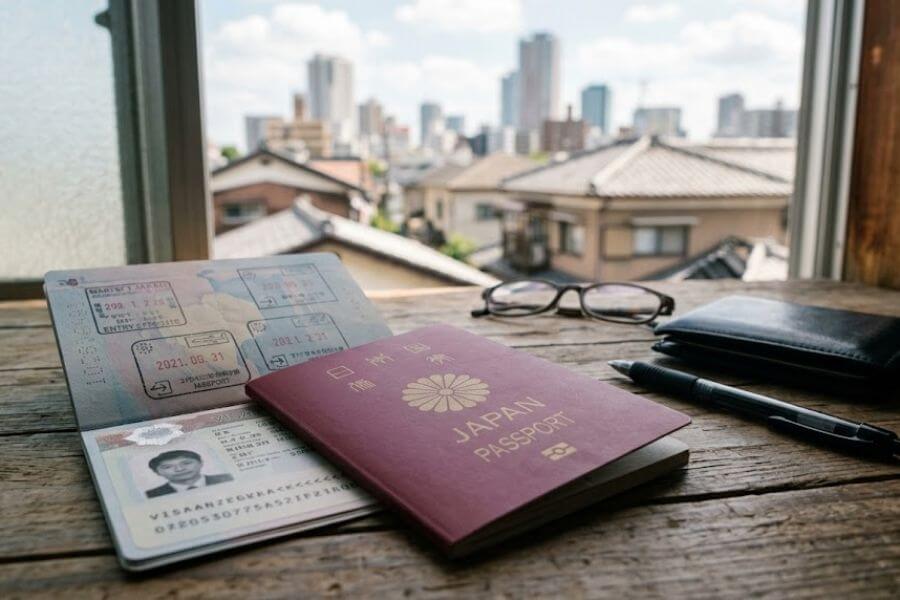
Ever dreamed of trading your daily routine for the neon-lit streets of Tokyo, the historic temples of Kyoto, or the snowy peaks of Hokkaido? Moving to Japan to live and work is an incredible adventure, and doing it in 2026 is more realistic than you might think. Japan is actively looking for global talent to join its workforce, which means the doors are open if you know how to walk through them. This guide will show you exactly how to turn that big dream into your reality.
Key Takeaways for Moving to Japan
Before diving into the deep details, let us look at the most important things you need to remember about getting a Japan work visa this year:
- A Job Offer Comes First: You almost always need a contract with a company based in Japan before you can apply for a work visa. They will act as your sponsor.
- The Certificate of Eligibility (COE) is Essential: This document is the golden ticket. Your employer applies for it inside Japan, and it proves you meet all the government requirements.
- New Pathways Exist: Japan has expanded options like the Specified Skilled Worker visa and the J-Find visa for recent grads, making it possible for people with various backgrounds to move.
- Language Skills Boost Your Odds: While some tech and teaching jobs do not require Japanese, knowing the language opens up way more job choices and makes daily life much smoother.
- Preparation Saves Time: Gathering your university degree, passport photos, and clean background checks early will prevent major delays.
The Big Picture: How Japan Work Visas Work
To understand the visa process, you have to understand what a visa actually is. Think of a visa as an official permission slip from the Japanese government. It tells the border officers that you have a legitimate reason to be in the country, whether that is for teaching English, coding software, or cooking authentic cuisine.
Japan does not have a single, generic work visa. Instead, they split their visas into very specific categories based on the exact type of job you will be doing. If you get a visa to teach, you cannot suddenly quit and go work at a construction site or an advertising agency without changing your visa status first.
The entry process generally involves three distinct steps: finding a job, getting your Certificate of Eligibility, and then converting that certificate into an actual visa at your local embassy. It requires patience, but following the steps in order makes the whole journey manageable.
Popular Work Visa Categories
Let us look at the most common types of visas that people use to move to Japan. Knowing which category fits your skills will help you target the right job boards.
The Engineer/Specialist in Humanities/International Services Visa
This is the long name for the most common work visa in Japan. It covers a massive range of office and technical jobs. If you have a university degree and want to work in a typical corporate environment, this is likely the route you will take.
- Engineer: This part is for software developers, mechanical engineers, data analysts, and tech specialists. Tech is booming in Japan, and companies are eager to hire overseas talent.
- Specialist in Humanities: This covers fields like marketing, sales, accounting, human resources, and business management.
- International Services: This includes translation, interpretation, fashion design, and language teaching at private corporations.
To get this visa, you generally need either a bachelor degree or many years of documented professional experience in your field. The job you are offered must also pay a salary that is equal to or higher than what a Japanese citizen would earn for the same role.
The Instructor Visa
Do not confuse this with the International Services visa. The Instructor visa is specifically for people who teach at official educational institutions. This includes public elementary schools, middle schools, high schools, and universities.
If you apply for the famous Japan Exchange and Teaching (JET) Program, or if you get hired directly by a city school board to be an Assistant Language Teacher, you will receive an Instructor visa. This visa gives you a unique look into the Japanese public school system, though your salary and contracts are often tied directly to the school calendar year.
The Specified Skilled Worker Visa (SSW)
Introduced to help fill labor shortages, the Specified Skilled Worker visa is a fantastic option for people who want to work in specific industries but might not have a four-year university degree. There are two levels to this visa: SSW-i and SSW-ii.
To get the SSW-i visa, you must pass a skills test for your specific industry and a basic Japanese language test. This visa allows you to stay for up to five years, but you cannot bring your family with you.
The industries included under this visa are:
- Nursing care (looking after the elderly)
- Building cleaning management
- Machine parts and tooling industries
- Industrial machinery manufacturing
- Electric, electronic, and information industries
- Construction
- Shipbuilding and ship machinery
- Automobile maintenance
- Aviation and airport ground handling
- Lodging and hotel hospitality
- Agriculture and farming
- Fisheries and aquaculture
- Food and beverage manufacturing
- Food service industry (working in restaurants)
If you advance to the SSW-ii level by passing higher tests, you can renew your visa indefinitely and bring your spouse and children to live with you in Japan.
The Highly Skilled Professional Visa
If you have an advanced degree, a very high salary, and years of top-tier experience, Japan wants to fast-track your move. They use a points-based system to evaluate candidates for the Highly Skilled Professional visa. You earn points for things like your age (younger applicants get more points), your academic degrees, your work history, and your Japanese language proficiency.
If you score seventy points or more, you get special perks. These perks include a five-year visa right away, faster processing times, and the ability to sponsor a visa for a parent or a domestic helper to come with you under certain conditions. Most importantly, it shortens the time you need to live in Japan before applying for permanent residency down to just one to three years.
The J-Find Visa for Top Graduates
If you recently graduated from a world-class university, Japan has a special visa just for you called the J-Find visa. This is a job-seeking visa that lets you live in Japan for up to two years while you look for work or prepare to start a business.
To qualify, your university must be ranked in the top one hundred of certain recognized global university lists. You also need to show that you have a certain amount of savings in your bank account to support yourself when you first arrive. This is a rare example of a Japan visa that lets you move to the country before you have an official job offer.
Step-by-Step Guide to Getting Your Work Visa
Now that you know the types of visas, let us break down the exact chronological process of getting one. Think of this as a multi-stage project where each phase builds on the previous one.
Phase One: Landing the Job Offer
Unless you are on the J-Find visa or a working holiday visa, your journey must start with a job hunt. You cannot just pack your bags, fly to Tokyo on a tourist visa, and hope to find a job before your ninety days run out. The government frowns on this, and most companies will not interview you if you do not already have a legal status or a clear path to one.
Start by searching on international job boards that cater to English speakers in Japan. Tailor your resume to highlight your technical skills, your adaptability to new cultures, and any language abilities you have.
When a company interviews you, be upfront about your need for visa sponsorship. Large companies do this all the time and have dedicated human resources departments to handle the paperwork. Smaller companies might be willing to sponsor you but might need you to help guide them through the process. Once you sign your employment contract, Phase One is complete.
Phase Two: Gathering Your Documents
Once the company hires you, they will ask you to send them a digital stack of personal documents. They need these to apply for your Certificate of Eligibility inside Japan. You will want to get these ready as fast as possible to avoid delaying your move.
Here is a common list of what you will need to provide:
- A Completed Application Form: Your employer will fill out the company sections, but you must fill out the personal pages detailing your education and employment history.
- Passport Photos: Japan has very strict rules about passport photos. They must be taken within the last three months, have a plain white background, and show your face clearly without any shadows or hair blocking your eyes.
- Your University Diploma: You will need to provide a high-quality scan of your graduation certificate or diploma. Some companies may ask for your official academic transcripts as well.
- Proof of Past Employment: If your visa relies on your work experience instead of a degree, you will need official letters from your previous employers stating your job titles, responsibilities, and dates of employment.
Phase Three: Waiting for the Certificate of Eligibility (COE)
After you hand your documents over to your employer, they will submit the official application to the Immigration Services Agency of Japan. This is where patience becomes your best friend.
The immigration office checks the stability of the company hiring you and reviews your background to ensure you meet all legal requirements. The processing time for a COE can take anywhere from one month to three months or more, depending on how busy the office is.
During this time, you cannot work in Japan, and it is highly recommended that you do not book non-refundable flights. Once the immigration office approves the application, they will issue a physical paper certificate or a digital electronic certificate. Your employer will then mail the physical paper or forward the email to you.
Phase Four: Converting the COE into a Visa
Holding the COE does not mean you can just board a plane and enter Japan. You must take that certificate to the Japanese embassy or consulate that has jurisdiction over your home area.
You will submit your physical passport, the COE, a visa application form, and another passport photo. The embassy will hold onto your passport for a few days to print the actual visa sticker inside it. This step is usually quick, often taking less than a week. Once you get your passport back with the glossy new Japanese visa inside, you are legally ready to fly.
Phase Five: Landing in Japan and Getting Your Residence Card
When your plane touches down at a major Japanese airport like Narita, Haneda, Kansai, or Chubu, you will pass through the immigration line for mid-to-long-term residents.
The officer will scan your passport, check your visa, and take your fingerprints. Instead of just stamping your passport, they will use a special machine to print your physical Residence Card, known as a Zairyu Card. This card is your official identification while you live in Japan. You are legally required to carry it with you everywhere you go.
Comparing Your Options: Work Visa Overview
To help you visualize which path makes the most sense for your situation, let us look at a breakdown comparing the entry requirements, stay durations, and family rules for the different visas we discussed.
| Visa Type | Main Educational or Skill Requirement | Initial Duration of Stay | Can You Bring Your Family? |
| Engineer / Specialist in Humanities | University Degree or years of professional experience | 1, 3, or 5 years | Yes (Spouse and children) |
| Instructor | University Degree or teacher certification | 1, 3, or 5 years | Yes (Spouse and children) |
| Specified Skilled Worker (SSW-i) | Industry Skills Test and basic Japanese Test | Up to 5 years total | No |
| Specified Skilled Worker (SSW-ii) | Advanced Industry Skills Test and leadership traits | Renewable indefinitely | Yes (Spouse and children) |
| Highly Skilled Professional | 70+ points on government scorecard | 5 years | Yes (Plus parents under strict rules) |
| J-Find Graduate Visa | Graduation from a top-100 global university | Up to 2 years total | Yes (Spouse and children) |
Hidden Secrets to a Smooth Visa Application
While the official steps sound straightforward, real life can sometimes throw curveballs. Here are some insider tips to make sure your application sails through without hitting any snags.
Keep Your Social Media Clean and Professional
While the Japanese immigration department does not officially list social media checks as part of their daily routine, individual embassies and hiring managers absolutely do. Ensure your public profiles reflect a responsible individual. Avoid posting anything that could make an employer question your professionalism or your ability to abide by local laws.
Double-Check Every Single Letter
Spelling mistakes can cause massive delays in the Japanese immigration system. If your middle name is printed on your passport, it must be written exactly the same way on your visa application forms, your employment contract, and your COE documents. If your university diploma spells your name differently than your legal passport, you may need to get an official letter from your school confirming you are the same person.
Understand the Three-Month Rule
Once the Japanese immigration office issues your Certificate of Eligibility, a ticking clock starts. You must enter Japan within three months of the date printed on the COE. If you wait too long, the certificate expires, becomes completely useless, and you will have to start the entire process over from scratch. Plan your life changes, apartment rentals, and resignation notices carefully around this timeline.
Living in Japan: What Happens After You Arrive
Getting your visa is a massive victory, but it is just the gate that lets you into the game. Once you are on the ground, you have a few immediate tasks to complete within your first two weeks to keep your legal status active and healthy.
Registering Your Address
Within fourteen days of finding a permanent place to live, you must walk into the local ward office or city hall of the neighborhood where you reside. Bring your Residence Card with you. You will fill out a moving-in form, and the clerk will print your new address onto the back of your card. Failing to do this can lead to fines and can cause serious issues with your visa status.
Joining the National Health Insurance System
Japan requires everyone living in the country to be part of a health insurance plan. If you work for a large company, they will likely enroll you in Social Insurance, known as Shakai Hoken. The company pays half of your premium, and your half is deducted directly from your monthly paycheck.
If you work for a smaller company or are on a job-seeking visa, you must enroll in National Health Insurance, known as Kokumin Kenko Hoken, at your local city hall. This system covers seventy percent of your medical bills, leaving you to pay only thirty percent out of pocket when you visit a doctor or a dentist.
Getting a Japanese Phone Number and Bank Account
You will quickly find out that you cannot do much in Japan without a local phone number. You need it to open a bank account, and you need a bank account to receive your salary.
Setting this up can feel like a riddle because you need one to get the other. The best way to break the loop is to visit a mobile phone shop that caters to foreigners to get a SIM card using your Residence Card and temporary address. Once you have that working number, you can head over to a bank like Japan Post Bank, which is famous for being friendly to new residents who have been in the country for less than six months.
Frequently Asked Questions
Can I apply for a work visa if I do not have a college degree?
Yes, you can. While having a bachelor’s degree is the easiest way to qualify for corporate visas, you have other options. You can apply for the Specified Skilled Worker visa, which requires passing industry skills and language tests instead of showing a diploma. Alternatively, if you have ten years of documented professional experience in your specific field, or three years for international services like translation, you can use that work history to qualify for a standard work visa.
How much money do I need in my bank account to move to Japan?
If you already have a signed job offer and a company sponsoring your visa, the government does not set a strict minimum amount of savings because you will start earning money right away. However, you should bring enough money to cover your first month of rent, food, and train travel before your first paycheck arrives. A good baseline is around two thousand to three thousand US dollars. If you are applying for the J-Find job-seeking visa, you must show proof of around one thousand five hundred US dollars in savings to clear immigration.
Can I change my job once I am living in Japan under a work visa?
Yes, your work visa belongs to you, not to your employer. You are not a servant to the company that sponsored you. You can quit your job and move to a new company, provided that your new job falls under the exact same visa category. For example, if you have an Engineer visa, you can switch from one software company to another software company. You just need to notify the immigration office about the change within fourteen days of leaving your old job and within fourteen days of starting your new one.
What happens if I lose my job while living in Japan?
If you lose your job or resign, your visa does not instantly become invalid. The government generally gives you up to three months to look for a new position, as long as you are actively job hunting. You must report your unemployment to the immigration office within fourteen days of your last day of work. If you are trying your best to find a new role but need more time, you can visit the immigration office to explain your situation and apply for a temporary change of status to a designated activities visa for job seeking.
Do I need to speak fluent Japanese to get hired and get a visa?
Not necessarily, but it depends heavily on your industry. If you are entering fields like English teaching, global IT development, or international research, many companies use English as their primary operating language and do not require Japanese proficiency. However, if you want to work in marketing, hospitality, design, or standard corporate management, you will typically need to demonstrate a business level of Japanese, usually measured as level N2 or N1 on the Japanese Language Proficiency Test.
Can my spouse work if they come to Japan on a Dependent Visa?
If you bring your husband or wife to Japan on a Dependent visa, they are not allowed to start working full-time right away. However, they can visit the local immigration office and apply for a permission slip called Permission to Engage in Activity Other Than That Permitted Under the Status of Residence Previously Granted. Once approved, this allows them to work part-time for up to twenty-eight hours per week. There are no restrictions on the type of part-time work, as long as it does not violate public order or adult entertainment laws.
How long does it take for a work visa to be approved from start to finish?
The entire process usually takes between two months and four months. Finding a job and passing interviews can take a few weeks to several months. Once you sign the contract, the Certificate of Eligibility phase takes the longest time, usually lasting between four and twelve weeks. After you receive the certificate, the final step of turning it into a visa sticker at your local home embassy takes only three to seven business days.
Can I turn my work visa into permanent residency down the road?
Absolutely. The standard rule is that you must live and work continuously in Japan for ten years to apply for permanent residency. However, if you qualify for the Highly Skilled Professional visa or can score enough points on their official scorecard, you can fast-track this timeline. If you score seventy points, you can apply for permanent residency after three years of living in Japan. If you score eighty points or more, you can apply after just one single year of residency.