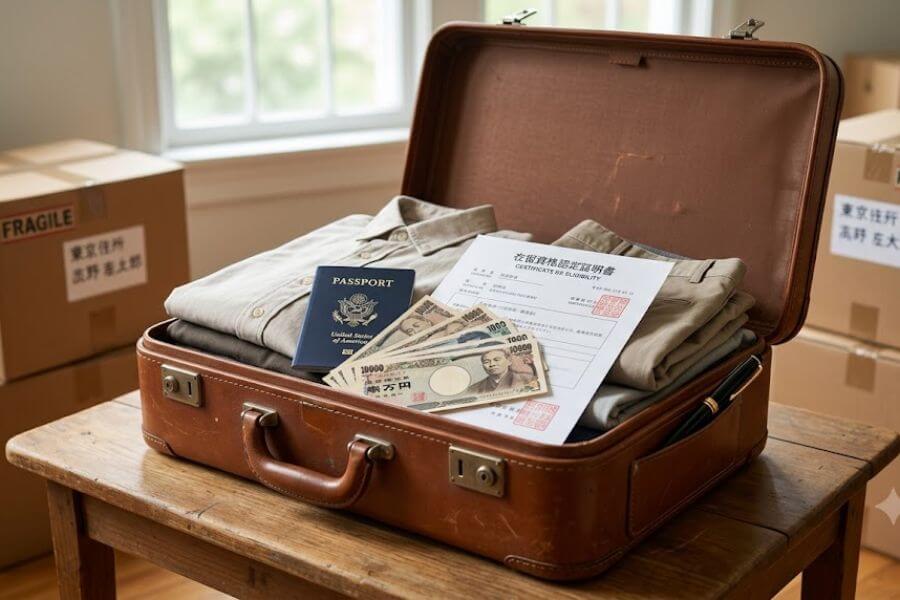
Trading the fast-paced American lifestyle for the neon-lit streets of Tokyo or the quiet temples of Kyoto is an incredible dream. Turning that dream into reality requires a solid plan, a clear timeline, and a lot of preparation. This guide breaks down every single phase of your relocation into structured checklists so you can make your big move across the Pacific Ocean without losing your peace of mind.
Key Takeaways
Before diving into the detailed logistics, here are the main actions you must take to ensure your relocation is successful:
- Secure Your Visa Early: You cannot move to Japan without an official sponsor, such as an employer or a school, to secure your Certificate of Eligibility.
- Downsize Drastically: Japanese apartments are much smaller than American homes, meaning you should sell or donate most of your large furniture.
- Prepare Heavy Upfront Cash: Moving into an apartment in Japan requires multiple months of rent upfront due to traditional fees like key money and agency fees.
- Keep Up with US Taxes: As an American citizen, you must continue to file your United States tax returns every year, even when living abroad.
- Learn the Language Basics: Having a baseline understanding of Japanese will help you navigate municipal offices and daily life when you first arrive.
Months Before the Move: Visas and Paperwork
Your journey begins long before you pack a single bag. The legal side of moving to another country takes the most time, so you need to start this process at least six months before your target departure date.
Choosing Your Visa Pathway
Japan does not have an option that allows you to move there first and figure out your plan later. You must have a specific, legally recognized reason to live in the country.
- The Work Visa: This is the path used by most American professionals. It requires a formal job offer from a company located in Japan that is willing to sponsor you. Common fields include technology, finance, engineering, and English language teaching.
- The Student Visa: If you want to go to a Japanese university or attend a full-time language school, the educational institution can sponsor your stay. This allows you to live in Japan and work part-time up to twenty-eight hours per week.
- The Highly Skilled Professional Visa: This path uses a point system based on your education, work history, salary, and age. If you score high enough, you get special immigration benefits, including a faster route to permanent residency.
- The Spouse Visa: If you are married to a Japanese citizen or a permanent resident, you can apply for this highly flexible option, which allows you to work in any industry without restrictions.
- The Digital Nomad Visa: Introduced recently, this option allows remote workers making a high individual income to live and work in Japan for up to six months, though it does not directly lead to long-term residency.
Securing the Certificate of Eligibility
The Certificate of Eligibility is the absolute core of your immigration process. Your sponsor in Japan must apply for this document at the Immigration Services Agency on your behalf. You must send them your university diplomas, clean criminal background checks, passport scans, and passport-sized photos. Once the immigration office approves the application, they will mail the physical certificate to your American address. This step can take anywhere from one to three months.
Turning the Certificate into a Visa
Once the physical document arrives at your home in the United States, you must make an appointment at the nearest Japanese embassy or consulate. You will submit your physical passport, the certificate, your official visa application form, and extra passport photos. The consulate will then print the actual visa directly into your passport page.
Preparing Your Belongings: Shipping and Downsizing
American homes are famous for being spacious. Japanese homes, especially in major hubs like Tokyo, Yokohama, or Osaka, are famous for being compact and efficient. You must adjust your mindset regarding your physical possessions.
The Art of Drastic Downsizing
Before you look into international shipping companies, look at your items through a Japanese lens. A standard one-bedroom apartment in Tokyo might range from twenty to thirty-five square meters, which is tiny compared to a standard American apartment.
- Furniture: Leave your king-sized beds, massive sectional sofas, and large wooden dressers behind. They simply will not fit through the narrow hallways, tight stairwells, or small rooms of Japanese residences.
- Appliances: Do not bring large appliances like microwaves, blenders, or televisions. Japan uses a different voltage system than the United States. While American devices run on one hundred and twenty volts, Japan operates on one hundred volts. Your items might turn on, but they will not run at full power and could become safety hazards.
- Clothing: Bring your favorite outfits, but remember that storage space is highly limited. Closet space is minimal, and you will likely rely on plastic storage drawers that fit under your bed.
Choosing a Shipping Method
When sending your remaining items across the ocean, you have two primary methods to weigh against each other.
| Shipping Feature | Sea Freight | Air Freight |
| Delivery Time | Two to three months | One to two weeks |
| Cost Scale | Budget-friendly for heavy items | Expensive per pound |
| Best Used For | Books, seasonal clothes, memories | Laptops, important papers, immediate needs |
| Customs Risk | Higher chance of port holds | Quick clearance through airports |
Navigating Japanese Customs
You can bring your used personal items into Japan duty-free if you have owned them for at least six months before your arrival. You must create a detailed, itemized inventory list of everything inside your shipping boxes. When you land at the airport in Japan, you must submit an “Unaccompanied Baggage” form to the customs officers to ensure your shipped boxes do not get hit with surprise import taxes when they arrive weeks later.
Financial and Legal Adjustments
Moving your life across the globe means dealing with complex banking rules and tax laws. You must set up your financial life correctly before leaving American soil to avoid major headaches later.
Managing American Bank Accounts
Do not close your United States bank accounts. You will still need them to pay off remaining American bills, receive tax refunds, or manage subscriptions. Contact your banks and credit card companies to add an international travel notice to your profile so they do not freeze your accounts for suspicious overseas activity. It is also wise to switch all your statements to paperless delivery and change your primary verification phone number to a digital service that works globally.
Understanding the Foreign Account Tax Compliance Act
The United States requires all citizens to report their global income every year, no matter where they live. Japan also has its own strict financial reporting systems. Because of these intense American regulations, some Japanese banks are hesitant to open accounts for United States citizens. You will need to carefully research which local institutions are willing to work with expats.
Planning for Massive Moving Fees
Moving to a new home in Japan requires a large sum of upfront cash. The traditional rental system involves several unique, non-refundable fees that you must pay before you even get your keys.
- Shikikin (Security Deposit): Usually equal to one or two months of rent. This is used for repairs when you move out, and a portion may be returned.
- Reikin (Key Money): This is a mandatory, non-refundable monetary gift given to the landlord as a traditional thank-you. It usually costs one to two months of rent.
- Chukai Tesuryo (Agent Fee): The fee paid to the real estate agency for finding the apartment, usually costing about one month of rent.
- Guranto Fee (Guarantor Company Fee): Foreigners typically need a guarantor company to co-sign their lease. This costs about half a month to a full month of rent.
The First Fortnight: Crucial On-Arrival Steps
When your airplane touches down at Narita, Haneda, or Kansai international airport, your official life as a resident begins. The first two weeks require a specific sequence of bureaucratic tasks.
Receiving Your Residence Card
When you pass through the airport immigration counter with your long-term visa, the officer will print your physical Residence Card, known locally as a Zairyu Card. This card is your primary form of identification in Japan. By law, you must carry this card with you everywhere you go.
Registering Your Local Address
Within fourteen days of finding a permanent place to live, you must visit the local municipal ward office or city hall in your neighborhood. Bring your passport and your Residence Card. You will fill out a moving-in form, and the government worker will print your official address on the back of your card.
Enrolling in National Health Insurance
While you are at the ward office registering your address, you must enroll in the National Health Insurance system if you are not already covered by a major Japanese employer. This system covers seventy percent of your medical costs, making healthcare highly affordable. Your monthly premium is calculated based on your previous year of income earned within Japan, meaning it will be very low during your first year in the country.
Getting a Local Phone Number
You cannot open a traditional bank account or sign an apartment lease without a Japanese phone number that starts with the mobile prefix of zero-eight-zero or zero-nine-zero. Walk into a major electronics store or mobile provider shop with your registered Residence Card and a valid credit card to sign up for a local subscriber identity module card.
Opening a Japanese Bank Account
With your phone number, registered Residence Card, and passport in hand, you can finally open a local bank account. Japan Post Bank is widely known for being welcoming to new foreign residents who have been in the country for less than six months. They provide a cash card that allows you to withdraw funds from automated teller machines located inside convenience stores nationwide.
Adapting to Daily Life and Cultural Norms
Living in Japan is vastly different from taking a vacation there. To blend into your new community smoothly, you need to learn the unspoken social guidelines of Japanese society.
Mastering the Complex Trash System
Waste management in Japan is highly detailed and varies significantly by individual city wards. You cannot simply throw everything into a single bag. You must separate your garbage into burnable items, non-burnable items, recyclable plastics, clean cardboard, and glass bottles. Each category has a specific collection day, and you must use correct color-coded bags designated by your neighborhood.
Navigating Public Transportation
Japan has one of the most reliable and advanced train networks in the world. Trains run exactly on schedule down to the second.
- Commuter Cards: Immediately buy a rechargeable transit card like a Suica or Pasmo. You can load funds onto these cards using cash at any train station ticket machine, or add them digitally to your smartphone wallet.
- Train Etiquette: Keep your voice to a quiet whisper, switch your mobile phone to silent mode, and never make voice calls while riding on public trains or buses. Eating or drinking is generally frowned upon unless you are riding a long-distance bullet train.
The Shoe Rule
Always look at the floor when entering any indoor space. If you see a raised floor step and a row of neatly lined-up shoes, you must remove your outdoor footwear. Change into the provided indoor slippers, or walk in your clean socks. This rule applies to homes, traditional restaurants, temples, and schools.
Key Takeaway
Moving from the United States to Japan is a massive life pivot that requires deep respect for local regulations, immense financial preparation, and a willingness to downsize your material lifestyle. By systematically completing your visa work, handling your finances, and tackling your local registration steps upon arrival, you can set yourself up for an incredible, enriching life chapter in Japan.
Frequently Asked Questions
Can I move to Japan without a college degree?
Yes, you can move to Japan without a four-year bachelor’s degree, but your visa paths will look different. The standard white-collar work visa generally requires a university degree or several years of documented professional experience in your specific field. If you do not have a degree, you can move by applying for a student visa to study at a Japanese language school or university, or by securing a spouse visa if you marry a Japanese citizen.
How much money should I save before moving from the USA to Japan?
It is highly recommended to save between five thousand and ten thousand American dollars before making the move. This fund covers your one-way flight, initial stay in temporary housing, mobile phone setup, food for the first month, and the steep upfront fees required to secure an apartment lease. Having a healthy financial cushion prevents unnecessary stress during your first few weeks.
Will my American driver’s license work in Japan?
Your regular state driver’s license is not valid for driving in Japan. Before leaving the United States, you must visit an American Automobile Association office to obtain an International Driving Permit. This permit allows you to drive in Japan for up to one year from your date of arrival. If you plan to stay long-term, you will eventually need to convert your American license into an official Japanese license at a local driving center.
Do I need to speak fluent Japanese to find a job?
Fluency is not mandatory for every single industry, but it depends heavily on your professional field. Many international tech companies, global corporations, and English language academies hire native speakers with zero prior Japanese language ability. However, if you want to work in traditional corporate environments, marketing, healthcare, or customer service, companies will generally require you to pass the Business Level Two or Level One of the Japanese Language Proficiency Test.