Walking into a restaurant in Japan can feel like stepping onto a different planet. One minute you are looking at incredibly detailed plastic food models in a window, and the next you are standing in front of a giant machine covered in buttons, wondering how to get a bowl of noodles. Ordering food here is an adventure all its own. This guide will show you exactly how to navigate Japanese menus, talk to servers, and master the famous ticket vending machines so you can eat like a local.
The Magic of Plastic Food Windows
Before you even open the front door of a restaurant, you will often find the ultimate cheat code for ordering. Most casual dining spots display lifelike plastic models of their entire menu right outside the entrance. These models are called sampuru. They look so real that you might actually try to take a bite out of them.
Why You Should Look Closely
These displays are not just for decoration. They are exact replicas of the dishes served inside. They show you the precise size of the bowl, the number of meat slices you get, and every single topping. If you are a picky eater or have a hard time picturing what a dish looks like from text alone, this window is your best friend.
How to Use the Display to Your Advantage
Take a quick picture of the dish you want on your phone before you walk inside. If you find yourself struggling to communicate with the host or server, you can simply show them the photo and point. It removes all the guesswork and ensures you get exactly what your stomach is craving.
Stepping Inside and Getting Seated
When you cross the threshold of a Japanese eatery, the first thing you will hear is a loud, energetic shout from the entire staff. They will yell “Iraasshaimase!” This means welcome to the shop. Do not be scared by the volume. It is just their way of being super enthusiastic about your arrival.
Decoding the Host Protocol
The host will look at you and hold up their fingers to ask how many people are in your party. You can hold up your own fingers to answer. If you want to use your words, you can say “hitori” for one person, “futari” for two people, or “sannin” for three people.
Choosing Your Seat Styling
In many traditional or casual spots, the host might ask if you prefer a regular table or a traditional low table.
- Teburu: This is the word for a standard table with normal chairs.
- Zashiki: This is a traditional area with tatami grass mats where you sit on the floor.
If you choose the zashiki option, remember that you must take your shoes off before stepping onto the straw mats. Look for a cubby hole or a designated shoe shelf right next to the platform.
Mastering the Vending Machine Cafe
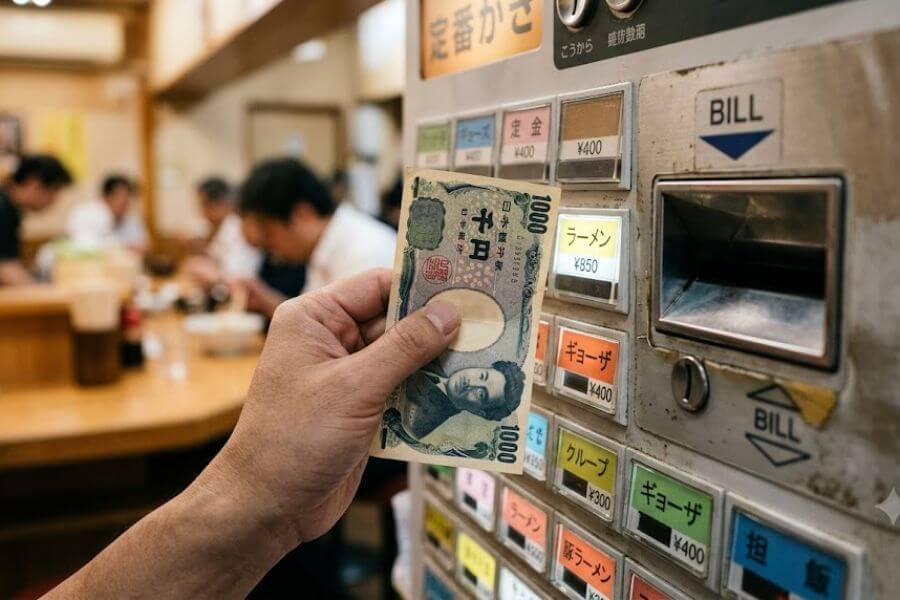
In fast food spots, ramen shops, and busy lunch joints, you will not find a human host waiting to seat you. Instead, you will meet a ticket vending machine called a kenbaiki. These machines sit right by the front door or even outside on the sidewalk. You must buy a paper ticket for your food before you take a seat.
Step-by-Step Machine Navigation
Using these machines is a fun, arcade-like experience once you know the pattern. Follow these steps to get your food ticket:
- Insert Your Money First: This is the step that surprises most travelers. You must put your coins or crisp paper bills into the slots before you press any buttons. If you press buttons first, nothing will happen. The machine will light up to show you which items you can afford based on the cash you put inside.
- Look for the English Toggle Switch: Look at the top corners of the screen. Many modern machines have a button with a little American flag or text that reads “English.” Tap that button to translate the screen instantly.
- Decode the Pictureless Buttons: If you are at an older shop, the machine might only have physical plastic buttons with Japanese characters and no screens. Do not panic. Look for matching symbols on the wall menu, or look at the prices. Usually, the biggest button at the top-left corner is the absolute most popular dish in the shop.
- Press the Big Button: Tap the button for the meal you want. If you want a large portion, look for the word “Oomori.” If you want regular size, look for “Namimami” or “Futsuu.”
- Get Your Change and Tickets: Once you make your selection, your small paper tickets will drop into a tray at the bottom. Your change will also slide out with a loud metal clink.
Handing Over the Goods
Take your paper tickets and walk inside the shop. Find an open stool at the counter or a free table. A chef or server will walk over to you and take your tickets. They will often tear the ticket in half, leaving one piece with you and taking the other piece to the kitchen. Now you just sit back and wait for your hot food to arrive.
The Art of Counter Dining
Many noodle shops and sushi spots use counter seating. This is designed for solo diners or pairs who want a quick, delicious meal without a long wait. It gives you a front-row seat to all the kitchen action.
Reading the Counter Setup
When you sit at a counter, everything you need for your meal is already sitting directly in front of you. You do not need to ask a server for napkins, water, or condiments. It is a completely self-contained station.
Locating Your Tools
Look at the small shelves and containers on the counter surface. You will find:
- Hashi: Chopsticks tucked into a wooden box or plastic holder.
- Otefuki: A wet paper towel to clean your hands before eating.
- Shoyu: Soy sauce in a small pouring bottle.
- Shichimi: A seven-spice chili blend that adds a nice kick to noodles.
- Gari: Pickled ginger, which is usually found in big tubs at sushi counters.
Navigating Table Service Restaurants
If you sit at a standard family restaurant or an izakaya, which is a Japanese style pub, you will experience table service. This process is a bit different from western style dining because servers will generally leave you alone until you specifically call for them.
Finding the Magic Call Button
Look closely at the small plastic box holding the soy sauce or the toothpick holder on your table. In most modern restaurants, you will see a small, round button on top of this box. This is the summon button. When you are ready to order, give that button a firm press. It will make a soft chiming sound, and a server will rush over to your table.
Calling Out Loudly
If there is no button on your table, you have to use your voice. Wait until a server walks past your table, look them in the eye, and say “Sumimasen!” This word means excuse me. Do not be shy about saying this loudly. In Japan, it is considered completely polite and normal to call out to your server when you need them.
Talking to Your Server
You do not need to speak fluent Japanese to order a great meal. A few simple words and phrases will help you communicate clearly and show respect to the staff.
Essential Phrases for Ordering
| English Phrase | Japanese Pronunciation | When to Use It |
| This one, please. | Kore o kudasai. | Use this while pointing at a picture on the menu. |
| Water, please. | Mizu o kudasai. | Use this when you want a glass of cold water. |
| What do you recommend? | Osusume wa nan desu ka? | Use this when you cannot decide what to choose. |
| Is it spicy? | Karai desu ka? | Use this if you are worried about chili heat. |
| Thank you. | Arigatou gozaimasu. | Use this when they drop off your food or drinks. |
Handling Special Requests
If you do not eat meat or have a specific food allergy, you must tell your server right away. You can say “Niku nashi” to ask for no meat, or “Sakana nashi” for no fish. If you have a dairy allergy, you can point to your menu and say “Nyuuroku nashi” to avoid milk products.
The Wonderful World of Free Upgrades
One of the best parts about eating at casual Japanese restaurants is the culture of free side items and custom options. Many shops allow you to customize your meal experience without charging you an extra dime.
Soup and Rice Refills
At many tonkatsu, which are fried pork cutlet shops, your meal comes as a set called a teishoku. This set includes your main meat, a bowl of rice, a bowl of miso soup, and a massive pile of shredded raw cabbage. At many of these places, the rice, soup, and cabbage are completely bottomless. If you want more rice, just hold up your bowl and say “Gohan okawari kudasai.”
Customizing Your Ramen Broth
When you order ramen, especially Hakata style tonkotsu ramen, the server might hand you a small piece of paper with check boxes on it. They want you to customize your soup. You can choose how firm you want your noodles, how rich you want your broth, and how much fresh garlic you want added to the bowl.
Understanding Water and Tea Culture
In western countries, you often have to wait for a server to bring you a drink menu or offer you tap water. In Japan, hydration is automatic and completely free.
The Self-Service Drink Stations
At vending machine cafes and casual counter spots, you will see water pitchers or large green machines sitting in the corner of the room. These are self-service beverage stations. You grab a small plastic cup from the stack and fill it up yourself. The machines usually offer ice cold water, hot water, or hot green tea.
The Never-Ending Tea Cup
At sushi restaurants, you will often find a small green powder container and a built-in hot water tap right at your counter seat. You spoon a bit of the green tea powder into your ceramic cup, push the cup against the black rubber lever of the tap, and fill it up with steaming hot water. You can drink as much tea as you want throughout your meal, and it is entirely free.
How to Eat and Show Appreciation
Once your food arrives, there are a few cultural customs that will make your dining experience much smoother. Eating in Japan has its own set of polite manners that are easy to follow.
Starting Your Meal Right
Before you pick up your chopsticks or take your first bite, join your hands together in front of your chest, bow your head slightly, and say “Itadakimasu.” This phrase translates to “I humbly receive this food.” It is a way of showing thanks to the ingredients, the chef, and everyone who helped bring the meal to your table.
The Rules of the Slurp
If you are eating ramen, soba, or udon noodles, you will notice that the people around you are making a lot of noise. Slurping your noodles is not rude in Japan. In fact, it is actually encouraged. Slurping pulls cool air into your mouth along with the hot soup, which keeps you from burning your tongue. It also helps spray the flavors across your palate, making the food taste even better. So do not be afraid to make some noise.
Handling Your Chopsticks Politely
There are a couple of major chopstick mistakes that you should avoid at all costs:
- Never Stick Them Upright: Do not stick your chopsticks straight down into a bowl of rice. This looks like a traditional ritual used at Japanese funerals and is considered bad luck.
- Never Pass Food Directly: Do not pass a piece of food from your chopsticks directly to another person’s chopsticks. If you want to share food, pick up the item and place it gently on your friend’s side plate.
Settling the Bill Smoothly
When you are done eating and your stomach is full, it is time to handle the payment process. Just like ordering, paying has its own unique system in Japan.
Locating Your Receipt Slip
In standard table service restaurants, the server will drop a small clip or a folded piece of paper onto your table either when they bring out your final dish or right after you finish eating. This piece of paper is your bill. Do not leave this paper on the table when you get up. You must pick it up and carry it with you to the cash register near the front exit.
The Cash-Is-King Mindset
While credit cards and digital smartphone payments are becoming much more common in big cities like Tokyo and Osaka, many traditional and family-run shops still only accept cash. Always make sure you have bills and coins in your wallet before you sit down to eat.
The Tray System
When you step up to the cash register, you will see a small plastic or metal tray sitting on the counter. Do not hand your cash directly to the cashier’s fingers. Instead, place your bills and coins flat inside the tray. The cashier will pick up the tray, count your money, and then place your change back into the same tray for you to collect.
The No-Tip Rule Explained
One of the most surprising things for visitors traveling to Japan is the complete absence of a tipping culture. Tipping is not expected anywhere, from tiny street food stalls to the most expensive luxury restaurants.
Why You Should Not Tip
In Japanese society, high-quality service is considered the standard benchmark of everyday employment. It is already built into the price of your food. If you leave extra coins on the table or try to hand a cash tip to your server, they will not be happy or excited. Instead, they will assume you accidentally forgot your change. They will likely run down the street after you to return your money.
How to Say Thanks Instead
If you want to show your appreciation for an incredible meal, you do not need money. As you walk out the door, simply look at the staff or the chef behind the counter, smile, bow slightly, and say “Gochisousama deshita.” This phrase means “Thank you for the wonderful feast.” It is the highest compliment you can pay to the kitchen crew.
Spotting Different Restaurant Types
Japan has many different categories of eateries, each specializing in a specific style of food or dining experience. Knowing what type of shop you are looking at will help you decide where to eat.
Izakaya Pubs
These are casual drinking spots that also serve a huge variety of small, shareable plates of food. Think of it like Japanese tapas. You can order grilled chicken skewers called yakitori, fried chicken called karaage, edamame beans, and potato salad. They are lively, noisy, and perfect for groups.
Shokudo Diners
A shokudo is a neighborhood family diner that serves affordable, everyday comfort food. They always have a massive menu featuring curry rice, pork cutlets, rice bowls, and noodle dishes. They are very welcoming and offer a cozy look into local daily life.
Kaitenzushi Conveyor Belt Spots
These are high-tech sushi restaurants where the plates travel around the room on a moving track. You sit down at a booth, look at the plates passing by, and grab whatever looks delicious. Many of these shops also have a touchscreen tablet at your table where you can order specific items that zoom straight to your seat on a special miniature bullet train track.
Frequently Asked Questions
What should I do if the vending machine eats my cash and does not give me a ticket?
If the machine jams or swallows your money without printing your ticket, do not try to hit or shake the machine. Look into the shop and call out to the staff by saying “Sumimasen!” Point at the coin slot and say “Okane,” which means money. The kitchen staff have keys to open up the back of the machine. They will quickly fix the jam and give you your correct change or food ticket right away.
Can I share a single bowl of ramen with my friend if we are not very hungry?
At most casual noodle shops and counter seats, sharing a single dish is generally frowned upon. These shops have very few seats, and they rely on a fast turnaround of paying customers to make a profit. The general rule of thumb is that every person who takes up a seat must order at least one individual main dish. If you are not feeling hungry enough for a big meal, it is better to visit a cafe or a street food stall instead.
Is it okay to use my phone or watch videos while eating at a counter?
It is completely fine to look at your phone, text, or read a book while you eat your food. However, you should always use headphones if you are watching a video or listening to music. Keeping the volume low helps maintain the calm and peaceful environment of the shop for the other people sitting right next to you at the counter.
What do the different colored plates mean at a conveyor belt sushi shop?
Each color pattern on the rims of the sushi plates represents a different price point. For example, a plain white plate might cost one hundred yen, a blue plate might cost two hundred yen, and a gold pattern plate might cost five hundred yen. At the end of your meal, the server will come over to your table and count the number of plates you stacked up by color to calculate your total bill.
Are there any vegetarian options available at typical ramen vending machine cafes?
Traditional ramen broth is almost always made by simmering pork, chicken, or fish bones for many hours, even if the soup looks clear. This means that standard ramen shops rarely have vegetarian broth options on their automated machines. If you follow a strict vegetarian diet, it is best to look for specialized vegan ramen shops in major city areas, or stick to traditional Buddhist vegetarian spots called shojin ryori.
Can I bring my own drinks or outside snacks into a Japanese restaurant?
Bringing outside food or drinks into a standard restaurant is considered impolite. The only common exception to this rule is a small water bottle for a baby or toddler. Since casual spots already provide free water and green tea at every table, you will always have plenty of options to stay hydrated during your meal without needing to bring your own cans or plastic bottles inside.