When most people think about Japan, they picture Tokyo’s bright lights, Kyoto’s temples, or Osaka’s busy streets. While these famous destinations deserve their popularity, some of Japan’s most breathtaking places are found far away from the crowds.
Rural Japan offers a completely different travel experience. You can discover peaceful villages, stunning coastlines, mountain landscapes, historic towns, and cultural treasures that many international visitors never see. These hidden gems allow you to experience authentic Japanese life while enjoying incredible scenery and a slower pace.
If you’re looking to explore beyond the typical tourist route, these beautiful rural destinations deserve a place on your travel bucket list.
Quick Summary Table 🌸
| Hidden Gem | Location | Best Known For | Best Time to Visit |
|---|---|---|---|
| Ainokura Village | Toyama | Traditional thatched houses | Spring and Autumn |
| Ouchi-juku | Fukushima | Edo-period village | Winter and Autumn |
| Takachiho Gorge | Miyazaki | Dramatic canyon scenery | Spring and Summer |
| Ine Fishing Village | Kyoto Prefecture | Waterfront boathouses | Spring and Fall |
| Shodoshima | Kagawa | Olive groves and coastal views | Spring |
| Tottori Sand Dunes | Tottori | Desert-like landscape | Spring and Autumn |
| Shiratani Unsuikyo | Kagoshima | Ancient moss-covered forest | Year-round |
| Hoshitoge Rice Terraces | Niigata | Scenic terraced rice fields | Spring and Fall |
| Gokayama | Toyama | UNESCO mountain village | Winter |
| Motonosumi Shrine | Yamaguchi | Red torii gates by the sea | Spring and Summer |
How We Ranked These Hidden Gems 🏞️
We selected these destinations using several important factors:
- Natural beauty and scenery
- Cultural and historical significance
- Authentic rural Japanese experience
- Lower tourist crowds compared to major cities
- Accessibility for travelers
- Unique features not found elsewhere in Japan
- Photography opportunities
- Seasonal appeal throughout the year
- Preservation of traditional Japanese culture
- Overall visitor experience
1. Ainokura Village, Toyama 🌿
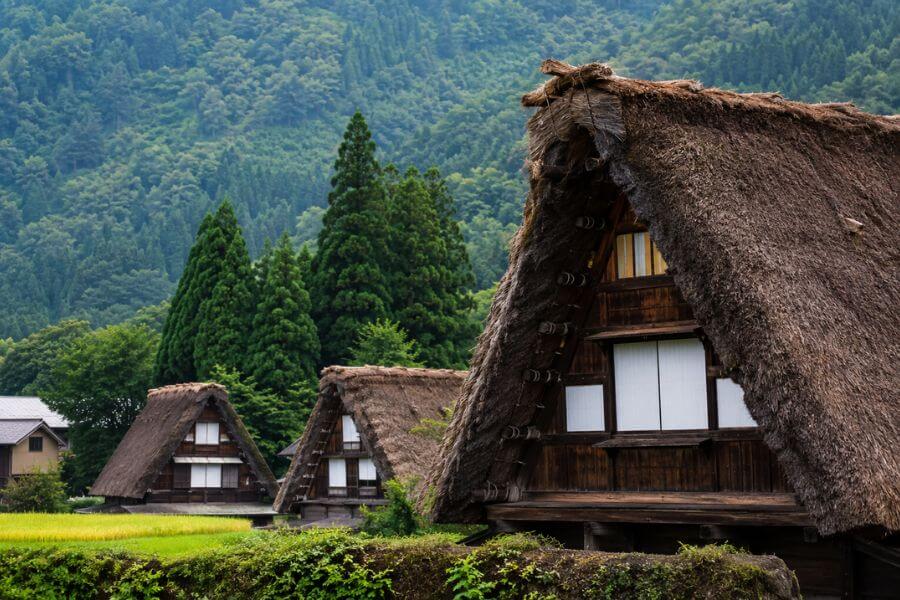
Ainokura Village feels like stepping into a storybook. Located in the mountainous Gokayama region, this small village is famous for its traditional gassho-zukuri farmhouses with steep thatched roofs.
Unlike the more famous Shirakawa-go, Ainokura remains relatively quiet and less crowded. The peaceful atmosphere allows you to fully appreciate the beauty of rural Japan.
Walking through the village, you will see centuries-old homes surrounded by forests and mountains. Many of the buildings are still occupied by local families, helping preserve the area’s traditions.
During winter, heavy snowfall transforms the village into a magical scene that looks almost unreal. Spring and autumn are equally beautiful, with colorful flowers and vibrant foliage adding extra charm.
2. Ouchi-juku, Fukushima 🏡
Ouchi-juku is one of Japan’s best-preserved post towns from the Edo period. Long ago, travelers stopped here while journeying between important regions of Japan.
Today, the village still looks much like it did hundreds of years ago. Traditional thatched-roof buildings line the main street, creating a unique historical atmosphere.
One of the highlights is trying the local specialty, negi soba. Instead of using chopsticks, many visitors eat the noodles with a large green onion.
Winter is especially magical when snow blankets the village. The annual snow festival creates one of the most beautiful scenes in rural Japan.
3. Takachiho Gorge, Miyazaki 🚣
Takachiho Gorge is one of Japan’s most spectacular natural wonders. This dramatic canyon was formed by ancient volcanic activity and features towering cliffs that rise above emerald-green water.
The most popular activity is renting a rowboat and paddling beneath the famous waterfall that flows directly into the gorge.
Beyond its natural beauty, Takachiho holds deep significance in Japanese mythology. According to legend, many important stories involving Japanese gods took place in this region.
The combination of mythology, nature, and peaceful surroundings makes Takachiho Gorge a truly unforgettable destination.
4. Ine Fishing Village, Kyoto Prefecture ⚓
While Kyoto City attracts millions of visitors each year, few travelers venture north to the charming fishing village of Ine.
The village is famous for its funaya, unique waterfront boathouses built directly along the bay. Many of these structures have boat storage on the ground floor and living spaces above.
The calm waters create beautiful reflections that make the entire village feel peaceful and picturesque.
Taking a boat tour provides stunning views of the shoreline and offers insight into the local fishing culture that has shaped the community for generations.
For travelers seeking tranquility and an authentic coastal life, Ine is a perfect escape.
5. Shodoshima, Kagawa 🍃
Shodoshima is Japan’s second-largest island in the Seto Inland Sea and remains surprisingly overlooked by international tourists.
The island is known for its olive groves, beautiful beaches, mountain scenery, and relaxed atmosphere. Because of its Mediterranean-like climate, olives have been successfully grown here for over a century.
One of the island’s highlights is Angel Road, a sandbar that appears during low tide and connects several small islands.
Shodoshima offers a wonderful mix of nature, culture, and local food experiences, making it one of Japan’s most rewarding hidden destinations.
6. Tottori Sand Dunes, Tottori 🐪
Many travelers are surprised to learn that Japan has massive sand dunes.
Stretching along the Sea of Japan coast, the Tottori Sand Dunes create a landscape unlike anywhere else in the country. Rolling hills of sand extend for miles, creating an almost desert-like environment.
Visitors can enjoy camel rides, sandboarding, hiking, and stunning sunset views.
The contrast between the dunes, ocean, and surrounding mountains creates spectacular scenery that feels completely different from typical images of Japan.
7. Shiratani Unsuikyo, Yakushima 🌳
Located on Yakushima Island, Shiratani Unsuikyo is an ancient forest filled with towering cedar trees and thick green moss.
Many travelers believe this magical landscape inspired scenes from famous Japanese animated films. The forest feels almost otherworldly, with misty pathways and centuries-old trees creating a dreamlike atmosphere.
Hiking trails range from easy walks to more challenging routes, allowing visitors of all fitness levels to enjoy the scenery.
The area receives abundant rainfall, which helps maintain its lush environment throughout the year.
8. Hoshitoge Rice Terraces, Niigata 🌾
Hoshitoge Rice Terraces offer one of Japan’s most stunning rural landscapes.
Hundreds of rice paddies cascade down the hillside, creating beautiful patterns that change with the seasons. During spring, the flooded fields reflect the sky like mirrors. In autumn, golden rice plants cover the slopes.
Early morning fog often settles over the terraces, creating breathtaking views that attract photographers from across Japan.
This destination showcases the deep connection between Japanese culture and agriculture.
9. Gokayama, Toyama ❄️
Gokayama remains one of Japan’s most authentic mountain regions.
The area features traditional villages, ancient houses, and spectacular mountain scenery. Compared to more famous UNESCO sites, Gokayama often feels quieter and more intimate.
Visitors can learn about local crafts, traditional music, and rural lifestyles that have survived for centuries.
Winter is particularly impressive, with snow-covered rooftops creating postcard-worthy scenes throughout the region.
For travelers who enjoy culture, history, and nature, Gokayama delivers a complete experience.
10. Motonosumi Shrine, Yamaguchi ⛩️
Motonosumi Shrine offers one of the most dramatic coastal views in Japan.
A long line of bright red torii gates stretches along cliffs overlooking the Sea of Japan. The vivid colors contrast beautifully against the blue ocean and green landscape.
Unlike many famous shrines in major cities, Motonosumi feels remote and peaceful.
The surrounding coastline is equally impressive, with powerful waves and rugged cliffs creating unforgettable scenery.
This destination combines spirituality, nature, and photography opportunities in one remarkable location.
Conclusion 🌅
Japan’s most famous cities deserve attention, but some of the country’s greatest treasures are hidden in its rural regions. From ancient villages and mountain forests to dramatic coastlines and scenic rice terraces, these destinations offer experiences that many travelers never discover.
Exploring rural Japan allows you to see a quieter and more authentic side of the country. You can connect with local traditions, enjoy stunning landscapes, and escape the crowds that often fill major tourist attractions.
If you’re planning a future trip to Japan, consider adding a few of these hidden gems to your itinerary. The memories you create in these lesser-known destinations may become the highlight of your entire journey.
Frequently Asked Questions 💡
How many days should I spend exploring rural Japan?
A good rural Japan itinerary typically requires at least 5 to 10 days. This allows you to visit multiple regions without feeling rushed and gives you enough time to enjoy local culture and scenery.
Is public transportation available in rural Japan?
Yes, but transportation can be less frequent than in major cities. Trains, buses, and ferries serve many rural areas, though renting a car can provide greater flexibility for exploring remote locations.
Which season is best for visiting hidden gems in rural Japan?
Spring and autumn are generally considered the best seasons because of the comfortable weather and beautiful scenery. However, winter snow landscapes and summer greenery also offer unique experiences.
Are rural destinations in Japan family-friendly?
Most rural destinations are very family-friendly. Many villages, nature parks, and cultural attractions offer activities suitable for children while providing safe and clean environments.
Do I need to speak Japanese to visit rural areas?
Knowing a few basic Japanese phrases can be helpful, but it is not essential. Many destinations provide signs, maps, and information for international visitors. Translation apps can also make communication much easier.