What You Will Learn: Key Takeaways of Oshogatsu
- Family and Renewal: Japanese New Year, or Oshogatsu, is not about loud midnight parties. It is a quiet, peaceful time centered on family, spiritual cleansing, and welcoming a fresh start.
- Deep Cleansing Rituals: Houses are cleaned from top to bottom before the year ends to wash away the old year’s bad luck and make room for good spirits.
- Beautiful Traditional Decorations: Special ornaments made of bamboo, pine, and rice cakes are placed at entrances to guide good fortune into the home.
- Symbolic Foods: Every single dish eaten during the first three days of the year has a specific meaning, from long life to wealth and good health.
- The First Visit to the Temple: Millions of people visit a shrine or temple in the first few days of January to pray for peace, health, and success in the coming year.
- Gifts for the Children: Kids receive beautiful small envelopes filled with money from older relatives, making it one of their favorite holidays of the year.
Welcome to the Most Beautiful Time of the Year in Japan
Imagine a chilly winter morning where the air feels perfectly crisp and clean. The usually busy streets of Tokyo, Kyoto, or Osaka are wonderfully quiet. Stores have closed their doors, cars are rare on the roads, and a calm peace covers the entire country. This is not a ghost town. This is Japan on New Year’s Day.
In many Western countries, people celebrate the New Year with loud music, fireworks, bright lights, and big parties that last until the early hours of the morning. In Japan, the celebration is completely different. It is soft, deeply spiritual, and filled with old traditions. This holiday is called Oshogatsu. It is the most important holiday on the Japanese calendar.
If you want to experience Oshogatsu, you must change how you think about New Year celebrations. This is a time to slow down, spend time with the people you love, look back at the past year, and prepare your heart for the future. Through this detailed guide, you will discover how to prepare your home, what amazing foods you will taste, and how to participate in rituals that have been practiced for hundreds of years. Let us begin this beautiful cultural journey together.
The True Meaning and Spirit of Oshogatsu
To truly enjoy this holiday, you need to understand why the Japanese people care about it so much. Oshogatsu is much more than just changing the calendar from one year to the next. It is a sacred season of renewal.
In the traditional Shinto religion of Japan, people believe that special spirits, called kami, visit the human world during the New Year. The most important spirit during this time is Toshigami-sama, the god of the New Year and harvest. This god brings blessings, health, and good luck to every family for the next twelve months. Therefore, almost every tradition you see during Oshogatsu is designed to welcome Toshigami-sama into the home and make the spirit feel comfortable and honored.
Because a god is visiting, everything must be fresh and clean. The old year is seen as a separate time that is now finished. Any bad luck, sadness, or mistakes from the past year must be left behind. This mindset gives people a wonderful sense of hope. No matter how difficult your previous year was, Oshogatsu offers you a clean slate, a brand new beginning.
Preparing Your Mind and Body Before the Year Ends
The celebration of the New Year actually starts weeks before January first. To experience a true Japanese New Year, you cannot simply wake up on New Year’s Day and start celebrating. You must do the necessary preparation work in December. This period of preparation helps you transition from the busy energy of daily life into the peaceful mindset of the holiday.
The Art of Osoji or Big Cleaning
One of the most important pre-New Year rituals is osoji, which translates to big cleaning. During the last week of December, families, schools, and offices clean every single corner of their buildings. People move heavy furniture, wipe down windows, scrub floors, and organize closets that have been ignored for months.
This is not just normal housework. It is a spiritual cleansing. By removing physical dust and dirt, you are also clearing away the negative energy and stress of the past year. It is believed that Toshigami-sama will not enter a dirty or cluttered house. When you participate in osoji, you should think about letting go of old grudges, worries, and regrets as you throw away old items. When the cleaning is finished, the house feels light, bright, and ready for peace.
Settling Your Debts and Obligations
Another beautiful tradition is resolving all unfinished business before December thirty-first. In Japan, it is considered bad luck to carry old burdens into the new year. People try their best to pay back any borrowed money, return borrowed items to friends, and finish work projects.
This is also a time to say thank you to the people who helped you during the year. People send special winter gifts called oseibo to bosses, teachers, and clients to show their appreciation. By clearing your financial and social obligations, you enter the new year with a free mind and a happy heart.
Traditional Ornaments That Welcome Good Fortune
Once your home is perfectly clean, it is time to decorate. Japanese New Year decorations are elegant, natural, and filled with deep symbolic meaning. You will notice three main types of decorations placed around homes, shops, and shrines during this season.
Kadomatsu at the Entrance
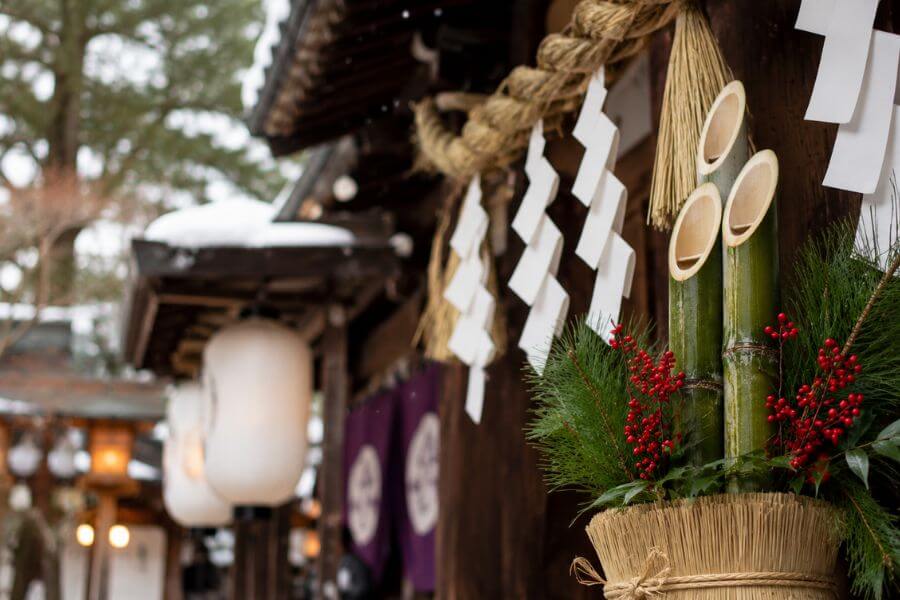
When you walk down a Japanese street in late December, you will see pairs of beautiful arrangements standing on both sides of front doors. These are kadomatsu, which means gate pine. They are usually made from three diagonal pieces of green bamboo cut at different lengths, surrounded by pine branches and sometimes plum blossoms.
Each element of the kadomatsu has a special meaning:
- Bamboo: Grows straight and tall toward the sky, representing strength, flexibility, and growth.
- Pine: Stays green even in the freezing winter, representing long life and endurance.
- Plum Blossoms: Bloom early in the cold season, representing hope and sweetness.
The kadomatsu acts as a temporary home or a green beacon for Toshigami-sama. It tells the spirit, “This home is clean, and we are ready to welcome you inside.”
Shimekazari on the Front Door
Hung directly on the front door, you will see a sacred wreath called shimekazari. This ornament is made from twisted straw rope, bitter orange fruits, fern leaves, and white paper strips cut in zigzag patterns.
The straw rope creates a sacred boundary, preventing evil spirits from entering the house. The bitter orange, called daidai in Japanese, sounds like the word for generation to generation, symbolizing a wish for a long-lasting family line. The fern leaves represent hope for an expanding and healthy family. When you hang this on your door, you are creating a safe, blessed space for your loved ones.
Kagami Mochi in the Center of the Home
Inside the house, usually in the living room or a special alcove, you will place kagami mochi, which means mirror rice cakes. This decoration consists of two round cakes of pounded rice stacked on top of each other. The bottom cake is larger, and the top cake is smaller. A bitter orange with a leaf is placed on the very top.
The two round shapes represent the sun and the moon, or the going and coming years. They are called mirror rice cakes because their shape looks like the ancient round copper mirrors used in Shinto rituals. This decoration serves as the actual seat for the New Year spirit while it stays in your home.
New Year’s Eve: The Night of Reflection
December thirty-first is called Omisoka in Japan. Unlike the exciting and wild New Year’s Eve parties in many Western cities, this evening is quiet, cozy, and deeply comforting. It is a night spent at home with family, watching television, talking, and eating special food.
The Warmth of the Kotatsu
During a cold Japanese winter night, the center of family life is often the kotatsu. This is a low wooden table frame covered by a heavy, thick blanket, with a safe electric heater attached underneath. Families sit on the floor with their legs underneath the warm blanket.
On Omisoka, family members gather around the kotatsu to stay warm, peel sweet mandarin oranges, and watch traditional television programs. The most famous show is Kohaku Uta Gassen, a legendary singing contest that has been broadcast every New Year’s Eve for decades. Popular musical artists are divided into a red team and a white team, and they compete against each other. Watching this show while relaxing under the blanket is a classic modern Oshogatsu experience.
Eating Toshikoshi Soba
Before the clock strikes midnight, everyone enjoys a hot bowl of toshikoshi soba, which means year-crossing buckwheat noodles. This meal is simple but carries a massive amount of symbolism.
The long, thin buckwheat noodles represent a long, healthy life. However, buckwheat noodles are also very easy to bite through and break compared to other types of noodles. This easy breaking is important because it symbolizes cleanly cutting off all the hardships, debts, and bad luck of the old year. You must finish eating your noodles before midnight. If you eat them after the clock strikes twelve, it is believed you will bring your old worries into the new year.
Joya no Kane: Hearing the Temple Bells
As midnight approaches, the television is turned off, and people listen to the night air. From every Buddhist temple across Japan, you will hear the deep, echoing sound of a giant bronze bell ringing. This tradition is called Joya no Kane.
The bell is struck exactly one hundred and eight times. In the Buddhist tradition, humans have one hundred and eight earthly desires and negative emotions, such as anger, greed, jealousy, and selfishness. Each strike of the heavy wooden beam against the bronze bell cleanses away one of these negative desires. Most temples ring the bell one hundred and seven times before midnight, and the final, loudest strike happens exactly as the new year begins. Listening to the deep vibrations of the bell in the darkness helps you feel perfectly calm and purified.
The Magical Morning of January First
When you wake up on January first, which is called Gantan, you are stepping into a sacred time. Everything you do on this day sets the tone for the rest of your year. Therefore, people try to maintain a positive, peaceful, and happy attitude throughout the day.
Hatsuhinode: Welcoming the First Sunrise
Many people wake up hours before dawn on New Year’s Day to witness hatsuhinode, the very first sunrise of the year. People travel to beautiful locations like mountain tops, sandy beaches, or the upper floors of tall buildings to get a clear view of the eastern horizon.
As the golden sun slowly rises above the earth, people fold their hands together, press their palms in prayer, and make wishes for health and happiness in the new year. The sight of the morning sun shining on the winter landscape is breathtaking and fills you with energy and hope.
Otoso: The Medicinal New Year Wine
Once the family gathers inside the warm house, the celebrations begin with a special drink called otoso. This is spiced sake or rice wine that has been infused with a mixture of healthy traditional herbs, cinnamon, and ginger.
The drink is served from a beautiful lacquer teapot into three stacked, shallow cups of different sizes. Family members drink from the cups in order of age, starting from the youngest person and moving to the oldest. This order ensures that the youthful energy of the young people is shared with the elders. Drinking otoso is believed to clear away any remaining sickness from the body and guarantee good health for the entire year.
Osechi Ryori: The Royal New Year Feast
Food is the absolute heart of Oshogatsu. The traditional meals eaten during the first three days of January are called osechi ryori. This is undoubtedly the most beautiful, artistic, and complex food preparation in Japanese cuisine.
The History of the Bento Box Tradition
Historically, it was considered a taboo to cook or use a kitchen hearth during the first three days of the new year. This was done to give the god of fire a rest, and also to give the hardworking homemakers a well-deserved break from daily cooking duties. Therefore, osechi dishes are prepared before New Year’s Eve. They are cooked using lots of sugar, soy sauce, or vinegar so the food stays fresh for several days without modern refrigeration.
The food is arranged exquisitely inside special multi-layered lacquer boxes called jubako, which look like luxury nesting bento boxes. The stacking of the boxes represents the stacking of happiness and good fortune over the coming year.
The Meanings Behind the Dishes
Every single item inside the osechi box is selected for its symbolic meaning. When you eat osechi, you are literally eating wishes for your future. Here is a helpful guide to the most common dishes you will find and what they mean for your life.
- Kuromame (Sweet Black Soybeans): The word mame means bean, but it also sounds like the word for hard work and health. Eating these beans means you wish to work hard and stay healthy in the new year.
- Kazunoko (Herring Roe): This is a large cluster of tiny yellow fish eggs. Because there are so many eggs, this dish represents a wish for many children and a flourishing family line.
- Tazukuri (Sweet Dried Sardines): Historically, dried sardines were used as fertilizer in rice fields. Eating these crunchy, sweet fish represents a prayer for a massive, successful agricultural harvest or business success.
- Kamaboko (Fish Cake): These are dense, semi-circular rice cakes made from pureed fish. They are usually sliced in alternating red and white colors. The red color protects against evil spirits, while the white color represents purity. The shape also resembles the rising sun.
- Datemaki (Sweet Egg Omelet): This is a yellow omelet mixed with fish paste, rolled into a cylinder shape. Because it looks like an ancient scroll of paper, it represents a wish for deep knowledge, education, and wisdom.
- Kurikinton (Sweet Potato Mashed with Chestnuts): This dish has a bright, beautiful golden color. Because it looks like gold coins or treasure, it represents a strong wish for financial wealth and prosperity.
- Ebi (Cooked Shrimp): Shrimps have long antennae and curved backs. This shape looks like an elderly person with a long beard and a bent back. Eating shrimp represents a wish to live until you are very old and happy.
Ozoni: The Comforting Rice Cake Soup
Along with the cold osechi dishes, you will enjoy a hot bowl of ozoni. This is a savory soup that always contains mochi, which are stretchy, chewy rice cakes. The style of ozoni varies dramatically depending on the region of Japan. In Tokyo and the eastern parts of the country, the soup has a clear broth seasoned with soy sauce, and the mochi is cut into squares and toasted. In Kyoto and the western parts of Japan, the broth is made from sweet white miso paste, and the mochi is round and boiled. The sticky, stretchy nature of the rice cake symbolizes a long life that stretches far into the future.
Hatsumode: The First Visit to a Shrine or Temple
Between January first and January third, almost everyone in Japan participates in hatsumode. This is the very first visit of the year to a Shinto shrine or a Buddhist temple. It is a beautiful social event where people dress in their finest clothes, often wearing magnificent traditional silk kimonos.
Choosing Between a Shrine and a Temple
You can visit either a Shinto shrine or a Buddhist temple for hatsumode. Shinto shrines are easily identified by a large wooden or stone gateway called a torii at the entrance. Buddhist temples usually have large, ornate wooden gates housing fierce guardian statues. Both places offer a wonderful spiritual environment, but the way you pray at each location is slightly different.
The Purification Ritual
Before you walk toward the main altar to pray, you must cleanse your hands and mouth at a stone water basin called a chozuya. You use a long wooden water ladle to scoop up fresh water. You pour a little water over your left hand, then your right hand. Next, you pour some water into your hand to rinse your mouth, and finally, you tilt the ladle upward so the remaining water cleanses the handle for the next guest. This simple act ensures you approach the spirits with a clean body and mind.
How to Pray Correctly at a Shinto Shrine
When you reach the main altar, you will see a large wooden box for donations. The process of praying follows a strict, beautiful rhythm that you can easily follow:
- Toss a coin into the box: Most people use a five-yen coin because the Japanese word for five yen sounds like the word for good fortune or connection.
- Ring the bell: If there is a thick rope connected to a brass bell above the box, shake it gently to alert the spirits of your presence.
- Bow deeply twice: Bend your back forward at a ninety-degree angle two times.
- Clap your hands twice: Bring your palms together in front of your chest and clap twice. On the second clap, keep your hands together.
- Close your eyes and pray: Keep your hands pressed together, offer your silent thanks, and make your wishes for the new year.
- Bow deeply one last time: Lower your head once more to show respect before walking away.
Buying Omikuji and Omamori
After praying, people line up to buy omikuji, which are random paper fortunes. You shake a wooden cylinder until a thin stick falls out with a number on it. A shrine worker then gives you the paper fortune corresponding to that number. The fortune tells you how your luck will be in areas like love, health, work, and travel. If you receive a good fortune, you keep it in your wallet. If you receive a bad fortune, you tie the paper to a designated wooden rack or a pine tree branch at the shrine, asking the spirits to fix your bad luck.
You can also purchase omamori, which are small, beautiful fabric amulets containing sacred prayers. There are different amulets for specific goals, such as traffic safety, passing school exams, finding true love, or general health protection.
Fun, Games, and Happiness for Children
For children in Japan, Oshogatsu is arguably the most exciting holiday of the entire year, primarily due to a wonderfully generous tradition called otoshidama.
The Tradition of Otoshidama
During the first few days of January, adult relatives, grandparents, aunts, uncles, and family friends give money to children. The money is not given casually. It is placed inside beautifully designed, small paper envelopes called pochibukuro. These envelopes are decorated with cute animals, traditional patterns, or popular cartoon characters.
The amount of money inside the envelope usually increases as the child grows older. A young child might receive two thousand yen, while a teenager might receive ten thousand yen. Children look forward to this tradition all year, and they use this money to buy special toys, video games, or save it for their future education.
Traditional Winter Games
With no school sessions and plenty of free time, families play unique traditional games together during Oshogatsu. While modern electronics are popular, these old-fashioned games still hold a special place in people’s hearts.
- Takoage (Kite Flying): Children and parents go to open parks to fly beautifully painted paper kites. The higher the kite flies into the winter sky, the more good luck the child will receive.
- Hanetsuki (Japanese Badminton): This is a game played with artistic rectangular wooden paddles called hagoita and a small wooden shuttlecock with feathers. Unlike modern sports, there is no net. Players simply try to keep the shuttlecock in the air as long as possible. If a player drops it, their opponent gets to draw a funny black ink mark on their face.
- Karuta (Card Game): This is a fast-paced card game matching beautiful poems or proverbs. One person reads a poem aloud, and the players race to find the corresponding card laid out on the tatami straw mat floor. It requires quick reflexes and a good memory.
- Komamawashi (Spinning Tops): Children spin wooden or metal tops on flat surfaces, competing to see whose top can spin for the longest amount of time without falling over.
Kakizome: Writing Your Intentions for the Year
On January second, a beautiful cultural tradition called kakizome takes place. This translates to the first writing. It is the ritual of practicing Japanese calligraphy for the very first time in the new year.
People prepare dark black ink using an inkstone and take a large, soft calligraphy brush made of animal hair. On long strips of white paper, they carefully write meaningful kanji characters or short poems that represent their personal goals, hopes, or resolutions for the coming months. Common words chosen include peace, health, ambition, growth, or new beginnings.
The act of writing requires deep focus, slow breathing, and excellent posture. You cannot erase or correct a mistake in calligraphy once the brush touches the paper. This forces you to think deeply about your intentions. Once the ink dries, the paper is often displayed on the wall of the bedroom or living room to remind you of your goals throughout the year.
Shigemoto and Nengajo: Staying Connected
An essential part of Oshogatsu is showing love and respect to your wider social circle of friends, coworkers, and distant relatives whom you might not see in person.
The System of Nengajo New Year Cards
Instead of sending digital text messages or emails, Japanese people write physical New Year postcards called nengajo. This is a massive tradition managed beautifully by the national postal service.
People buy special pre-stamped postcards in November and December. They print beautiful designs on them, often featuring the zodiac animal of the upcoming year, along with handwritten personal notes thanking the recipient for their kindness over the past year.
If you mail these cards by a specific date in mid-December, the Japanese post office stores them safely in bundles. Then, on the morning of January first, mail carriers across the nation deliver all the nengajo cards simultaneously to every household. Waking up and opening a stack of beautiful cards from everyone you know is a truly heartwarming experience.
Comparing New Year Traditions: East vs. West
To give you a clearer perspective on how unique Oshogatsu truly is, it is helpful to look at how these customs compare directly to typical Western New Year celebrations. The entire atmosphere and focus of the holiday are completely different.
| Celebration Element | Traditional Japanese New Year (Oshogatsu) | Typical Western New Year Celebration |
| Primary Atmosphere | Quiet, spiritual, calm, and reflective | Loud, exciting, energetic, and festive |
| Main Location | At home with family and at sacred shrines | At public squares, bars, clubs, or party venues |
| The Midnight Moment | Listening to 108 temple bells ringing slowly | Counting down out loud, fireworks, shouting |
| Traditional Food | Prepared cold osechi ryori eaten from lacquer boxes | Finger foods, heavy dinners, and champagne drinks |
| Core Activity | Praying at shrines, looking at the first sunrise | Dancing, drinking, social gatherings with friends |
| Main Symbolism | Welcoming a visiting spirit and spiritual renewal | Counting down time and celebrating the new calendar |
Celebrating Beyond January First: Key Dates
The Japanese New Year is not just a single-day event. The celebration spreads out across the first two weeks of January, with different activities happening on specific days. Here is a chronological timeline of how the holiday season progresses.
January First (Gantan)
This is the official start of the year. The day is spent completely with immediate family members. You drink the medicinal otoso wine, open the beautiful osechi boxes, eat hot ozoni soup, read the incoming nengajo postcards, and give otoshidama envelopes to the children.
January Second
This day is marked by the resumption of activity. It is the day for kakizome, your first calligraphy writing. It is also the day when traditional merchants and shops perform hatsuuri, the first sale of the year, often selling mysterious sealed grab-bags filled with discounted items.
January Third
This is usually the final day of the Sanganichi, the official three-day holiday period where most businesses remain completely closed. Families use this day to travel back to their main cities or complete their hatsumode shrine visits if they have not done so yet.
January Seventh (Jinjitsu)
After days of eating rich, heavy holiday food, the body needs a gentle rest. On the morning of January seventh, people eat nanakusa gayu, which is a warm, comforting rice porridge cooked with seven specific wild green herbs of springtime. This simple meal soothes the stomach, aids digestion, and brings wishes for a healthy body throughout the year.
January Eleventh (Kagami Biraki)
On this day, the decorative kagami mochi rice cakes that have been sitting in the living room are finally taken down. The rice cakes have become hard and dry by this time. You do not cut them with a knife, as cutting symbolizes breaking a human connection. Instead, you break them open using a wooden mallet or your hands. The broken pieces of rice cake are cooked into a sweet red bean soup called shiruko. This ritual is called kagami biraki, which means opening the mirror, and it marks the official end of the core New Year spirit’s stay in your home.
Bringing Oshogatsu into Your Own Life
You do not need to live in Japan or be Japanese to experience the beautiful spirit of Oshogatsu. You can easily adapt these wonderful customs to your own home, no matter where you live in the world.
Start by practicing osoji in the final week of December. Clean your bedroom, organize your work desk, and clear out old clutter. As you do this, consciously think about letting go of past stress.
On New Year’s Eve, instead of going to a loud party, try staying cozy at home. Cook a simple bowl of hot buck-wheat noodles to cut off the year’s challenges. On New Year’s morning, wake up early to see the sunrise from your window or a local park, and take a moment to write down your positive intentions for the coming year with a pen and paper. By focusing on mindfulness, family, and fresh starts, you can enjoy a peaceful, traditional Japanese New Year experience wherever you are.
Frequently Asked Questions About Oshogatsu
What should I wear if I visit a shrine for Hatsumode during New Year?
You do not need to wear a traditional Japanese kimono to visit a shrine for hatsumode. While many Japanese people enjoy wearing their best traditional clothing, most people simply wear nice, warm everyday clothes. Because you will be standing in long lines outdoors in the cold winter air, it is very important to wear a heavy coat, a warm scarf, gloves, and comfortable walking shoes. Just ensure your clothing looks respectful, neat, and clean.
Is it difficult to find food during the first three days of January in Japan?
Historically, almost every business closed for the first three days of the year. Today, many large modern department stores, major restaurant chains, and standard convenience stores stay open during the New Year period, especially in big cities like Tokyo. However, smaller family-owned restaurants, local supermarkets, and traditional boutique shops will definitely close their doors from January first through January third. It is always a smart idea to buy some extra groceries before December thirty-first just in case.
Can non-Japanese people participate in the shrine prayers?
Yes, absolutely. Shinto shrines and Buddhist temples welcome visitors of all backgrounds, cultures, and religions. The spirits are believed to protect everyone who visits with a sincere and respectful heart. You can easily participate in the purification water ritual and follow the bowing and clapping steps at the altar. If you do not feel comfortable doing the Shinto movements, you can simply bow your head quietly for a moment to show respect.
Why do people eat cold food during the New Year period?
People eat cold osechi ryori dishes for two main reasons. First, it is a traditional way to give the hardworking home cooks a total break from standing over a hot stove during the sacred holiday period. Second, ancient beliefs stated that using a fire hearth to cook food during the first few days of the year would disturb or anger the visiting New Year spirits. Because the food is prepared with high amounts of sugar, soy sauce, and salt, it stays perfectly safe and delicious to eat at room temperature.
What happens if I drop my paper fortune or get a bad one?
If you draw an omikuji paper fortune that predicts bad luck, do not worry. You do not have to carry that bad luck home with you. Shinto shrines have special wooden structures, metal wires, or designated tree branches where you can tie the bad fortune. By folding the paper and tying it securely to the shrine grounds, you are leaving the bad luck behind and trusting the spirits to transform it into good fortune. If your fortune is good, you should keep it safe inside your wallet or bag.