Key Takeaways
- Ticket Lotteries dominate the system: You cannot just buy a ticket on release day. You enter a random draw months in advance, often requiring a Japanese phone number.
- Strict rules apply: Photography, filming, and recording are completely forbidden at almost all Japanese concerts. Breaking this rule means instant ejection.
- The drink coin system: Most small to mid-sized live houses charge a mandatory drink fee at the door, usually around 500 to 600 yen, in exchange for a token.
- Assigned standing order: Tickets for standing sections have reference numbers. You must enter the venue in the exact order of your number, not by who shows up first.
- Perfect crowd synchronization: Fans often perform identical hand gestures, jumps, and calls called furitsuke. Watching the crowd is as important as watching the band.
Welcome to the World of Live Japanese Music
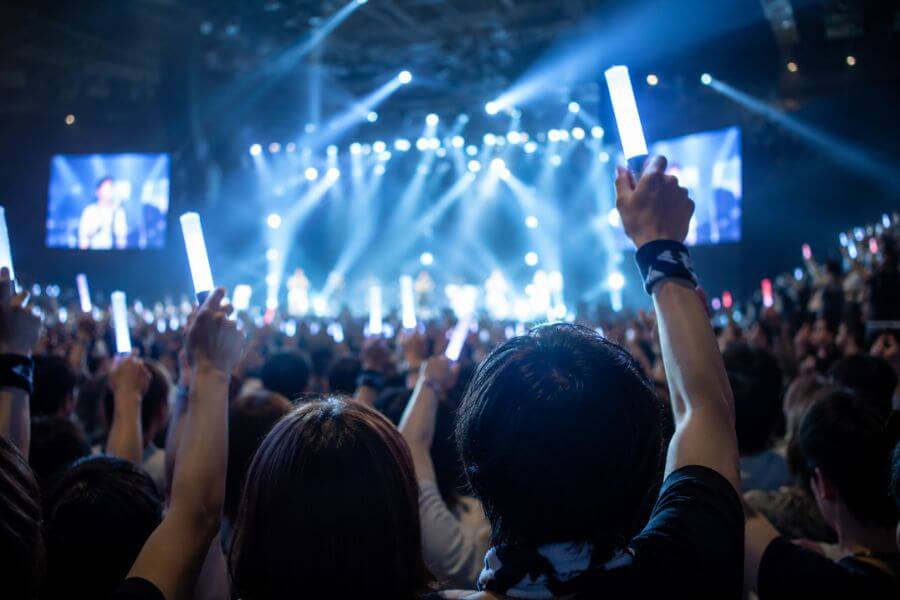
Imagine standing in a room with thousands of people. The lights go down. A collective gasp ripples through the crowd, followed by an immediate, respectful silence. Then, the first guitar chord rings out, and the entire room explodes into perfect, unison movement. Everyone jumps at the same time. Everyone waves their hands in the exact same direction. No one is holding up a phone to record. Everyone is completely in the moment.
Attending a live concert in Japan is unlike any music experience anywhere else on the planet. Whether you love the high-energy dance routines of J-Pop, the heavy riffs of Japanese rock, or the underground sounds of indie bands, going to a show here is a must-do experience.
However, the Japanese live music industry has its own unique ecosystem. The way you buy tickets, the way you enter the venue, and the way you behave inside the crowd follow strict, unwritten customs. If you show up unprepared, you might miss out on tickets entirely, or you might accidentally upset the fans around you.
This guide will walk you through every single step of the process. You will learn how to get your hands on tickets, what to wear, how to handle venue logistics, and how to fit in with the local crowd. By the end of this post, you will feel like a seasoned veteran ready to experience your first live show in Japan.
Understanding the Different Types of Live Venues
Before you start looking for tickets, you need to know where your favorite artists are playing. The type of venue changes everything about your concert day, from how you get inside to how close you can stand to the stage. Japan categorizes its music venues into a few distinct levels.
Live Houses for Indie and Underground Acts
If you love smaller indie rock bands, underground punk, or rising pop artists, you will likely head to a “Live House.” This is the Japanese term for a small indoor club. These spaces can hold anywhere from 50 to 1,000 people.
The atmosphere in a live house is intimate and sweaty. The stage is low, and you can often stand just inches away from the performers. Famous live house districts include Shimokitazawa and Koenji in Tokyo, or Amerikamura in Osaka.
Inside a live house, you will almost always find a standing-only floor. There are no seats, no rows, and very little personal space once the show starts. These venues are where the most passionate subcultures live, and they offer a raw look at the local music scene.
Hall Venues for Mid-Tier Artists
When an artist grows too big for small clubs but is not yet ready for massive stadiums, they tour through public halls and theaters. These venues usually hold between 1,000 and 5,000 people.
Famous examples include the Tokyo Dome City Hall or the various NHK Halls across the country. The biggest difference here is comfort. Halls are almost entirely seated. Even if the artist plays fast rock music, you will have an assigned seat number.
During the show, everyone stands up in front of their seats to dance and cheer, but you retain your own designated square of personal space. This makes hall venues much less exhausting than live houses.
Arenas and Domes for Major Superstars
Only the most successful pop groups and legendary rock bands play in arenas and domes. Arenas hold around 10,000 to 20,000 fans. The most famous arena is the Nippon Budokan in Tokyo, a historic octagonal building that every Japanese musician dreams of headlining.
Domes are massive baseball stadiums that can hold 40,000 to 55,000 people. The Tokyo Dome, Kyocera Dome in Osaka, and Vantelin Dome in Nagoya are the ultimate milestones for major pop idols and stadium rock acts.
In these giant venues, the production value is incredible. Expect massive video screens, laser shows, moving stages that glide over the audience, and special effects like indoor fireworks. The crowd energy in a dome is deafening, but you will be quite far from the stage unless you get lucky with floor seats.
Venue Type Comparison
| Venue Type | Average Capacity | Seating Style | Best For |
| Live House | 50 to 1,000 | Standing Only | Close proximity, raw energy, indie bands |
| Hall | 1,000 to 5,000 | Assigned Seating | Comfort, clear views, mid-tier artists |
| Arena | 10,000 to 20,000 | Mixed (Floor standing/Seats) | Big production, historic venues, major acts |
| Dome | 40,000+ | Assigned Seating | Massive spectacles, idol groups, global stars |
The Ticket System and How to Buy Them
Getting a ticket to a Japanese concert is often the hardest part of the entire experience. Unlike Western ticketing sites where you buy a ticket instantly on a first-come, first-served basis, Japan uses a lottery system for almost all popular shows.
The Fan Club Lottery System
When a tour is announced, tickets are not sold to the public right away. Instead, they go through multiple rounds of lotteries, called tansen. The very first round is reserved exclusively for official fan club members.
Joining a Japanese fan club usually requires a yearly fee of about 4,000 to 6,000 yen. For massive pop groups, the fan club lottery is often the only way to get tickets because the shows sell out before the public ever gets a chance. If you are a huge fan of a specific group, paying for the fan club membership is a smart investment just to gain access to this first ticket draw.
Public Lotteries and General Sales
If tickets remain after the fan club rounds, the general public can enter public lotteries. These are hosted on major Japanese ticketing websites like Lawson Ticket, Ticket Pia, and eplus.
You create an account, select the concert dates you want, and enter your payment details. A week or two later, you receive an email telling you if you won or lost. If you win, your card is automatically charged.
If a show still has not sold out after all the lottery rounds, the remaining seats go up for general sale, called ippan hanbai. This is a traditional first-come, first-served sale, and tickets usually disappear within seconds of the clock striking the release hour.
The Phone Number Verification Obstacle
For international travelers, buying tickets on Japanese websites has become very difficult in recent years. To prevent scalpers from buying up tickets, almost all Japanese ticketing platforms now require a Japanese mobile phone number for account verification.
When you register, the site sends a text message verification code, or it asks you to call a specific number from a Japanese phone within 120 seconds. Standard international roaming SIM cards will not work for this.
If you do not have a friend living in Japan who can help you verify an account, you have a few alternative options:
- Official International Sales: Some major artists create special ticket portals specifically for overseas fans. Check the artist’s official English website or social media pages to see if they offer an international lottery that accepts foreign credit cards and does not require a local phone number.
- In-Store Ticket Kiosks: If a show is not completely sold out, you can buy tickets in person once you arrive in Japan. You can use the touchscreen kiosks inside convenience stores, such as Loppi machines at Lawson or multi-copier machines at 7-Eleven. These machines are usually in Japanese, but store staff are often willing to help you if you show them the name of the artist.
- Travel and Hospitality Packages: For major music festivals like Summer Sonic or Fuji Rock, official travel agencies offer package deals that combine festival entry with hotel stays. These are designed for international tourists and bypass the standard ticketing restrictions.
Deciphering Your Concert Ticket
Once you successfully purchase a ticket, you need to understand the text printed on it. Japanese tickets contain specific terms that tell you exactly where to go and when to show up.
Open Time versus Start Time
Every Japanese ticket lists two distinct times: the Open Time (kaijo) and the Start Time (kaien).
The Open Time is when the doors of the venue swing open and staff begin letting people inside. This is usually one hour before the show begins. The Start Time is when the music actually starts.
Japanese concerts are famous for starting exactly on the minute. If the ticket says the show starts at 6:30 PM, the lights will go out at 6:30 PM on the dot. Do not be late, or you will miss the opening song.
Standing Reference Numbers
If you have a standing ticket for a live house or an arena floor, look for a letter followed by a number, such as “A-145” or “B-32.” This is your Reference Number (seiri bango).
This number does not mean you have a specific spot on the floor. Instead, it determines your place in the entry line outside the venue. Staff will call out numbers in order: A-1, A-2, A-3, and so on.
If you have a low number like A-12, you get to enter the building first and run straight to the front row. If your number is B-400, you must wait outside until hundreds of people have entered before you.
Reading Seats in Arenas and Halls
If your ticket is for an assigned seat, you will see different terms. You need to look for three main pieces of information: the floor level, the row, and the seat number.
- Arena Level (arena-seki): In arenas and domes, this refers to the temporary seating installed directly on the flat floor where sports are normally played. This puts you close to the stage, but if you are short, your view might be blocked by people standing in front of you.
- Stand Level (stando-seki): This refers to the permanent tiered stadium seats that rise around the floor. While you are further away from the stage, you get a clear, unobstructed view because each row is higher than the one in front of it.
- Row (retsu) and Seat Number (ban): Your ticket will list a row number followed by retsu and a specific seat number followed by ban or go. For example, “12列 34番” means Row 12, Seat 34.
Preparing for Concert Day: Dress Code and Gear
Going to a concert in Japan requires some physical preparation. You want to wear clothes that keep you comfortable while respecting the safety and comfort of the people packed tightly around you.
What to Wear to a Show
Comfortable shoes are your most important choice. You will be standing and jumping for two to three hours. Avoid high heels, platforms, or open-toed sandals. In a crowded standing section, people will accidentally step on your feet, and sandals offer zero protection.
Wear light, breathable clothing. Even in the dead of winter, Japanese concert venues become incredibly hot and humid once thousands of bodies start moving. A simple t-shirt and comfortable jeans or shorts are ideal.
Many fans arrive at the venue wearing regular clothes but change into the official artist tour t-shirt as soon as they buy merchandise. This is a great way to show your support and immediately feel like part of the community.
The Unspoken Clothing Restrictions
In Japan, concert etiquette values the collective experience over individual expression. This means you should avoid clothing or accessories that ruin the experience for others:
- No High Hairstyles: Do not wear your hair in high ponytails, top knots, or space buns. Do not wear large hats or headbands with animal ears. These completely block the view of the person standing directly behind you.
- No Sharp Accessories: Avoid heavy metal jewelry, spiked bracelets, or long wallets with heavy chains. In a tightly packed crowd, these items can scratch or bruise your neighbors when you raise your hands.
- No Large Bags: Do not carry huge backpacks or shopping bags onto a crowded standing floor. They take up valuable space and hit people every time you turn around.
Essential Items to Pack
Bring a small towel. Almost every Japanese artist sells a official “muffler towel” at the merchandise booth. This long, narrow towel is worn around the neck. It is used to wipe away sweat, but it also serves as a prop during the concert when the band tells everyone to swing their towels in the air.
Bring 100-yen coins. If you are going to a live house, you will need coins to pay for the mandatory drink fee at the door and to operate the coin lockers. Having five or six 100-yen coins ready in your pocket will save you a lot of time.
Bring a small plastic bag. Japanese venues rarely have trash cans on the concert floor. You should keep a small bag in your pocket to store your empty drink plastic bottles or wrappers until you leave the venue.
Navigating the Merchandise Booth
Buying official concert merchandise, known simply as guzzu, is a massive ritual for Japanese music fans. It is not just about buying a souvenir; it is a way to prove your dedication to the artist.
Pre-Sale Timing versus General Merch Sales
For popular artists, merchandise sales begin several hours before the venue doors ever open to the public. This is called Pre-Sale (kaijo-mae bansa).
For example, if a concert doors open at 5:00 PM, the merchandise booths might open outside the venue at 12:00 PM. Lines can form incredibly early, sometimes early in the morning. Popular items, such as specific t-shirt sizes, limited-edition keychains, or venue-exclusive items, often sell out during the pre-sale hours long before the concert starts.
If you want to secure popular items, check the artist’s official social media accounts the day before the show to find out exactly when the merchandise booths open, and plan to arrive early.
The Purchasing Process
When you reach the front of the merchandise line, the system is highly organized. Staff members will often hand you a printed sheet showing all the items, sizes, and prices while you wait in line.
You can point to the pictures on the sheet to show the staff exactly what you want. You do not need to speak advanced Japanese; simply saying the item name and the quantity is enough.
While many major arena tours now accept credit cards, electronic money cards, and QR code payments, smaller live houses often accept cash only. Always keep enough yen on hand to cover your merchandise wishlist.
Arriving at the Venue and Entering the Show
The hour leading up to the concert can be confusing if you do not know the local routine. Here is what to expect from the moment you step off the train at the venue’s nearest station.
The Entry Routine for Standing Shows
If your ticket has a standing reference number, do not just walk up to the doors when you arrive. Look around the outside of the venue for signs or staff holding megaphones.
Staff will organize fans into lines based on their reference numbers. They will call out ranges, such as “Numbers A-100 through A-150, please line up along this wall.”
Listen carefully to the numbers being called. If you do not understand Japanese numbers, show your ticket to a staff member or a fellow fan in line and say “Excuse me.” They will gladly point you to your correct spot in the sequence.
When your number is called, you will walk to the ticket checker, scan your ticket, pass through a brief bag inspection, and enter the building.
The Live House Drink Coin System
If you are attending a show at a live house, you will encounter the Drink Fee (dorinku-dai) system. This is a mandatory rule across almost all small and medium music clubs in Japan.
Even though you already paid for your concert ticket, you must pay an additional cash fee at the entrance door, usually 500 or 600 yen. In return, the staff will hand you a small plastic token, chip, or customized coin called a “drink coin.”
You take this token to the venue’s bar counter inside the lobby. You can exchange it for one drink, such as beer, a cocktail, soda, water, or green tea. You can exchange your coin immediately before the show starts, or you can hold onto it and get your drink after the concert ends.
Coin Lockers and Baggage Storage
If you have a standing ticket, do not take your jacket or bags onto the main floor. The crowd will be packed tightly, and there is no place to put items on the ground without them being stepped on or causing a tripping hazard.
Look for Coin Lockers (koin rokka). Large venues have rows of lockers inside the lobby or outside the entrance. Small live houses might only have a few dozen lockers inside.
A standard locker costs between 300 and 500 yen to use. Put your jacket, backpack, and everything except your phone, wallet, and concert towel inside the locker before you enter the main concert hall.
If the venue lockers are completely full, look for lockers at the nearest train station. At some shows, the venue staff will offer a bag-check service, where they give you a large plastic garbage bag for your belongings, store it in a back room for 500 yen, and return it to you after the final curtain call.
Concert Crowd Behavior and Etiquette
Once you walk onto the concert floor or find your assigned seat, you are entering a space governed by deep social respect. Japanese crowds are legendary for being both incredibly energetic and perfectly polite.
No Recording and No Photography
This is the most important rule of the night. At almost every rock and pop concert in Japan, taking photos, recording videos, or recording audio is strictly forbidden. This rule applies from the moment you enter the performance hall until you leave.
You cannot even take a photo of the empty stage before the band comes out. If you pull out your phone to record a song, security guards will notice you immediately. They will walk into the crowd, ask you to delete the footage, and they may eject you from the venue without a refund.
While a few modern artists are starting to allow photography during one specific song, they will explicitly state this on signs or screens before the show. If you do not see an explicit announcement saying photos are allowed, keep your phone firmly in your pocket. This rule ensures that everyone enjoys the live show with their own eyes rather than looking through a sea of tiny smartphone screens.
The Power of Silence
In many Western concerts, the crowd screams, shouts, and chants continuously throughout the night, even when the artist is trying to talk between songs. In Japan, the dynamic is completely different.
During a song, the crowd is loud, wild, and incredibly expressive. However, the moment a song ends, the crowd claps enthusiastically, and then a sudden, absolute hush falls over the room.
This silence is meant to give the artist the floor to speak. These talking breaks are called MC segments. Fans stand quietly and listen intently to what the band is saying, laughing at jokes or clapping at announcements. Never shout out an artist’s name or interrupt while they are speaking during an MC segment. Wait until they finish speaking, and then you can cheer.
Crowd Density and Personal Space
On a standing live house floor, the crowd will compress toward the front stage when the lights go down. However, unlike Western rock shows, true aggressive moshing and crowd surfing are rare and often explicitly banned by venue rules.
People will be packed close together, but they generally try to avoid pushing or shoving forcefully. If you accidentally bump into someone, a quick nod or saying “I am sorry” goes a long way. The goal is for everyone to enjoy the music together safely without anyone getting hurt.
Mastering the Fan Rituals
J-Pop and J-Rock shows are highly interactive experiences. The audience is not just passive listeners; they are active participants in the performance through perfectly timed movements.
Understanding Furitsuke
Furitsuke refers to choreographed hand movements and gestures performed by the audience in unison. This is incredibly common at J-Pop and idol concerts, but it also appears at alternative rock shows.
When a specific chorus starts, the entire crowd might raise their right hands, wave them side to side twice, clap twice, and then point at the stage. These movements are not random; they are established routines that fans learn by watching music videos or past live concert footage.
As a first-time visitor, do not worry about memorizing these movements in advance. Just look at the fans standing directly in front of you or to your sides. Watch their hands, follow their rhythm, and copy what they do. Within a few songs, you will find yourself naturally joining the wave.
The Call and Response Tradition
Many songs feature specific moments where the crowd is expected to shout out words or phrases to complement the singer’s vocals. This is known as “calls.”
For example, during a pause in the lyrics, the entire crowd might shout “Hey! Hey! Hey!” while pumping their fists in the air. In pop shows, these calls can become highly complex, with fans chanting rhythmic phrases called wotagei during instrumental breaks.
If the singer points the microphone toward the crowd, that is your universal cue to sing along with the chorus as loudly as you can.
Penlights and Glowsticks
If you are attending a pop, idol, or anime music concert, you will see thousands of colored glowing sticks dancing in the dark. These are called penlights or King Blades.
These are not cheap glowsticks that you snap in half. They are battery-operated LED devices that can change colors at the press of a button. Fans use them to show support for specific members of a group. Each performer has an official image color. If your favorite singer is performing a solo section and their color is blue, you switch your penlight to blue.
At major arena and dome shows, the venue often sells advanced, computerized penlights at the merchandise counter. When you enter the stadium, these lights sync automatically via radio signals to the venue’s main control booth. The production team can control every single light in the stadium, turning the entire audience into a massive, flashing light display that changes patterns in perfect sync with the music.
Fan Movement Styles
- Kobushi (The Fist Pump): Common at rock and punk shows. Fans raise their right fist and pump it vertically to the beat of the drum, especially during anthemic choruses.
- Oikake (The Chase): Waving your penlight or hand forward and backward toward the stage in time with a lead vocal line.
- Headbanging: Popular at Japanese heavy metal and Visual Kei rock shows. However, instead of random thrashing, the crowd often headbangs in perfect, synchronized rhythm, sometimes bending down completely from the waist.
The Encore Routine
When the main set ends and the band walks off the stage, the concert is not over. The audience will immediately begin calling for an encore, but even this follows a specific pattern.
How to Call for an Encore
Instead of screaming randomly or stomping feet, Japanese crowds use a unified chant. The type of chant depends entirely on the artist.
At a standard rock concert, the crowd will simply clap their hands in a steady, rhythmic pattern while shouting “Encore! Encore!” continuously until the band returns.
At pop and idol shows, the chant can be customized. Fans might chant the name of the group over and over, or they might sing the chorus of one of the band’s famous songs together in the dark.
Usually, the encore call lasts for five to ten minutes. It takes time for the artists to rest, change into the official tour t-shirt, and walk back out to the stage. Join in the clapping and chanting to help build the energy in the room.
The Double Encore
For major tour finales or historic shows, a single encore might not be enough. If the crowd stays inside the venue and continues chanting loudly even after the house lights turn back on, the band might come out for a rare “Double Encore” to play one final, unplanned song.
Pay attention to the venue announcements. If the overhead security speakers start playing background music and a voice over the megaphone tells everyone to leave, the show is officially finished. If no announcement plays and the crowd keeps chanting, stay in your spot.
Leaving the Venue and the Journey Home
The experience does not end when the final note fades. Exiting a massive Japanese concert venue is a masterclass in crowd control and social order.
Regulated Exits for Large Stadiums
If you are at a massive show inside an arena or a dome, do not stand up and run for the doors the moment the band leaves the stage. Doing so creates dangerous bottlenecks at the exits.
Instead, major venues enforce a system called Regulated Exits (kisei taijo). An announcer will take the microphone and ask everyone to remain seated in their rows.
The announcer will then call out specific sections one by one: “Rows 1 through 15 on the Stand Level may now exit. All other rows, please wait patiently.”
It can take 30 to 45 minutes for your section to be called. Fans respect this rule completely, staying in their seats, chatting with friends, or checking their phones until it is their turn to leave. Use this time to rest your legs and pack your belongings.
Returning Your Drink Bottle
If you are leaving a small live house, you will likely have an empty plastic drink bottle or cup in your hand. Look for large boxes or bins near the exit doors specifically designated for plastic bottles and caps.
Sort your trash carefully before stepping out into the street. Do not leave your empty cups on the floor, on coin lockers, or on the sidewalk outside the venue.
The Train Station Rush
When thousands of people leave a stadium at the same time, the nearest train station will become incredibly crowded. You might have to wait in a slow-moving line just to get through the station ticket gates.
To save yourself a massive headache, make sure your digital or physical transit card, such as a Suica or Pasmo card, is fully charged with plenty of money before you arrive at the concert venue earlier in the day.
If your card runs out of money after the show, you will have to wait in a massive line at the automated ticket machines to add cash, adding an extra 30 minutes to your journey home.
Frequently Asked Questions
Can I attend a Japanese concert if I do not speak any Japanese?
Yes, you can absolutely enjoy a concert without knowing the language. The universal language of music connects everyone in the room. Inside the venue, the entry processes are highly visual. Staff will guide you using hand gestures, and you can easily navigate the merchandise line by pointing at item sheets. While you might not understand the talking segments between songs, the energy, performance, and fan interactions are fully accessible and incredibly fun to witness.
What should I do if I cannot find a coin locker inside the venue?
If the lockers inside the venue are completely full, your best option is to look around the nearest train station. Most Japanese train stations are filled with coin locker banks of various sizes. If those are also full, look for luggage storage services near major transit hubs. Some travelers use specialized smartphone apps that let you reserve storage space at local shops, cafes, or hotels near the venue for a small fee.
Is it acceptable to buy concert tickets from resale websites?
Japan has incredibly strict laws against ticket scalping and unofficial reselling. Major ticketing platforms work closely with artists to cancel tickets found on unauthorized secondary marketplaces. Many premium shows now use digital ticketing apps that display a moving barcode or require identity verification matching the original buyer’s name. To avoid being turned away at the door, always try to buy through official ticket lotteries, international portals, or certified resale platforms run directly by the ticketing agencies.
Why do some people wear surgical masks or face coverings at concerts?
In Japan, wearing masks in public spaces has been a common courtesy for decades, long before global health events. People wear them if they have a slight cough or allergy to prevent spreading germs to others in tight spaces. At high-energy concerts, some fans also wear them to avoid breathing in dust or to protect their throats from dry air while shouting and cheering. It is a matter of personal comfort and social consideration.
Can I bring my own glowsticks or penlights to a pop show?
It depends on the specific artist and management rules. Many J-Pop and idol groups allow standard commercial penlights, but they often have strict rules regarding length, brightness, and battery type to avoid distracting the performers or blocking other fans. Furthermore, some major artists completely ban outside lights and require you to use only the official, synchronized tour penlights sold at the merchandise booth. Always check the official concert regulations page on the artist’s website before bringing your own gear.
What happens if I accidentally take a photo inside the venue?
If you pull out your phone and take a quick photo of the stage or the crowd, a staff member will likely approach you very quickly. They will politely but firmly ask you to open your phone’s photo library and permanently delete the image, including removing it from your trash folder. If you cooperate immediately and apologize, they will usually let you stay. However, if you are caught recording video during the actual performance, security is much stricter, and you run a very high risk of being escorted out of the building immediately.
Are there age restrictions for attending live music shows in Japan?
Most standard rock and pop concerts allow children, though children over a certain age, usually three to six years old, will require their own paid ticket. For standing-only live houses, the intense crowd density and loud volume might not be suitable for young children. Additionally, late-night events, club shows, or concerts that end after 10:00 PM are subject to local youth ordinances, meaning minors under 18 years old are not allowed inside without a legal parent or guardian.