Key Takeaways
- Income Proof: You must prove an annual income of at least 10 million Japanese Yen (roughly $65,000 to $70,000 USD depending on exchange rates).
- Stay Duration: The visa grants a stay of up to six months, and it cannot be extended immediately; you must wait six months after expiration to apply again.
- Country Eligibility: Available to citizens from forty-nine specified countries and territories that have tax treaties with Japan.
- Health Insurance: Private health insurance with comprehensive coverage for medical treatments and repatriation is mandatory.
- No Local Employment: You are strictly prohibited from working for companies based inside Japan or taking local employment.
Step into Your Tokyo Office
Imagine waking up to the sound of a distant temple bell, grabbing a hot canned coffee from a vending machine, and opening your laptop with a view of Mount Fuji or a neon-lit Tokyo street. If you work online, this dream is completely within your reach. Japan launched its official digital nomad visa to welcome remote workers, freelancers, and independent business owners who want to experience the country for more than just a quick vacation.
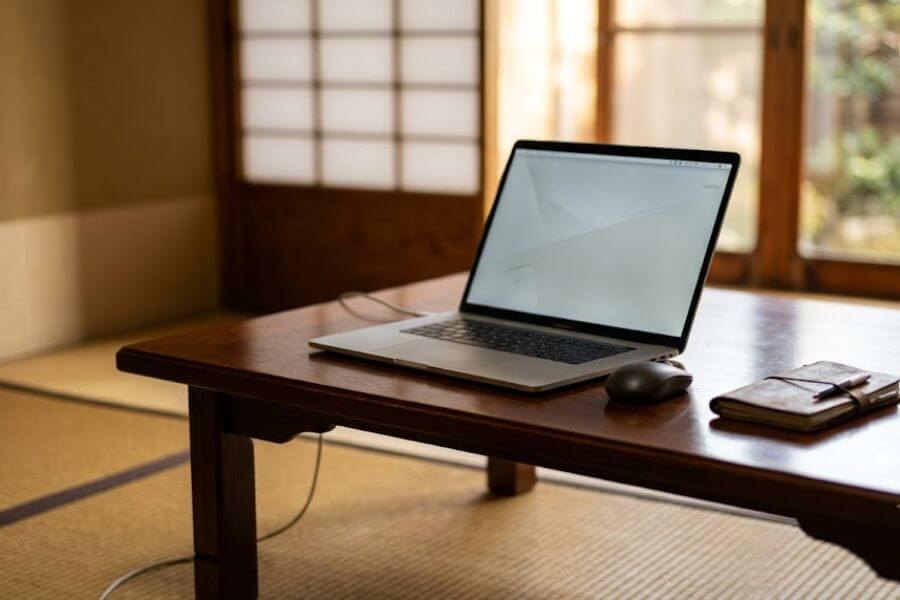
This guide will show you exactly how to navigate the application process so you can trade your usual desk for a cozy tatami mat room.
What Is the Japan Digital Nomad Visa?
The digital nomad visa is a special legal framework that lets you live and work in Japan legally while earning your money from abroad. For a long time, remote workers had to rely on standard tourist visas. Those tourist visas only allowed short stays and technically did not permit formal work activities, creating a gray area for remote employees.
This program solves that problem completely. Officially known as the “Specified Activities” visa for digital nomads, it creates a clear path for international professionals to spend an extended period immersing themselves in Japanese culture while keeping their global careers on track.
The Six Month Timeline Explained
One of the most important things to understand about this program is the specific timeframe. The visa grants you a stay of up to six months. This sits perfectly between a short ninety-day tourist entry and a full one-year working holiday visa. It gives you enough time to slow down, rent a local apartment, join a neighborhood gym, and truly understand what daily life looks like in a Japanese city or village.
The Waiting Period Rule
There is a unique condition that surprises many remote workers. The six-month stay cannot be renewed or extended while you are inside the country. Once your six months are up, you must leave Japan. Furthermore, you cannot immediately turn around and apply for a second digital nomad visa.
The immigration bureau requires a six-month cooling-off period. This means you can only spend a total of six months out of any twelve-month period in Japan under this specific visa category. If your goal is to stay in Japan continuously for multiple years, you might need to look into alternative paths like a student visa or a standard company-sponsored working visa.
Who Controls the Program?
The Immigration Services Agency of Japan oversees this entire system. They coordinate with local Japanese embassies and consulates around the world to process applications. Because this is a relatively new initiative, individual consulate offices might interpret specific document requirements slightly differently. It is always wise to double-check the local website of the specific embassy where you will submit your physical paperwork, though the core rules remain identical across the globe.
Who Can Apply for This Visa?
This program is not open to everyone in the world. The Japanese government designed it with specific restrictions regarding your nationality and your financial status. Before you spend hours gathering your paperwork, you need to make sure you tick all the primary checkboxes.
Eligible Countries and Territories
To qualify, you must hold a passport from one of the forty-nine countries or territories that have signed a visa-waiver agreement and a double-taxation treaty with Japan. This list includes the United States, Canada, the United Kingdom, Australia, New Zealand, Singapore, and most members of the European Union.
The government included these specific nations to ensure that incoming nomads are already covered by clear international tax laws, which prevents complicated legal issues while you work on foreign projects from a Japanese coffee shop.
Professional Profiles That Fit the Visa
What kind of work do you actually need to do? The visa targets three main categories of remote workers:
- Contract Employees: You work full-time or part-time for a company located outside of Japan, and your boss allows you to fulfill your duties entirely online.
- Freelancers and Independent Contractors: You provide services to multiple clients worldwide, managing your own schedule through online platforms or direct contracts.
- Business Owners: You run a registered corporation or digital enterprise based outside Japan, earning profits from international customers.
The unifying rule across all three categories is that none of your income can come from a business registered inside Japan. You cannot accept part-time jobs at a local convenience store, and you cannot pitch your services to Japanese companies while living there on this visa.
Bringing Your Family Members Along
A fantastic feature of this program is that it allows you to bring your spouse and children with you. Your family members can receive their own dependent visas under your main application. This makes the program highly attractive for families who want to give their children an unforgettable educational experience living abroad.
However, your dependents must also follow strict rules. Your spouse cannot take up local employment in Japan either, and your family must be covered under the same high-standard health insurance plan that you secure for yourself.
The Income Requirement Breakdown
Let us talk about the biggest hurdle for most applicants: the money. Japan wants to ensure that digital nomads can comfortably support themselves, pay for premium accommodation, and contribute positively to the local economy through daily spending. Because of this, they established a high income bar.
The Ten Million Yen Threshold
You must prove that your annual income is at least ten million Japanese Yen. Because exchange rates fluctuate constantly, the exact amount in your home currency will shift over time. Generally, this translates to roughly $65,000 to $70,000 US Dollars per year.
When the immigration officers look at your application, they assess your income based on the exchange rate on the exact day they process your paperwork. If your income sits right on the edge of the threshold, it is highly recommended to wait until you earn a slightly higher buffer to avoid an automatic rejection.
How to Prove Your Income Correctly
You cannot just tell the officer how much you make; you need an ironclad paper trail. The immigration bureau looks for official documents that verify your earnings over the past twelve months and prove that this income will continue during your stay in Japan.
Useful documents include:
- Tax Return Statements: Official annual tax filings from your home government’s revenue service.
- Payslips and Wage Statements: Consistent monthly stubs from your employer showing your gross and net pay.
- Employment Contracts: A signed agreement detailing your salary, your job title, and explicit confirmation of remote work approval.
- Client Invoices and Bank Ledgers: For freelancers, a clean spreadsheet of active contracts paired with bank statements showing those exact funds arriving in your account every month.
What Does Not Count as Income?
It is crucial to understand that savings do not equal income in the eyes of Japanese immigration. You could have fifty million Yen sitting silently in a savings account, but if you do not have an active, recurring source of remote revenue bringing in ten million Yen annually, your application will likely be denied.
The government wants to see active economic participation and continuous professional cashflow rather than a slowly depleting nest egg. Additionally, speculative income like crypto-currency trading profits or short-term stock market gains can be difficult to use unless they are structured through a registered investment business.
Required Documents Checklist
Gathering your paperwork is the most time-consuming part of the process. Japanese bureaucracy values perfection. Missing a single signature or submitting a blurry photocopy can delay your adventure by weeks.
Your Passport
Your passport must be valid for at least the entire six-month duration of your intended stay in Japan. However, it is much smarter to have at least one full year of validity remaining. Your passport must also have at least two blank pages for the entry stickers and stamps you will receive at the border.
The Visa Application Form
You can download this form directly from the official website of the Japanese Ministry of Foreign Affairs. You must fill it out completely using clear English block letters. Do not leave any sections blank. If a question does not apply to you, write a simple “N/A” or “Not Applicable.”
Passport-Style Photographs
You need to provide two identical physical photos taken within the last six months. They must meet strict specifications: a plain white background, clear focus on your face, no hats, no heavy jewelry, and no distracting shadows. The exact dimensions are typically two inches by two inches, but confirm the precise millimeter measurements on your local consulate website.
Certificate of Eligibility or Direct Documentation
In standard Japanese visa processes, applicants must obtain a Certificate of Eligibility from an immigration office inside Japan before applying for the actual visa. For the digital nomad visa, many consulates now allow a direct application pathway where you submit your professional proof directly to the embassy in your home country, bypassing the need for an internal Japanese sponsor.
The Proof of Income Dossier
As discussed, this includes your tax returns, bank records, and employment verification letters. Ensure all these documents are printed clearly. If your documents are written in a language other than English or Japanese, you must attach a professional, accurate translation. You do not necessarily need a certified notary to translate them, but the translation must be flawless and include the name and signature of the person who translated it.
Comprehensive Medical Insurance Policy
Japan has a world-class healthcare system, but it can be incredibly expensive if you are not enrolled in the national public insurance plan. Because digital nomads do not qualify for public health insurance, you must buy a private policy.
Your insurance policy must explicitly cover up to ten million Yen in medical expenses, include emergency medical evacuation or repatriation cover, and remain fully active for every single day you plan to spend in Japan. A standard travel insurance policy that only covers lost luggage will not cut it; you need a dedicated international health insurance certificate.
A Detailed Trip Itinerary and Explanation Letter
While not always explicitly labeled as mandatory on every single consulate checklist, including a clear, typed letter describing your plans is a brilliant strategy. Write a simple overview explaining what your business does, why you want to work from Japan, and where you plan to travel month-by-month. This shows the processing officer that you are a legitimate professional with a organized plan.
| Document Name | Purpose | Key Requirement |
| Visa Application Form | Core personal details | Filled completely with no empty fields |
| Valid Passport | Proof of identity and nationality | Must have at least two blank pages |
| Two Passport Photos | Identity verification | White background, taken within six months |
| Tax Returns / Payslips | Income verification | Must demonstrate ten million Yen annually |
| Remote Work Letter | Job verification | Explicit permission from your employer |
| Health Insurance Certificate | Medical safety | Coverage up to ten million Yen with repatriation |
| Travel Itinerary Plan | Intent verification | Simple layout of intended cities and stays |
The Step by Step Application Process
Once you have your mountains of paper stacked neatly on your desk, it is time to launch the actual application process. Follow these stages carefully to keep your timeline on track.
Phase One: Choosing Where to Apply
You must submit your application at the Japanese embassy or consulate general that holds jurisdiction over your permanent legal residence. If you are currently traveling the world as a tourist in Europe, you generally cannot just walk into the Tokyo embassy in Paris to apply. You must apply from your home country or a country where you hold a valid, long-term legal residence permit.
Phase Two: Booking Your Appointment
Many Japanese consulates require you to book an appointment online before showing up at their office. Check their local digital calendar early, as slots can fill up fast during peak travel seasons like spring and autumn. Some locations allow you to mail in your application documents via secure postal services, while others demand a face-to-face drop-off.
Phase Three: The Interview and Submission
If you go in person, dress in smart-casual business attire. This makes a positive, professional impression on the embassy staff. The clerk will look through your papers one by one. They might ask simple questions about your job, your clients, and how you plan to manage the time-zone differences while working in Japan. Answer honestly, calmly, and clearly.
Phase Four: The Processing Wait
Once the embassy accepts your application, your passport will remain with them while they process the visa. The typical waiting time ranges anywhere from five business days to three full weeks. Avoid booking non-refundable flights or accommodation during this window, as delays can happen if the Tokyo head office requests additional verification regarding your foreign company.
Phase Five: Collecting Your Passport
When your approval comes through, you will head back to the consulate to pick up your passport. Inside, you will find a shiny new visa vignette stuck to an open page. Check all the printed details immediately. Make sure your name is spelled perfectly and that the visa category matches the “Specified Activities” designation.
Arriving in Japan and Border Control
The real adventure begins when your plane wheels touch down at Narita, Haneda, or Kansai International Airport. Getting through the border requires one final push of organization.
Passing Through Customs
When you join the immigration line, you will present your passport with the digital nomad visa inside. You will also need to show your digital or printed landing card, which you fill out on the plane or via the official Visit Japan Web digital portal before departure. The immigration officer will scan your fingerprints, take a quick photo, and look over your visa.
Receiving Your Landing Permission Sticker
Instead of a standard tourist stamp, the officer will apply a specific “Landing Permission” sticker to your passport. This sticker dictates the exact final date you must leave the country. Make a digital copy of this page immediately and save it on your phone or cloud storage. You are legally required to carry your physical passport with you everywhere you go in Japan, as local police officers have the right to ask for identity verification at any time.
Why You Do Not Get a Residence Card
Under standard long-term visas, foreigners receive a plastic card called a Zairyu Card, which acts as a domestic identity document. Because the digital nomad visa is classified as a short-term stay under six months, you will not receive one of these plastic cards. This is a critical detail because it changes how you interact with local businesses and government offices during your stay.
Living in Japan as a Digital Nomad
Living in Japan without a formal domestic residence card introduces a few unique logistics that you need to prepare for before you arrive. It changes how you handle accommodation, money, and internet access.
Finding a Place to Sleep
Because you do not have a residence card or a local Japanese guarantor, you cannot walk into a standard real estate office and sign a traditional apartment lease. Instead, you must rely on alternative housing solutions geared toward travelers and mid-term residents.
Excellent housing options include:
- Share Houses: Managed co-living spaces where you get a private bedroom but share a kitchen, living room, and bathrooms with other locals and travelers. This is an exceptional way to make friends quickly.
- Monthly Serviced Apartments: Fully furnished flats designed for business travelers. Companies like Oakwood or MetroResidences specialize in these, providing utilities, internet, and kitchenware packed into a flat monthly fee.
- Vacation Rentals: Using platforms like Airbnb to book long stays. Many hosts offer major discounts ranging from thirty to fifty percent if you book a stay longer than twenty-eight days.
Setting Up Your Internet Connection
You cannot sign a contract for a home fiber-optic line without a long-term residency status. Thankfully, Japan has incredibly advanced temporary internet options that are perfect for heavy remote workloads.
Your best choices are:
- Pocket Wi-Fi Rentals: Portable routers that connect to high-speed cellular networks. You can rent these for months at a time, and they allow you to connect multiple devices simultaneously whether you are working in your room or on a bullet train.
- eSIM Data Plans: If your phone supports eSIM technology, you can buy large data packages online before you even land. This gives you instant access to maps, translation tools, and communication apps the moment you step off the plane.
- Co-working Spaces: Cities like Tokyo, Kyoto, Osaka, and Fukuoka are packed with beautifully designed shared offices. Many offer flexible monthly hot-desk memberships, free flowing coffee, quiet booths for video calls, and lightning-fast connection speeds.
Managing Your Finances
Without a residence card, you cannot open a local bank account at traditional institutions like Japan Post Bank or MUFG. You will need to rely entirely on international financial tools to pay for your daily bowls of ramen and train tickets.
Make sure to set up a multi-currency travel account like Wise or Revolut before you leave home. These platforms allow you to hold money in Japanese Yen and convert your home currency at fair, real-time rates. While Japan is rapidly adopting digital payments like credit cards and smartphone apps, it is still very much a cash-centric society in rural areas. Always carry a coin purse packed with physical Yen coins and thousand-yen bills for small shops, temple entry fees, and local festival food stalls.
Navigating the Japanese Tax Rules
Tax laws can be intimidating, but the Japanese digital nomad visa keeps things relatively straightforward due to its short duration.
The One Hundred and Eighty Three Day Rule
Under global tax standards, you generally become a tax resident of a country if you spend more than one hundred and eighty-three days there in a single calendar year. Because the maximum stay on this visa is exactly six months (roughly one hundred and eighty days), the Japanese government specifically structured the timeline to keep you below this threshold.
Non Resident Status
As a digital nomad, you are legally considered a “non-resident” for domestic tax purposes. Because your employer or clients are based entirely outside of Japan, and because you do not stay long enough to trigger tax residency, you are generally not required to pay local income taxes to the Japanese National Tax Agency. You will continue paying taxes to your home country exactly as you always do. However, if you accidentally take on a project for a company inside Japan, this tax shield disappears immediately, and you could face severe legal fines.
Cultural Etiquette for Remote Workers
Japan values harmony, quietness, and respect for public spaces. To have a fantastic experience and avoid frustrating the locals, you need to adapt your working habits to match their cultural expectations.
Coffee Shop Culture Rules
In many Western countries, it is normal to buy a single latte and sit at a cafe table with your laptop for five hours. In Japan, this is often frowned upon, especially in busy neighborhoods. Many cafes display clear signs prohibiting laptop use during peak lunch hours because it takes away space from dining customers.
If you want to work from a cafe, choose spaces that explicitly cater to remote workers, look for outlets at individual counter seats, and always buy a fresh beverage or snack every ninety minutes to show respect to the business owners.
Making Video Calls with Respect
Never take a loud video meeting or voice call while sitting in a general public area, inside a quiet coffee shop, or on public transportation. Japanese trains and buses have strict rules against talking on your phone to maintain a peaceful environment for everyone. If your job requires constant verbal communication, invest in a dedicated co-working space membership with private call booths or use a rental telecommunication box located inside major train stations.
Navigating the Language Barrier
Do not expect everyone you meet to speak perfect English, especially outside the core tourist hubs of Tokyo and Kyoto. Learning just a few basic Japanese phrases will completely transform how locals treat you. Simple words like “Arigatou gozaimasu” (Thank you very much) and “Sumimasen” (Excuse me / Sorry) go an incredibly long way. Download a reliable live-translation app onto your phone to help you read grocery store labels and garbage recycling instructions.
Top Japanese Cities for Digital Nomads
Japan offers an incredible variety of environments. Depending on your personal lifestyle, hobbies, and work schedule, different regions will offer completely unique remote work experiences.
Tokyo: The Ultimate Neon Metropolis
If you love endless energy, world-class dining, and hyper-efficient transit, Tokyo is the ultimate choice. Neighborhoods like Shibuya and Shinjuku offer cutting-edge co-working hubs, while areas like Koenji or Yanaka offer a slower, retro neighborhood feel. The main downside is the cost of accommodation, which is significantly higher than the rest of the country.
Fukuoka: The Coastal Startup Hub
Located on the southern island of Kyushu, Fukuoka is famous for its warm weather, friendly locals, and legendary street food stalls called Yatai. The city actively brands itself as a startup city and is incredibly welcoming to international remote workers. It offers a much lower cost of living than Tokyo while still providing fantastic internet speeds and a beautiful beachside lifestyle.
Kyoto: Cultural Immersion
For those who want to spend their lunch breaks walking through historic bamboo forests, visiting ancient wooden temples, and watching traditional arts, Kyoto is unmatched. While it can get incredibly crowded with tourists during peak seasons, living in a quieter residential neighborhood lets you experience an artistic, deeply traditional side of Japanese daily life.
Sapporo: Nature and Winter Sports
If you prefer cooler summer weather or love snowboarding and skiing, head north to Sapporo on the island of Hokkaido. The city offers an affordable lifestyle, incredible seafood, and instant access to some of the best mountain ranges and powder snow in the entire world.
Frequently Asked Questions
Can I change my tourist visa into a digital nomad visa while I am inside Japan?
No, you cannot perform this specific visa switch while staying inside Japan as a temporary visitor. The Japanese immigration system requires you to apply for the digital nomad visa through a Japanese embassy or consulate located outside of the country before you arrive. If you are already traveling in Japan on a regular tourist entry, you will need to return to your home country or visit a neighboring country with a valid application center to submit your paperwork and wait for official approval.
What happens if my income drops below the ten million Yen line after I receive the visa?
Your eligibility is formally evaluated based on your financial history and contract security at the exact time you submit your application papers. If your income experiences a brief, minor dip after you have already been approved and entered the country, your visa will not be automatically canceled. However, you must ensure that you always maintain enough personal funds to fully cover your living costs and healthcare throughout your stay, as you cannot turn to public funds or take local jobs to supplement your income.
Can I use this visa to work for a branch of an international company located inside Japan?
No, you cannot. The fundamental rule of the digital nomad visa is that your source of employment and economic value must remain entirely outside the borders of Japan. If you work for a multinational company that has a legal corporate entity registered inside Japan, and you receive your salary from that domestic branch, you do not qualify for this program. In that scenario, your company must sponsor you for a traditional intra-company transfer visa or a standard specialist working visa instead.
Do I need to speak fluent Japanese to pass the visa interview?
Not at all. The entire application process, including any potential interviews or conversations at your local consulate, can be conducted fully in English or the official language of the country where the embassy is located. The processing officers do not test your language abilities because the visa is designed for global remote professionals who work with international clients rather than local Japanese businesses.
Is there an official age limit to apply for the digital nomad visa?
There is no strict maximum age limit established for this visa category. As long as you are an adult who holds a valid passport from an eligible country, meets the high annual income threshold, and secures the mandatory comprehensive health insurance policy, you are welcome to apply whether you are twenty-five or sixty-five years old.
Can I use cryptocurrency earnings to meet the income requirement?
Using cryptocurrency trading profits to satisfy the ten million Yen requirement can be incredibly difficult and often leads to rejection. Japanese immigration officers look for highly stable, predictable, and recurring sources of revenue backed by traditional corporate contracts, official wage statements, or steady freelance invoices. If your income relies entirely on volatile coin trading, it is hard to prove that your cashflow will remain guaranteed during your upcoming six months abroad.
Can I bring my boyfriend or girlfriend with me on this visa?
No, the dependent visa paths are strictly reserved for legally married spouses and recognized children. Unmarried partners, boyfriends, or girlfriends cannot be included as dependents under your primary digital nomad application. If your partner wants to join you on your journey through Japan, they must either qualify and apply for their own individual digital nomad visa or enter the country using a standard tourist visa, which limits their stay to ninety days at a time.