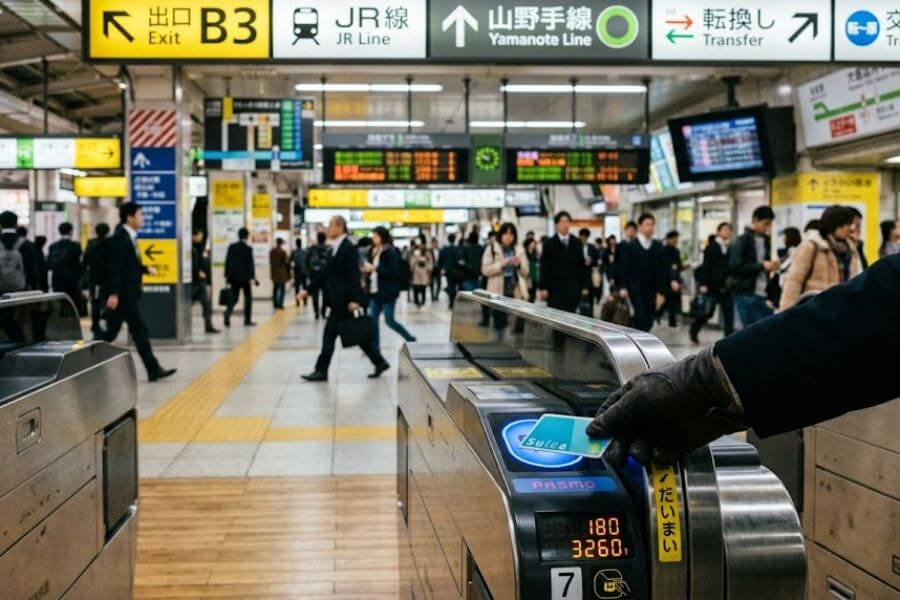
Standing inside a massive transportation hub in Tokyo or Osaka for the very first time can feel like walking directly into a giant, fast-moving puzzle. Millions of people are rushing past you in every direction, neon signs are flashing bright colors, and screens are displaying words that look completely unfamiliar to your eyes. It is incredibly easy to feel overwhelmed, but here is a secret that seasoned travelers know: you do not need to read or speak a single word of Japanese to navigate this system like an absolute pro. Japan has built one of the most logical, organized, and visual transit networks on the planet. By learning how to read the clever color codes, symbols, and hidden patterns built into every station, you can transform a stressful maze into a fun, predictable adventure. This guide will give you every single tool, trick, and strategy you need to move through any station with total confidence.
Key Takeaways for Your Journey
If you only remember a few things before you step off the plane, keep these essential rules in mind to keep your journey smooth and simple.
- Follow the Colors and Numbers: Every single train line has its own dedicated color and letter, and every station has a unique number. If you can match a pink circle or the letter “M” on your phone to the signs on the wall, you will never get lost.
- Get a Transit Card Right Away: Do not spend your precious vacation time standing in front of complicated ticket vending machines every time you want to ride. Buy a digital or physical tap-and-go transit card as soon as you arrive to breeze through the gates.
- Look Up for Yellow Signs: Yellow is the universal color for exits and transfers across Japan. Whenever you feel confused about where to go after stepping off a train, simply look up at the ceiling and search for the bright yellow boards.
- Download Offline Navigation Apps: Digital maps are your best friend. They will tell you the exact time your train departs, the precise platform number you need, and even the best car number to board for a quick exit.
- When in Doubt, Look for the Hat: Station staff members wear crisp uniforms and distinct hats. They are incredibly kind and helpful, and they can guide you in the right direction even if you only communicate using hand gestures and smiles.
The Ultimate Station Preparation Checklist
Before you even step foot inside a bustling terminal, your success begins in your hotel room or at the airport. Entering a transit hub without a few basic tools is like trying to build a Lego set without the instruction manual. You can certainly do it, but it will take much longer and cause a lot of unnecessary headaches.
Get Your IC Card Sorted Out Immediately
The single best thing you can do for your peace of mind is to get an integrated circuit card, which everyone in Japan calls an IC card. These are pocket-sized, rechargeable transit cards that let you pay for your rides with a single tap. Depending on where you start your vacation, you will see different names printed on them. In the Tokyo region, the two main cards are called Suica and Pasmo. If you land in Osaka or Kyoto, the local card is called Icoca.
Here is the wonderful news: all of these cards work interchangeably across the entire country. You can buy a Suica card in Tokyo and use it to ride the subways in Fukuoka or the buses in Kyoto without any issues.
| Card Name | Primary Region | Where to Buy | Best For |
| Suica | Tokyo and Eastern Japan | Train Stations / Apple Wallet | General travel and convenience stores |
| Pasmo | Tokyo and Subway Lines | Subway Stations / Apple Wallet | Great alternative to Suica |
| Icoca | Osaka, Kyoto, and Western Japan | JR West Ticket Machines | Essential for exploring the Kansai area |
You have two choices when it comes to these cards: physical plastic or digital. If you have a smartphone, you can actually add a digital transit card directly to your phone wallet before you even leave your home country. This allows you to simply tap your phone against the ticket barrier without even waking up your screen. If you prefer a physical souvenir, you can buy a plastic card at airport multi-functional ticket machines.
Having this card means you never have to look at a giant, confusing wall map above the ticket machines to calculate how much your ride costs. You just tap in at your starting point, enjoy your ride, and tap out at your destination. The machine will automatically subtract the correct amount of money from your balance.
Download the Right Navigation Apps
Your smartphone is your personal tour guide, and two specific apps will do ninety percent of the heavy lifting for you. Google Maps works exceptionally well throughout Japan. It provides incredibly accurate, real-time data for almost every train, subway, and monorail line in the country. Another fantastic option is an app called Navitime, which is tailor-made for tourists traveling through Japan.
When you type your destination into these apps, they do not just give you a generic route. They give you highly specific details that remove all the guesswork. The app will tell you the exact time the train will pull into the station, the specific platform number you need to stand on, the cost of the trip, and the name of the final stop on that train line so you can ensure you are boarding a train heading in the correct direction.
Take Screen Captures of Your Routes
Technology is amazing until your phone battery dies or you suddenly lose your internet connection deep underground. A brilliant habit to develop is taking a quick screen capture of your route before you enter the station. Make sure your picture includes the station names in both English and Japanese characters, the platform numbers, and the visual logo of the train line. If your phone loses its connection, you still have a perfect visual guide saved in your photo library to show to a station worker if you need assistance.
Decoding the Visual Language of Signs
The moment you step inside a station entrance, you might feel like you are being bombarded with information. There are flashing lights, video screens, and arrows pointing in every possible direction. However, the entire system is built on a highly strict, beautiful code. Once you understand what the shapes and colors mean, you will realize that the station is actually talking directly to you in a language you already understand.
Master the Universal Color Codes
Every single train and subway company in Japan assigns a permanent, distinct color to every line they operate. For example, the famous Yamanote Line, which runs in a giant circle around the center of Tokyo, is always represented by a bright, vibrant yellow-green color. The Chuo Line, which cuts directly through the middle of the city, is always a bold orange.
If your navigation app tells you that you need to take the Marunouchi Line, it will also show you a red circle. When you look up at the overhead signs in the station, you do not need to search through lists of words. You simply scan the room for red icons, red arrows, and red stripes painted on the floor or walls. Follow that red color path, and it will lead you straight to your train.
Read the Letters and Numbers
To make things even easier for international travelers, Japan uses an alphanumeric system for its transit stations. This means every station has a letter and a number code. The letter represents the name of the train line, and the number tells you how many stops that station is from the beginning of the line.
Let us look at an example. Imagine you want to visit the historic temple district of Asakusa in Tokyo. The Asakusa station on the Ginza Line is coded as G19. The G stands for the Ginza Line, which is also color-coded as bright orange. The number 19 means it is the nineteenth station on that specific track. If you board the train at station G16, you instantly know that you need to ride the train for exactly three more stops until you see the number 19 outside your window. You do not need to memorize how to pronounce the names of the stations; you just need to count up or down like a basic math game.
Spot the Multi-Language Digital Displays
Almost every modern train station in Japan utilizes digital electronic displays above the ticket gates and along the platforms. These screens constantly cycle through four different languages: Japanese, English, Chinese, and Korean.
If you approach a screen and see nothing but Japanese characters, do not panic or walk away. Stand perfectly still and watch the screen for three to five seconds. The text will automatically flip to clean, clear English. These screens display the departure time, the type of train, the final destination, and any current delays.
Conquering the Ticket Gates with Confidence
The ticket gates can feel like the most intimidating part of the entire station experience. They look like sleek, robotic barriers, and a long line of fast-walking commuters is usually trailing right behind you. The fear of having the little plastic doors slam shut in front of you is very common for first-time visitors, but passing through them is actually an incredibly simple process.
The Anatomy of a Ticket Gate
When you walk up to a row of gates, you will notice that each individual lane has a small display screen facing you. Look down at the floor or at these screens before you pick a lane. If you see a bright green arrow pointing forward, that lane is open and ready for you to enter. If you see a red circle or a red cross symbol, it means that lane is reserved for people walking from the opposite direction, or it is temporarily closed.
[ Green Forward Arrow ]  -->  Lane is OPEN and ready for you.
[ Red Cross / Circle ]   -->  Lane is CLOSED or oncoming traffic.
Every gate has a smooth, glowing blue or yellow plastic pad near your right hand. This is the magic spot where your IC card or your smartphone communicates with the station.
How to Correctly Tap and Go
As you walk toward an open lane, hold your physical IC card or your phone in your right hand. You do not need to stop walking completely, and you do not need to press your device down hard onto the reader. A gentle, soft tap against the glowing plastic pad is all it takes.
The machine will make a clear, pleasant high-pitched beep sound, and a tiny digital screen right next to the touch pad will instantly display two numbers. The top number shows you how much money your current ride cost, and the bottom number shows you exactly how much money you have left on your card.
If you are using a physical paper ticket instead of a digital card, the process is slightly different. Look for a gate that has a small, thin slot at the very front. Insert your little paper ticket into that slot, walk forward through the open gates, and make sure to grab your ticket as it pops back out of a second slot at the far end of the barrier. You will need that exact same ticket to exit the station at the end of your trip, so place it somewhere incredibly safe where it will not fall out of your pocket.
What to Do If the Gate Rejects You
Every traveler, including people who have lived in Japan their entire lives, occasionally causes the ticket gates to close. If you tap your card and a loud beep sounds while the little doors swing shut, do not worry or feel embarrassed. This usually happens for a very simple reason: you might have accidentally tapped your card too quickly, your phone might have been on the wrong setting, or your card might have run out of money.
If this happens to you, step backward out of the lane immediately so the people behind you can pass through the other gates. Look around the immediate area for a small window box next to the gates. This is the station staff booth. Walk over to the window and hand your card to the worker. They see this happen hundreds of times a day. They will tap your card on their computer, see exactly what went wrong, fix the error, or point you toward a nearby machine where you can add cash to your balance.
Finding the Exact Right Platform
Once you are successfully past the ticket gates, your next mission is to find the exact piece of tracks where your train will arrive. In massive multi-level stations, this can feel like searching for a specific room inside a giant castle. However, by using a step-by-step approach, you can narrow down your choices until you are standing exactly where you need to be.
Distinguish Between Different Train Systems
One thing that confuses many visitors is that a single large station can contain multiple completely independent train companies under one roof. The biggest operator is called JR, which stands for Japan Railways. They operate the famous high-speed bullet trains, known as Shinkansen, as well as massive local commuter lines. At the same time, the station might also house city subways, private railway lines that head out to distant suburbs, and airport express trains.
Each of these systems usually has its own separate ticket gates. If your phone app tells you to take a JR train, make sure you look for the distinct green JR logo on the signs before you walk through a gate. If you accidentally enter a subway gate using your IC card when you wanted a JR train, you will need to walk over to the staff window to have your card reset.
Use the Destination Clues
When you are looking at the signs pointing toward the platforms, you will often see that a single train line has two different platforms numbered side-by-side, such as Platform 1 and Platform 2. One platform sends trains heading north, while the other sends trains heading south. To figure out which side you need, look at the large signs hanging over the staircases.
These signs will display the name of the final, ultimate stop on that line, along with a few major landmark stations along the way. If you are in Tokyo on the Yamanote Line, the signs will explicitly state if the platform is for trains heading toward major hubs like Shibuya and Shinjuku, or toward Ueno and Tokyo Station. Match these major landmark names to your navigation app route to guarantee you do not board a train going in the absolute opposite direction of your hotel.
Understand the Dynamic Duo of Platform Signs
Once you ascend the stairs or escalator and arrive on the platform, look up at the hanging sign boards. These signs give you a complete picture of where you are and where you are going.
The main sign in the middle of the platform will display the name of the current station in large letters. Directly beneath the main name, you will see two smaller names with arrows. The name on the left shows you the station the train just came from, and the name on the right shows you the exact station where the train is going next. This is a perfect final check to ensure you are standing on the correct side of the tracks.
Boarding Etiquette and Floor Markings
Japanese train platforms are marvels of human organization. Hundreds of people can wait for a train together in a small space without any pushing, shoving, or chaos. This order exists because the floor beneath your feet is completely covered in detailed maps and instructions.
Decipher the Lines and Symbols Painted on the Ground
When you look down at the platform edge, you will see rows of painted lines, boxes, shapes, and numbers. These markings are not random decorations; they correspond precisely to where the doors of the incoming train will stop.
[ Platform Edge ] -----------------------------------------
   (Two-Line Queue)   || ||   [Door Mark]   || ||
                      || ||                 || ||
                      || ||                 || ||
You will see markings that indicate where to stand based on the type of train that is arriving. Some lines are solid, while others are dashed. Many stations use different colors, like yellow, blue, or green lines, to organize passengers for different routes. Look at the digital screens overhead to see what color or symbol matches the next arriving train, then find that exact symbol on the ground and line up behind it.
Master the Two-Line Waiting System
Efficiency is a core part of the culture. On the platform floor, you will notice lines that guide people to form neat, orderly queues. Usually, these lines form two parallel rows stretching back from the edge of the tracks.
When you arrive at your platform, simply pick the correct door marking and stand at the back of the existing line. People do not crowd around the door area. They wait patiently in their designated line until the train comes to a complete stop.
Follow the Flow of the Exit and Entry Dance
When the train pulls up and stops, the magic of the system really shines. The painted lines on the ground are designed to keep the space directly in front of the train doors completely clear. This creates a wide, unobstructed path for the passengers who are inside the train to step off onto the platform safely.
As the doors slide open, remain in your line and wait. Never try to step onto the train until every single person who wants to get off has fully exited the car. Once the path is clear, the lines on the left and right sides will smoothly merge and walk into the train car in a calm, orderly fashion. It is a beautiful, respectful process that keeps everything moving right on time.
Riding the Train Like a Local Resident
Once you are safely inside the train car, you can finally take a deep breath and relax. Your main goal now is to enjoy the ride, respect the local customs, and make sure you do not miss your stop.
Keep It Quiet and Courteous
Japanese trains are incredibly peaceful places. Even during the busiest rush hours when cars are packed with commuters, the interior of the train is often remarkably quiet. To fit right in and show respect to your fellow travelers, there are a few simple cultural guidelines to follow.
- Switch Your Phone to Silent Mode: Local residents call this manner mode. It is considered quite impolite to have a loud ringtone blast out through a quiet train car.
- Avoid Making Phone Calls: If your phone rings or you need to make an emergency call, wait until you can step off at the next station. People do not hold voice conversations while riding inside the cars.
- Use Your Headphones: If you want to listen to music, play a game, or watch a video on your journey, make sure your headphones are securely plugged in and the volume is low enough that the person sitting next to you cannot hear any sound leaks.
- Manage Your Large Backpacks: If you are traveling with a large backpack or bag, take it off your shoulders when you board a crowded car. Hold it down by your feet, carry it in your hands in front of your body, or place it on the handy metal luggage shelves located directly above the seats. This prevents you from accidentally bumping into people when you turn around.
Watch the High-Tech Interior Screens
You do not need to listen carefully to the spoken audio announcements to know where you are. Look directly above the interior doors of the train car. Almost all modern trains feature bright, high-definition television screens that provide a wealth of real-time information for passengers.
These screens show a complete map of the train line. They display the name of the current station, the next stop, and a running list of all upcoming stations. The names flash on screen in English, alongside a counting clock that tells you exactly how many minutes remain until you reach your destination.
Many of these screens even display a helpful diagram of the entire train layout. This diagram shows you exactly where the staircases, elevators, and exit escalators are located at the next station relative to the specific car you are currently riding in.
[ Car 3 ] --- [ Car 4 ]* --- [ Car 5 ]
                 |
         (Escalator Near Door)
Identify Priority and Special Seating Sections
As you look around the train car, you will notice certain seats that are covered in a completely different color of fabric, or have large, obvious stickers affixed to the windows above them. These are priority seats. They are strictly reserved for elderly individuals, pregnant mothers, people traveling with small infants, and individuals with physical injuries or disabilities. You are allowed to sit in these seats if the train is completely empty, but it is expected that you will instantly stand up and offer your spot if someone who needs it boards the train car.
Additionally, during the busy morning and evening rush hours, certain train lines designate specific cars as women-only cars. These cars have large pink stickers affixed to the platform floor and on the train windows. They provide a safe, comfortable commuting environment for women, schoolgirls, and young children during the absolute peak travel times of the day. Check the ground markings and train windows carefully if you are traveling during rush hour to make sure you do not accidentally board one of these cars if you do not fit that category.
Navigating the Labyrinth of Station Exits
Arriving at your target station is a massive victory, but your journey is not quite finished yet. Many of the largest stations in major cities have dozens of different exits scattered across multiple floors and buildings. If you take the wrong exit, you could find yourself walking out on the completely opposite side of a massive skyscraper district, adding twenty minutes of unnecessary walking to your trip. Fortunately, there is a perfect system designed to guide you directly to the correct street corner.
Look for the Yellow Sign Highway
When you step off the train and onto the platform, look up at the ceiling and completely ignore every sign except for the ones painted bright, vivid yellow. In Japan, yellow is the universal, mandatory color code used for exits and street connections. White signs tell you how to transfer to other trains, but yellow signs lead you out into the fresh air.
These yellow signs will feature numbers and letters, such as Exit A1, Exit B3, or the North Exit. Before you even leave your train seat, check your navigation app to see which specific exit name is closest to your hotel, museum, or restaurant. Once you spot that specific exit code on a yellow sign on the platform, simply follow the arrows like a trail of breadcrumbs.
Utilize the Massive Yellow Neighborhood Maps
If your phone battery dies or your app does not specify an exit name, do not worry. Walk past the ticket exit gates and look around the station walls. You will always find a massive, incredibly detailed neighborhood map painted on a large yellow board.
+--------------------------------------------------+
|                  YELLOW WALL MAP                 |
|                                                  |
|  [Exit A1] --> Central Mall, Public Library      |
|  [Exit A2] --> City Park, Historic Shrine        |
|  [Exit B1] --> Business District, West Plaza     |
|                                                  |
+--------------------------------------------------+
This map lists every single major landmark, hotel, shopping center, and government building in the entire surrounding area. Next to each landmark name, the map lists the exact exit code that offers the shortest walk. Find the name of the place you want to go on the alphabetical list, note down the letter and number combination, and follow the yellow overhead signs directly to that exit.
Master the Fare Adjustment Machine Trick
Sometimes, when you try to tap your card to exit the station, the gate will close and a yellow light will flash. Ninety-nine percent of the time, this simply means you do not have enough money left on your card to pay for the trip you just took.
To fix this easily, look for a machine located immediately next to the exit gates called a Fare Adjustment Machine. These machines are a lifesaver. Walk up to the machine, slide your transit card into the slot, and look at the screen.
The machine will automatically calculate the exact number of yen you owe to complete your journey. You can insert a coin or a bill to pay the exact remaining balance, or you can choose to top up your card with extra cash for future rides. Once the machine finishes processing, it will hand your card back to you, and you can tap through the exit gates without any problems.
Secret Hacks for Stress-Free Transfers
Transferring from one train line to another inside a massive hub can feel like the trickiest part of traveling. However, if you understand the secret design principles used by Japanese engineers, you can turn a confusing transfer into a quick, stress-free walk.
Follow the Footsteps and Floor Tracks
When you need to change from one train line to another inside a complex station, look down at the floor beneath your feet. Many stations have painted colored tracks or dashed lines running right along the tiles of the main walkways. These floor markings act like a physical highway system for pedestrians.
If you are trying to transfer to a specific subway line, you will often find a painted colored line on the ground with the name of that line printed on the floor every few yards. You do not need to look up at the walls or navigate through crowds. You can simply look straight down, lock your eyes onto that colored path, and walk along it until it delivers you directly to the platform you need.
Understand the Difference Between Orange and Blue Gates
In certain stations, transferring between different subway lines or train networks requires you to actually walk out through a set of ticket gates and walk through a public hallway before entering a new set of gates. This can be very confusing for first-time tourists.
To make this seamless, look closely at the color of the ticket gates when you are making a transfer. If you see a row of bright orange ticket gates, these are special transfer gates. If you are using a paper ticket, these machines will return your ticket to you so you can use it at the next gate down the hall. If you tap your digital IC card at an orange gate, the system instantly recognizes that you are in the middle of a transfer and will grant you a special discounted rate when you tap into the next line within a specific time limit.
Look for the Elevator and Escalator Shortcuts
If you are traveling with heavy luggage, a baby stroller, or you simply have tired legs after a long day of walking, finding an elevator can sometimes feel challenging in older stations. A brilliant trick is to look at the large structural pillars located along the center of the train platforms.
These pillars almost always feature a vertical diagram of the entire station level layout. The diagram will use clear, universal icons to show you exactly which direction to walk to find the nearest elevator or escalator. If you follow these diagrams before you join a massive crowd rushing toward a standard staircase, you can often save yourself a lot of physical lifting and stress.
Communicating with Station Staff Members
Even with the absolute best preparation, apps, and maps, there may come a moment on your vacation where you truly need human help. Perhaps you dropped an item on the train, you cannot find a specific exit, or you are completely turned around. This is when you get to experience one of the best parts of traveling in Japan: the incredible hospitality of the station workers.
Locate the Helpful Uniformed Staff
Station staff members are very easy to spot. They wear neat, clean uniforms, polished shoes, and very distinct hats. They are stationed at the ticket windows next to the gates, along the main platforms, and near the information desks.
Never feel afraid or hesitant to approach them. They are famously polite, patient, and highly accustomed to helping international travelers from all over the world who do not speak a single word of Japanese.
Use the Power of Single Words and Simple Gestures
You do not need to try to speak complex sentences or use translation programs for every basic interaction. In fact, using long sentences can sometimes make things harder to understand. The best approach is to keep your communication incredibly simple, direct, and focused on key nouns.
If you are looking for a specific train line, like the Shinkansen, simply walk up to a staff member, point in a general direction, and say the name of the train with a questioning tone: “Shinkansen?” The worker will instantly understand what you need. They will smile, use clear hand gestures to point you toward the correct hallway, or even walk with you for a few steps to make sure you are heading in the right direction.
Leverage Visual Tools and Smartphone Screens
If you are trying to find a highly specific destination or a particular landmark building, let your smartphone do the talking for you. Open your navigation app, pull up the name of the place you want to go, and ensure the text is large and easy to read.
Show the screen directly to the station worker. They will recognize the location instantly. They will often produce a handy paper map from beneath their desk, draw a circle around your current location, and draw a clear line with a pen showing you exactly how to walk out of the station to reach your destination. It is a highly visual, friendly interaction that requires zero shared language.
Frequently Asked Questions
What should I do if I drop my transit card or a personal item onto the train tracks?
Never, under any circumstances, lean over the edge of the platform or attempt to climb down onto the train tracks to retrieve a dropped item. The tracks are incredibly dangerous due to high-voltage electricity and fast-moving trains that can arrive without warning. Instead, look around the platform for the nearest station staff member. They possess a special, long-handled mechanical gripping tool designed specifically for this situation. Tell them what happened, point to the location, and they will safely retrieve your item from the tracks in a matter of moments.
How can I find out if a train station has coin lockers for my large suitcases?
Almost every single train station in Japan is equipped with rows of convenient coin lockers where you can securely store your heavy bags, backpacks, and suitcases for the day. To find them, look for the universal locker icon on the overhead station signs, which looks like a small key next to a suitcase. Modern lockers use a digital touchscreen interface that can be switched into English. You can pay for the locker using your digital or physical IC card, which acts as your digital key. To unlock your bag later, you simply tap the exact same card against the reader.
Can I use my digital transit card on my phone if my phone battery completely dies?
If your smartphone battery dies completely, a digital transit card stored in your phone wallet may not function depending on your specific phone model and its power management settings. Some modern smartphones keep a tiny reserve of backup emergency power specifically for transit cards, allowing you to tap out even if the main screen is black. However, to avoid any stressful situations, it is highly recommended to carry a portable battery pack in your day bag, or keep a small amount of physical cash on hand so you can purchase a temporary paper ticket if your phone shuts down completely.
Are all train stations in Japan fully accessible for strollers and heavy luggage?
Yes, the vast majority of train stations across Japan, especially in major cities and tourist areas, are highly accessible and equipped with modern elevators, escalators, and wide ticket gates. The floors of the stations feature bright yellow tactile paving strips designed to guide visually impaired passengers safely through the corridors. If you are traveling with a stroller or heavy bags, look for the elevator icons on the overhead signs. In rare instances where an older, smaller station does not have an elevator, the station staff will happily assist you in carrying your items safely up or down the stairs.
What is the major difference between a local train and an express train in Japan?
When you are standing on a platform, you will notice trains labeled as Local, Rapid, Express, or Limited Express. A Local train stops at absolutely every single station along the line. A Rapid or Express train skips smaller stations to move passengers between major hubs much faster. A Limited Express train only stops at the absolute largest stations. Your navigation app will tell you exactly which type of train you need to board. Always check the digital platform screens before stepping onto a train to ensure you do not accidentally board an express train that will fly right past your intended stop.