Thinking about moving to Tokyo, or just wondering how your life in the United States compares to life across the ocean? It is easy to look at a plane ticket and a hotel room and think you know what a place costs. But living somewhere is totally different from visiting. To find the true cost of living in Tokyo versus the United States, you have to look beneath the surface. You cannot just compare the price of a hamburger or a train ticket. You have to look at the hidden fees, the taxes, the way apartments work, and the tiny daily choices that add up over time. Let us dive straight into the numbers, the lifestyle changes, and the surprising truths about what it actually costs to call Tokyo home.
The Big Picture of Two Different Worlds
When you try to compare a massive country like the United States to a single city like Tokyo, things get tricky right away. The United States is huge, and the cost of living changes dramatically depending on where you stand. Living in New York City or San Francisco is incredibly expensive, while living in a small town in Ohio or Texas is much cheaper. Tokyo, on the other hand, is a gigantic mega-city, but it represents a huge chunk of Japan’s economy.
To make this comparison fair, you have to think about what kind of life you want. In the United States, a lot of your money goes toward big things like a house with a yard, a car, car insurance, and health insurance. In Tokyo, your money goes toward smaller spaces, convenience, eating out, and train fares. The overall cost of living in Tokyo can actually be lower than in major American cities, but the way you spend your money is completely different.
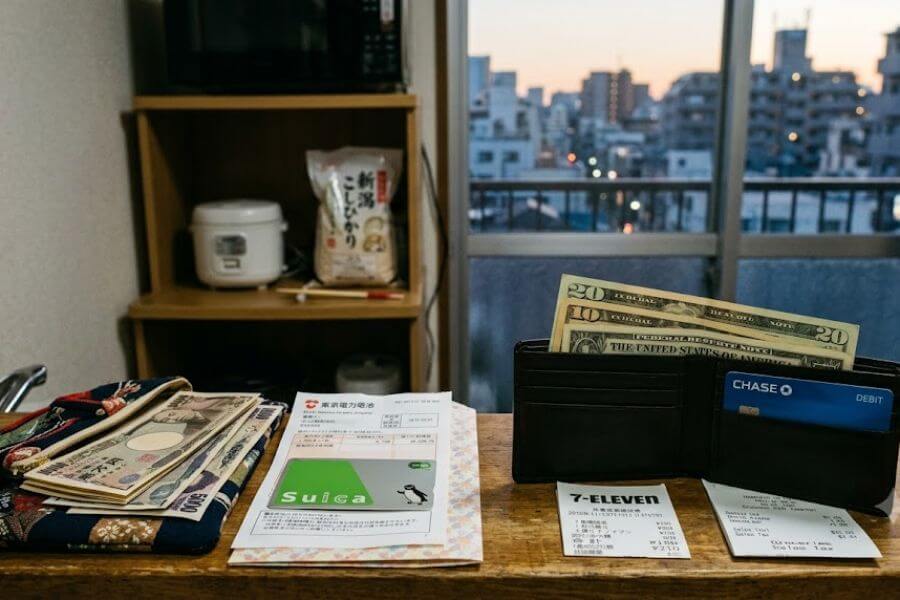
In Tokyo, the local currency is the Japanese yen. The exchange rate between the US dollar and the Japanese yen changes every single day, which can make things feel cheaper or more expensive for an American expat. If the dollar is strong, your American money buys a lot more in Tokyo. If the yen is strong, Tokyo feels much pricier. But for people who earn their salaries in yen, the prices stay mostly steady. That is why we need to look at the actual lifestyle costs rather than just the daily currency rates.
Housing and the Secret Upfront Costs
Finding a place to live is usually your biggest monthly expense no matter where you are in the world. In the United States, renting an apartment is a fairly straightforward process. You usually pay a security deposit, which you get back when you move out if you did not break anything, and your first month of rent.
Tokyo housing is a whole different ball game. The upfront costs can blow a massive hole in your budget if you are not prepared for them. When you sign a lease for a traditional apartment in Tokyo, you encounter several unique fees that do not exist in the United States.
The Breakdown of Tokyo Moving Fees
- Key Money (Reikin): This is a literal gift to the landlord. It is a traditional fee to thank the landlord for letting you rent the apartment. It is usually equal to one or two months of rent, and you never get this money back.
- Deposit (Shikikin): This is similar to a US security deposit. It is usually one or two months of rent, used to fix any damages when you move out. Whatever is left over comes back to you.
- Real Estate Agent Fee (Chukai Tesuryo): The agent who helps you find the apartment usually charges a fee equal to one month of rent plus tax.
- Guarantor Company Fee: In Japan, you need someone to promise they will pay your rent if you cannot. If you do not have a Japanese relative to do this, you must pay a company to act as your guarantor, which costs about half a month to a full month of rent.
- Fire Insurance and Lock Changing Fees: These are smaller mandatory fees that usually cost a few hundred dollars altogether.
When you add all of these up, moving into a new apartment in Tokyo can cost you four to six months of rent before you even step inside. If your rent is one thousand dollars a month, you might need six thousand dollars just to get the keys.
Space and Size Comparison
Once you get inside a Tokyo apartment, you will notice the size right away. In the United States, apartment sizes are measured in square feet. In Japan, they are measured in square meters or by the number of tatami mats that can fit on the floor.
A typical one-bedroom apartment in a US city might be around seven hundred square feet. In Tokyo, a standard apartment for a single person is often around twenty-five square meters, which is only about two hundred and seventy square feet. The layout is often called a 1K or a 1DK. A 1K means you have one main room and a tiny kitchen separated by a door. A 1DK means you have a dining and kitchen area plus one bedroom. The walls are often thinner than in US apartments, and the ceilings are lower. You have to learn to live with much less stuff because there simply is no room for massive furniture or giant televisions.
Food and Grocery Shopping Habits
Food is an area where Tokyo can actually save you a lot of money compared to the United States, but only if you change the way you shop and eat. If you try to live exactly like an American in Tokyo, you will end up spending a fortune.
In the United States, many families drive to a massive supermarket once a week, fill up a giant cart, and pack a large refrigerator full of food. In Tokyo, refrigerators are small, kitchens have very little counter space, and people usually buy fresh food every single day or every two days.
Supermarket Surprises
Tokyo supermarkets are fascinating places. You will find incredible seafood, high-quality meats, and pre-made meals that taste amazing. However, certain items that are cheap in the United States are luxury goods in Tokyo.
Fruit is a perfect example. In the United States, you can buy a big bag of apples or a carton of strawberries for a few dollars. In Japan, fruit is treated with immense respect and grown with extreme care. A single melon can cost twenty dollars, and a perfect pack of strawberries can cost ten dollars. If you love big fruit smoothies every morning, your grocery bill in Tokyo will skyrocket.
On the other hand, traditional Japanese staples are very cheap. Rice, tofu, noodles, bean sprouts, and local vegetables like daikon radish are highly affordable. If you cook local dishes, you will spend very little money.
Eating Out and the No-Tip Culture
One of the biggest shocks for Americans living in Tokyo is how cheap and high-quality the restaurants are. In the United States, eating out has become very expensive. You have to pay for the food, high sales taxes, and a tip of fifteen to twenty percent for the server.
In Tokyo, there is absolutely no tipping. If you try to leave extra money on the table, the waiter will run down the street after you to give it back. The price you see on the menu is exactly what you pay. You can get a steaming bowl of delicious ramen or a plate of beef and rice for five to eight dollars. This means a single person can often eat out for every meal and spend less money than they would cooking for themselves in a major US city.
Transportation and Car Ownership
The way you get around is one of the most fundamental differences between living in Tokyo and living in the United States. Your transportation budget will look completely opposite depending on which place you choose.
In most of the United States, a car is not a luxury; it is a necessity. If you do not have a car, you cannot get to work, go to the grocery store, or visit your friends. Owning a car comes with a massive list of regular expenses.
The True Cost of an American Car
- Monthly car loan payments
- Car insurance premiums, which can be hundreds of dollars a month
- Gasoline prices, which go up and down but always add up
- Regular maintenance like oil changes, new tires, and repairs
- Parking fees, registration fees, and highway tolls
When you add all of these together, the average American spends several hundred dollars every month just to keep a vehicle on the road.
The Tokyo Train System
In Tokyo, you do not need a car. In fact, owning a car in Tokyo is an expensive headache. To even buy a car in Tokyo, you have to prove to the police that you have a legal, assigned parking space within a certain distance of your home. A parking space in Tokyo can cost as much as renting a small room in some US towns.
Instead of cars, Tokyo runs on trains and subways. The public transportation system in Tokyo is world-famous for a reason. The trains are spotlessly clean, perfectly safe, and they run exactly on time down to the second.
Train fares are based on how far you travel, but they are very reasonable. A typical ride costs between one and three dollars. Even better, almost every company in Tokyo pays for their employees’ train passes. Your company will cover the cost of your commute from your home station to your office station. You can also use that pass to get off at any station along your route for free on the weekends. For everywhere else, you can ride a bicycle or just walk, which keeps you healthy and costs nothing at all.
Utilities and the Comfort of Your Home
Keeping your home warm in the winter, cool in the summer, and bright at night costs money everywhere, but the systems in Tokyo and the United States work differently.
In the United States, many homes have central heating and air conditioning. You set a thermostat, and the entire house stays at one comfortable temperature all day long. This is wonderful, but it can create huge electric or gas bills, especially if you have a large house.
Heating and Cooling Room by Room
Tokyo apartments almost never have central heating or cooling. Instead, each room has its own individual unit mounted on the wall, called an air conditioner or a heater unit. You use a remote control to turn it on when you enter a room and turn it off when you leave.
This means you only pay to heat or cool the specific space you are using. If you are sleeping, you only run the unit in your bedroom. This saves energy, but Japanese apartments often have poor insulation compared to American homes. In the winter, the floors can feel freezing cold, and the apartment cools down the minute you turn off the heater.
Water and Gas Systems
Water and gas bills in Tokyo are usually managed by public utility companies and are very fair. One interesting thing about Tokyo bathrooms is the deep soaking tub, called an ofuro. Japanese culture places a high value on taking a hot bath every single night to relax. The plumbing systems are highly advanced, allowing you to set the exact temperature of your bath water from a computerized panel on the kitchen wall. While filling a deep tub every night uses a lot of gas and water, utility bills in Tokyo are generally stable and manageable, rarely reaching the extreme highs that Americans sometimes face during severe winter storms or summer heatwaves.
Healthcare and Peace of Mind
Healthcare is an area where the comparison between Tokyo and the United States becomes incredibly stark. The two countries have completely opposite philosophies on how people should pay for medical care.
In the United States, healthcare is largely private and can be incredibly complex. Most people get insurance through their jobs, but they still have to pay monthly premiums, deductibles, and co-pays. A deductible means you might have to pay the first few thousand dollars of your medical bills yourself before the insurance company pays anything. If you do not have good insurance, a single trip to the hospital for a broken bone or an illness can leave you with thousands of dollars in debt.
Japan’s National Health Insurance
Japan uses a universal healthcare system. Everyone who lives in Tokyo for more than three months is required by law to join the National Health Insurance system or be part of their company’s health insurance plan.
Your monthly insurance fee is based on your income from the previous year. If you are a student or you do not earn much money, your monthly payment is very low. Once you have your insurance card, the government covers seventy percent of all your medical bills, including doctor visits, dental care, and prescription medicines. You only ever pay thirty percent out of your own pocket.
Furthermore, the government sets strict limits on how much medical care can cost. A regular doctor visit in Tokyo often costs less than fifteen dollars, and a cleaning at the dentist might cost ten dollars. You never have to worry about going broke just because you got sick, which removes a massive amount of financial stress from your daily life.
Taxes and the Take-Home Pay
When you look at a job offer in Tokyo versus a job offer in the United States, you cannot just look at the raw salary number. You have to figure out how much money will actually land in your bank account after the government takes its share.
In the United States, you pay federal income tax, state income tax if your state has one, local city taxes, and payroll taxes for social security and medicare. US taxes can be confusing, and many Americans have to hire an accountant or buy software every spring to file their tax returns.
The Layers of Japanese Taxes
If you work in Tokyo, your paycheck will face three main types of deductions:
- National Income Tax: This is a progressive tax, meaning the more money you make, the higher your tax rate becomes.
- Residence Tax (Inhabitant Tax): This is a flat tax of about ten percent that goes to your local city ward to pay for things like trash collection, parks, and local roads. A big surprise for expats is that residence tax is calculated based on your previous year’s income. During your first year living in Tokyo, you do not pay it. In your second year, you get a big bill based on what you earned in your first year.
- Social Insurance (Shakai Hoken): This covers your health insurance, public pension, and employment insurance.
While the total tax rate in Japan can feel high if you earn a massive salary, for the average worker, the deductions are quite similar to what you would pay in a state with high income taxes like California or New York. The big benefit is that your company handles almost all the paperwork for you through a process called the year-end tax adjustment. You rarely ever have to file a separate tax return yourself.
Education and Raising a Family
If you are moving to Tokyo alone, your budget is easy to manage. But if you are raising children, the true cost of living involves school, childcare, and activities. This is another area where choices dictate your entire financial reality.
In the United States, public schools are free from kindergarten through high school, though you do have to pay for school supplies, sports equipment, and field trips. The quality of public schools often depends heavily on the neighborhood you live in because schools are funded by local property taxes.
Public versus International Schools in Tokyo
If you live in Tokyo, you have two main choices for your children’s education: local Japanese public schools or international schools.
If your children speak Japanese or are young enough to learn quickly, Japanese public schools are excellent and highly affordable. The tuition is free, and the schools teach children deep values of responsibility, teamwork, and cleanliness. Students even clean their own classrooms and serve each other lunch. You do have to pay for school lunches and uniform items, but the costs are very low.
However, if you want your children to study in English and follow an American curriculum, you will have to send them to an international school. International schools in Tokyo are elite institutions, and they are incredibly expensive. Tuition can easily cost twenty thousand to thirty thousand dollars per year per child. This single expense can completely change your cost of living calculation, making Tokyo much more expensive than the United States for a family with multiple children.
Childcare and After-School Support
Tokyo has put a lot of effort into making childcare cheaper for families because the country wants to encourage people to have more children. The government subsidizes preschool and daycare for many families based on their income. However, spots in public daycare centers can be hard to get, and you might have to wait on a long list.
For older kids, many Japanese parents send their children to after-school cram schools, known as juku. These schools help kids prepare for difficult entrance exams for middle school, high school, and university. Juku is a massive industry, and it can cost several hundred dollars a month, which is a standard expense for a typical Tokyo household but an unusual one for an American family.
Entertainment, Shopping, and Lifestyle
What do you like to do on the weekends? How you spend your free time will play a huge role in determining whether Tokyo or the United States is cheaper for your specific lifestyle.
In the United States, entertainment often revolves around space and nature. Many people have big backyards where they throw barbecues, or they drive to national parks for camping and hiking. Going to the movies, attending a professional sports game, or hitting a big amusement park can be quite expensive, but basic outdoor recreation is often free or very cheap.
The Tokyo Entertainment Scene
Tokyo is an absolute wonderland for entertainment, but it is a dense, commercial city. Almost everything you do will cost at least a small amount of money.
- Karaoke: You can rent a private room with friends to sing your heart out. It is very popular and highly affordable, especially during weekday afternoons.
- Izakayas: These are Japanese pubs where people go after work to share small plates of food and drink. They are casual, fun, and usually much cheaper than going out to a bar in America.
- Arcades and Theme Cafes: Tokyo is famous for multi-story arcades and cafes where you can hang out with cats, owls, or even hedgehogs. These are unique experiences, but the entry fees add up.
- Shopping: Tokyo has some of the best shopping in the world, from luxury fashion in Ginza to anime goods in Akihabara.
Because Tokyo apartments are small, people do not usually invite friends over to their homes. Socializing happens out in the city. This means you will naturally spend more money on cafe coffees, small snacks, and entrance fees just to spend time with your friends.
The Cost of Staying Connected
In the modern world, you cannot live without a smartphone and high-speed internet. This is an area where Tokyo wins by a landslide compared to the United States.
Internet and phone services in the United States are notorious for being expensive and filled with hidden fees. A single phone line with unlimited data can easily cost seventy or eighty dollars a month, and home internet can cost another seventy dollars.
In Tokyo, the telecommunications market is highly competitive. The government pushed major phone companies to lower their prices, resulting in fantastic deals. You can get a high-quality smartphone plan with plenty of data for twenty to thirty dollars a month. Home internet is incredibly fast, using advanced fiber-optic cables, and it usually costs around thirty to forty dollars a month. There are no sudden price hikes or hidden rental fees for equipment, making it a smooth and affordable part of your monthly budget.
A Side-by-Side Comparison
To help you visualize how these expenses stack up, let us look at a general comparison table. Keep in mind that this table compares a typical major US city like Chicago or Seattle to central Tokyo for a single professional person.
| Expense Category | Typical Major US City | Central Tokyo | Winner for Your Wallet |
| Monthly Rent | Higher for a larger space | Lower for a much smaller space | Tokyo (if you enjoy compact living) |
| Upfront Moving Costs | Low (First month + deposit) | Extreme (Key money, agent fees, deposit) | USA |
| Daily Commuting | High (Gas, insurance, car loan) | Very Low (Trains often paid by employer) | Tokyo |
| Groceries | Medium (Cheap fruit, expensive meat) | Medium (Expensive fruit, cheap fish/tofu) | Tie |
| Eating Out | High (Plus tax and 15-20% tip) | Low (No tip, cheap high-quality options) | Tokyo |
| Healthcare | High and unpredictable | Low and highly predictable | Tokyo |
| Cell Phone and Internet | High with hidden fees | Low and very fast | Tokyo |
| International Schools | Free (Public school option) | Extremely High (20k-30k per year) | USA |
This table shows that for a single person who is willing to live in a smaller space and use public transit, Tokyo offers an incredibly affordable lifestyle. But for a large family that needs English education and lots of square footage, the United States remains much easier on the bank account.
The Hidden Costs of Being an Expat
There is one more category of expenses that people often forget when they calculate the cost of living in Tokyo. If you are an American moving to Japan, you are not just a local resident; you are an expat. Being an expat comes with its own unique financial burdens.
First, there is the cost of visiting home. A round-trip flight from Tokyo to the United States can cost anywhere from one thousand to two thousand five hundred dollars depending on the time of year. If you have a family of four, flying back to see grandma and grandpa for Christmas can cost thousands of dollars just for the plane tickets.
Second, you have to think about foreign exchange fees and banking costs. Moving money across borders involves international wire fees and exchange rate markups. If you have student loans or credit card bills in the United States that you need to pay using money you earn in Tokyo, you will lose a small percentage of your cash every single time you transfer it.
Finally, there is the tax filing cost. The United States is one of the only countries in the world that requires its citizens to file a tax return every single year no matter where they live on the planet. Even if you do not owe any money to the US government because of foreign tax credits, you still have to prepare and file complex tax forms every April. Many expats have to pay specialized cross-border accountants hundreds of dollars just to ensure they are following all the rules correctly.
The Concept of Value versus Cost
At the end of the day, looking at the true cost of living is not just about counting pennies. It is about understanding what you get in exchange for your hard-earned cash. This is the concept of value.
Tokyo might offer smaller apartments, but it gives you a city that is incredibly safe, spotlessly clean, and filled with efficient services. You can walk down a dark street at three o’clock in the morning without a single worry. You can leave your laptop on a coffee shop table while you go to the bathroom, and it will be exactly where you left it when you get back. Your children can ride the subways to school by themselves from a young age. How much is that peace of mind worth to you?
The United States might have expensive healthcare and car payments, but it gives you vast open spaces, big houses, large yards, and the freedom to drive wherever you want whenever you want. It gives you massive supermarkets, familiar comfort foods, and a culture where you can communicate effortlessly with everyone around you.
The true cost of living depends entirely on what you are willing to trade. If you trade space and a car for convenience, safety, and incredible food, Tokyo is an amazingly affordable paradise. If you trade cheap trains and low-cost healthcare for a big house, a lawn to mow, and a massive car, the United States is the place where you will feel most comfortable. Calculate your own priorities before you calculate your budget, and you will find the right answer for your life.
Frequently Asked Questions
Is it cheaper to live in Tokyo or New York City?
Tokyo is significantly cheaper than New York City. Rent in central Tokyo for a standard apartment is often half the price or even one third of the price of a similar apartment in Manhattan or Brooklyn. Eating out in Tokyo is also much less expensive because there is no tipping and competition keeps restaurant prices low. Public transportation in Tokyo is cleaner, more reliable, and often cheaper than the New York subway system, especially since most employers in Tokyo cover their workers’ commuting costs.
Can I live comfortably in Tokyo without speaking Japanese?
You can survive in Tokyo without speaking Japanese because the train stations have English signs and many restaurants have English menus or automated ordering screens. However, living comfortably is a different story. Finding a traditional apartment, setting up utility bills, opening a bank account, and going to the doctor can be very stressful without knowing the local language. You may have to use specialized expat agencies that charge higher fees, which increases your overall cost of living. Learning basic Japanese will save you a lot of money and hassle.
Why are fruits so expensive in Tokyo supermarkets?
Fruit is expensive in Tokyo because of Japanese farming traditions and cultural values. In Japan, fruit is treated as a luxury item or a special gift rather than a basic daily snack. Farmers focus on producing perfect, beautiful, and incredibly sweet fruits rather than growing them in massive, cheap quantities. Each piece of fruit is often inspected, polished, and wrapped individually by hand. While you can find cheaper seasonal fruits if you shop carefully, giant portions of cheap fruit do not exist in Tokyo.
Do I need to buy a car if I move to Tokyo?
No, you absolutely do not need a car in Tokyo. The public train and subway network covers the entire city so perfectly that a car is actually an expensive burden. Parking spaces are difficult to find and very expensive to rent, and highway tolls are high. Most people walk, ride bicycles for short trips, and take the train for longer journeys. Giving up a car is one of the easiest ways to reduce your daily expenses when moving from the United States to Tokyo.
What is Key Money in Japan and do I really have to pay it?
Key Money is a traditional mandatory fee paid directly to a landlord when you start a new apartment lease. It is a non-refundable gift to thank the landlord for renting the space to you. While it can feel frustrating for Americans who are not used to it, it is a deeply embedded part of Japanese renting culture. However, because many foreign workers and young Japanese people dislike this fee, some modern real estate agencies now offer apartments with zero key money to attract tenants, though these apartments might have slightly higher monthly rent.