Many travelers dream of visiting Japan, but one concern often comes up before the trip: what if you do not speak Japanese?
The good news is that millions of visitors explore Japan every year without knowing more than a few Japanese words. While speaking the local language can help, it is far from necessary. Japan has become increasingly friendly to international travelers, especially in major cities and tourist areas.
That said, a little preparation can make your trip much smoother. From ordering food to finding the correct train platform, the right strategies can help you avoid stress and enjoy your adventure with confidence.
In this guide, you will discover the most practical tips for visiting Japan when you do not speak Japanese. These suggestions are based on real travel situations and can save you time, confusion, and unnecessary frustration.
Quick Summary Table 📋
| Tip | Why It Helps |
|---|---|
| Use translation apps | Makes communication easier in daily situations |
| Learn a few basic phrases | Shows respect and improves interactions |
| Download offline maps | Helps when internet access is limited |
| Use train apps | Simplifies navigation through complex rail systems |
| Take screenshots of destinations | Useful when asking for directions |
| Stay in tourist-friendly areas | Easier access to English support |
| Use restaurant displays and photos | Makes ordering food simple |
| Carry your hotel address | Helps if you get lost |
| Embrace non-verbal communication | Many situations can be handled without words |
| Stay patient and polite | Creates positive interactions with locals |
How We Ranked These Tips 🎯
We selected and ranked these tips based on several important factors:
- Practical value for first-time visitors
- Ease of implementation
- Ability to reduce travel stress
- Usefulness in everyday situations
- Effectiveness across different regions of Japan
- Impact on communication and navigation
- Relevance for travelers with zero Japanese knowledge
- Long-term usefulness throughout an entire trip
1. Download a Reliable Translation App Before You Arrive 📱
A translation app is one of the most powerful tools you can carry in Japan.
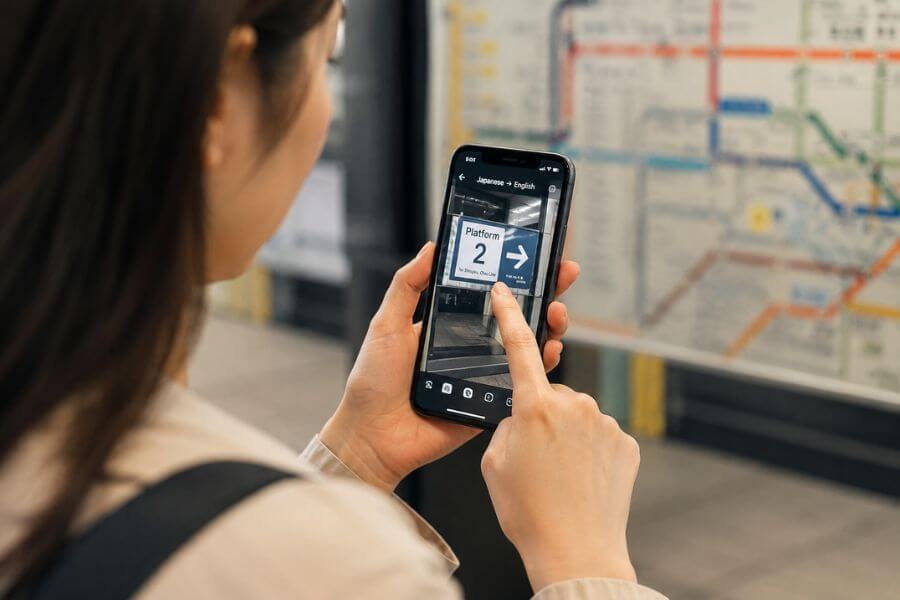
Modern translation apps can instantly translate text, menus, signs, and even spoken conversations. If a restaurant menu is only available in Japanese, you can simply point your camera at it and receive a translation within seconds.
You can also type questions and show the translated text directly to local people. This often works surprisingly well for basic requests such as asking for directions, ordering food, or finding a restroom.
Before your trip, download the language packs you need, so the app can work even when your internet connection is weak.
This single step can eliminate many communication barriers during your trip.
2. Learn a Handful of Basic Japanese Phrases 🗣️
You do not need to become fluent, but learning a few useful phrases can make a big difference.
Simple expressions like greetings, thank you, excuse me, and yes or no are often enough to create positive interactions. Japanese people generally appreciate visitors who make an effort to use their language, even if it is only a few words.
Knowing basic phrases can also help in situations where technology is unavailable or inconvenient.
Focus on practical expressions you are likely to use every day rather than memorizing long sentences.
A small effort can go a long way toward building goodwill and confidence.
3. Download Offline Maps Before Your Trip 🗺️
Getting lost in a foreign country can be stressful, especially when you cannot easily ask for help.
Offline maps allow you to navigate even when your mobile signal disappears or your data plan stops working. This is particularly useful in underground train stations, rural towns, and mountain regions.
Before leaving home, download maps for all the cities you plan to visit.
Having reliable navigation at all times gives you peace of mind and reduces the risk of wasting valuable travel time.
It is one of the easiest preparations you can make before arriving in Japan.
4. Use Train Navigation Apps Instead of Guessing 🚆
Japan’s train network is amazing, but it can also feel overwhelming at first.
Large stations may have multiple levels, dozens of exits, and several train companies operating under one roof. Trying to figure everything out without assistance can become confusing quickly.
Train navigation apps can show platform numbers, transfer points, departure times, and fare information.
Following step-by-step instructions is much easier than trying to interpret station signs on your own.
When traveling between cities or navigating busy urban rail systems, these apps often become your most valuable travel companion.
5. Save Screenshots of Important Destinations 📸
One of the simplest travel hacks is also one of the most effective.
Take screenshots of your hotel address, important attractions, train schedules, reservation confirmations, and destination names written in Japanese.
If you need assistance, you can simply show the screenshot to station staff, taxi drivers, restaurant employees, or local residents.
This avoids pronunciation problems and reduces misunderstandings.
Having visual information ready can solve many communication challenges in seconds.
6. Stay in Tourist-Friendly Areas 🏙️
If this is your first trip to Japan, choosing the right location can make life much easier.
Popular tourist districts often have English signs, multilingual staff, international restaurants, and transportation information designed for visitors.
This does not mean you must avoid local neighborhoods. Instead, use a tourist-friendly area as your home base while exploring the surrounding regions.
You will spend less time solving logistical problems and more time enjoying your trip.
For many travelers, convenience during the first visit is worth the slightly higher accommodation cost.
7. Use Food Displays and Menu Photos When Ordering 🍣
Japan makes ordering food easier than many travelers expect.
Many restaurants display realistic food models or large photographs outside their entrances. Menus frequently include pictures that allow you to identify dishes visually.
When language becomes a challenge, simply pointing to a picture often works perfectly.
Some restaurants even provide digital ordering systems with multiple language options.
Do not let language concerns stop you from trying local food. Visual ordering methods are common and widely accepted throughout Japan.
8. Carry Your Hotel Address Everywhere 🏨
Even experienced travelers occasionally become disoriented.
Keeping your hotel address saved on your phone or written on a card can save you from stressful situations.
If you need a taxi, assistance from station staff, or directions from a local resident, showing the hotel address is usually enough.
This is particularly helpful after a long day of sightseeing when you are tired and simply want to return to your accommodation.
Think of it as a safety net that you hopefully will not need but will be glad to have.
9. Become Comfortable with Non-Verbal Communication 🤝
Communication is about much more than words.
Pointing, gestures, maps, pictures, and facial expressions can often communicate your needs effectively.
Many Japanese people may understand some English but feel uncomfortable speaking it. In these situations, visual communication can help both sides feel more comfortable.
You may be surprised by how many everyday situations can be handled successfully without speaking the same language.
Being flexible and creative can make interactions smoother and more enjoyable.
10. Stay Patient, Polite, and Open-Minded 🌸
This may be the most important tip of all.
Language barriers occasionally create delays, misunderstandings, or moments of confusion. Instead of becoming frustrated, approach these situations with patience and a positive attitude.
Japanese culture places great value on politeness and respect. Remaining calm and courteous often encourages people to go out of their way to help you.
Many travelers discover that some of their most memorable experiences happen during unexpected interactions that require a little extra effort.
A friendly attitude can often overcome language challenges better than perfect vocabulary.
Conclusion ✈️
Visiting Japan without speaking Japanese is much easier than many people imagine. Modern technology, excellent transportation systems, visual communication tools, and the kindness of local residents make it possible to travel confidently throughout the country.
The key is preparation. Download helpful apps, save important information, learn a few basic phrases, and remain flexible when challenges arise.
You do not need to speak Japanese fluently to enjoy incredible food, beautiful landscapes, historic temples, vibrant cities, and unforgettable cultural experiences.
With these practical tips, you can focus less on communication worries and more on creating amazing memories during your journey.
Frequently Asked Questions ❓
Can I visit rural parts of Japan without speaking Japanese?
Yes, but preparation becomes more important. Translation apps, offline maps, and saved destination information can be especially helpful in smaller towns where English support may be limited.
Do Japanese train stations have English signs?
Most major train stations have extensive English signage. Large cities and popular tourist destinations are generally easy to navigate, even for visitors who do not speak Japanese.
Is it rude to speak English in Japan?
No. Most locals understand that international visitors may not speak Japanese. Speaking politely and respectfully is usually appreciated, especially when combined with simple greetings and courteous behavior.
Should I hire a guide if I do not speak Japanese?
A guide is not necessary for most travelers, but it can be helpful if you want deeper cultural insights or plan to visit remote areas where English support is limited.
What should I do if I cannot communicate with someone?
Stay calm and use visual aids such as maps, photos, screenshots, translation apps, or gestures. In many cases, these methods are enough to solve the situation successfully.