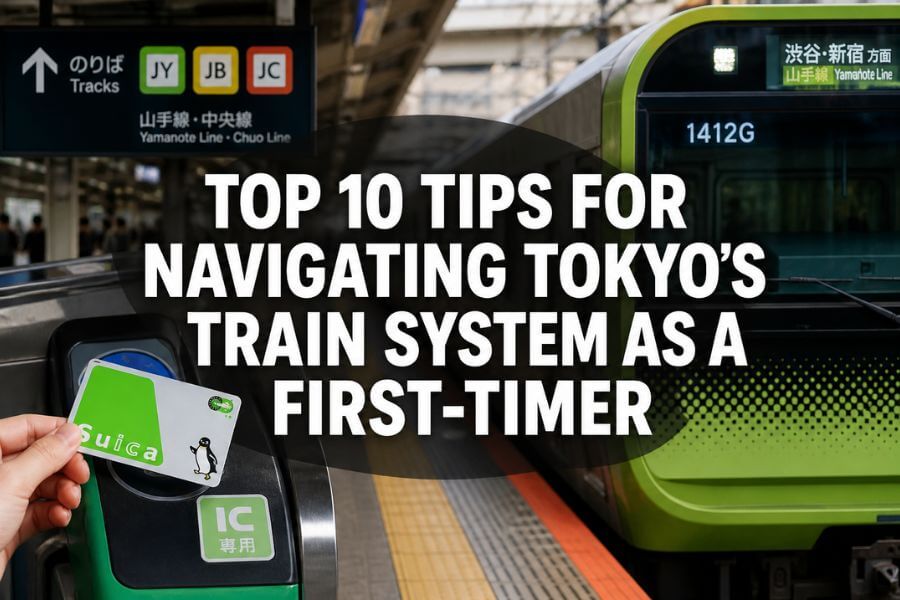
If you are visiting Tokyo for the first time, one of the biggest challenges you may face is figuring out the train system. At first glance, it can feel overwhelming. There are many lines, multiple train companies, different ticket types, and crowded stations that seem to go on forever.
But here is the good news. Once you understand a few key basics, Tokyo’s train system becomes one of the easiest and most efficient ways to travel in the world. It is fast, clean, safe, and incredibly reliable.
This guide is designed to help you navigate Tokyo’s trains with confidence. Whether you are heading to popular areas like Shibuya Crossing or exploring quieter neighborhoods, these tips will save you time, reduce stress, and make your trip smoother.
Let’s break it all down in a simple and easy way.
Quick Summary Table 📊
| Tip Number | Tip Title | Why It Matters | Difficulty Level |
|---|---|---|---|
| 1 | Get an IC Card | Makes travel fast and cashless | Easy |
| 2 | Learn the Main Train Lines | Helps you understand routes | Easy |
| 3 | Use Navigation Apps | Prevents confusion | Very Easy |
| 4 | Follow Signs and Colors | Makes transfers simple | Easy |
| 5 | Avoid Rush Hours | Reduces stress | Easy |
| 6 | Understand Train Types | Prevents mistakes | Medium |
| 7 | Plan Transfers in Advance | Saves time | Medium |
| 8 | Know Exit Numbers | Helps you find destinations faster | Easy |
| 9 | Keep Your Card Ready | Speeds up movement | Very Easy |
| 10 | Stay Calm and Patient | Keeps your experience smooth | Easy |
How We Ranked These Tips 🧠
To make sure this guide is useful for you as a first-time traveler, we focused on the following key factors:
- Ease of understanding for beginners
- Real impact on your travel experience
- Frequency of common mistakes made by tourists
- Time-saving benefits
- Stress reduction while navigating stations
- Practical usefulness in real situations
Each tip is designed to be simple, actionable, and helpful right away.
1. Get an IC Card Like Suica or Pasmo 💳
The first thing you should do when you arrive in Tokyo is get an IC card, such as a Suica Card or a Pasmo Card.
These cards are rechargeable and allow you to tap in and out of train stations without buying individual tickets each time. This saves you a lot of time and confusion.
You can also use these cards for:
- Buses
- Convenience stores
- Vending machines
- Some restaurants
For a first timer, this is one of the easiest ways to simplify your entire travel experience.
2. Learn the Main Train Lines 🚉
Tokyo has many train lines, but you do not need to learn all of them.
Start with the most important ones:
- JR Yamanote Line, which loops around major areas
- Tokyo Metro for underground travel
- Toei Subway for additional routes
The JR Yamanote Line is especially helpful because it connects major districts like Shinjuku, Shibuya, and Tokyo Station.
Once you understand this loop line, you will already feel much more confident.
3. Use Navigation Apps for Real-Time Directions 📱
Trying to figure everything out on your own is not necessary.
Apps like Google Maps or Japan Transit Planner will show you:
- Which train to take
- What platform to go to
- Transfer points
- Travel time
- Ticket cost
These apps are extremely accurate in Japan, so you can trust them.
Always check your route before entering the station. It will save you from getting lost.
4. Follow Signs and Line Colors 🎨
Tokyo stations are large, but they are very well organized.
Each train line has:
- A specific color
- A letter or number code
- Clear directional signs
For example, the Yamanote Line is green, and metro lines have letters like G, M, or H.
When you follow colors and symbols instead of just names, it becomes much easier to navigate, even if you do not understand Japanese.
5. Avoid Rush Hours If Possible ⏰
Rush hours in Tokyo can be intense.
The busiest times are:
- Morning around 7:30 to 9:30
- Evening around 5:30 to 7:30
During these times, trains can be extremely crowded, especially in central areas like Shinjuku.
If you are a first timer, try to travel outside these hours. You will have more space, more time to think, and a much more comfortable experience.
6. Understand Local, Rapid, and Express Trains 🚄
Not all trains stop at every station.
You will see different types, such as:
- Local trains that stop everywhere
- Rapid trains that skip some stations
- Express trains that stop at major stations only
If you get on the wrong type, you may miss your stop.
Always check the train type on the platform screen before boarding. This small habit can save you from major confusion.
7. Plan Your Transfers in Advance 🔄
Some routes require you to change trains.
Large stations like Shinjuku Station can be huge and busy.
Planning your transfers ahead of time helps you:
- Know where to go
- Avoid running around
- Reduce stress
Look at your route on your app and remember the line name and platform if possible.
8. Pay Attention to Exit Numbers 🚪
Many stations in Tokyo have multiple exits.
For example, a single station may have:
- Exit A1
- Exit B3
- Exit East or West
If you choose the wrong exit, you might end up far from your destination.
Check your destination’s nearest exit before leaving the station. This small detail can save you a lot of walking time.
9. Keep Your IC Card Ready at All Times 🎟️
When entering and exiting stations, you need to tap your IC card quickly.
To avoid slowing down:
- Keep your card in your hand or wallet
- Do not stop in front of the gate
- Move smoothly with the crowd
This helps you blend in and avoid holding up others behind you.
10. Stay Calm and Patient 😊
Even with preparation, you may still get confused at times.
That is completely normal.
If you get lost:
- Stop and check your app
- Look for station staff
- Follow signs carefully
People in Tokyo are generally helpful, and station staff are used to assisting tourists.
Staying calm will help you think clearly and solve problems quickly.
Conclusion 🌏
Navigating Tokyo’s train system may seem complicated at first, but it becomes much easier once you understand the basics.
With tools like IC cards, navigation apps, and clear signage, you can travel around Tokyo efficiently and confidently. Each tip in this guide is designed to help you avoid common mistakes and enjoy a smoother experience.
As you use the system more, you will notice how well it works. What once felt confusing will quickly become second nature.
By the end of your trip, you might even find yourself navigating like a local.
Frequently Asked Questions ❓
Is Tokyo’s train system difficult for tourists?
It can feel confusing at first because there are many lines and stations. However, with a little preparation and the help of apps, it becomes very manageable even for beginners.
Do I need to speak Japanese to use the trains?
No, you do not need to speak Japanese. Most signs have English translations, and station staff can often assist you using simple English.
Can I use one IC card for all trains?
Yes, cards like Suica and Pasmo work on most trains, subways, and buses in Tokyo. You can also use them for small purchases in stores.
What should I do if I take the wrong train?
Do not worry. Simply get off at the next station, check your route again, and take the correct train. It is a common mistake, especially for first-time visitors.
Are trains in Tokyo always on time?
Yes, Tokyo trains are known for being extremely punctual. It is best to arrive on time because trains often depart exactly as scheduled.