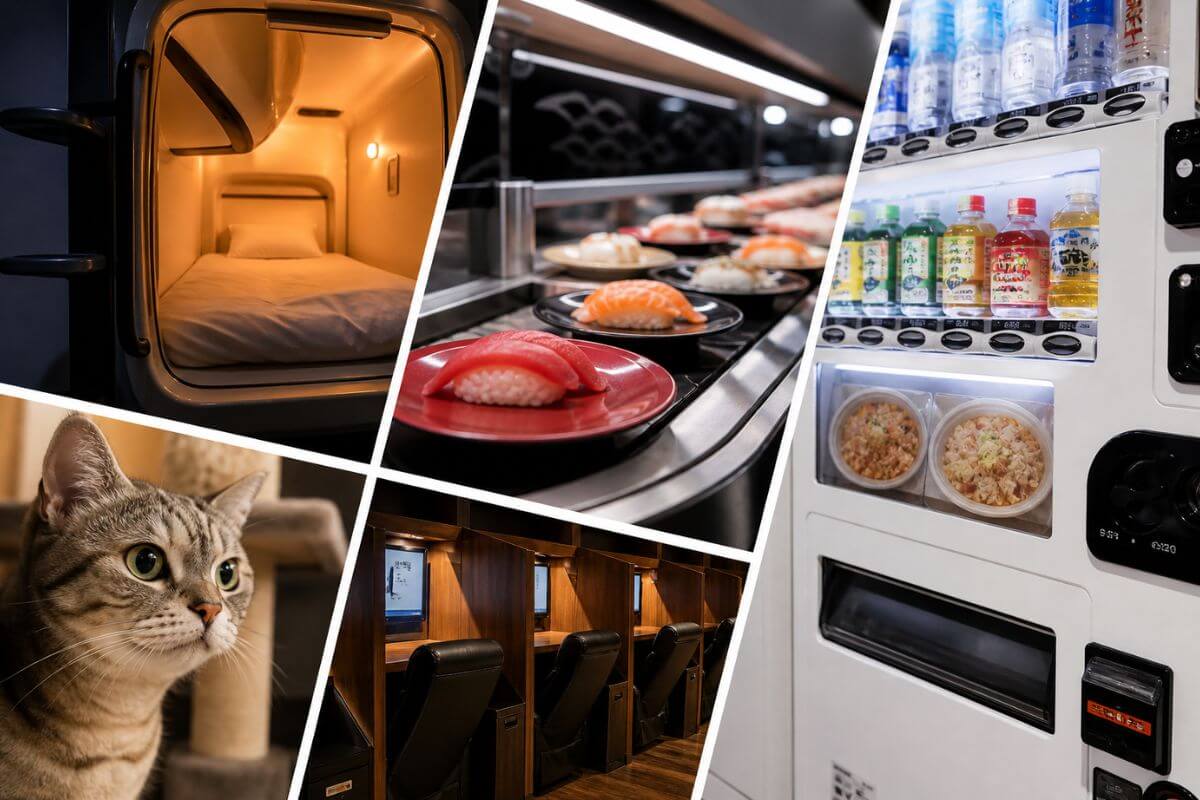
Japan is full of businesses that can make you stop and say, “Wait, this is a real thing?” From tiny capsule hotels to vending machines that sell hot meals, the country has built an entire culture around creative convenience, customer service, and unusual experiences. Many of these businesses grew from Japan’s crowded cities, fast-paced lifestyle, and strong attention to detail.
When you travel through Japan, you quickly notice that everyday services feel completely different from what you see in other countries. Some are practical. Some are strange. Some are surprisingly useful. But all of them show how Japan turns ordinary ideas into unforgettable experiences.
In this guide, you’ll discover the top only-in-Japan businesses that truly stand out and why people around the world are fascinated by them.
Quick Summary Table 🗾
| Rank | Business Type | What Makes It Unique | Best For |
|---|---|---|---|
| 1 | Capsule Hotels | Tiny sleeping pods in prime city areas | Budget travelers |
| 2 | Maid Cafes | Anime themed dining with performances | Pop culture fans |
| 3 | Cat and Animal Cafes | Relaxing cafes with animals | Stress relief |
| 4 | Conveyor Belt Sushi | Automated sushi delivery systems | Food lovers |
| 5 | Manga Kissa | Manga libraries mixed with internet cafes | Solo travelers |
| 6 | Rent-a-Friend Services | Temporary companions for events or support | Curious visitors |
| 7 | Vending Machine Businesses | Machines selling almost everything | Convenience seekers |
| 8 | Sleep Cafes | Businesses designed for naps and rest | Busy workers |
| 9 | Purikura Photo Booths | Decorated photo sticker experiences | Teen groups |
| 10 | Standing Bars | Fast, affordable standing-only dining | Nightlife lovers |
How We Ranked These Businesses 🧭
We looked at several important factors while choosing these uniquely Japanese businesses:
- How different the business feels compared to other countries
- Cultural importance inside Japan
- Popularity among locals and tourists
- Creativity and originality
- How memorable the experience is
- Accessibility for visitors
- Impact on modern Japanese lifestyle
- Entertainment value and practicality
1. Capsule Hotels 🛌
Capsule hotels may be the most famous only-in-Japan business idea. Instead of traditional hotel rooms, you sleep inside a compact pod that contains just enough space for one person to lie down comfortably.
At first, the idea sounds strange. But once you stay in one, you understand why they became popular. Japan’s major cities are expensive and crowded, especially in places like Tokyo and Osaka. Capsule hotels offer an affordable solution without sacrificing cleanliness or convenience.
Most capsule hotels include:
- Shared bathrooms
- Lockers for luggage
- Quiet sleeping floors
- Reading lounges
- Sauna or bath areas
- Charging stations and WiFi
Modern capsule hotels have become surprisingly stylish. Some even feel futuristic, with mood lighting, smart controls, and luxury amenities. Business workers often use them after missing the last train home, while tourists enjoy the novelty and lower prices.
Few countries have embraced tiny sleeping spaces the way Japan has.
2. Maid Cafes ☕
Walking into a maid cafe feels like entering another world. Staff members dress in cute maid costumes inspired by anime culture and treat customers like honored guests returning home.
The experience is intentionally playful and theatrical. Employees greet you with cheerful phrases, decorate food with ketchup art, and sometimes perform songs or games at your table.
These cafes became popular in Tokyo’s Akihabara district, which is famous for anime, gaming, and otaku culture. While they may sound unusual to outsiders, maid cafes are a major part of Japan’s entertainment scene.
Visitors often enjoy them because:
- The atmosphere is highly energetic
- The staff interactions are unique
- Food presentations are creative
- The experience feels completely different from normal cafes
Even if you are not an anime fan, visiting one can be a fun cultural experience that shows Japan’s love for themed entertainment.
3. Cat and Animal Cafes 🐈
Japan helped popularize the idea of animal cafes around the world, especially cat cafes. In busy cities where many apartments do not allow pets, these cafes give people a chance to relax with animals.
Today, Japan offers far more than cat cafes. You can find businesses built around:
- Owls
- Hedgehogs
- Rabbits
- Mini pigs
- Dogs
- Reptiles
The concept combines comfort, relaxation, and companionship. Customers buy drinks while spending time with friendly animals in carefully designed spaces.
These cafes became successful because many Japanese workers deal with long hours and stressful commutes. Spending time with animals can feel calming and therapeutic.
Some animal cafes are cozy and peaceful, while others are designed more like attractions. Either way, they remain one of the country’s most recognizable business trends.
4. Conveyor Belt Sushi Restaurants 🍣
Conveyor belt sushi completely changed casual dining in Japan. Instead of waiting for servers, plates of sushi move around the restaurant on conveyor belts, allowing customers to grab whatever looks good.
Many modern locations now use advanced technology, such as:
- Touchscreen ordering
- High-speed sushi delivery lanes
- Automated billing systems
- Robot servers
The system is fast, affordable, and surprisingly entertaining. Families especially love watching sushi glide through the restaurant.
Japan’s attention to efficiency makes these restaurants run smoothly even during busy hours. The experience feels both futuristic and practical at the same time.
Some restaurants even hold sushi races where your order zooms directly to your table in seconds.
5. Manga Kissa 📚
Manga kissa, short for manga kissaten, are internet cafes mixed with comic libraries and private relaxation booths.
These businesses became popular because they provide cheap overnight stays, entertainment, and quiet personal space all in one location.
Inside a manga kissa, you may find:
- Thousands of manga books
- Reclining chairs
- Private cubicles
- Showers
- Unlimited drinks
- Gaming computers
Some people use them to rest overnight after missing trains, while others spend hours reading comics or watching movies.
The atmosphere is usually quiet and cozy. For solo travelers, manga kissa can become both an affordable shelter and a fascinating cultural experience.
Few countries treat internet cafes as comfortable living spaces the way Japan does.
6. Rent-a-Friend Services 🤝
One of Japan’s most surprising business ideas is the rent-a-friend industry. These services allow people to hire temporary companions for social situations.
Clients may rent someone to:
- Attend weddings
- Practice conversations
- Pretend to be a partner
- Offer emotional support
- Join social outings
While it may sound unusual, these businesses reflect some real social challenges in modern Japan, including loneliness and social pressure.
The services are usually professional and carefully organized. Many customers simply want companionship without long-term commitment.
This type of business rarely exists openly in other countries, making it one of Japan’s most unique social industries.
7. Vending Machine Businesses 🥤
Japan’s vending machine culture is on another level. You can find machines almost everywhere, including quiet neighborhoods, mountain roads, train stations, and office buildings.
What makes them special is not just the quantity, but the variety of products available.
Japanese vending machines may sell:
- Hot meals
- Fresh eggs
- Umbrellas
- Ice cream
- Batteries
- Soup
- Ties and shirts
The machines are usually clean, safe, and well-maintained. Crime rates are low enough that businesses trust machines to operate almost anywhere.
Some vending machine businesses are entire restaurants with little or no human staff. Others focus on specialty products or novelty items that attract tourists.
Japan transformed vending machines from simple snack dispensers into an important part of daily life.
8. Sleep Cafes 😴
Japan’s work culture can be exhausting, so businesses built around rest and napping have become increasingly popular.
Sleep cafes allow customers to take short naps in peaceful environments during the day. Some offer private sleeping booths, while others provide massage chairs and quiet relaxation rooms.
Customers often receive:
- Blankets and pillows
- Soft lighting
- Noise reduction spaces
- Coffee after naps
- Timed wake-up services
These businesses are especially common near office districts where workers need quick breaks.
In many countries, sleeping during the day in public might feel awkward. In Japan, businesses found a way to turn rest into a practical service.
9. Purikura Photo Booths 📸
Purikura booths are highly advanced Japanese photo machines that let users decorate pictures with filters, stickers, doodles, and dramatic beauty effects.
The booths are extremely popular with teenagers and friend groups. Taking purikura photos often becomes a social activity rather than just photography.
The experience usually includes:
- Choosing backgrounds
- Taking multiple poses
- Editing photos on touchscreens
- Adding decorations and messages
- Printing sticker-sized photos
Japanese purikura technology became famous for making eyes larger and skin smoother long before beauty filters became common on social media apps.
These booths combine photography, gaming, and self-expression into one unforgettable experience.
10. Standing Bars 🍺
Standing bars, known as tachinomi bars in Japan, remove chairs completely so customers can eat and drink while standing.
The idea may sound uncomfortable at first, but it creates a casual and energetic atmosphere. Since businesses save space, prices are often much lower than those in regular restaurants.
Standing bars are popular because they allow:
- Quick meals after work
- Fast social interactions
- Affordable drinks
- Efficient customer turnover
Many office workers stop by for short visits before heading home. The atmosphere feels lively and informal, making conversations easier between strangers.
These bars perfectly reflect Japan’s efficient urban lifestyle while still encouraging social connection.
Conclusion 🌏
Japan has an incredible talent for turning everyday problems into creative business ideas. Whether it is sleeping in compact capsules, relaxing with animals, or ordering sushi from a moving conveyor belt, these businesses show how innovation and culture blend together in daily Japanese life.
What makes these businesses so memorable is not just their uniqueness. Many of them solve real needs in smart and surprisingly enjoyable ways. They reflect Japan’s focus on convenience, efficiency, entertainment, and customer experience all at once.
If you ever visit Japan, trying at least a few of these businesses will give you a much deeper understanding of the country beyond the usual tourist attractions.
Frequently Asked Questions ❓
Why does Japan have so many unusual businesses?
Japan’s dense cities, demanding work culture, and strong customer service traditions encourage businesses to become more creative. Companies often compete by offering unique experiences rather than just products.
Are these businesses expensive for tourists?
Many of them are actually affordable. Conveyor belt sushi, capsule hotels, manga cafes, and standing bars are often cheaper than traditional alternatives.
Do you need to speak Japanese to enjoy these places?
Not always. Many businesses in major tourist areas have English menus, signs, or touchscreen systems. Staff members are also used to helping visitors.
Are animal cafes in Japan ethical?
Some animal cafes focus strongly on animal welfare, while others receive criticism. It is a good idea to research businesses carefully and choose places that prioritize proper care and healthy environments.
Which only-in-Japan business is best for first-time visitors?
Conveyor belt sushi restaurants and capsule hotels are usually the easiest and most beginner-friendly experiences. They are fun, affordable, and widely available across Japan.