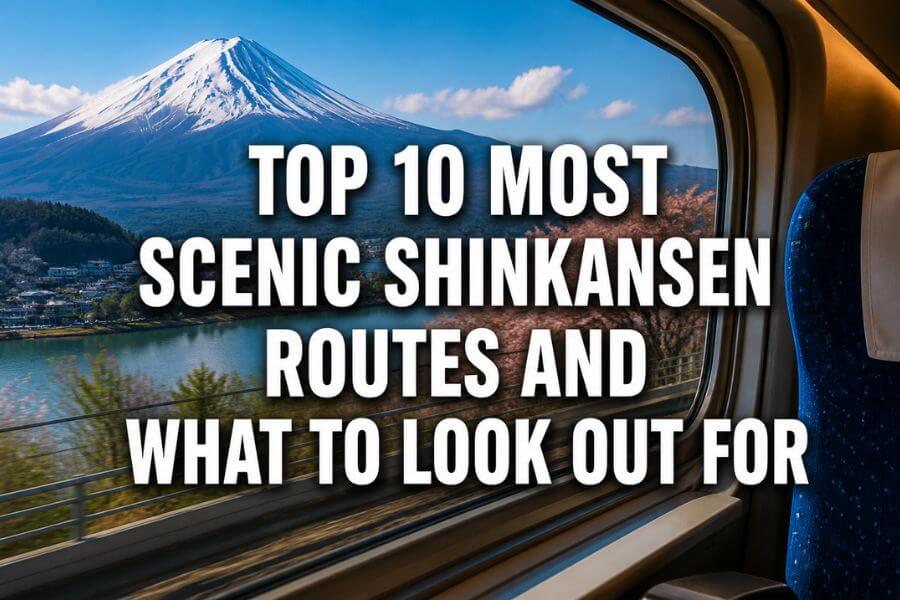
When you think about traveling in Japan, the Shinkansen is more than just a fast train. It is an experience. You are not only getting from one city to another, you are also passing through some of the most beautiful landscapes in the country. From snow-covered mountains to coastal views and famous landmarks, each route offers something unique.
If you plan your trip carefully, you can turn a simple train ride into one of the highlights of your journey. In this guide, you will discover the most scenic Shinkansen routes in Japan and exactly what you should look out for along the way. This will help you choose the best seat, travel at the right time, and enjoy views that many travelers miss.
Quick Summary Table 📊
| Rank | Route | Highlights | Best Side to Sit | Best Season |
|---|---|---|---|---|
| 1 | Tokyo to Shin-Osaka | Mount Fuji, countryside | Right side | Winter |
| 2 | Tokyo to Kanazawa | Mountains, tunnels, rivers | Left side | Autumn |
| 3 | Tokyo to Sendai | Coastal views, forests | Right side | Spring |
| 4 | Shin-Osaka to Hiroshima | Inland Sea glimpses | Left side | Spring |
| 5 | Tokyo to Niigata | Snow landscapes | Either side | Winter |
| 6 | Hakata to Kagoshima | Volcano views | Right side | Year-round |
| 7 | Tokyo to Nagano | Alps scenery | Left side | Autumn |
| 8 | Morioka to Shin-Aomori | Rural beauty, lakes | Right side | Summer |
| 9 | Shin-Hakodate to Sapporo | Northern wilderness | Either side | Winter |
| 10 | Osaka to Kyoto | Short but iconic | Either side | Spring |
How We Ranked These 🧭
To help you get the most out of your journey, these routes were selected based on a few important factors:
- Scenic variety such as mountains, oceans, rivers, and cities
- Iconic landmarks you can see from the train
- Seasonal beauty like cherry blossoms or snow
- Length of scenic sections during the ride
- Ease of viewing depending on seat position
- Overall travel experience and uniqueness
Each route offers something special, so your personal preference will also play a role in which one you enjoy the most.
1. Tokyo to Shin-Osaka (Tokaido Shinkansen) 🗻
This is the most famous Shinkansen route, and for good reason. As you travel between Tokyo and Osaka, you pass through a mix of urban landscapes and peaceful countryside.
The highlight is Mount Fuji. If you sit on the right side when traveling from Tokyo to Osaka, you have a good chance of seeing it clearly on a sunny day. The view is especially stunning in winter when the mountain is covered in snow.
You will also notice rice fields, small towns, and distant mountains along the way. The contrast between modern cities and traditional scenery makes this route unforgettable.
2. Tokyo to Kanazawa (Hokuriku Shinkansen) 🍁
This route feels more like a journey into nature. As you head toward Kanazawa, you pass through mountainous regions, deep valleys, and long tunnels.
During autumn, the mountains turn into a sea of red and orange leaves. It is one of the best times to travel this route. Rivers and small villages appear between tunnels, giving you quick but beautiful glimpses of rural Japan.
Sitting on the left side offers better views of the mountains for most of the journey.
3. Tokyo to Sendai (Tohoku Shinkansen) 🌸
This route takes you north into a quieter and less crowded part of Japan. The scenery includes forests, farmland, and occasional coastal views.
In spring, cherry blossoms can be seen in certain areas, adding a soft pink touch to the landscape. The route feels calm and peaceful compared to busier lines.
If you enjoy a mix of nature and open space, this is a great choice. The right side often offers better views.
4. Shin-Osaka to Hiroshima (Sanyo Shinkansen) 🌊
This route introduces you to western Japan and offers glimpses of the Seto Inland Sea. While much of the route includes tunnels, the sections that open up are truly rewarding.
You may spot islands, bridges, and coastal towns along the way. Spring is a great time to travel, as the weather is clear and the scenery is fresh.
Sitting on the left side increases your chances of catching sea views.
5. Tokyo to Niigata (Joetsu Shinkansen) ❄️
If you want to see snow, this is the route for you. During winter, the landscape transforms into a white wonderland.
You will pass through mountains and rural areas where snow piles up on rooftops and fields. The contrast between the warm train interior and the cold scenery outside makes the experience even more special.
Both sides of the train offer good views, so you can relax and enjoy the ride without worrying too much about seat selection.
6. Hakata to Kagoshima (Kyushu Shinkansen) 🌋
This route is one of the most unique because it includes views of active volcanic landscapes. As you travel through Kyushu, you may see Sakurajima volcano in the distance.
The scenery includes green hills, coastal areas, and small towns. It feels very different from the main island routes.
The right side usually gives you a better chance of spotting the volcano, especially on clear days.
7. Tokyo to Nagano (Hokuriku Shinkansen) 🏔️
This route takes you into the Japanese Alps, offering stunning mountain views. It is especially beautiful during autumn when the leaves change color.
You will pass through valleys, rivers, and forested areas. The scenery feels dramatic and refreshing compared to flatter routes.
The left side is generally better for mountain views.
8. Morioka to Shin-Aomori (Tohoku Shinkansen) 🌾
This lesser-known route offers a peaceful look at northern Japan. You will see farmland, rivers, and small towns that feel untouched by time.
In summer, the greenery is vibrant and full of life. The slower pace of the scenery makes it easy to relax and enjoy the ride.
The right side provides slightly better views overall.
9. Shin-Hakodate to Sapporo (Hokkaido Shinkansen Extension) 🐻
Although still developing, this route showcases the wild beauty of Hokkaido. Expect forests, open land, and a sense of space that is rare in Japan.
Winter transforms the landscape into a snowy paradise. It feels almost like traveling through another country.
Both sides offer great views, so you can focus on enjoying the journey.
10. Osaka to Kyoto (Tokaido Shinkansen) 🏯
This route is short but still worth mentioning. While it does not offer long scenic stretches, it connects two of Japan’s most famous cities.
You may catch glimpses of traditional buildings and urban scenery. It is a great introduction to the Shinkansen if you are short on time.
Because the trip is short, either side works fine.
Conclusion ✨
Traveling on the Shinkansen is more than just a fast way to get around Japan. It is a chance to see the country from a unique perspective. Each route offers its own mix of landscapes, seasons, and highlights.
By choosing the right route, sitting on the correct side, and traveling at the best time of year, you can turn your journey into a memorable experience. Whether you want to see Mount Fuji, snowy mountains, or coastal views, there is a Shinkansen route that fits your travel style.
Take your time, look out the window, and enjoy every moment of the ride.
Frequently Asked Questions ❓
What is the most scenic Shinkansen route overall?
The Tokyo to Shin-Osaka route is often considered the most scenic because it includes views of Mount Fuji and a variety of landscapes. It offers a balanced experience that many travelers enjoy.
Which seat should you choose for the best views?
It depends on the route. For example, the right side is best for Mount Fuji when traveling from Tokyo to Osaka. Always check the route in advance to choose the best side.
What time of day is best for scenic views?
Daytime is always best. Early morning or late afternoon can offer softer lighting, which makes the scenery even more beautiful.
Do all Shinkansen trains have large windows?
Yes, most Shinkansen trains have large windows designed for sightseeing. However, window cleanliness and seat position can affect your experience.
Is it worth choosing a specific route just for scenery?
Yes, especially if you enjoy landscapes and photography. Scenic routes can turn travel time into one of the best parts of your trip.