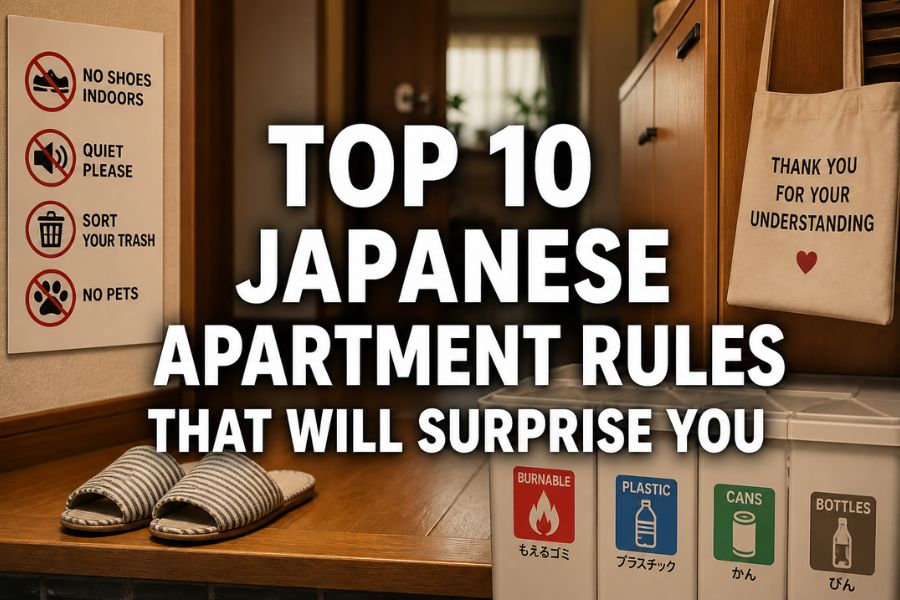
If you are planning to live in Japan, one thing you will quickly notice is that apartment living comes with a unique set of rules. These rules may feel strict at first, especially if you are used to more relaxed housing norms. However, they are deeply rooted in respect, harmony, and shared living.
Japanese apartments are often smaller and closer together than what you might be used to. Because of this, maintaining peace and minimizing inconvenience for neighbors is a top priority. What may seem unusual at first will start to make sense as you understand the culture behind it.
In this guide, you will discover the top 10 Japanese apartment rules that often surprise foreigners. Knowing these in advance can help you avoid trouble and settle into your new home more smoothly.
Quick Summary Table 📊
| No. | Rule | Why It Exists | What Surprises People |
|---|---|---|---|
| 1 | Strict noise rules | Thin walls, close living | Even walking loudly matters |
| 2 | No shoes indoors | Cleanliness culture | Entryway shoe removal is mandatory |
| 3 | Trash separation rules | Recycling system | Very detailed sorting |
| 4 | Limited guest stays | Safety and privacy | Overnight guests can be restricted |
| 5 | No pets allowed | Noise and hygiene | Even small pets may be banned |
| 6 | Balcony usage rules | Safety and uniformity | No clutter or storage allowed |
| 7 | Quiet hours are serious | Respect for neighbors | Silence expected at night |
| 8 | No DIY modifications | Property preservation | Even small changes need permission |
| 9 | Laundry timing restrictions | Noise control | Late night washing is discouraged |
| 10 | Community etiquette rules | Harmony culture | Greetings and behavior matter |
How We Ranked These 🧭
We selected these apartment rules based on how surprising they are for foreigners and how important they are for daily living.
Key factors include:
- Cultural differences compared to Western countries
- Frequency of the rule across Japan
- Potential impact if you break the rule
- Level of strict enforcement by landlords
- How much adjustment is required from your usual habits
1. Strict Noise Rules Even During the Day 🔇
One of the biggest surprises you will face is how seriously noise is taken in Japanese apartments. It is not just about loud music or parties. Even normal activities like walking, closing doors, or talking loudly can be considered disruptive.
Apartments in Japan often have thin walls and floors. This means your neighbors can hear much more than you think. Because of this, residents are expected to keep noise levels low at all times.
You may need to:
- Walk softly, especially late at night
- Avoid vacuuming early in the morning or late at night
- Use headphones instead of speakers
If you ignore this rule, neighbors may complain to the landlord quickly. In some cases, repeated complaints can lead to warnings or even eviction.
2. No Shoes Indoors Is Non Negotiable 👟
Taking off your shoes before entering your apartment is not just a suggestion. It is a strict rule that reflects Japan’s strong focus on cleanliness.
Every apartment has a small entry area called a genkan, where you remove your shoes. You then step up into the living space in socks or slippers.
This rule exists because:
- Outdoor dirt should not enter living areas
- Floors are often used for sitting or sleeping
- Cleanliness is closely tied to comfort and respect
If you forget this rule, it may be seen as disrespectful. Even guests are expected to follow it without exception.
3. Trash Separation Is Extremely Detailed ♻️
Japan has one of the most organized waste systems in the world, and you are expected to follow it carefully.
Trash is divided into categories such as:
- Burnable waste
- Non-burnable waste
- Plastic
- Glass
- Cans
- Paper
Each category has specific collection days. You must also use designated bags in many areas.
What surprises many people is how strict this system is. If you sort your trash incorrectly or put it out on the wrong day, it may not be collected. Sometimes, it can even be returned to your door with a notice.
4. Overnight Guests May Be Restricted 🛏️
In many Japanese apartments, especially smaller ones, there are rules about guests. Some contracts limit how often guests can stay overnight.
This is done to:
- Maintain security
- Avoid noise complaints
- Prevent overcrowding
If you plan to have someone stay over frequently, you may need to inform your landlord or even get permission.
For foreigners, this can feel unusual, but it is quite common in Japan.
5. Pets Are Often Not Allowed 🐾
Many apartments in Japan have a strict no-pet policy. Even small animals like hamsters or birds can be restricted.
This rule exists because:
- Pets can create noise
- Some residents may have allergies
- Buildings are not always designed for animals
There are pet-friendly apartments available, but they are usually more expensive and may require extra deposits.
If you plan to bring a pet, you need to check this rule carefully before signing a lease.
6. Balcony Usage Is Surprisingly Limited 🌇
You might think of a balcony as a place to relax or store items, but in Japan, it comes with strict rules.
Balconies are often used for:
- Drying clothes
- Emergency evacuation routes
Because of this, you may not be allowed to:
- Store large items
- Install furniture
- Hang decorative objects outside
The goal is to keep the building looking uniform and ensure safety at all times.
7. Quiet Hours Are Taken Very Seriously 🌙
While many countries have quiet hours, Japan takes this concept to another level.
Typically, quiet hours start around 10 PM. During this time, you are expected to:
- Keep conversations low
- Avoid using noisy appliances
- Move around quietly
Even activities like showering late at night can sometimes be discouraged in older buildings.
This rule reflects the strong cultural value of not disturbing others, especially when they are resting.
8. You Cannot Make Changes to the Apartment 🔧
In many Japanese apartments, you are not allowed to make changes without permission.
This includes:
- Drilling holes in walls
- Painting
- Installing shelves or fixtures
Apartments are expected to be returned in their original condition when you move out. If you damage anything, you may need to pay for repairs.
This rule can feel restrictive, especially if you like to personalize your space. However, it helps maintain the building’s condition for future tenants.
9. Laundry Timing Can Be Restricted 🧺
Washing clothes late at night may seem harmless, but in Japan, it can be considered noisy.
Washing machines can create vibrations that travel through walls and floors. Because of this, many apartments recommend doing laundry during the day.
Some buildings even have specific guidelines, such as:
- Avoid washing after 9 PM
- Do not use dryers late at night
This is another example of how daily habits are adjusted to respect neighbors.
10. Community Etiquette Matters More Than You Think 🤝
Living in a Japanese apartment is not just about following written rules. Unspoken social etiquette also plays a big role.
You may be expected to:
- Greet your neighbors politely
- Keep shared spaces clean
- Avoid blocking hallways or entrances
Even small actions, like holding the door or keeping noise low in common areas, are appreciated.
This focus on community harmony is one of the most important aspects of life in Japan.
Conclusion 🎯
Japanese apartment rules may seem strict at first, but they are designed to create a peaceful and respectful living environment. Once you understand the reasons behind them, they become much easier to follow.
If you plan to live in Japan, preparing yourself for these rules can save you from misunderstandings and stress. Instead of seeing them as limitations, you can view them as part of a system that values harmony and consideration for others.
By adapting to these expectations, you will not only avoid problems but also gain a deeper appreciation for Japanese culture and daily life.
Frequently Asked Questions ❓
Do all Japanese apartments have the same rules?
Not exactly. While many rules are common across the country, each building and landlord may have their own specific guidelines. It is important to read your lease carefully.
What happens if you break apartment rules in Japan?
If you break rules, you may receive a warning from the landlord or management company. Repeated violations can lead to fines or even eviction in serious cases.
Are these rules stricter in cities like Tokyo?
Yes, rules tend to be stricter in major cities where apartments are smaller and closer together. Noise and space management become more important in dense urban areas.
Can foreigners rent apartments easily in Japan?
It can be challenging because some landlords prefer Japanese tenants. However, many agencies specialize in helping foreigners find suitable housing.
Is it possible to find more flexible apartments in Japan?
Yes, newer or foreign-friendly apartments may have more relaxed rules. However, they are often more expensive compared to traditional options.