Japan is famous for its politeness, cleanliness, and respect for others. While Japanese people are generally understanding toward visitors, following local customs can help you avoid awkward situations and create positive interactions during your trip.
Many travelers accidentally break etiquette rules because they are different from what they are used to at home. The good news is that most mistakes are easy to avoid once you know what to look for. Whether you are exploring Tokyo, Kyoto, Osaka, or smaller towns, these etiquette tips will help you travel with confidence and respect.
Quick Summary Table 🧳
| Rank | Etiquette Mistake | Why It Matters |
|---|---|---|
| 1 | Talking loudly on public transportation | Disturbs the peaceful atmosphere |
| 2 | Eating while walking in crowded areas | Considered messy and inconsiderate |
| 3 | Wearing shoes indoors | Seen as unhygienic |
| 4 | Ignoring proper queue etiquette | Disrupts order and fairness |
| 5 | Using your phone loudly in public | Can disturb others nearby |
| 6 | Mishandling chopsticks | Some actions have negative meanings |
| 7 | Taking photos where prohibited | Invades privacy and sacred spaces |
| 8 | Being overly loud in public places | Draws unwanted attention |
| 9 | Not following onsen rules | Can affect other guests’ comfort |
| 10 | Littering or leaving trash behind | Cleanliness is highly valued |
How We Ranked These Mistakes 📋
We ranked these etiquette mistakes based on the following factors:
- How commonly tourists make the mistake
- How noticeable the behavior is to locals
- The potential to inconvenience others
- The cultural significance behind the rule
- The likelihood of causing embarrassment during your trip
- The impact on your overall travel experience
- How easy the mistake is to avoid once you know the custom
1. Talking Loudly on Public Transportation 🚆
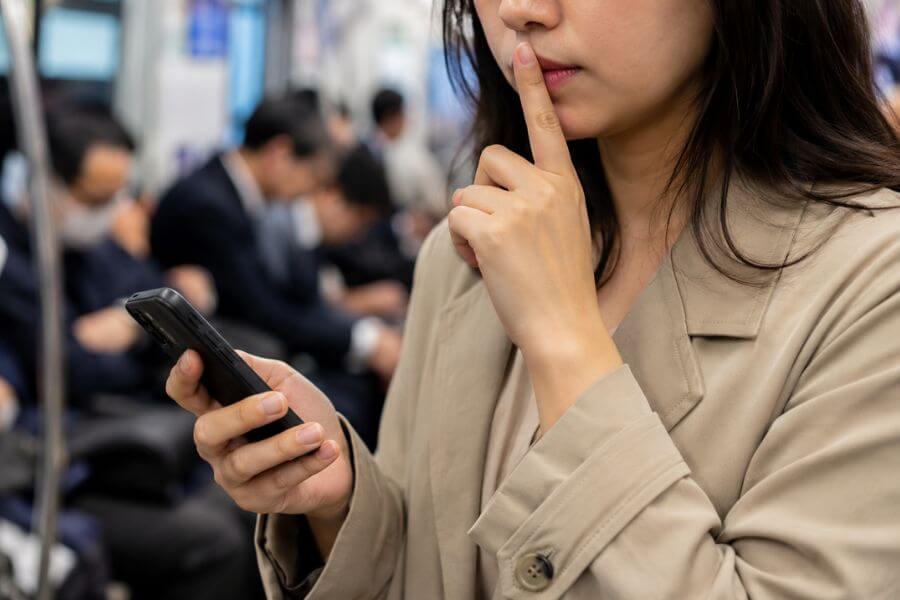
One of the most common mistakes tourists make in Japan is speaking loudly on trains, subways, and buses. Public transportation is generally very quiet. Many passengers use the time to rest, read, work, or simply enjoy a peaceful ride.
You may notice entire train cars where people barely speak above a whisper. Loud conversations, phone calls, and excessive laughter can stand out immediately.
To avoid this mistake:
- Keep conversations quiet
- Put your phone on silent mode
- Avoid making phone calls on trains
- Use headphones at a low volume
Following this simple rule helps you blend in and shows respect for fellow passengers.
2. Eating While Walking in Crowded Areas 🍡
Many visitors are surprised to learn that eating while walking is not always common in Japan. Although you may see exceptions during festivals or in tourist-heavy districts, eating while strolling through busy streets is often discouraged.
The concern is not the act of eating itself. It is more about cleanliness, avoiding spills, and respecting shared spaces.
Instead:
- Eat near the shop where you purchased the food
- Use designated eating areas
- Dispose of packaging properly
- Finish your food before continuing your walk
This small habit demonstrates consideration for the people around you.
3. Wearing Shoes Indoors 👟
Removing shoes before entering certain buildings is an important part of Japanese culture. This custom helps keep indoor spaces clean.
You may need to remove your shoes when entering:
- Traditional homes
- Ryokan inns
- Some restaurants
- Temples
- Schools
- Certain historical buildings
Look for shoe racks near entrances or signs indicating that shoes should be removed.
Many locations provide indoor slippers. If slippers are available, use them as instructed. Forgetting to remove your shoes can be one of the quickest ways to commit a cultural faux pas.
4. Ignoring Proper Queue Etiquette 🚶
Japan is known for orderly lines. Whether you are waiting for a train, elevator, restaurant, or bus, people usually form organized queues and patiently wait their turn.
Cutting in line is considered extremely rude.
Even when stations are crowded, people typically stand in marked areas and board in an orderly fashion.
To avoid problems:
- Join the end of the line
- Follow floor markings
- Wait for passengers to exit before entering
- Respect personal space
Good queue etiquette helps public spaces operate smoothly.
5. Using Your Phone Loudly in Public 📱
Many travelers assume that using a phone in public is acceptable everywhere. While using your phone is fine, being loud while doing so can be disruptive.
Phone conversations on trains are especially discouraged. Many train operators even display reminders asking passengers to avoid calls.
Instead:
- Text when possible
- Move to a less crowded area for calls
- Keep speakerphone turned off
- Use headphones responsibly
Being mindful of noise levels is highly appreciated.
6. Mishandling Chopsticks 🥢
Using chopsticks incorrectly can unintentionally send the wrong message.
Some actions carry cultural meanings that visitors may not know about.
Avoid:
- Sticking chopsticks upright into rice
- Passing food from chopstick to chopstick
- Pointing at people with chopsticks
- Rubbing disposable chopsticks together aggressively
The reason some of these actions are discouraged is that they resemble funeral traditions or appear disrespectful.
You do not need perfect chopstick skills. Simply making an effort and avoiding these common mistakes is enough.
7. Taking Photos Where They Are Not Allowed 📸
Japan offers incredible photo opportunities, but not every location permits photography.
Some temples, shrines, museums, and private properties prohibit photos. Certain neighborhoods also discourage photography because of privacy concerns.
Before taking pictures:
- Look for posted signs
- Respect staff instructions
- Avoid photographing strangers without permission
- Turn off flash when requested
Remember that respecting privacy is often more important than capturing the perfect photo.
8. Being Overly Loud in Public Places 🔊
In many parts of Japan, people tend to keep their voices relatively low in public settings. This does not mean you need to whisper everywhere, but excessive volume can attract attention.
Tourists sometimes become excited while sightseeing, shopping, or dining and forget how loud they are being.
Situations where you should be especially mindful include:
- Hotel hallways
- Restaurants
- Shopping centers
- Train stations
- Residential neighborhoods
Maintaining a moderate volume helps create a pleasant environment for everyone.
9. Not Following Onsen Rules ♨️
Visiting a traditional hot spring, known as an onsen, is a memorable experience. However, onsens have specific etiquette rules.
Common mistakes include:
- Entering the bath before washing
- Bringing towels into the water
- Swimming in the bath
- Making excessive noise
- Wearing swimsuits when they are not permitted
Before entering an onsen:
- Wash thoroughly at the shower station
- Rinse off all soap
- Enter the bath slowly
- Keep towels out of the water
Following these customs helps everyone enjoy a relaxing experience.
10. Littering or Leaving Trash Behind 🗑️
Japan is famous for its cleanliness. Surprisingly, public trash cans can be difficult to find in some areas.
Because of this, many locals carry their trash until they find an appropriate disposal location.
Tourists sometimes leave wrappers, bottles, or food containers behind because they cannot locate a trash bin.
A better approach is to:
- Carry a small bag for trash
- Sort recyclables when possible
- Dispose of waste properly
- Leave public spaces as clean as you found them
Respect for shared spaces is one of the foundations of Japanese society.
Conclusion 🌸
Japan’s etiquette rules may seem unfamiliar at first, but most are rooted in simple values such as respect, cleanliness, patience, and consideration for others. You do not need to be perfect to have a great experience. Japanese people generally appreciate visitors who make a genuine effort to understand local customs.
By avoiding these common mistakes, you will feel more confident, enjoy smoother interactions, and gain a deeper appreciation for Japanese culture. A little awareness goes a long way, and your trip will likely be more enjoyable because of it.
Frequently Asked Questions ❓
Will Japanese people be upset if I accidentally break an etiquette rule?
Usually not. Most locals understand that visitors may not know every custom. If you make a mistake, simply apologize politely and correct your behavior.
Is bowing required when visiting Japan?
Bowing is appreciated but not mandatory for tourists. A small nod of respect is perfectly acceptable in most situations.
Can I wear casual clothes when visiting temples and shrines?
Yes. Casual clothing is generally acceptable, but modest and respectful attire is recommended, especially at important religious sites.
Are etiquette expectations stricter in smaller towns than in Tokyo?
In some cases, yes. Smaller communities may place greater emphasis on traditional customs and local manners than large international cities.
What is the best way to learn etiquette during my trip?
Observe what locals are doing around you. Paying attention to signs, listening to staff instructions, and following local behavior are often the easiest ways to learn proper etiquette quickly.