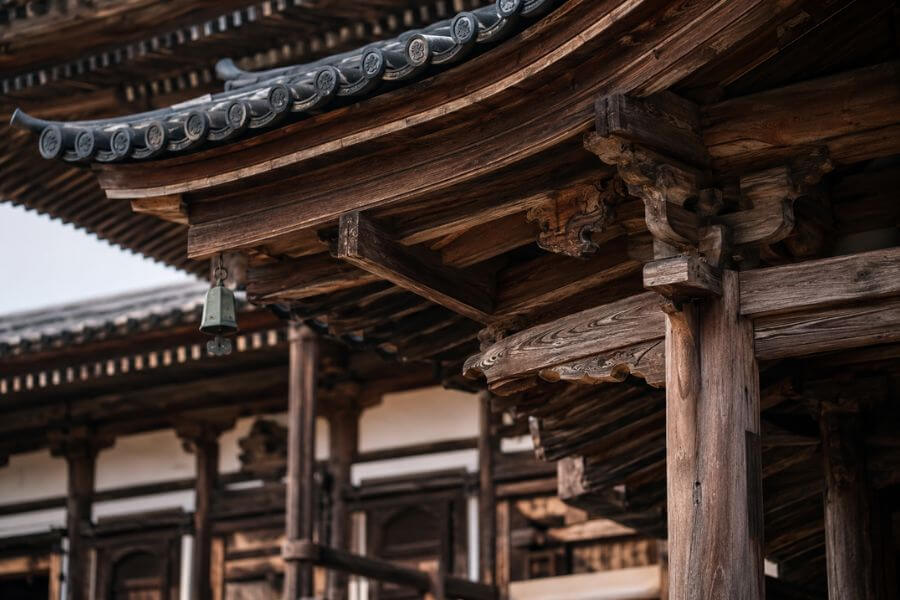
Japan is home to some of the oldest wooden buildings on Earth, and many of them are still standing after more than a thousand years. That alone feels almost impossible when you think about earthquakes, fires, typhoons, wars, and centuries of changing rulers. Yet these buildings survived through careful craftsmanship, constant repairs, and deep cultural respect.
When you visit these places, you are not just looking at old wood and ancient roofs. You are stepping into stories that began long before modern cities existed. You can see how early Japanese builders worked without modern tools, how Buddhism shaped architecture, and how communities protected these treasures across generations.
In this guide, you will discover 10 of the oldest surviving wooden buildings in Japan and learn the fascinating stories behind them. Some are famous landmarks, while others are quieter places that many travelers overlook. Together, they offer a rare look into Japan’s distant past.
Quick Summary Table 📜
| Building | Location | Approximate Age | Why It Matters |
|---|---|---|---|
| Horyu-ji Temple | Nara | Early 7th century | Widely considered the world’s oldest surviving wooden structure |
| Five Story Pagoda at Horyu-ji | Nara | 7th century | One of the oldest wooden pagodas on Earth |
| Kondo Hall at Horyu-ji | Nara | 7th century | Famous for ancient Buddhist art and architecture |
| Toshodai-ji Kondo | Nara | 8th century | Strong Chinese Tang Dynasty influence |
| Yakushi-ji East Pagoda | Nara | 8th century | Only original surviving structure at Yakushi-ji |
| Daigo-ji Five Story Pagoda | Kyoto | 10th century | Kyoto’s oldest surviving wooden building |
| Byodo-in Phoenix Hall | Uji | 11th century | One of Japan’s most beautiful temple halls |
| Chuson-ji Konjikido | Iwate | 12th century | Golden hall preserving northern samurai history |
| Engyo-ji Temple Buildings | Hyogo | Medieval period | Mountain temple complex linked to warrior monks |
| Sanjusangen-do | Kyoto | 13th century | Famous for its 1,001 Buddhist statues |
How We Ranked These Buildings 🪵
We used several important factors when choosing and ranking these historic wooden structures:
- Age and historical importance
- How much of the original structure still survives
- Architectural uniqueness
- Cultural and religious significance
- Influence on later Japanese architecture
- Stories and legends connected to the building
- Visitor experience and preservation quality
- Recognition as national treasures or UNESCO sites
1. Horyu-ji Temple, Nara 🌸
Horyu-ji is often called the oldest surviving wooden building complex in the world, and that title alone makes it extraordinary. Located in Nara Prefecture, the temple dates back to the early 600s during the Asuka period. Prince Shotoku, one of Japan’s most important historical figures, is strongly connected to its foundation and helped spread Buddhism across Japan.
Walking through Horyu-ji feels different from visiting newer temples. The wood looks aged but alive, with deep tones shaped by centuries of weather. The structures are surprisingly simple compared to later Japanese temples, yet that simplicity is what makes them powerful.
One of the most fascinating stories about Horyu-ji is that the original complex likely burned down in the 7th century. The surviving buildings were rebuilt shortly afterward, meaning they are still over 1,300 years old. Imagine how many generations have stood in the same courtyard you are standing in today.
The temple’s builders used advanced wooden joinery techniques without nails, helping the buildings survive earthquakes for centuries. Even modern architects continue studying the engineering behind Horyu-ji.
2. Five Story Pagoda at Horyu-ji ⛩️
Inside the Horyu-ji complex stands one of the oldest wooden pagodas in the world. The five-story pagoda rises gracefully into the sky while maintaining incredible balance and stability.
The pagoda was designed not just as a religious symbol but also as a structure capable of surviving earthquakes. At the center is a long wooden pillar called the shinbashira, which acts almost like a shock absorber during seismic activity. This ancient engineering idea still impresses modern experts.
Inside the pagoda are clay sculptures that tell stories from the life of Buddha. Many visitors focus on the outside appearance, but the interior artwork is equally important because it preserves some of Japan’s oldest Buddhist imagery.
The pagoda has become a symbol of endurance. Through wars, natural disasters, and centuries of political change, it remains standing as a reminder of Japan’s early spiritual and architectural history.
3. Kondo Hall at Horyu-ji 🔔
The Kondo, or Golden Hall, is another masterpiece within Horyu-ji. It serves as the temple’s main worship hall and contains priceless Buddhist statues and paintings.
The structure combines Japanese and Chinese architectural influences, showing how cultural exchange shaped early Japan. The roof curves gently upward, and the wooden beams create a sense of warmth rather than heaviness.
One of the hall’s greatest treasures is the Shaka Trinity statue, which is linked to Prince Shotoku. According to tradition, the artwork was created to honor loved ones lost to illness and political struggles.
The Kondo also survived centuries of danger because monks and local communities treated it with deep respect. Fires destroyed countless wooden buildings throughout Japanese history, yet this hall survived through careful maintenance and restoration.
When you stand inside, you are surrounded by materials shaped by craftsmen who lived more than a millennium ago. Few places in the world offer that experience.
4. Toshodai-ji Kondo, Nara 🕊️
Toshodai-ji was founded by the Chinese monk Ganjin, who traveled to Japan after multiple failed attempts and even lost his eyesight during the journey. His determination became legendary.
The temple’s Kondo hall is one of the best surviving examples of Nara period architecture. Compared to later Japanese buildings, it feels more grounded and symmetrical, reflecting a strong influence from China’s Tang Dynasty.
The story behind Ganjin gives the temple emotional depth. Despite blindness and hardship, he continued his mission to bring Buddhist teachings and proper monastic practices to Japan. His arrival changed Japanese religious history forever.
The wooden hall itself reflects discipline and balance. Its wide roof, strong columns, and open spaces create a calm atmosphere that still feels timeless.
Visitors often describe Toshodai-ji as quieter than more famous temples in Kyoto or central Nara, which makes the experience even more memorable.
5. Yakushi-ji East Pagoda, Nara 🌅
The East Pagoda of Yakushi-ji is the only original structure that survived from the temple’s ancient complex. Dating back to the 8th century, it is widely admired for its elegant proportions.
At first glance, the pagoda appears to have six stories, but it actually has three main levels with decorative roofs placed between them. This clever design creates a lighter and more graceful appearance.
The pagoda survived while many surrounding buildings were destroyed by fires over the centuries. Because of that, it became a symbol of resilience and continuity.
Japanese poets and writers have praised the pagoda for generations. Its silhouette during sunrise or sunset became especially famous in traditional art and literature.
Unlike some massive temple buildings, the East Pagoda feels refined rather than overwhelming. Its beauty comes from balance and detail instead of size.
6. Daigo-ji Five Story Pagoda, Kyoto 🍁
Kyoto is filled with historic temples, but the five-story pagoda at Daigo-ji is the city’s oldest surviving wooden building. It dates back to the 10th century and has survived earthquakes, civil wars, and major political shifts.
Daigo-ji became closely connected to powerful aristocrats and samurai leaders. One of its most famous moments came when Toyotomi Hideyoshi hosted extravagant cherry blossom viewing parties there during the late 1500s.
The pagoda itself contains rare Buddhist paintings hidden inside, many of which are not regularly shown to the public. These artworks provide insight into religious life during medieval Japan.
Surrounded by forests and seasonal colors, the pagoda becomes especially stunning during autumn. The combination of ancient wood and red maple leaves creates one of Kyoto’s most unforgettable views.
7. Byodo-in Phoenix Hall, Uji 🦚
Byodo-in’s Phoenix Hall is one of Japan’s most recognizable historic buildings and even appears on the 10 yen coin. Built in the 11th century, the hall was designed to represent the Buddhist paradise.
The building stretches gracefully over a reflective pond, creating a dreamlike atmosphere. Its wings extend outward like a bird in flight, which inspired the name, Phoenix Hall.
Originally, Byodo-in belonged to a powerful noble family before becoming a temple. During the Heian period, aristocrats believed the world was entering a dark age, so they built places like this to recreate visions of paradise on Earth.
Inside sits a magnificent statue of Amida Buddha created by the sculptor Jocho, whose artistic style influenced Japanese Buddhist art for generations.
Even today, Byodo-in feels peaceful and elegant rather than heavy or ancient. That timeless beauty is one reason it remains so beloved.
8. Chuson-ji Konjikido, Iwate ✨
Hidden in northern Japan, Chuson-ji’s Konjikido, or Golden Hall, looks completely different from many older wooden buildings. Covered in gold leaf and intricate decoration, it reflects the wealth and ambition of the northern Fujiwara clan during the 12th century.
The hall was built as a memorial space and houses the remains of powerful leaders. At a time when Kyoto dominated politics and culture, the northern Fujiwara family wanted to prove their region could rival the capital in sophistication and power.
Despite wars and political collapse, the Konjikido survived because protective coverings were built around it over the centuries.
The golden interior creates an unforgettable contrast against the surrounding forests and mountains. It feels almost hidden from the modern world.
Many travelers are surprised to discover such an important treasure outside Japan’s more famous tourist routes.
9. Engyo-ji Temple Buildings, Hyogo 🥾
Located on Mount Shosha near Himeji, Engyo-ji is a temple complex with several surviving medieval wooden structures. The mountain setting gives the site a mysterious atmosphere that feels far removed from busy modern cities.
The temple became associated with warrior monks and spiritual training. Over the centuries, monks, samurai, and pilgrims climbed the mountain seeking wisdom and discipline.
Several buildings within the complex have survived for centuries thanks to the isolated location and careful preservation efforts. The wooden halls blend naturally into the forest environment, making the temple feel almost hidden among the trees.
Modern audiences may recognize Engyo-ji from movies, including scenes filmed there for historical epics.
The silence of the mountain is part of what makes the experience powerful. You can hear the wind moving through the ancient wood that has stood there for generations.
10. Sanjusangen-do, Kyoto 🎎
Sanjusangen-do is famous for its astonishing line of 1,001 statues of Kannon, the Buddhist goddess of mercy. The current wooden hall dates back to the 13th century after the original structure was destroyed by fire.
The building itself is incredibly long, stretching over 390 feet. Its name actually refers to the thirty-three spaces between the supporting columns.
Walking through the hall is unforgettable because the rows of statues seem endless. Each figure has slight differences, creating the feeling that every statue has its own personality.
The hall also became famous for traditional archery contests held along its length during the Edo period. Archers attempted impossible shots across the entire building, turning the temple into both a spiritual and cultural landmark.
Even with its enormous size, Sanjusangen-do still feels deeply peaceful. The scent of old wood and the quiet atmosphere create a strong connection to Japan’s medieval past.
Conclusion 🌏
Japan’s oldest wooden buildings are more than tourist attractions. They are living pieces of history that survived against incredible odds. Fires, earthquakes, wars, and time itself could have erased them long ago, yet they continue standing because generations of people protected them.
When you visit these places, you are seeing architecture created by craftsmen who lived over a thousand years ago. You are also experiencing stories of monks, nobles, warriors, artists, and communities who shaped Japanese culture across centuries.
Some buildings impress you with size, while others move you through silence and simplicity. Together, they reveal why Japan’s wooden architecture remains admired around the world.
If you ever travel through Japan, taking time to visit even one of these places can completely change how you understand the country’s history.
Frequently Asked Questions ❓
Why are so many ancient Japanese buildings made from wood?
Japan traditionally used wood because it was widely available, flexible during earthquakes, and easier to repair than stone. Skilled carpenters developed advanced joinery techniques that allowed buildings to survive for centuries.
How do these wooden buildings survive earthquakes?
Many ancient Japanese structures use flexible wooden frames and central support systems that absorb movement during earthquakes. Their engineering techniques were far ahead of their time.
Are these buildings original or rebuilt?
Some structures are mostly original, while others have undergone careful repairs and partial restorations over centuries. In Japan, preserving traditional craftsmanship is considered just as important as preserving original materials.
Which old wooden building in Japan is the most famous?
Horyu-ji is generally considered the most famous because it contains some of the oldest surviving wooden structures in the world.
Can you go inside all of these buildings?
Not always. Some interiors are open to visitors, while others restrict access to protect fragile artwork, statues, and ancient materials. Seasonal openings are sometimes available for special exhibitions.