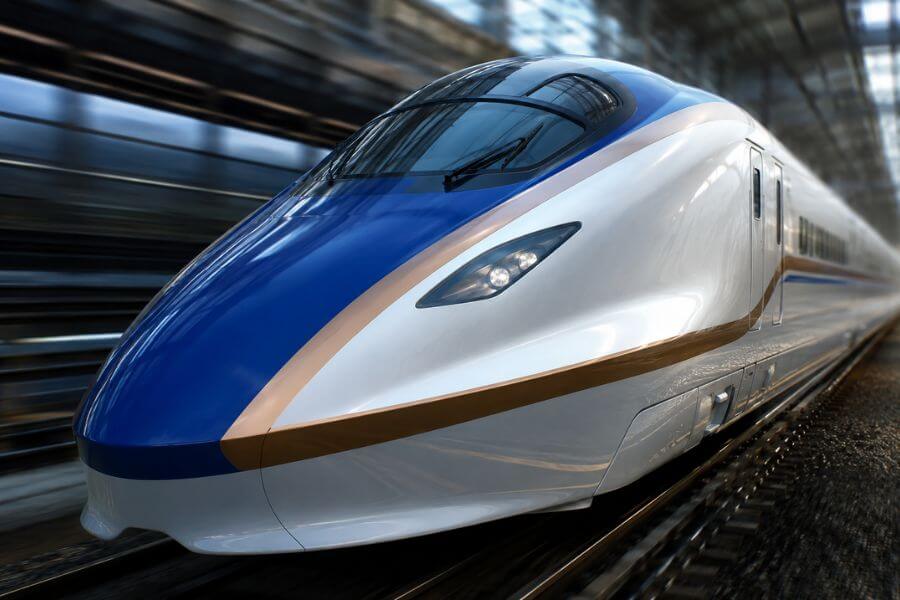
When you think about Japan, one of the first things that probably comes to mind is the Shinkansen, better known around the world as the bullet train. These sleek trains have become a symbol of Japanese innovation, speed, and reliability. Millions of people ride them every year, whether they are commuting between major cities or exploring the country as tourists.
But there is much more to the Shinkansen than just traveling fast. Behind the famous trains are fascinating stories, incredible engineering achievements, and surprising details that many travelers never learn about. Some of these facts sound almost impossible until you discover they are completely true.
If you are planning a trip to Japan or simply love trains and technology, these surprising Shinkansen facts will give you a new appreciation for one of the world’s greatest transportation systems.
Quick Summary Table 🗾
| # | Fact | Why It’s Surprising |
|---|---|---|
| 1 | The Shinkansen started in 1964 | It has been operating for over 60 years |
| 2 | Average delays are measured in seconds | Most train systems measure delays in minutes |
| 3 | Trains are cleaned in minutes | Entire trains are cleaned incredibly fast |
| 4 | No passenger deaths from derailments in service | An exceptional safety record |
| 5 | Some trains exceed 300 km/h | Faster than many people realize |
| 6 | Earthquake detection systems stop trains automatically | Advanced safety technology |
| 7 | Train noses are inspired by birds | Nature influenced engineering |
| 8 | The network covers huge distances | It connects much of Japan |
| 9 | Seats can rotate | Travelers can face any direction |
| 10 | Future versions may use magnetic levitation | Even faster travel is coming |
How We Ranked These Facts 🎯
We selected and ranked these Shinkansen facts based on several important factors:
- How surprising the fact is to first-time visitors
- Historical significance
- Technological innovation
- Impact on everyday travelers
- Uniqueness compared to train systems in other countries
- Relevance to modern Japan
- Ability to showcase Japanese engineering excellence
- Long-term influence on global transportation
1. The Shinkansen Has Been Running Since 1964 🏅
Many people assume high-speed rail is a relatively recent invention. In reality, Japan introduced the world’s first modern high-speed railway more than six decades ago.
The first Shinkansen line opened just before the Tokyo Olympics in 1964. At the time, the idea of traveling between Tokyo and Osaka at such high speeds seemed revolutionary. While many countries were still focused on expanding highways and airports, Japan invested heavily in rail transportation.
The success of the original line helped inspire high-speed rail projects around the world. Today, countries across Europe and Asia operate high-speed trains, but Japan was the pioneer that showed the concept could work on a large scale.
When you ride a Shinkansen today, you are experiencing a transportation system built on decades of continuous improvement and innovation.
2. Average Delays Are Often Measured in Seconds ⏱️
One of the most shocking facts about the Shinkansen is its punctuality.
In many countries, a train arriving five or ten minutes late might not seem unusual. In Japan, however, delays are often measured in seconds rather than minutes.
Train schedules are carefully planned, and staff members work together to keep operations running smoothly throughout the day. Even small delays are monitored closely.
For travelers, this means you can often plan connections with remarkable confidence. When a train is scheduled to depart at a specific time, there is a very good chance it will leave exactly when expected.
This incredible reliability has become one of the Shinkansen’s most famous characteristics.
3. Entire Trains Are Cleaned in Just a Few Minutes 🧹
Many visitors are amazed when they see how quickly cleaning crews prepare a train for its next journey.
At major stations, teams of workers enter the train and perform a complete cleaning operation in only a few minutes. Seats are checked, trash is removed, windows are inspected, and cabins are refreshed before new passengers board.
The process is carefully organized so every team member knows exactly what to do.
What makes this even more impressive is the size of the trains. Some Shinkansen trains have many cars and hundreds of seats, yet they can still be cleaned and prepared extremely quickly.
The result is a travel experience that feels consistently clean and comfortable.
4. The Safety Record Is One of the Best in the World 🛡️
The Shinkansen has earned global respect for its extraordinary safety record.
Despite carrying billions of passengers over the decades, the system has maintained an incredibly high level of safety. Extensive engineering standards, regular maintenance, advanced monitoring systems, and strict operational procedures all contribute to this achievement.
Tracks are built specifically for high-speed trains, reducing many of the risks associated with mixed-use rail systems.
For passengers, this means riding the Shinkansen is not only convenient and fast but also one of the safest ways to travel long distances.
The dedication to safety remains a core part of the Shinkansen’s identity.
5. Some Shinkansen Trains Travel Faster Than 300 km/h ⚡
The term “bullet train” is not just a nickname.
Many modern Shinkansen trains operate at speeds exceeding 300 kilometers per hour. At these speeds, cities that once felt far apart become much easier to reach.
Travelers can often move between major destinations faster than they would by car and with far less stress.
What is particularly impressive is how smooth the ride feels. Even at extremely high speeds, the trains remain remarkably stable and comfortable.
You may glance out the window and suddenly realize that the scenery is flying by much faster than you expected.
6. Earthquake Detection Systems Can Stop Trains Automatically 🌋
Japan experiences frequent earthquakes, so safety systems have been developed to respond rapidly.
The Shinkansen network includes earthquake detection technology that can identify seismic activity and automatically trigger emergency procedures.
If significant ground movement is detected, trains can begin slowing down before the strongest shaking reaches certain areas.
This technology represents years of research and investment in passenger safety.
Many visitors are surprised to learn that the railway system constantly monitors environmental conditions to help protect travelers.
7. The Train’s Nose Design Was Inspired by a Bird 🐦
One of the most famous examples of nature-inspired engineering comes from the Shinkansen.
Engineers studying noise problems noticed similarities between trains entering tunnels and pressure changes created by fast-moving objects.
An engineer who was also a bird enthusiast looked to the kingfisher for inspiration. This bird dives into water with very little splash despite traveling at high speed.
The shape of the kingfisher’s beak helped inspire a redesigned train nose that reduced noise and improved efficiency.
It is a fascinating example of how solutions to complex engineering challenges can sometimes be found in nature.
8. The Network Connects Much of the Country 🗺️
Many people think of the Shinkansen as a single train line, but it is actually a large network connecting numerous regions.
From northern areas to southern destinations, high-speed rail links many of Japan’s most important cities and tourist locations.
This extensive network allows travelers to explore a wide range of destinations without needing domestic flights.
For tourists, it can transform how they experience Japan. Places that seem far apart on a map often become convenient day trips thanks to high-speed rail connections.
The network continues to expand, bringing even more regions into the system.
9. The Seats Can Rotate 🔄
One small detail surprises many first-time riders.
On many Shinkansen trains, seats can be rotated to face different directions. This feature allows groups and families to sit together more comfortably.
It also means passengers can face forward regardless of the train’s direction of travel.
While this may seem like a simple feature, it reflects the attention to passenger comfort that has helped make the Shinkansen so popular.
Little details like this often leave a lasting impression on visitors.
10. Even Faster Shinkansen Technology Is Being Developed 🚀
As impressive as today’s bullet trains are, Japan is already working on the future.
Researchers have been developing magnetic levitation technology, often called maglev. Instead of relying entirely on traditional wheels, maglev trains use magnetic forces to move.
These trains have achieved astonishing speeds during testing.
If future projects continue as planned, travel times between major cities could become even shorter than they are today.
The fact that Japan is still pushing transportation technology forward shows that the spirit of innovation behind the original Shinkansen remains stronger than ever.
Conclusion 🌸
The Shinkansen is far more than a fast train. It represents decades of innovation, precision, safety, and attention to detail. From its world-famous punctuality to its bird-inspired design and earthquake protection systems, every part of the network reflects Japan’s commitment to excellence.
Whether you are a train enthusiast, a technology lover, or someone planning a future trip to Japan, understanding these fascinating facts makes riding the Shinkansen even more memorable. The next time you see one of these sleek trains speeding across the countryside, you will know there is an incredible story behind every journey.
Frequently Asked Questions ❓
Is the Shinkansen the fastest train in Japan?
Not all Shinkansen trains are the same. Different train models operate at different speeds, although many are among the fastest regular passenger trains in the country.
Do all Shinkansen trains look the same?
No. Different routes use different train models, and their appearances can vary significantly. Some have longer noses, different colors, or unique interior designs.
Can tourists easily use the Shinkansen?
Yes. The system is very tourist-friendly, with clear signs, English information at major stations, and simple ticket purchasing options.
Are food and drinks allowed on the Shinkansen?
Yes. Many passengers bring meals, snacks, and drinks onboard. Eating quietly at your seat is generally accepted on long-distance routes.
What is the longest Shinkansen journey you can take?
Several routes cover long distances across Japan, allowing travelers to experience hours of high-speed rail travel while passing through multiple regions and landscapes.