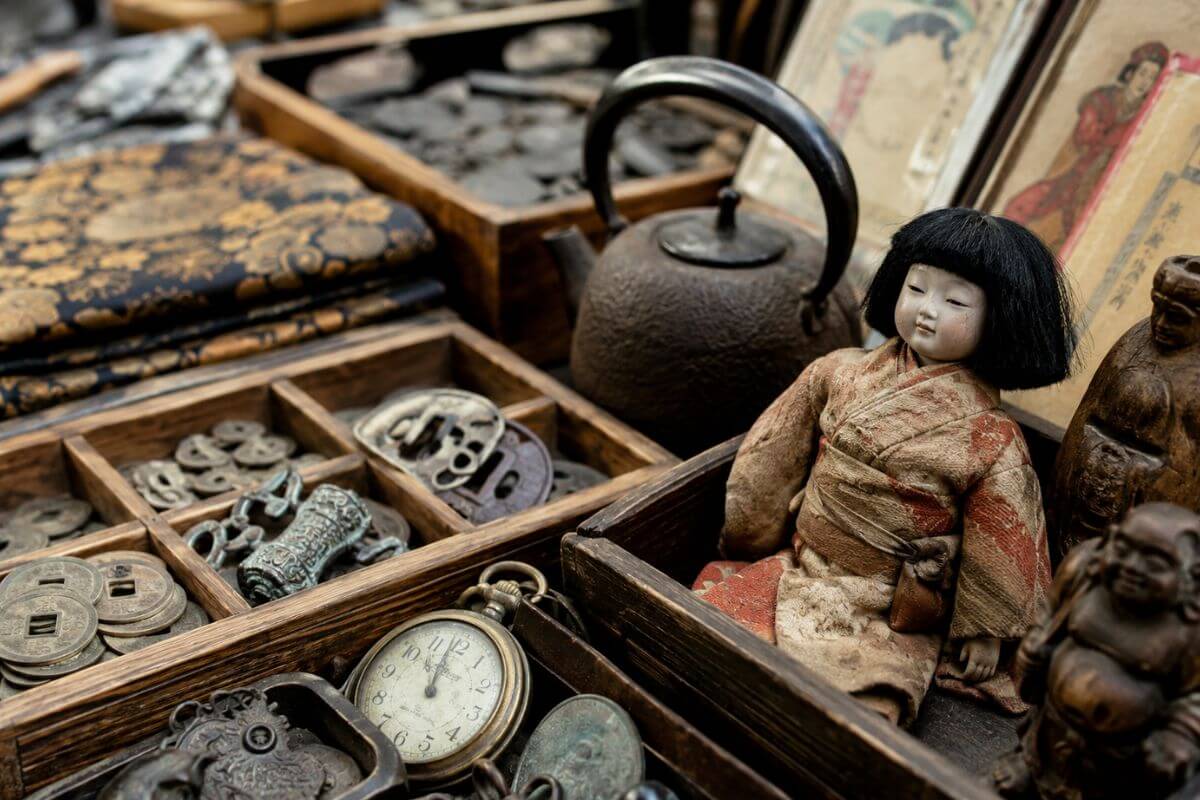
Japan is one of the best places in the world for flea markets and antique fairs. You can walk through temple grounds filled with handmade ceramics, old kimono fabrics, vintage toys, woodblock prints, and centuries-old furniture, all in a single morning. Some markets feel like treasure hunts, while others feel more like open-air museums where every stall has a story.
If you love slow travel, unique souvenirs, or Japanese history, planning your trip around one of these markets can completely change your experience. Instead of buying mass-produced gifts, you get the chance to meet collectors, artists, and local sellers who care deeply about what they sell.
In this guide, you will discover the top Japanese flea markets and antique fairs that are truly worth traveling for.
Quick Summary Table 🎎
| Market | Location | Best For | Frequency |
|---|---|---|---|
| Oedo Antique Market | Tokyo | High quality antiques and vintage goods | Twice monthly |
| Kobo-ichi Market | Kyoto | Traditional Kyoto crafts and antiques | Monthly |
| Toji Temple Flea Market | Kyoto | Massive temple market experience | Monthly |
| Setagaya Boroichi | Tokyo | Historic bargain hunting | Twice yearly |
| Heiwajima Antique Fair | Tokyo | Serious antique shopping | Multiple times yearly |
| Shitennoji Flea Market | Osaka | Affordable vintage finds | Monthly |
| Togo Shrine Antique Market | Tokyo | Stylish vintage fashion and decor | Monthly |
| Kitano Tenmangu Tenjin Market | Kyoto | Folk crafts and local culture | Monthly |
| Osu Antique Market | Nagoya | Retro collectibles and old toys | Monthly |
| Nogi Shrine Flea Market | Tokyo | Relaxed and beginner friendly market | Monthly |
How We Ranked These Markets 🧭
We used several important factors to choose the best flea markets and antique fairs in Japan:
- Variety of antiques and vintage goods
- Atmosphere and cultural experience
- Accessibility for travelers
- Reputation among collectors
- Size and number of vendors
- Chances of finding unique items
- Food stalls and surrounding attractions
- Overall value for visitors
- Frequency and reliability of the event
- Local charm and authenticity
1. Oedo Antique Market, Tokyo 🗼
The Oedo Antique Market is often considered the king of Japanese antique fairs. Held near Tokyo Station and the Tokyo International Forum, this market combines convenience with incredible quality.
You can spend hours browsing through stalls selling old samurai armor pieces, lacquerware, tea ceremony tools, vintage watches, pottery, and handmade jewelry. Many sellers specialize in carefully selected antiques rather than random secondhand items, so the overall quality feels very high.
One of the best things about this market is the mix of locals and international visitors. Even if you are not an expert collector, you will still feel welcome here. Vendors are used to travelers, and many can communicate basic information in English.
The market also works perfectly for first-time visitors to Japan because it is easy to reach from major tourist areas. After shopping, you can explore nearby neighborhoods like Ginza or Marunouchi.
If you only visit one flea market during your Japan trip, this is probably the safest and most rewarding choice.
2. Kobo-ichi Market, Kyoto 🪭
Kyoto already feels like stepping into old Japan, and the Kobo-ichi Market makes that feeling even stronger. Held at Toji Temple every month, this market is famous for traditional goods and handcrafted items.
You will find antique kimonos, wood carvings, calligraphy scrolls, tea cups, old books, and beautiful textiles. Some stalls look like tiny museums filled with treasures from another era.
The temple surroundings make the entire experience unforgettable. Walking through the market while hearing temple bells and smelling street food creates a peaceful atmosphere you rarely find in modern cities.
Many travelers come here specifically to buy authentic Japanese antiques without visiting expensive galleries. Prices range from very affordable to collector-level expensive, so you can enjoy the market no matter your budget.
The food is another highlight. Try local Kyoto snacks while exploring the stalls for a full cultural experience.
3. Toji Temple Flea Market, Kyoto ⛩️
The Toji Temple Flea Market is one of the biggest and most famous markets in all of Japan. Locals often call it the “Kobo-san” market because it honors the monk Kobo Daishi.
This market feels endless. Hundreds of vendors line the temple grounds selling antiques, ceramics, tools, vintage clothing, fans, paintings, and seasonal decorations.
Unlike some carefully curated antique fairs, this market feels more adventurous. You never know what you will discover hidden between ordinary items. One minute you are looking at old postcards, and the next you find a centuries-old tea set.
The market is also great for photography lovers because the setting is incredibly scenic. The pagoda in the background gives the whole market a timeless atmosphere.
Arriving early is important because the best pieces disappear quickly. Serious collectors often show up right after sunrise.
4. Setagaya Boroichi, Tokyo 🧺
The Setagaya Boroichi is not just a flea market. It is a piece of Japanese history. This event dates back more than 400 years and still attracts huge crowds today.
Unlike modern antique fairs, Boroichi feels rough around the edges in the best possible way. The market stretches through local streets filled with food stalls, vintage goods, handmade crafts, and random treasures.
This is the kind of place where you might discover old vinyl records, retro toys, military collectibles, or handmade pottery sitting next to traditional antiques.
The atmosphere is lively and energetic. You will see locals bargaining, families eating street food, and collectors carrying bags full of finds.
Winter is the most famous season for this event, and the cool weather actually adds to the cozy atmosphere.
If you enjoy flea markets with personality and history, this one deserves a top spot on your list.
5. Heiwajima Antique Fair, Tokyo 🏺
Serious antique lovers should not miss the Heiwajima Antique Fair. This indoor event is one of Japan’s largest antique fairs and attracts professional dealers from across the country.
The quality level here is extremely high. You can find rare ceramics, swords, furniture, traditional art, old cameras, and valuable collectibles.
Because it is indoors, the shopping experience feels more organized and comfortable than many outdoor flea markets. You can take your time examining items without worrying about weather conditions.
This market is especially good if you want authentic antiques rather than tourist souvenirs. Some pieces are museum quality, and even browsing the displays feels educational.
Although prices can be higher than those at temple flea markets, the selection and authenticity are outstanding.
Collectors from overseas often plan Tokyo trips specifically around this event.
6. Shitennoji Flea Market, Osaka 🥟
Osaka has a more relaxed and playful personality than Kyoto or Tokyo, and the Shitennoji Flea Market reflects that spirit perfectly.
Held at one of Japan’s oldest temples, this market combines affordable shopping with local culture. You can find secondhand clothing, antiques, ceramics, old toys, kitchenware, and handmade crafts.
The market feels approachable and less intimidating for beginners. Vendors are friendly, and many items are reasonably priced.
One of the best parts of visiting this market is the food. Osaka is famous for street snacks, and you can enjoy delicious local dishes while browsing.
Because the market is less tourist-heavy than Kyoto’s famous flea markets, it often feels more local and authentic.
Travelers who enjoy relaxed shopping experiences will love the friendly atmosphere here.
7. Togo Shrine Antique Market, Tokyo 🎐
The Togo Shrine Antique Market is smaller than some of the giant temple markets, but that is part of its charm.
Located in the trendy Harajuku area, this market attracts stylish sellers offering vintage fashion, retro accessories, ceramics, prints, and decorative antiques.
You can easily combine this market with shopping in nearby Harajuku and Omotesando, making it a perfect half-day activity.
The market has a more curated and fashionable vibe compared to rougher flea markets. Many younger collectors and designers come here looking for inspiration.
If you love vintage fashion or interior decor, this market is especially rewarding.
It is also easier to navigate than huge temple markets, which makes it ideal for casual travelers.
8. Kitano Tenmangu Tenjin Market, Kyoto 🌸
The Kitano Tenmangu Tenjin Market blends flea market culture with seasonal beauty. Held at the famous Kitano Tenmangu Shrine, this event attracts both antique hunters and locals visiting the shrine.
You can shop for ceramics, old paintings, kimono fabrics, kitchenware, and handcrafted souvenirs while surrounded by beautiful shrine grounds.
The atmosphere changes throughout the year. Spring plum blossoms and autumn leaves make the market especially scenic during certain months.
Many vendors here focus on traditional Kyoto-style goods, which makes the shopping experience feel very regional and authentic.
The food stalls are excellent too. You can enjoy local sweets and grilled snacks while exploring.
This market is perfect if you want a slower and more scenic flea market experience.
9. Osu Antique Market, Nagoya 🎮
Nagoya is often overlooked by international travelers, but the Osu Antique Market proves the city deserves more attention.
This market is famous for retro collectibles and quirky vintage items. You can find old gaming systems, manga, retro electronics, posters, vinyl records, and unusual Japanese memorabilia.
The surrounding Osu shopping district adds even more energy to the experience. The area mixes traditional culture with modern pop culture in a very unique way.
Younger travelers especially enjoy this market because it feels less formal than classic antique fairs.
If you love Japanese retro culture, anime history, or vintage electronics, this market can feel like paradise.
Prices are often more affordable than in Tokyo, which is another big advantage.
10. Nogi Shrine Flea Market, Tokyo 🪙
The Nogi Shrine Flea Market is one of the best choices for travelers who want a calm and beginner-friendly introduction to Japanese flea markets.
The setting is peaceful, and the market size feels manageable without being overwhelming. You can comfortably browse antique dishes, handmade accessories, vintage books, and decorative items.
Many visitors appreciate the slower pace here. Unlike crowded mega markets, you can actually talk with vendors and carefully inspect items.
The location is convenient for tourists staying in central Tokyo, and nearby cafes make it easy to turn the visit into a relaxing afternoon.
This market may not be the biggest, but it consistently delivers a pleasant and authentic experience.
Sometimes, smaller markets create the strongest memories.
Conclusion 🌅
Japanese flea markets and antique fairs offer much more than shopping. They give you a chance to connect with local culture, history, craftsmanship, and everyday life in a way that regular tourist attractions often cannot.
Whether you are searching for rare antiques, vintage fashion, handmade ceramics, or simply a memorable travel experience, these markets provide something special. Each one has its own personality, from the massive temple fairs of Kyoto to the stylish vintage markets of Tokyo.
Planning your trip around one of these events can completely change how you experience Japan. Instead of rushing between famous landmarks, you slow down, explore, and discover stories hidden inside old objects and local traditions.
That is what makes these markets truly unforgettable.
Frequently Asked Questions ❓
What is the best time of year to visit Japanese flea markets?
Spring and autumn are usually the best seasons because the weather is comfortable and many outdoor markets are especially scenic during the cherry blossom or fall foliage season.
Are Japanese flea markets cash only?
Many vendors still prefer cash, especially at temple markets and smaller fairs. Carrying Japanese yen in small bills is highly recommended.
Can tourists negotiate prices at Japanese flea markets?
Yes, but keep it polite and reasonable. Aggressive bargaining is not common in Japan, so friendly conversation works much better.
Are flea markets in Japan expensive?
Prices vary widely. You can find cheap secondhand goods for a few dollars or rare antiques worth thousands. Most markets offer something for every budget.
What should you buy at Japanese antique markets?
Popular items include vintage kimonos, ceramics, woodblock prints, tea sets, retro toys, handmade crafts, and traditional kitchenware. Small antiques also make excellent souvenirs because they are unique and meaningful.